

TL;DR
A homeowner achieved a major increase in kitchen functionality and perceived space by implementing a single smart design change, without expanding the physical size. This highlights the potential of strategic modifications to optimize small spaces.
A homeowner has transformed their kitchen’s functionality and perceived space by making just one strategic, smart change, without increasing the room’s physical dimensions. This development underscores how targeted design adjustments can maximize small spaces and improve everyday usability, making it relevant for homeowners and designers alike.

Get home appliances delivered free with Prime
- Fast, free delivery on millions of items
- Prime Video, Amazon Music and more included
- Member-only deals all year
Why a Single Smart Change Can Transform Small Kitchens
This development highlights how strategic, well-planned modifications can dramatically improve space utilization and functionality in small kitchens. It demonstrates that homeowners and designers can achieve better results without costly renovations or enlargements. The approach encourages a shift toward smarter design choices, emphasizing efficiency and user experience, which is especially relevant as urban living spaces become more compact. The success of this change could influence future kitchen redesigns, promoting innovative storage solutions and layout adjustments as cost-effective ways to enhance small homes.Products Worth Considering

Sonos Era 100 SL Compact Microphone-Free Speaker, Black

Dyson HushJet Compact Air Purifier, White/Silver

Roborock Qrevo S Pro Robot Vacuum and Mop with 18,500 Pa Suction
As an affiliate, we earn on qualifying purchases.
The Growing Need for Space Optimization in Home Design
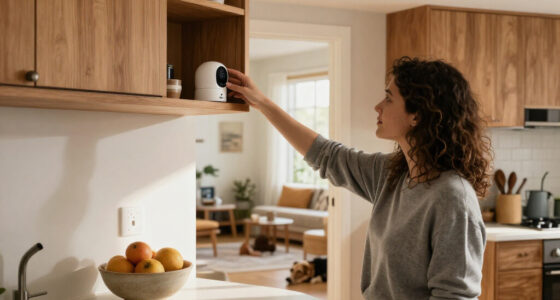
With urban living increasingly characterized by smaller homes and apartments, maximizing space has become a priority for homeowners and designers. Traditionally, enlarging a kitchen involved costly renovations and structural changes, which are not always feasible. Recent trends focus on smarter storage, layout reconfiguration, and technology integration to make small spaces more functional. This specific case exemplifies how a single, deliberate change can lead to significant improvements, aligning with broader efforts to optimize limited space without extensive construction. Experts have long advocated for strategic design over expansion, and this example reinforces that approach.“By rearranging my appliances and adding smart storage, I feel like I have a whole new kitchen — it’s more spacious and easier to work in.”
— Homeowner
Details of the Specific Change Still Unclear
It is not yet confirmed exactly what specific modifications were made, such as the type of storage solutions or appliance reconfigurations. The long-term durability and broader applicability of this approach are also still under review. Further details from the homeowner or designers are expected to clarify the precise methods used and their potential for replication in other kitchens.Potential for Broader Adoption and Further Study
Design professionals and homeowners are expected to explore similar layout adjustments and smart storage options to replicate this success. Additional case studies are likely to emerge, providing more detailed guidance. Researchers may also analyze the long-term impacts of such changes on usability and space perception. Meanwhile, industry experts anticipate increased interest in cost-effective, non-structural modifications as a primary strategy for space optimization in small homes.Key Questions
What specific change did the homeowner make?
The exact details are not fully confirmed, but it involved reconfiguring storage and appliance placement to improve flow and reduce clutter, utilizing smart storage solutions.
Can this approach work in all small kitchens?
While promising, the effectiveness depends on individual kitchen layouts and existing design. Consulting with a professional can help determine if similar adjustments are suitable.
Is this a costly renovation?
No, the change primarily involved layout adjustments and smart storage solutions, which are generally more affordable than structural renovations.
How long will the benefits last?
Long-term durability depends on the quality of storage solutions and the implementation of the layout changes. Proper maintenance and periodic review are recommended.
Could this idea be scaled for larger kitchens?
While the concept is most impactful in small spaces, similar principles of smart storage and layout reconfiguration can benefit larger kitchens as well.
Source: rss