TL;DR

Get home appliances delivered free with Prime
- Fast, free delivery on millions of items
- Prime Video, Amazon Music and more included
- Member-only deals all year
Designer Amy Howard shared an Instagram post showing vintage shutters used as a pantry entrance in place of a conventional door. The Hunker report describes the look as a customizable upcycling idea, but does not provide project costs, installation details for a specific home or evidence of broader adoption.
Designer Amy Howard has presented vintage shutters as an alternative to a traditional pantry door, using the hinged panels to add an aged, textured look to a kitchen. The example, featured in an Instagram post and reported by Hunker, is a design suggestion rather than a newly announced product or a documented trend.
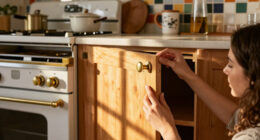
In the image described by Hunker, a set of old shutters stands in for a standard pantry door. The panels can be mounted on hinges in the doorframe so they swing open for access. Howard’s installation, as shown in the report, does not have shutters that fully meet in the middle, suggesting the panels need not form a sealed, conventional door to create the intended visual effect.
The report presents the project as a way to reuse existing materials and personalize a kitchen. Shutters could be left weathered, sanded to create an aged finish or painted in a brighter color. Using two different panels is another option mentioned by Hunker. The right choice depends on the kitchen’s existing finishes and whether the owner wants the pantry entrance to blend in or stand out.
Hunker says installation can involve hanging the shutter panels with hinges, similar to fitting interior window shutters. It advises measuring the opening first, even if the panels do not match it exactly. The report also mentions a saloon-door-style arrangement for shutters that are shorter than the opening. It does not offer measurements, hardware specifications or instructions for adapting the approach to different wall and frame conditions.
A Pantry Entrance With More Character
The idea changes a pantry entrance from a standard, often overlooked feature into a visible design element. For homeowners drawn to rustic, farmhouse or French country interiors, aged wood and shutter details may add texture without requiring a newly manufactured door. Reusing shutters can also give an existing item a new purpose, although the report does not compare the cost or environmental impact of this option with other door choices.
There is a practical trade-off alongside the decorative appeal. A pair of shutters that leaves a gap may not provide the same privacy or containment as a fitted door. The panels also need to open without obstructing nearby counters, appliances or walkways. Those considerations matter before copying the look: the Instagram example establishes that the style is possible, not that every shutter or pantry opening will suit it.
As an affiliate, we earn on qualifying purchases.
From Interior Shutters to Pantry Panels
Hunker connects the look to traditional plantation shutters, now commonly called interior shutters. The report says this style has historical links to French, Spanish and British colonial architecture in the American South, where shutters were suited to humid, storm-prone climates. It adds that their popularity spread more broadly in the United States during the 19th century and that shutters remain in use on windows and French doors.
That history offers a reason the panels can read as rustic or vintage in a modern kitchen, but the pantry adaptation is the point of the report. Hunker does not say when Howard shared the Instagram post or identify a wider design-industry shift. Its coverage focuses on one designer’s example and practical ways readers might adapt the appearance to their own rooms.
“Howard used a set of vintage shutters in place of a traditional pantry door.”
— Amy Howard, as described in Hunker’s report
As an affiliate, we earn on qualifying purchases.
Fit, Function and Project Costs
The source does not state the dimensions or materials of Howard’s shutters, the pantry opening, the hinge type or the total project cost. It also does not explain whether the panels were modified, professionally installed or tested for frequent use. The report’s description of the project as easy and inexpensive is guidance from the article, not a costed assessment applicable to every kitchen.
It is also unclear how much clearance a particular setup needs, whether the shutters will stay aligned over time, or how much a gap between panels could affect privacy, dust control or the pantry’s contents. Those questions depend on the opening, the condition and weight of the shutters, and the household’s needs. The source provides no broader survey or sales data to show how popular the idea is.
As an affiliate, we earn on qualifying purchases.
Measure Before Choosing Shutters
For readers considering the look, the next step is to measure the pantry opening and check how the panels would swing before selecting shutters. Hunker recommends deciding whether the finish should match the room or serve as a focal point, then considering weathered wood, paint or mismatched panels. The report offers no scheduled follow-up or additional announcement; the practical outcome depends on each homeowner’s opening and chosen materials.
Before installation, owners should check that the frame can support the shutters and that the hinges allow safe, unobstructed movement. If the opening needs structural changes or the panels are heavy, a qualified professional can assess the frame and fitting. Any required permits or local building rules should be checked where applicable.
As an affiliate, we earn on qualifying purchases.
Key Questions
What is the pantry-door alternative in the report?
Vintage shutters are mounted on hinges in place of a conventional pantry door, based on designer Amy Howard’s example described by Hunker.
Do the shutters need to meet in the middle?
Not necessarily in the example covered: Hunker says Howard’s panels do not quite meet. A gap may affect privacy or how well the pantry is enclosed, so the fit should suit the household’s needs.
How can the shutters be styled?
The report suggests leaving them weathered, sanding them for an aged appearance, painting them a bright color or using mismatched panels. The choice depends on the kitchen’s existing style.
What should homeowners check before installing them?
Measure the opening, consider the shutters’ size and weight, and check that the panels can swing without hitting nearby fixtures or blocking a walkway. Hunker does not provide specific hardware or structural instructions for individual homes.
Source: rss
Columbus Day / Indigenous Peoples' Day Picks
long weekend sales
As an affiliate, we earn on qualifying purchases.