
TL;DR

Get home appliances delivered free with Prime
- Fast, free delivery on millions of items
- Prime Video, Amazon Music and more included
- Member-only deals all year
House Beautiful published expert guidance on 14 household items that may need replacement or maintenance sooner than homeowners expect. Suggested timeframes vary by product, manufacturer, use and condition; the report advises checking alarm instructions and watching for signs of wear or damage.
House Beautiful has published expert recommendations on when to replace or maintain 14 everyday household items, including smoke and carbon monoxide alarms, shower liners, towels, mattresses and HVAC filters. The advice highlights that item condition and manufacturer guidance matter alongside general timelines, particularly for home safety, moisture damage and indoor air quality.
The report’s suggested schedules range from checking HVAC filters monthly and replacing them about every three months to replacing mattresses roughly every seven to 10 years. It says smoke and carbon monoxide alarms generally need replacement after five to 10 years, but the exact interval varies by manufacturer. The report also recommends monthly alarm tests and annual battery replacement.
Other suggested intervals include shower liners every six months to a year, bath towels every one to three years, bed pillows every one to two years, and sheets every two to three years. Duvets may last five to 10 years. The report says these are general recommendations, not a substitute for checking product instructions or assessing visible wear.
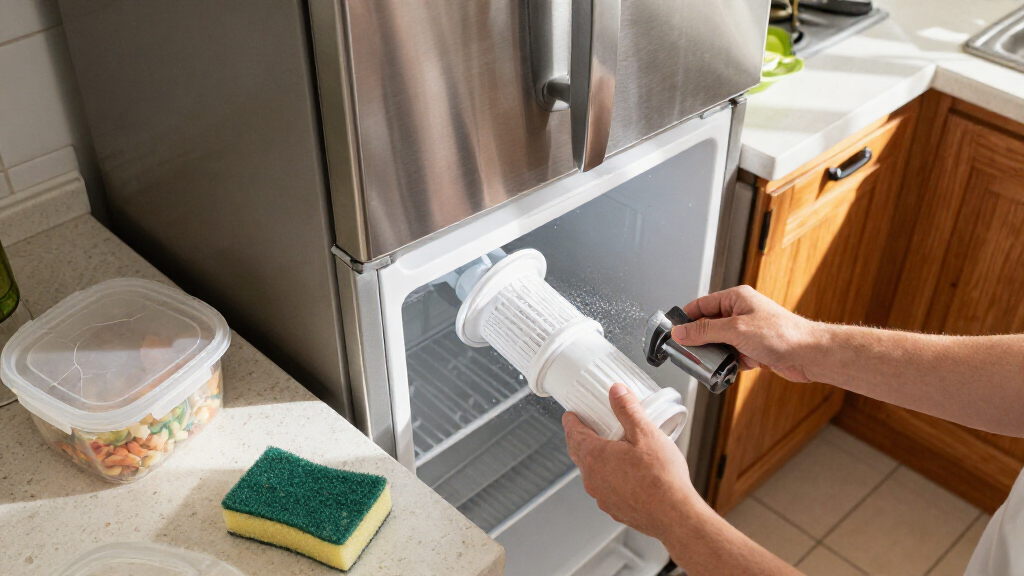
For grout, the report gives a five-to-10-year timeframe but emphasizes condition: separated or deteriorating grout may allow water to damage drywall and should be addressed. It also lists additional household items, including kitchen sponges, cutting boards, water filters, cleaning tools and personal-care items, with replacement schedules dependent on product use and condition.
Safety and Wear at Home
Some replacements are matters of comfort or cleanliness; others can affect emergency detection or preventable property damage. An aging alarm may become less sensitive, according to the report, while deteriorating grout can let water reach surrounding materials. Dirty or overdue HVAC filters can also affect system performance and the circulation of dust and allergens.
The list gives readers practical prompts to inspect items that are easy to overlook during routine cleaning. Its timeframes should be treated as maintenance guidance rather than guarantees: actual lifespan can change with product design, household conditions and frequency of use.
Products Worth Considering

Blueair Blue Pure 311i Max Air Purifier

Philips Hue White and Color Ambiance Smart Retrofit Recessed LED Downlights, 5/6-Inch, 4-Pack

Blueair Blue Pure 511i Max Smart Air Purifier
As an affiliate, we earn on qualifying purchases.
How the Report Sets Timelines
The House Beautiful article draws on comments from designers and home experts, including Linda Hayslett of LH.Designs, Rebekah Zaveloff of Imparfait Design Studio, and other named contributors. Their advice combines estimated replacement periods with signs that an item may need attention, such as musty towels, sagging mattresses, misshapen pillows or grout pulling away.
For HVAC filters, the report refers to maintenance guidance that includes checking filters monthly and replacing them around every three months. It says households may need to change filters more often if they look especially dirty. For alarms, it directs readers to look up the specific model because replacement schedules differ by manufacturer.
The source also cites a 2024 SafeHome.org study that reported shower curtains had the most germs among bathroom surfaces included in that study. That finding is attributed to the study as described by House Beautiful; the supplied material does not provide its methods or data, so it should not be read as a universal ranking of all bathrooms.
““Even the most gorgeous spaces lose their charm if we forget to update essentials.””
— Linda Hayslett, principal designer at LH.Designs, as quoted by House Beautiful
Why Replacement Dates Can Vary
The supplied report does not establish that every item must be replaced at a fixed age. Manufacturer instructions, material, use and household conditions can change the appropriate schedule. The alarm guidance is explicitly model-dependent, and the report recommends checking the product information.
The source excerpt ends partway through its HVAC filter discussion and does not show the full list of all 14 items or all recommendations. It also does not provide the underlying methods for the cited shower-curtain study. Readers should use the report as a prompt to inspect products, not as a complete technical standard.
Inspect Items and Check Labels
Homeowners can start by checking alarm manufacture dates and instructions, testing alarms monthly, and replacing batteries as directed. They can inspect filters, grout and frequently used linens for signs of dirt, damage or loss of function, then compare those findings with product guidance.
Where a repair or replacement involves building materials or home systems, the appropriate next step depends on the problem and local requirements. The report does not provide technical installation instructions; readers should follow product directions and seek qualified help when a repair is beyond routine household maintenance.
Key Questions
How often should smoke and carbon monoxide alarms be replaced?
The report gives a general range of five to 10 years, but says the exact schedule depends on the manufacturer. Check the model instructions, test alarms monthly and replace batteries annually, as advised in the report.
How often should HVAC filters be changed?
The report recommends checking filters monthly and replacing them about every three months. A filter that looks especially dirty may need more frequent replacement; follow the filter and system instructions.
What signs suggest towels or pillows need replacing?
The report says towels may be due for replacement if they stay scratchy or musty after washing, or show discoloration. Pillows should be replaced when they lose their shape; the suggested general interval is one to two years.
Does the report say all household items have a fixed lifespan?
No. The listed timeframes are general recommendations. The report says replacement needs depend on factors such as manufacturer guidance, material, use and condition, and it points readers to visible signs of wear.
Source: housebeautiful.com