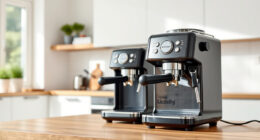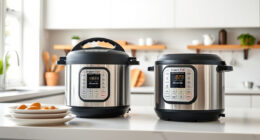

Scale buildup happens when minerals like calcium and magnesium from hard water settle inside your pipes and appliances. As water heats or evaporates, these minerals harden into deposits that clog pipes, reduce appliance efficiency, and cause damage over time. You might notice reduced water flow or spots on dishes. Addressing this early can save you money and hassle later. To learn how to prevent and treat this common problem, keep going.
Key Takeaways
- Hard water contains high mineral levels like calcium and magnesium that cause scale buildup in pipes and appliances.
- Scale forms as mineral deposits harden over time, leading to reduced water flow and appliance efficiency.
- Buildup insulates heating elements, decreasing performance and risking premature appliance failure.
- Recognizing signs like decreased water pressure and white deposits helps identify early scale issues.
- Installing water softeners and regular cleaning are effective strategies to prevent and manage scale buildup.
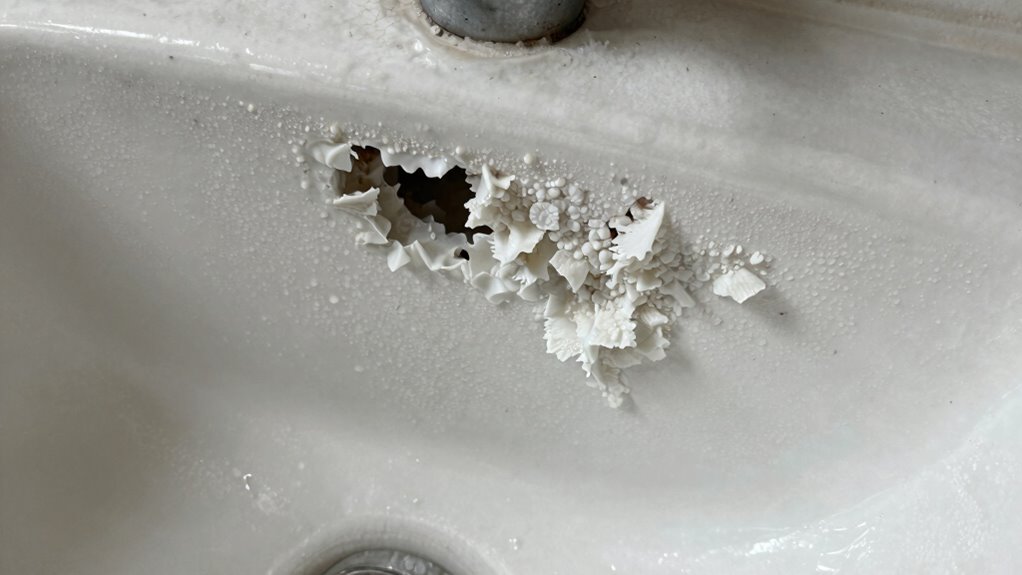
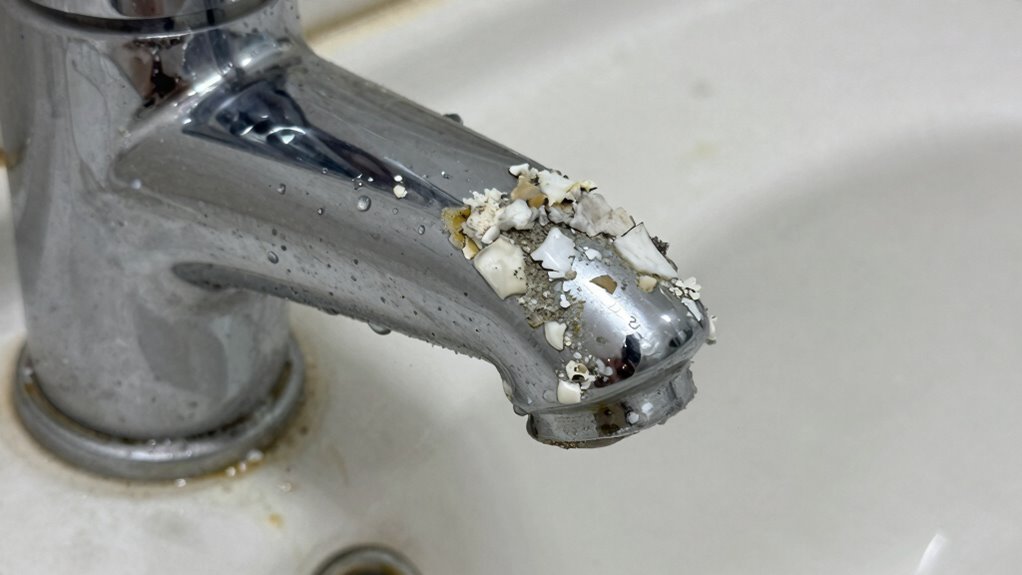
Have you ever noticed white or gray deposits forming inside your pipes or appliances? If so, you’re likely dealing with scale buildup caused by mineral accumulation. This common issue occurs when hard water flows through your plumbing, leaving behind deposits of dissolved minerals like calcium and magnesium. Over time, these minerals settle and harden, creating a crusty layer that clings to pipes, fixtures, and appliances. The more mineral-rich your water is, the more pronounced this buildup becomes, leading to decreased efficiency and potential damage.
You might not immediately see the effects of scale buildup, but it quietly hampers the performance of your water heater, dishwasher, and washing machine. As calcium deposits accumulate, they form a thick, chalky layer—often referred to as scale—that insulates the heating elements, forcing your appliances to work harder to reach desired temperatures. This increased strain can cause appliances to wear out faster or even break down prematurely. Furthermore, mineral accumulation clogs pipes, restricting water flow and reducing pressure, which can be frustrating during daily routines.
Scale buildup silently damages appliances and pipes, reducing efficiency and increasing the risk of costly breakdowns.
The presence of scale buildup isn’t just an aesthetic issue; it also impacts your water quality. Hard water with high mineral content can leave spots on dishes, soap scum on shower doors, and a filmy residue on your skin and hair. When calcium deposits grow inside pipes, they can trap debris and bacteria, creating potential health concerns over time. Additionally, the mineral deposits can lead to unpleasant odors or tastes in your water, making everyday tasks less pleasant. Recognizing how water quality directly influences mineral buildup helps in understanding the importance of water treatment solutions.
To combat this problem, you need to understand what’s happening at the source. Hard water contains dissolved minerals that are naturally picked up from rocks and soil. When this water is heated or evaporates, these minerals get left behind, forming deposits. Regular maintenance, such as descaling appliances with vinegar or commercial descaling agents, can help dissolve existing calcium deposits and prevent further buildup. Installing a water softener is another effective solution, as it replaces calcium and magnesium ions with sodium, drastically reducing mineral accumulation and scale formation.
In essence, scale buildup is a slow but persistent problem caused by mineral accumulation from hard water. Recognizing the signs early, like reduced water flow or white deposits, allows you to take proactive steps. Whether through regular cleaning, using descaling products, or investing in water softening systems, you can protect your plumbing and appliances from the damaging effects of calcium deposits, ensuring your home’s water remains clean, efficient, and long-lasting.

Aquasure Harmony Series 48,000 Grains Whole House Water Softener w/High Efficiency Digital Metered Control Head (48,000 Grains)
💧【 PERFECTLY DESIGNED FOR 3-4 BATHROOMS 】The Aquasure Harmony Series is the professional grade water softener that delivers…
As an affiliate, we earn on qualifying purchases.
As an affiliate, we earn on qualifying purchases.
Frequently Asked Questions
How Does Hard Water Affect My Skin and Hair?
Hard water can cause your skin to feel dry and irritated because the minerals strip away natural oils, leading to skin dryness. For your hair, it can cause damage, making it look dull, brittle, and harder to manage. You might notice increased scalp itchiness or frizz, which are signs of hard water’s negative effects. Using gentle cleansers and water softeners can help protect your skin and hair from these issues.
Can Scale Buildup Damage My Appliances Long-Term?
Think of scale buildup as tiny invaders slowly corroding your appliances. Over time, mineral accumulation can damage components, reducing their lifespan and efficiency. Hard water causes this buildup, which acts like a silent thief stealing years from your appliances. Ignoring it risks costly repairs or replacements, so regularly cleaning and installing water softeners helps protect your investments and keeps everything running smoothly for years to come.
What Are Eco-Friendly Methods to Prevent Scale Formation?
You can prevent scale formation with eco-friendly solutions like water softening systems that use salt-free technology or ion exchange filters. These methods reduce mineral buildup without harmful chemicals or high energy use. Additionally, installing a whole-house water softener or using natural descaling solutions like vinegar can help maintain appliances and pipes efficiently. By choosing eco-friendly water softening options, you protect your home while minimizing environmental impact.
Is There a Way to Test My Water Hardness at Home?
Yes, you can test your water hardness at home with DIY testing kits. These kits are simple to use; you just collect a water sample, add the reagent, and observe the color change. Water test kits are affordable, quick, and effective, giving you a clear idea of your water’s hardness level. This way, you can take proactive steps to prevent scale buildup and protect your appliances.
How Often Should I Flush My Water Heater to Prevent Scale?
You should flush your water heater at least once a year to prevent mineral deposits from building up. Regular flushing helps remove scale caused by hard water, which can reduce efficiency and damage the unit. If you have a water softening system, you might extend the interval. However, for areas with very hard water, consider flushing more often—every six to twelve months—to keep your water heater running smoothly.

Baby Brezza Descaler 8 oz. Made in USA. Universal Descaling Solution for Baby Brezza and other baby appliances. Removes mineral build-up and extends your machine’s lifespan
Safe for use in all brands of appliances
As an affiliate, we earn on qualifying purchases.
As an affiliate, we earn on qualifying purchases.
Conclusion
Dealing with hard water isn’t just about limescale; it affects your appliances and wallet. Did you know that hard water can cause up to 30% more energy consumption in your home? By understanding scale buildup, you can take steps to prevent it and save money. Regular maintenance and water softening solutions make a big difference. Don’t let mineral deposits drain your resources—tackle the problem early and keep your home running smoothly.
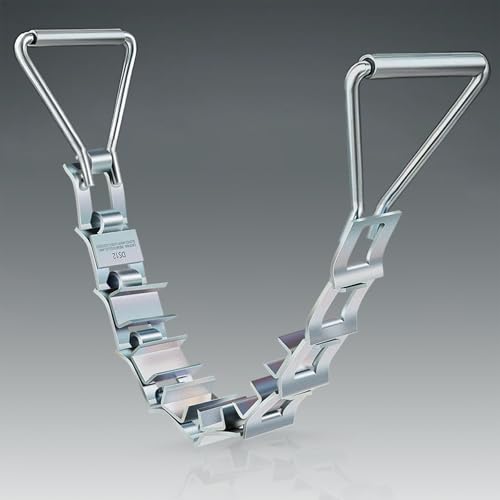
33" Steel Pipe Descaler –For DS12 Zinc-Plated Steel Scale Remover for 3" to 12" Pipes,With Welded Scrapers, Removes Scale/Rust – 2" Clearance Needed, Ideal for Plumbing, Sewer & Industrial Maintenance
Fast & Effective Pipe Descaler for 3” to 12” Pipes – The for DS12 Chain Pipe Descaler is…
As an affiliate, we earn on qualifying purchases.
As an affiliate, we earn on qualifying purchases.

iSpring ED2000 Whole House Water Descaler, Alternative Electronic Salt-Free Hard Water Conditioner, Reduces Limescale Prevent Deposits Build-up, Different from a Water Softener
[Improve Water Quality] Solves hard water problems without the need for chemicals, salt, or maintenance, while keeping healthy…
As an affiliate, we earn on qualifying purchases.
As an affiliate, we earn on qualifying purchases.