
Your ability to adapt to cold faster depends on your metabolic rate, genetics, and how effectively your body responds. People with a higher metabolism generate more internal heat, while those with genetic traits like active brown fat or better vasoconstriction conserve heat more efficiently. Repeated cold exposure can also improve your body’s responses over time. If you want to understand more about what influences your cold resilience, keep exploring these fascinating factors.

Get home appliances delivered free with Prime
- Fast, free delivery on millions of items
- Prime Video, Amazon Music and more included
- Member-only deals all year
Key Takeaways
- Genetic differences influence brown fat activity and vasoconstriction efficiency, affecting cold adaptation speed.
- Individuals with higher metabolic rates generate more internal heat, enabling quicker cold acclimatization.
- Repeated cold exposure enhances physiological responses like blood flow and brown fat activation over time.
- Lifestyle choices, such as diet and activity, can optimize metabolic rate and thermoregulatory responses.
- Populations in colder climates often develop genetic adaptations, allowing faster natural acclimatization.
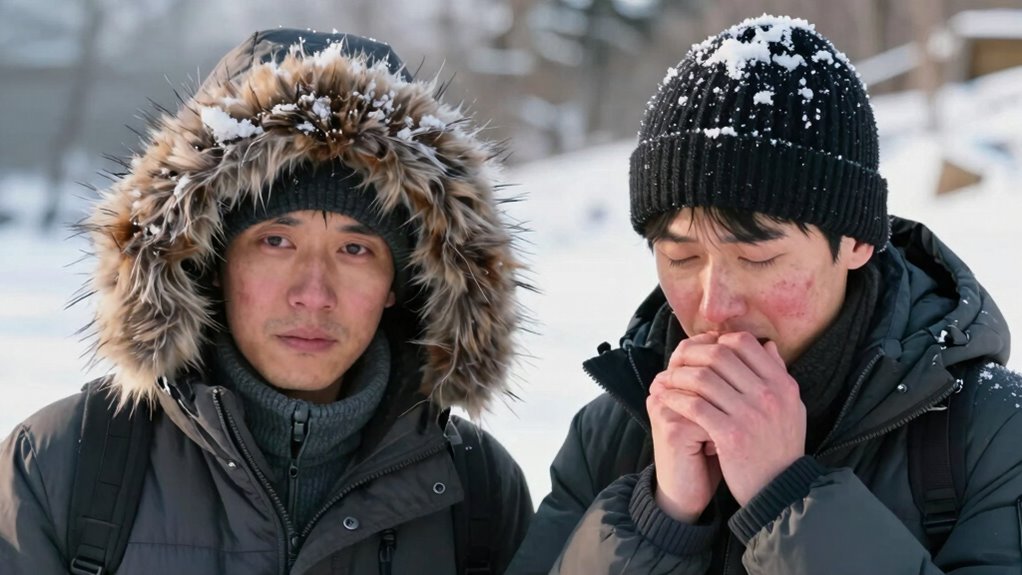
Some people seem to shrug off cold temperatures more easily than others, and understanding why can reveal fascinating insights into our bodies’ ability to adapt. One of the key factors is your metabolic rate, which determines how quickly your body burns calories to generate heat. If you have a higher metabolic rate, your body produces more internal heat, making you less susceptible to the chill. This process isn’t just about how active you are; it’s also influenced by your body’s efficiency in converting food into energy. People with a naturally faster metabolism tend to warm up faster and maintain core temperature more effectively in cold environments.
But metabolism isn’t the only piece of the puzzle. Your genetic predisposition plays a significant role in how well you handle cold. Some individuals are born with specific genes that enhance their ability to generate heat or conserve it. For example, certain genetic variations can promote higher brown fat activity, a type of fat that burns calories to produce heat. These genetic traits can make a noticeable difference, especially during repeated cold exposure, allowing some people to acclimate more rapidly than others. Over generations, populations living in colder climates often develop genetic adaptations that improve cold tolerance, which explains why some individuals seem inherently better equipped to handle chilly conditions. Interestingly, brown fat activity can be influenced by both genetics and lifestyle factors, further affecting cold adaptation. Additionally, the body’s ability to vasoconstrict blood vessels effectively is another important cold response mechanism that varies among individuals. Improving your understanding of genetic variation can help you recognize the biological factors that influence your personal responses to cold. Maintaining a balanced metabolic rate through lifestyle choices can help optimize your body’s natural responses to cold, though genetic factors often set the foundation for these capabilities.
Your body’s ability to adapt to cold isn’t solely about genetics or metabolism in isolation. It’s a dynamic interplay of both, along with environmental factors and lifestyle habits. If you regularly expose yourself to cold temperatures, your body can adapt by improving blood flow, increasing brown fat activity, and refining your thermoregulatory responses. This process, known as acclimatization, can enhance your tolerance over time, but how quickly it happens often depends on your genetic makeup and baseline metabolic rate.
In essence, your capacity to cope with cold is deeply rooted in biological factors that you inherit and develop. While you can influence this through habits like cold exposure or maintaining a healthy metabolism, some aspects remain beyond your control. Recognizing the importance of genetic predisposition and metabolic rate can help you understand your own responses better and set realistic expectations for how quickly you might adapt to colder environments. So, whether you’re naturally more resilient or find it takes longer for your body to adjust, appreciating these differences can deepen your understanding of your unique resilience to the cold.
cold weather thermal base layers
As an affiliate, we earn on qualifying purchases.
As an affiliate, we earn on qualifying purchases.
Frequently Asked Questions
Can Diet Influence Cold Adaptation Speed?
Yes, your diet can influence how quickly you adapt to cold. A varied diet guarantees you get essential nutrients that support your body’s resilience, while nutrient timing helps optimize energy use during cold exposure. Eating nutrient-dense foods at the right times boosts your metabolism and improves circulation, making it easier for your body to adjust. So, paying attention to diet variety and nutrient timing can enhance your cold adaptation process.
Does Age Affect Cold Tolerance Development?
Yes, age affects cold tolerance development because of age-related immune changes and developmental thermoregulation. As you age, your body’s ability to regulate temperature may decline, making it harder to adapt to cold environments. Younger individuals typically develop thermoregulatory responses faster due to more efficient immune responses and better metabolic flexibility. Conversely, older adults might need more time and effort to improve cold tolerance, as their immune and thermoregulatory systems weaken over time.
How Does Hydration Impact Cold Adaptation?
Hydration levels play a vital role in your body’s temperature regulation during cold exposure. When you’re well-hydrated, your body can maintain efficient blood flow, helping you stay warmer and adapt faster to cold conditions. Dehydration hampers this process, leading to poorer temperature regulation and increased susceptibility to cold. To improve cold adaptation, make sure you stay properly hydrated, as it supports your body’s ability to generate and conserve heat effectively.
Are There Genetic Markers Linked to Cold Resilience?
You might have a genetic predisposition that boosts your cold resilience, like an innate fire inside that keeps you warm. Researchers have identified specific genetic markers linked to better cold tolerance, such as variations in genes regulating blood flow and fat metabolism. These markers help your body adapt faster, making you feel less chilled and more comfortable in cold environments. Your DNA can give you a natural edge in enduring low temperatures.
Can Mental Training Improve Cold Adaptation?
Yes, mental training can improve your cold adaptation by enhancing mental resilience and psychological preparedness. When you practice visualization, mindfulness, or cold exposure techniques, you train your mind to better handle the discomfort. This mental readiness helps you stay calm and focused, making your body more efficient at managing cold temperatures. Over time, these psychological strategies boost your ability to tolerate cold, improving your overall resilience.
brown fat activation supplements
As an affiliate, we earn on qualifying purchases.
As an affiliate, we earn on qualifying purchases.
Conclusion
So, now you see that your body’s ability to adapt to cold varies, and it’s often a matter of how you approach it. By gradually exposing yourself and staying consistent, you can build your cold tolerance. Remember, it’s not about fighting the heat but learning to dance in the rain. Don’t wait for a cold snap to start; take small steps today, and you might find yourself weathering the chill better than you thought.
As an affiliate, we earn on qualifying purchases.
vasoconstriction training devices
As an affiliate, we earn on qualifying purchases.
As an affiliate, we earn on qualifying purchases.
Halloween Picks
halloween
As an affiliate, we earn on qualifying purchases.