To spot hidden mold, check behind large appliances like refrigerators, washers, and dishwashers, and inspect hoses, seals, and drip pans for leaks. Look behind furniture, beds, and sofas, especially after water damage, and inside cabinets or shelves near sinks. Keep an eye on damp corners, around windows, vents, and in attics or basements where moisture may hide. Good ventilation and regular inspections will help, and you’ll find more tips if you keep exploring.
Key Takeaways
- Inspect behind large appliances like refrigerators, washing machines, and dishwashers for leaks and mold growth.
- Check behind furniture such as beds, sofas, and bookshelves, especially after water exposure.
- Examine hidden spaces around windows, vents, and attic or basement areas for condensation and water intrusion.
- Look inside cabinets, pantry shelves, and dark corners for signs of moisture and mold.
- Maintain proper ventilation and low humidity with dehumidifiers to prevent mold in concealed areas.

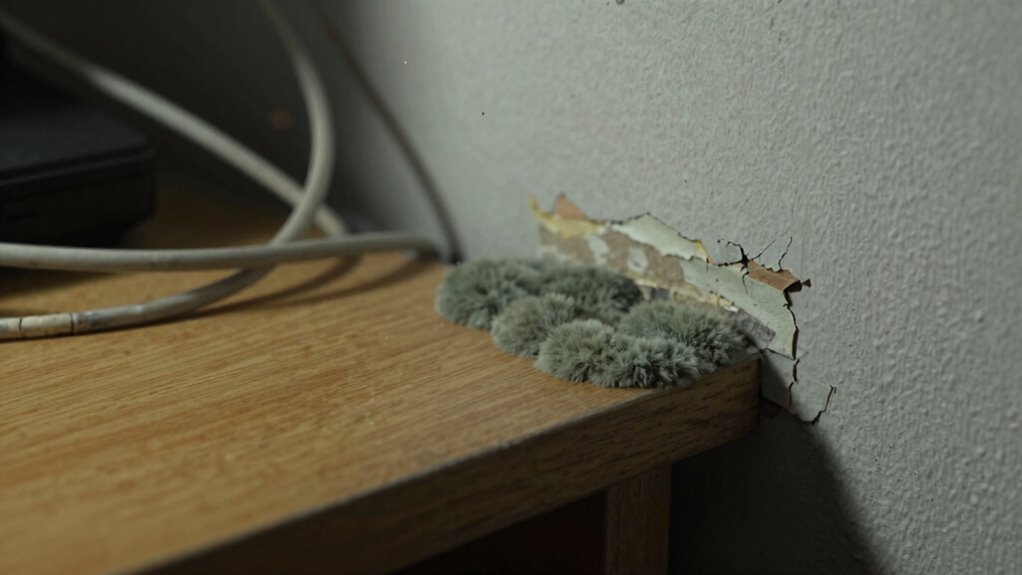
Have you ever wondered why mold often appears in the most unexpected places? It’s because mold thrives in hidden spots where moisture combines with poor air circulation, often out of sight and out of mind. These hidden areas can profoundly impact your indoor air quality, making it essential to know where to look and how to prevent mold growth. When mold develops in concealed spaces, it releases spores into the air, which can cause allergies, respiratory issues, and other health problems. That’s why paying close attention to these areas is vital for maintaining a healthy environment and ensuring your air quality stays high.
Start by checking behind and under large appliances like refrigerators, washing machines, and dishwashers. These appliances generate heat and moisture, creating the perfect environment for mold to flourish if not properly ventilated. Regularly inspect the hoses, seals, and drip pans for leaks or standing water, as these are common spots for mold to develop unnoticed. Don’t forget to look inside cabinets and pantry shelves, especially those near sinks or plumbing fixtures, where moisture can accumulate behind walls or within gaps. Mold can easily grow in these dark, damp corners, releasing spores into your home’s air.
Check behind appliances and inside cabinets for hidden mold growth and moisture buildup.
Another often-overlooked area is behind your furniture, such as beds, sofas, or bookshelves, especially if you’ve experienced water damage or high humidity. These spots tend to stay damp longer, creating a breeding ground for mold. To keep your air quality ideal, regularly clean these areas using effective cleaning tips like wiping surfaces with mold-killing solutions and ensuring proper ventilation. Using a dehumidifier can help reduce moisture levels in the air, making it harder for mold to take hold. Also, check for signs of water intrusion around windows, vents, and air conditioning units, as condensation can seep into walls or flooring, fostering hidden mold growth.
Additionally, understanding the importance of color accuracy in your home environment can help you better identify potential mold issues, since discoloration or staining might be mistaken for mold growth. Pay attention to your attic and basement, two areas often neglected but prone to moisture buildup. Inspect pipes, vents, and insulation for signs of mold or water damage. Improving air circulation in these spaces is essential—consider installing vents or fans if necessary. Maintaining good air quality involves more than just cleaning visible surfaces; it’s about keeping moisture levels low and preventing mold from establishing itself in concealed areas. Incorporate regular cleaning tips that focus on these hidden spots, like using mold-resistant paints or sealants on vulnerable surfaces.

Elitech Refrigerant Leak Detector, CLD-100 Freon Leak Detector Car HVAC Halogen Refrigerant Leak Detector CFCs HCFCs HFCs
Upgraded version of WJL-6000. Traditional corona sensor with updated analogue circuit, fast triggers on R11, R22, R134A, R404a,…
As an affiliate, we earn on qualifying purchases.
As an affiliate, we earn on qualifying purchases.
Frequently Asked Questions
How Can I Detect Hidden Mold Behind Walls?
To detect hidden mold behind walls, start with moisture detection tools like a moisture meter or infrared camera. These devices help you identify areas with excess moisture, which often signals mold presence. Use wall inspection techniques such as removing a small section of drywall or using a borescope to peek inside. Regularly check for musty odors or discoloration, and act quickly to prevent mold from spreading.
Are There Specific Tools to Identify Mold in Concealed Areas?
Think of mold detection tools as your secret agents in the battle against hidden spores. Infrared cameras act like X-ray vision, revealing temperature differences indicating hidden mold behind walls. Mold-resistant paint helps prevent future growth, but for detection, these specialized tools are key. With infrared cameras, you can spot mold lurking behind surfaces without damage, making your search precise and effective. Trust these tools to uncover what’s hiding in plain sight.
How Often Should I Inspect Hidden Spots for Mold?
You should inspect hidden spots for mold during routine inspections at least once every three to six months. Incorporate preventative maintenance by checking areas like behind appliances, under sinks, and inside cabinets regularly. This proactive approach helps catch mold early before it spreads. If you notice any musty odors or signs of moisture, increase inspection frequency to prevent mold growth and protect your health and property.
Can Mold in Hidden Spots Affect Indoor Air Quality?
Mold in hidden spots can definitely diminish your indoor air quality, making your space less safe and more stuffy. It’s vital to focus on mold prevention by controlling moisture and monitoring hidden corners regularly. When moisture accumulates, mold spores thrive, releasing allergens and irritants into the air. By maintaining proper moisture control and inspecting hidden areas, you keep your environment healthier and air cleaner, preventing mold’s harmful effects from spreading unseen.
What Are the Health Risks of Undiscovered Hidden Mold?
Undiscovered hidden mold can pose serious health risks, like allergies, respiratory issues, and asthma attacks. It may release spores that you breathe in over time, worsening your health. To avoid this, prioritize mold prevention by keeping your space dry and well-ventilated. If you find mold, get prompt mold remediation to eliminate it completely. Regular inspections help catch hidden mold early, protecting your health and maintaining a safe environment.

GearLight S100 LED Pocket Pen Light- 2 Small, Compact Flashlights with Clip for Tight Spaces, Police Inspection, Nurses & Medical Use – White Light – 2 Pack, (S100 Pen Light)
COMPACT – This sleek and portable pocket flashlight is compact enough to fit into small, tight spaces and…
As an affiliate, we earn on qualifying purchases.
As an affiliate, we earn on qualifying purchases.
Conclusion
While mold often lurks in hidden spots, catching it early saves you from unseen health risks and costly repairs. Ignoring these quiet invaders might seem harmless—until you realize the damage they cause. Vigilance transforms a potential threat into a manageable issue, turning a hidden hazard into a simple maintenance task. In the end, awareness isn’t just about spotting mold; it’s about protecting your space, proving that sometimes, the smallest checks make the biggest difference.

Dehumidifier, 95OZ Dehumidifier for Home 1000 Sq.Ft – Quiet with Auto Shut Off & Relaxing 7 Color Ambient Light,Ideal for Livingroom, Bedroom, Basement(Black)
Semiconductor dehumidifiers use thermoelectric cooling to remove moisture from the air. They create a drier, more comfortable environment…
As an affiliate, we earn on qualifying purchases.
As an affiliate, we earn on qualifying purchases.

Concrobium Mold Control, 32 oz Spray – Eliminates & Prevents Mold – EPA-Registered, Bleach-Free, Odorless, VOC-Free
Eliminates & Helps Prevent Mold: Targets existing mold at the source and leaves behind an invisible barrier that…
As an affiliate, we earn on qualifying purchases.
As an affiliate, we earn on qualifying purchases.