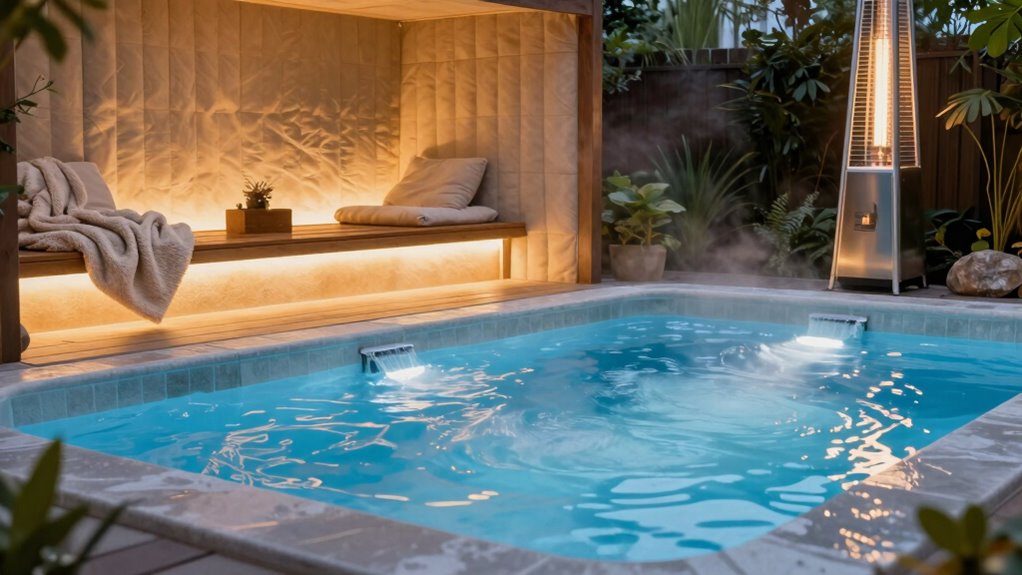

To build a better rewarming area next to your plunge, focus on creating a well-insulated, spacious space that keeps heat in and allows quick access to emergency gear. Use thermal blankets, insulated walls, and foam mats on the ground to prevent heat loss. Position equipment within easy reach and guarantee good lighting. Outdoor setups should include weatherproof coverings or tents. Proper layout, safety measures, and training are key—keep going for detailed tips to optimize your setup.

Get home appliances delivered free — and shop member deals
- Fast, free delivery on millions of items
- Access to Prime Big Deal Days deals on October 6–7
- Prime Video, Amazon Music and more included
Key Takeaways
- Use thermal insulation materials like foam and blankets to retain heat and prevent rapid heat loss.
- Design a spacious, well-lit layout with easy access to emergency equipment for quick response.
- Incorporate weatherproof coverings or tents for outdoor setups to shield from wind and rain.
- Stock essential warming supplies such as heat packs, electric pads, and thermal blankets for immediate use.
- Train staff thoroughly on equipment use, safety protocols, and effective rewarming techniques.

Creating an effective rewarming area is vital for safely restoring body temperature in cold or hypothermic patients. When planning this space next to your plunge, your primary goal should be to guarantee warmth retention and immediate access to necessary emergency equipment. You want to design an environment that minimizes heat loss and provides quick intervention if someone’s condition worsens. To do this, focus on thermal insulation, which plays a key role in maintaining a stable temperature. Use insulating materials like foam mats, thermal blankets, or insulated walls to prevent heat from escaping. Covering the ground with thick mats or rugs helps reduce conductive heat loss from the body to the cold surface, keeping the patient warmer for longer.
Prioritize thermal insulation and quick access to emergency tools for safe, effective rewarming in cold or hypothermic situations.
Equally important is equipping your rewarming area with the right emergency equipment. Stock it with essentials like thermal blankets, warm clothing, and heating devices such as electric heat pads or chemical heat packs. These tools can be applied immediately to help raise body temperature effectively. Make sure your emergency equipment is easily accessible, well-organized, and regularly checked for functionality. Having a thermometer to monitor temperature is essential so you can track progress and adjust your approach accordingly. Additionally, include items like gloves, masks, and sanitizers to maintain hygiene and safety during treatment, especially if multiple people are involved. Incorporating thermal insulation techniques can further enhance the environment’s effectiveness.
Lighting and space layout also matter when building your rewarming area. Well-lit surroundings allow you to assess the patient’s condition accurately, and a spacious setup gives you enough room to work efficiently without feeling cramped. Position your emergency equipment within arm’s reach so you can respond swiftly in urgent moments. If you’re outdoors, consider weatherproof coverings or tents that provide shelter from wind and rain, further improving thermal insulation. Remember, the goal is to create a controlled environment where heat isn’t lost quickly, and help is readily available at all times. Proper planning and understanding the importance of proper setup can help optimize the safety and efficiency of your rewarming area. Additionally, incorporating a well-insulated environment minimizes heat loss and enhances patient comfort. Recognizing the role of thermal insulation in your setup can guide you in selecting the most effective materials, ensuring your rewarming space remains warm and safe.
Finally, educate yourself and anyone else involved on how to use the emergency equipment properly. Practice procedures like applying heat packs or wrapping patients in thermal blankets to ensure quick, confident responses during real emergencies. Building a well-insulated, well-equipped rewarming area isn’t just about comfort—it’s about safety and saving lives. By prioritizing thermal insulation and guaranteeing your emergency equipment is ready to go, you set the stage for effective rewarming and better outcomes in cold situations.
thermal blankets for emergency rewarming
As an affiliate, we earn on qualifying purchases.
As an affiliate, we earn on qualifying purchases.
Frequently Asked Questions
What Materials Are Best for Insulating the Rewarming Area?
You should choose insulation materials like foam board, closed-cell spray foam, or mineral wool for your rewarming area. These materials provide excellent thermal resistance, helping retain heat effectively. By using these insulations, you guarantee effective heating, making it easier to warm up quickly after a plunge. They’re durable, moisture-resistant, and easy to install, creating a safe, comfortable environment that supports your recovery process efficiently.
How Should the Rewarming Area Be Heated Effectively?
You should strategically select strong, safe heat sources to effectively warm your rewarming zone. Use space heaters, infrared lamps, or heated blankets to generate gentle, consistent heat. Position these sources to evenly distribute warmth, avoiding hotspots. Keep safety in mind by ensuring proper ventilation and secure placement. With the right heat sources, you’ll create a cozy, controlled climate that helps your body recover and rewarm comfortably after your plunge.
What Safety Measures Are Necessary for Rewarming Zones?
You should implement clear safety measures in your rewarming zone by establishing emergency protocols and ensuring staff training. Make sure staff know how to respond quickly if someone shows signs of hypothermia or other complications. Keep emergency equipment, like blankets and first aid kits, accessible. Regularly train your team on safety procedures, so they’re prepared to handle emergencies efficiently. This proactive approach helps protect your guests and maintains a safe environment.
How Do I Ensure Proper Ventilation in the Rewarming Area?
To guarantee proper ventilation in your rewarming area, you should install effective ventilation systems that promote good air quality. Use exhaust fans or air purifiers to remove moisture and prevent stale air buildup, and consider adding windows or vents for natural airflow. Regularly inspect and maintain these systems to keep fresh air circulating, reducing the risk of condensation and ensuring a safe, comfortable environment for everyone.
What Is the Ideal Size for a Rewarming Space?
The ideal size for your rewarming zone should comfortably accommodate your needs, usually about 4×6 feet. This space allows you to move freely and stay warm without feeling cramped. Position the rewarming zone next to the plunge area to facilitate quick and easy shifts. Make sure there’s enough room for a warm blanket, towels, and any warming equipment. A well-sized rewarming zone helps you recover efficiently after your plunge.
insulated foam mats for cold weather
As an affiliate, we earn on qualifying purchases.
As an affiliate, we earn on qualifying purchases.
Conclusion
Creating a well-designed rewarming area transforms your plunge experience from a fleeting thrill to a restorative ritual. Think of it as planting a warm embrace right beside your icy adventure, ensuring your body recovers smoothly and safely. By paying attention to comfort, accessibility, and warmth, you turn a simple space into a sanctuary of recovery. With these tips, your rewarming area becomes the gentle lighthouse guiding you back to balance after each exhilarating dip—your personal haven of warmth amidst the cold.
electric heat pads for hypothermia
As an affiliate, we earn on qualifying purchases.
As an affiliate, we earn on qualifying purchases.
weatherproof outdoor emergency shelter
As an affiliate, we earn on qualifying purchases.
As an affiliate, we earn on qualifying purchases.
Fall yard work Picks
leaf blowers
As an affiliate, we earn on qualifying purchases.