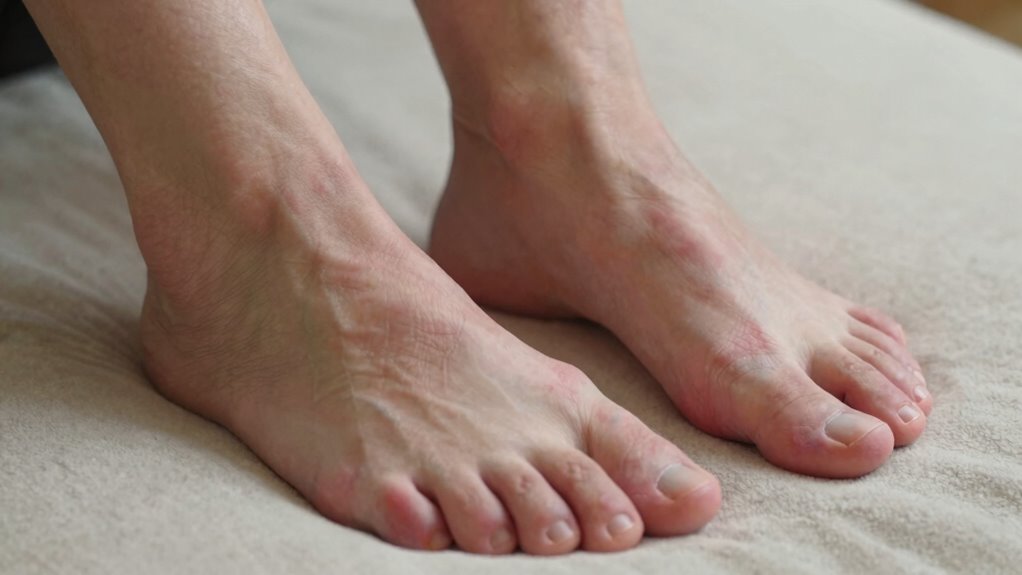

When your hands and feet hurt first, it often signals circulation or nerve problems. Reduced blood flow makes your extremities cold, pale, or bluish, while nerve damage can cause burning, tingling, or numbness. These symptoms can worsen with cold or activity and might indicate underlying issues like peripheral artery disease, diabetes, or nerve damage. Recognizing these signs early is vital. Keep going, and you’ll discover more about what your symptoms might really mean.
Key Takeaways
- Hand and foot pain often indicate circulatory problems, reducing blood flow and causing coldness, numbness, and discomfort.
- Nerve damage from conditions like diabetes or injury can trigger burning, tingling, and stabbing sensations first in extremities.
- Overlapping symptoms such as color changes and tingling suggest underlying issues needing prompt diagnosis and treatment.
- Early pain signals help identify circulatory or nerve issues early, preventing irreversible damage and long-term disability.
- Recognizing these symptoms allows timely intervention to restore circulation, nerve function, and improve overall health.
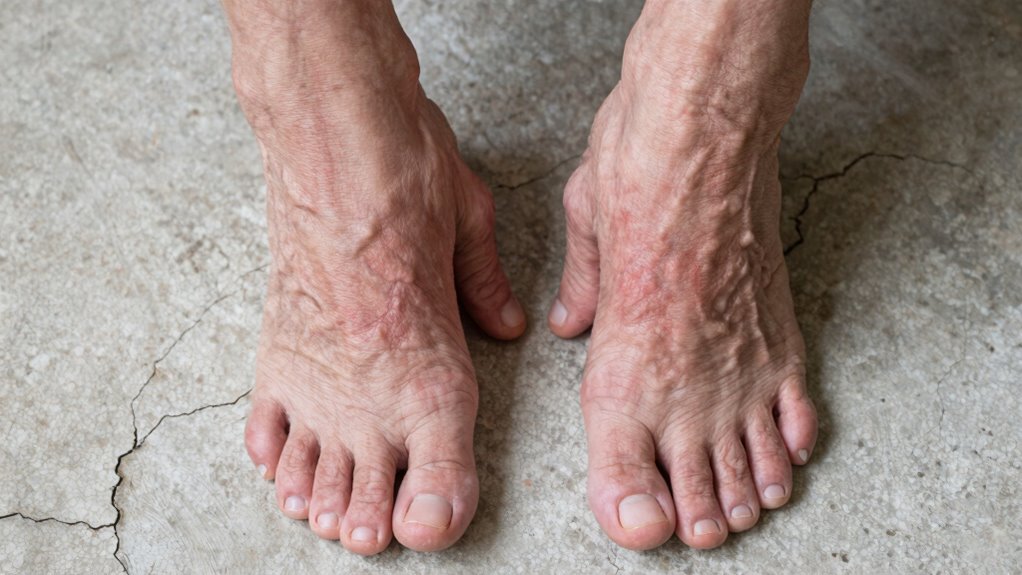
When you injure your hands or feet, it’s essential to address the damage promptly to prevent further harm. Often, pain in these extremities signals underlying issues that aren’t immediately obvious. Two common causes are circulatory issues and nerve damage, both of which can substantially impact your health if left unchecked. Recognizing the signs early can make a big difference in treatment outcomes and help you avoid more serious complications.
Circulatory issues occur when blood flow to your hands and feet is compromised. This can result from conditions like peripheral artery disease, blood clots, or even diabetes-related vascular problems. When blood doesn’t circulate properly, your extremities don’t receive enough oxygen and nutrients, leading to pain, coldness, and numbness. You might notice that your fingers or toes turn pale or bluish, especially in cold environments, and that pain worsens with activity or exposure to cold. Poor circulation can also slow healing, so injuries or cuts on your hands and feet may take longer to recover. Recognizing these symptoms early prompts you to seek medical advice, which can prevent more severe issues like tissue damage or gangrene. Additionally, vascular health plays a crucial role in overall well-being and should be monitored regularly.
Nerve damage is another common cause of pain in your hands and feet. It can result from diabetes (diabetic neuropathy), traumatic injuries, infections, or exposure to toxins. When nerves are damaged, they send abnormal signals or fail to transmit signals properly. This leads to sensations like burning, stabbing pains, tingling, or numbness. You might feel that your hands or feet are swollen or that you’re constantly aware of pins and needles. Nerve damage also affects coordination and balance, increasing the risk of falls or further injury. Early detection is vital because nerve damage can worsen over time, and ongoing damage might become irreversible if not treated promptly.
Both circulatory issues and nerve damage share some overlapping symptoms, making it important to consult a healthcare professional for proper diagnosis. If you notice persistent pain, coldness, numbness, tingling, or color changes in your hands and feet, don’t ignore these signs. Timely intervention can improve your chances of managing or reversing underlying problems. Your healthcare provider might run tests like blood flow studies, nerve conduction tests, or blood sugar checks to determine the root cause. Addressing these issues early can restore circulation, reduce nerve pain, and prevent long-term disability. So, pay close attention to what your hands and feet are telling you—early action can save you from more serious health consequences down the line.
compression gloves for circulation
As an affiliate, we earn on qualifying purchases.
As an affiliate, we earn on qualifying purchases.
Frequently Asked Questions
Can Poor Circulation Cause Hand and Foot Pain?
Yes, poor circulation can cause hand and foot pain. When your circulatory health declines, blood flow to extremities decreases, leading to symptoms like numbness, tingling, and discomfort. This pain is a sign your body isn’t getting enough oxygen and nutrients. To manage this symptom, focus on improving circulation through regular exercise, healthy eating, and avoiding smoking. Proper symptom management can help reduce discomfort and support overall circulatory health.
Are Cold Hands and Feet Always a Sign of a Health Problem?
Cold hands and feet don’t always signal a health problem; they can be a normal response to chilly weather or stress. But if you notice persistent coldness, it might be linked to Raynaud’s phenomenon or vitamin deficiencies affecting circulation. You may feel like your fingers are ice cubes or your toes are frostbitten, which warrants a check-up. Stay mindful of symptoms, and consult a doctor if cold extremities become a regular concern.
How Do I Differentiate Between Injury and Nerve Issues?
You distinguish between injury and nerve issues by paying attention to symptoms. If you experience sharp, localized pain, muscle strain could be the cause. Conversely, a pinched nerve often causes numbness, tingling, or weakness along nerves’ pathways. If pain worsens with movement or persists without obvious injury, see a healthcare professional to get a proper diagnosis. They can determine whether you’re dealing with a pinched nerve or muscle strain and suggest appropriate treatment.
Can Stress or Anxiety Trigger Hand and Foot Discomfort?
Yes, stress and anxiety can trigger hand and foot discomfort. Stress symptoms like muscle tension and hyperventilation affect your nervous system, leading to sensations like tingling, numbness, or pain. Anxiety effects can cause your body to react intensely, sometimes resulting in these discomforts. If you notice this happening during stressful moments, managing your stress through relaxation techniques or seeking support can help reduce your symptoms.
When Should I See a Doctor for Persistent Hand and Foot Pain?
If your hand and foot pain persists beyond a week or worsens, you should see a doctor. Studies show that early warning signs of nerve or circulation issues can lead to more serious conditions if ignored. Don’t dismiss chronic discomfort, especially if accompanied by numbness, tingling, or weakness. Prompt medical attention can help diagnose underlying problems early, preventing lasting damage and ensuring you get appropriate treatment.
neuropathy foot pain relief products
As an affiliate, we earn on qualifying purchases.
As an affiliate, we earn on qualifying purchases.
Conclusion
If your hands and feet start hurting first, it’s like tiny alarm bells ringing in your body’s command center, warning you of something bigger lurking beneath. Ignoring these signals is like trying to silence a thunderstorm with a whisper. Pay attention now—your body’s screaming for help, and if you don’t listen, that pain could escalate into a hurricane, taking over your whole life. Don’t wait—act now before it’s too late!
As an affiliate, we earn on qualifying purchases.
blood circulation booster devices
As an affiliate, we earn on qualifying purchases.
As an affiliate, we earn on qualifying purchases.






![Bukit Bintang Hicks Flat: DBKL Orders Cleanup After Viral Video Exposes Dirty Conditions [WATCH] - NST Online](https://koldfaste.com/wp-content/uploads/2026/08/bukit-bintang-hicks-flat-dbkl-orders-cleanup-after-viral-video-exposes-dirty-con-featured-260x140.jpg)