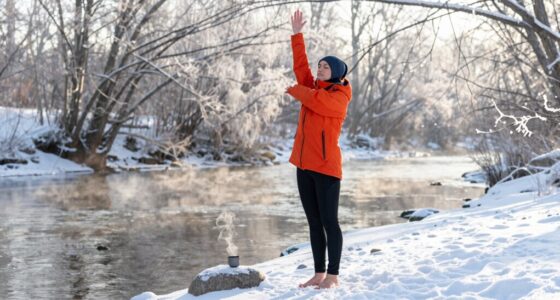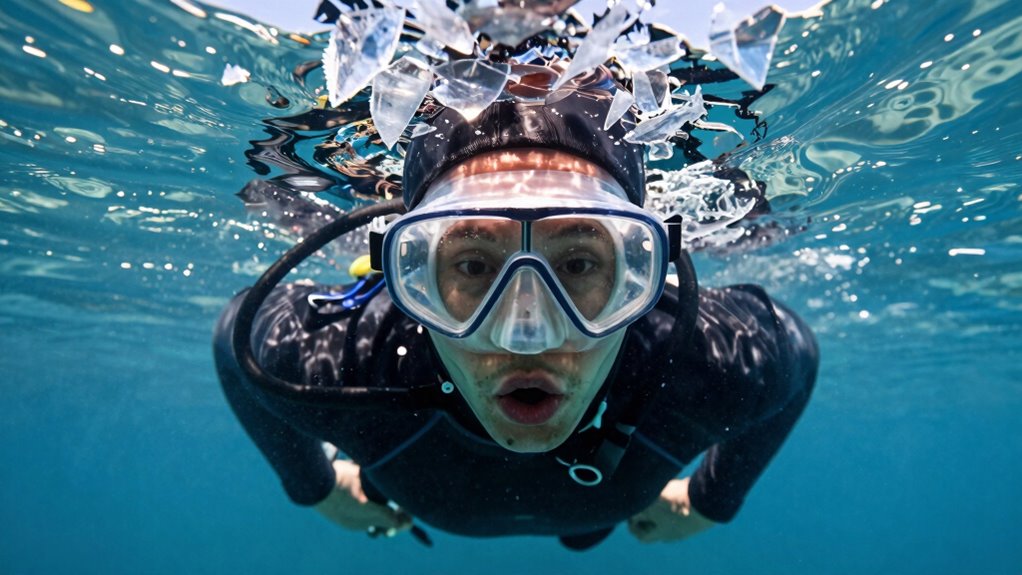

Breath-holding in cold water is risky because cold shock triggers involuntary gasps, rapid breathing, and increased heart rate, raising the chance of drowning or hypoxia. Sudden immersion can cause disorientation, hypothermia, or blackouts, especially if you push limits or ignore warning signs. Safer practices include gradual exposure, monitoring your responses, and never swimming alone. To stay safe and understand the best approach, know what to watch for and how to prepare properly.
Key Takeaways
- Cold water triggers the dive reflex, increasing risks like cold shock, hypoxia, and sudden blackout if not practiced safely.
- Pushing breath-hold limits without proper preparation and supervision significantly raises the danger of shallow water blackout.
- Recognizing signs of cold shock and hypothermia helps prevent panic, disorientation, and drowning during cold water breath-holding.
- Gradual acclimation, safety protocols, and monitoring body responses are essential for safer cold water breath-holding practices.
- Avoid rushing or ignoring warning signs; trained supervision and proper techniques greatly reduce risks in cold water breath-holding.
Why Cold Water Makes Breath-Holding More Dangerous
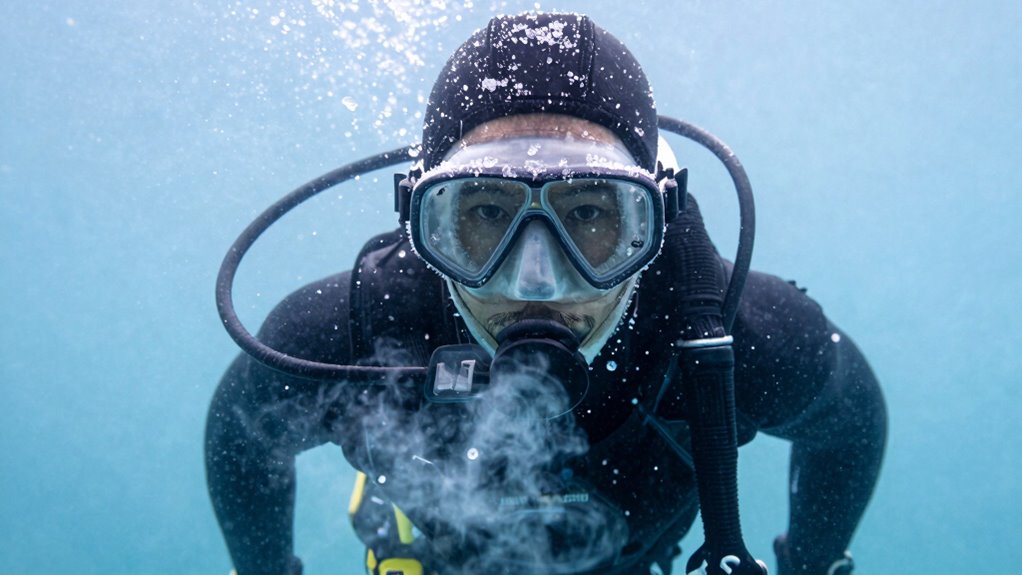
Cold water markedly increases the risks associated with breath-holding because it causes your body to react quickly and unpredictably. Many cold water myths suggest that cold exposure can improve breath control or lung capacity, but these breath hold myths are dangerous misconceptions. Instead, cold water triggers a reflex called the mammalian dive reflex, which slows your heart rate and constricts blood vessels, making it harder to breathe. This sudden physiological response can lead to shallow breathing or involuntary gasping, heightening the risk of panic or blackout. Believing in cold water myths might make you underestimate these dangers, but in reality, cold water amplifies your body’s stress response, making safe breath-holding much more challenging and risky. Understanding the physiological responses is crucial for recognizing how cold water impacts your safety during breath-holding. Additionally, cold water can cause rapid body temperature drops, which can further impair your physical and cognitive functions, increasing the danger. Recognizing the dangerous effects of cold water on the body can help you better assess the risks involved. Moreover, the activation of the mammalian dive reflex can lead to unexpected physiological changes that complicate safety measures during cold water exposure. Being aware of your body’s natural reflexes can help you better understand the potential dangers of cold water immersion.
How Cold Water Affects Your Breathing and Heart Rate
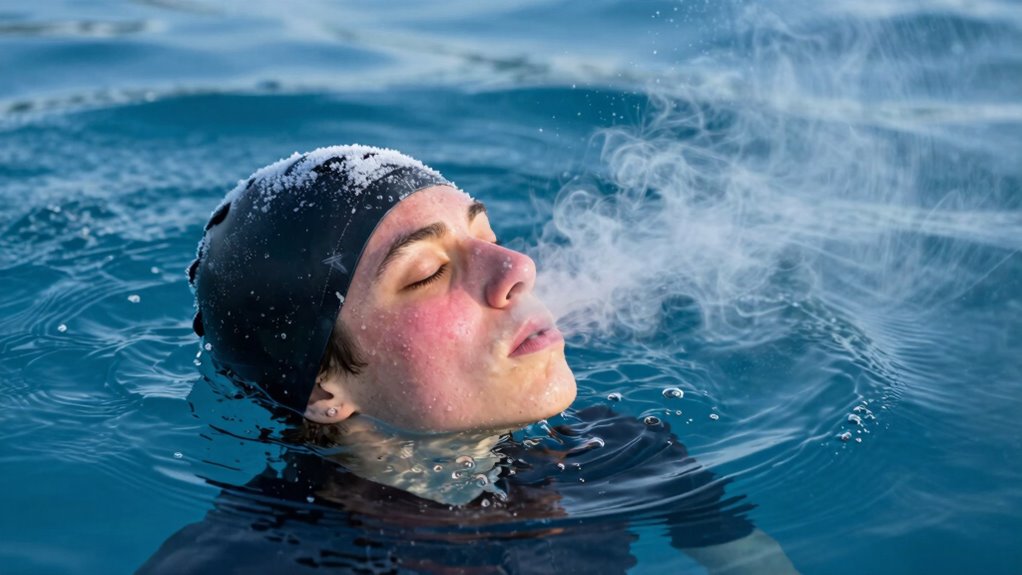
When you hit cold water, your body reacts quickly through the Cold Water Shock Response, causing you to gasp involuntarily. This sudden change also alters your breathing reflexes and can make your heart race or slow down unexpectedly. Understanding these reactions helps you stay safer and better prepared in icy conditions.
Cold Water Shock Response
Have you ever wondered how sudden immersion in icy water can cause your body to react so intensely? This is the cold water shock response, a key part of cold water physiology. When you hit cold water unexpectedly, your breathing rate spikes, and your heart races. This reflex is a survival mechanism designed to prevent hypothermia, but it can also be dangerous, increasing the risk of inhalation or drowning. Breath hold training can help you learn to control these reactions over time, but the initial shock remains powerful. It’s critical to understand that this response is automatic and happens within seconds, making it essential to approach cold water immersion with caution, especially if you’re unprepared or inexperienced. Additionally, understanding the role of the cardiovascular system in cold water response can help you better prepare for safe immersion. Recognizing how peripheral blood flow changes during cold exposure can aid in managing the body’s reactions effectively. Moreover, being aware of your body’s natural responses can help you stay calmer and more controlled during cold water encounters. Knowing how vasoconstriction influences blood circulation can also be crucial in understanding your body’s reaction to cold water exposure. Gaining knowledge of cold shock mechanisms can further improve your safety during sudden immersions.
Breathing Reflex Changes
As you enter icy water, your body’s breathing and heart rate undergo rapid changes driven by the cold water’s influence on your nervous system. Cold exposure initially triggers a gasp reflex, intensifying your respiratory reflexes. Over time, your body begins cold adaptation, dampening these reflexes to conserve heat. During this process, you may notice these effects:
- Increased sensitivity of respiratory reflexes, prompting rapid, shallow breaths.
- Sudden hyperventilation as the body reacts to the cold shock.
- Gradual suppression of reflexes, easing breathing difficulty.
- Stabilization of heart rate as cold adaptation progresses.
These changes reflect your body’s effort to protect itself, but they also underscore the importance of understanding breathing reflexes when cold water immersion. Proper awareness can reduce risks during breath-hold activities.
Heart Rate Fluctuations
Entering cold water immediately prompts your heart rate to fluctuate as your body responds to the sudden temperature drop. This reaction is part of the cold shock response, which causes a rapid increase in heart rate and blood pressure. You’ll notice increased heart rate variability as your body tries to adapt, but this can also put stress on your cardiovascular system. As your body adjusts, your heart rate may slow down, especially if you stay in the water longer. These fluctuations are natural, but intense or sudden changes can be risky, particularly for people with heart conditions. Understanding how cold shock influences your heart rate helps you recognize the importance of gradual immersion and proper safety measures to reduce potential dangers. Free Floating can also influence how your body reacts to cold water immersion and should be considered when evaluating safety. Recognizing heart rate fluctuations during cold water exposure is essential for preventing adverse health events, especially in vulnerable individuals. Additionally, being aware of cardiovascular responses can help in designing safer cold exposure protocols. Moreover, monitoring your heart rate variability can offer insights into your body’s adaptation process and overall safety during cold water exposure.
Common Mistakes That Increase Cold Water Breath-Holding Risks
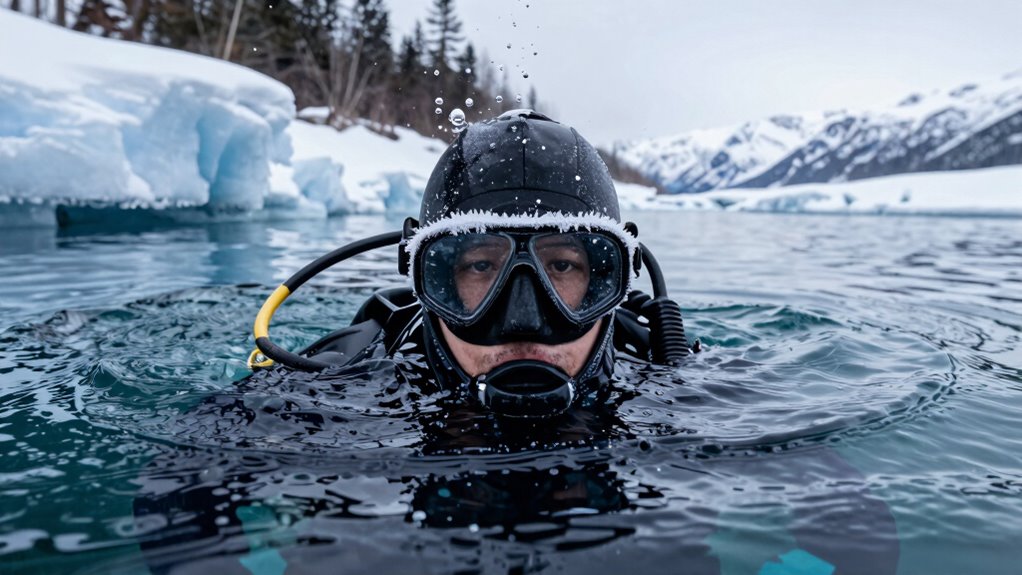
Many people overlook how cold water triggers strong reactions that can be dangerous if ignored. Overestimating your breath-hold ability without proper safety measures puts you at risk. Recognizing these common mistakes can help you stay safer and avoid serious issues. Being aware of Gold IRA Markets and their importance in financial planning can also serve as a reminder of the value of proper preparation and knowledge before attempting risky activities. Additionally, understanding piercing care and hygiene is crucial to preventing infections that could complicate your safety during such activities. Proper knowledge of pool hydraulics can also help prevent accidents caused by water movement and pressure changes in cold conditions. Furthermore, understanding insulated jackets for winter can help you stay warm and reduce the shock response during cold water exposure, decreasing the risk of hypothermia. Incorporating water resistance technology found in top waterproof running watches can assist you in monitoring conditions and maintaining safety during cold water exposure.
Ignoring Cold Responses
Ignoring your body’s cold responses can considerably increase the risks of breath-holding in cold water. When you neglect signs like shivering or numbness, you hinder your cold adaptation process and weaken your mental resilience. Recognizing these signals helps you adjust your behavior, preventing dangerous situations. A lack of awareness about creative storytelling for branding can also diminish your ability to connect emotionally with your audience, increasing risk in communication. To stay safe, consider these critical points: 1. Fail to notice early cold responses, risking hypothermia. 2. Ignore shivering as a sign to limit exposure. 3. Underestimate how quickly cold impacts your decision-making. 4. Neglect building mental resilience through gradual cold adaptation. Additionally, overlooking the importance of environmental considerations like proper campsite selection and minimal impact can further compromise safety. Being aware of your surroundings and cold response cues is essential for safe cold water exposure. Recognizing the significance of individual differences in cold tolerance can help tailor your approach and reduce risk. Furthermore, understanding how dreams of deceased loved ones can reflect emotional processing may help you stay grounded and aware of your mental state during cold exposure.
Overestimating Breath-Hold Time
Have you ever overestimated how long you can hold your breath in cold water? Many fall for cold water myths that suggest longer holds are always safer or more impressive. These breath hold myths can lead you to push beyond your limits, increasing risk. Cold water reduces your breath-hold capacity quickly, and assuming you can beat your personal best without proper training or safety measures is dangerous. Overestimating your ability can cause you to stay submerged too long, risking shallow water blackout or cold shock. Remember, your body’s response in cold water is unpredictable, and it’s *vital* to respect your actual limits. Never rely on myths or misconceptions; always prioritize safety and listen to your body instead of chasing unrealistic breath-hold times.
Lack of Safety Measures
Failing to implement proper safety measures markedly increases the risks associated with cold water breath-holding. Without adequate emergency preparedness, you leave yourself vulnerable to dangerous situations. Supervision importance cannot be overstated; having a trained observer nearby can prevent accidents and respond swiftly if issues arise. To reduce risks, consider these safety essentials:
- Always have a trained spotter present during breath-holding sessions.
- Perform safety checks, including weather and water conditions, before engaging.
- Keep rescue equipment readily accessible, such as a reaching stick or flotation device.
- Establish clear protocols for emergencies, including quick removal from the water and first aid procedures.
- Being aware of water temperature and its effects can help prevent cold shock and hypothermia. Recognizing the signs of hypothermia is crucial for prompt intervention and safety.
Neglecting these safety measures substantially heightens your vulnerability to cold water hazards.
Recognizing Signs of Blackout and Hypothermia in Cold Water
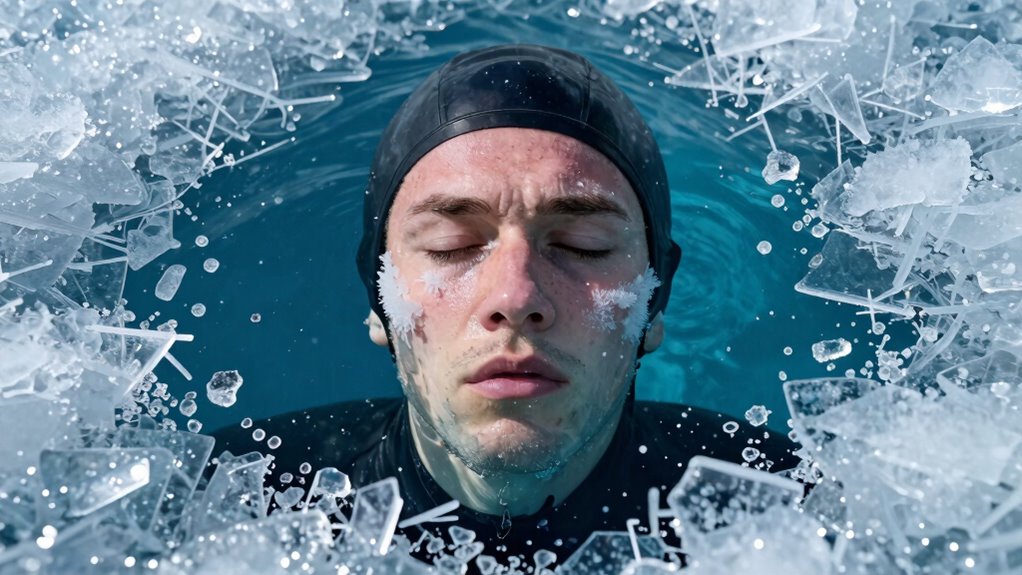
Recognizing the signs of blackout and hypothermia in cold water is crucial for your safety. As your body cools, you might experience cold water hallucinations—visions or sensations that seem real but are misleading, signaling your brain is struggling to function properly. Hypothermia slows your responses and impairs judgment, making it harder to recognize danger. Watch for signs like shivering, confusion, or loss of coordination. Blackout can occur suddenly, with loss of consciousness or disorientation. Your thermal insulation, such as a wetsuit, plays a key role in delaying hypothermia, but it can’t prevent it indefinitely. If you notice any of these signs, get out of the water immediately. Recognizing these symptoms early can prevent serious injury or drowning.
How Cold Temperatures Reduce Your Breath-Hold Capacity
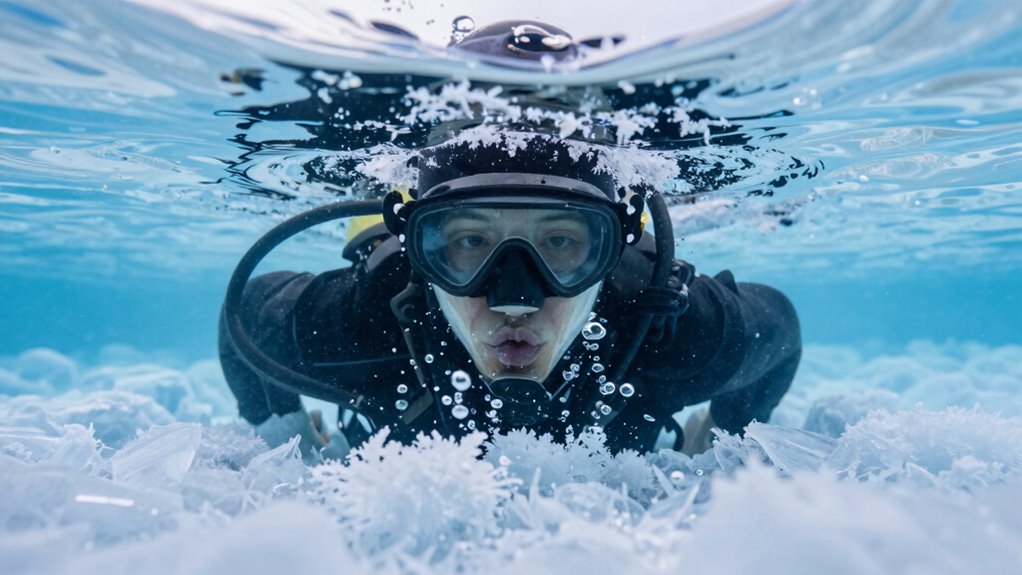
Cold temperatures considerably reduce your breath-hold capacity by causing your body to react quickly to the cold shock. This reaction triggers immediate physiological responses that hinder your ability to hold your breath. Your body’s cold adaptation mechanisms, such as vasoconstriction, limit oxygen flow to extremities, forcing you to breathe more rapidly. To improve breath control in cold water, focus on these key factors:
- Rapid increase in breathing rate due to cold shock reflex.
- Reduced lung compliance, making it harder to take deep breaths.
- Increased oxygen consumption as your body works to stay warm.
- Stress response that hampers your ability to relax and prolong breath-hold.
Understanding these effects helps you recognize why cold water diminishes your breath-hold capacity and emphasizes the importance of proper preparation.
Top Safety Tips for Cold Water Breath-Hold Practice
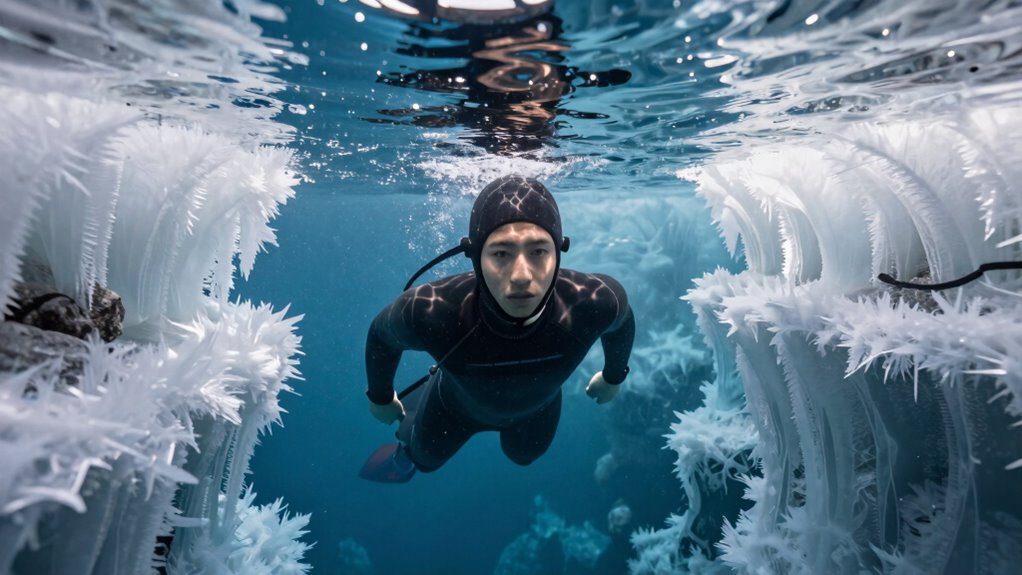
Practicing breath-hold in cold water demands strict safety measures to guarantee a safe experience. Always practice with a buddy who understands your limits and can assist in emergencies. Before diving, warm up your body and gradually acclimate yourself to cold water to reduce shock. Use proper breath hold techniques, such as diaphragmatic breathing, to maximize oxygen efficiency and avoid hyperventilation. Stay relaxed and avoid pushing your limits too quickly—listen to your body’s signals. Never hold your breath alone, especially in cold water, where the risk of cold shock and shallow water blackout increases. Establish clear signals and safety protocols before each session. Following these safety tips helps you enjoy cold water breath-hold practice while minimizing potential risks.
Essential Equipment and Precautions for Cold Water Swimming
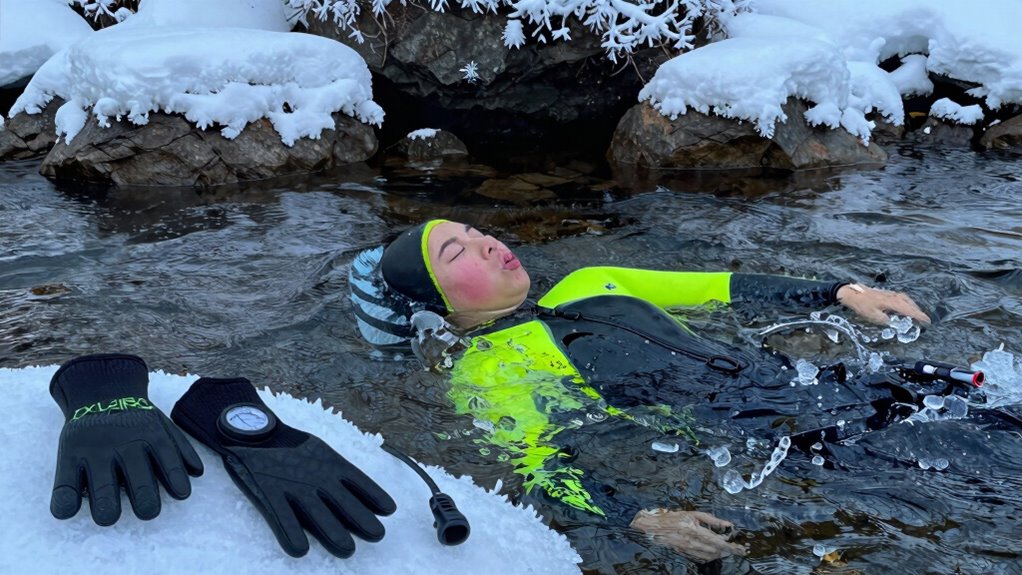
To guarantee your safety and comfort during cold water swimming, having the right equipment and taking proper precautions is essential. Proper gear helps with hypothermia prevention and thermal protection, making your experience safer.
Ensuring safety in cold water swimming requires proper gear and precautions for comfort and hypothermia prevention.
- Wetsuit or thermal swimwear: Provides insulation, reducing heat loss and maintaining core temperature.
- Swim cap: Keeps your head warm, as significant heat escapes through the scalp.
- Neoprene gloves and booties: Protect extremities from cold, preventing frostbite and improving thermal protection.
- Safety tow float: Enhances visibility and offers buoyancy support, ensuring you stay afloat comfortably.
Always check your equipment for proper fit and integrity, and never swim alone. These precautions help you enjoy cold water swimming safely while minimizing risks.
Knowing When to Exit and How to Do It Safely
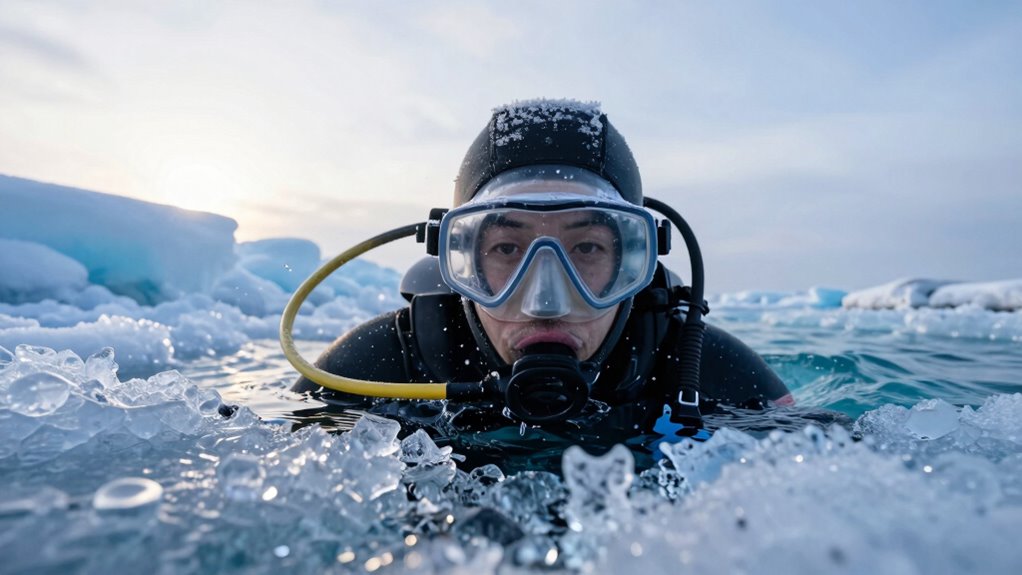
Knowing when to exit the water is crucial for your safety, especially as fatigue, cold, or discomfort take hold. Recognize clear safety signals, such as persistent shivering, numbness, or loss of coordination, which indicate it’s time to leave. Develop effective exit strategies beforehand, like planning your route to the shore or boat, so you can exit quickly when needed. Don’t ignore warning signs or push beyond your limits; cold water can impair judgment and physical ability rapidly. Stay alert to your body’s responses and maintain awareness of your surroundings. When you notice any safety signals, calmly and confidently exit the water, avoiding panic or rushing. Prioritizing timely exits reduces risks and helps keep your cold water experience safe and enjoyable.
Gradually Building Your Cold Water Breath-Hold Skills

Building your cold water breath-hold skills should be a gradual process that focuses on safety and consistency. Start with controlled breath hold techniques, gradually increasing duration as your comfort grows. Incorporate hypoxic training carefully to improve your tolerance without pushing limits prematurely. To build skill effectively, consider these steps:
- Practice basic breath-hold techniques daily, emphasizing relaxed breathing.
- Use incremental exposure, extending your breath-hold times slowly.
- Incorporate breath-hold exercises in warm water first, then progress to cold water.
- Monitor your body’s response diligently to avoid hypoxia risks.
When to Seek Expert Guidance for Cold Water Breath-Hold Activities
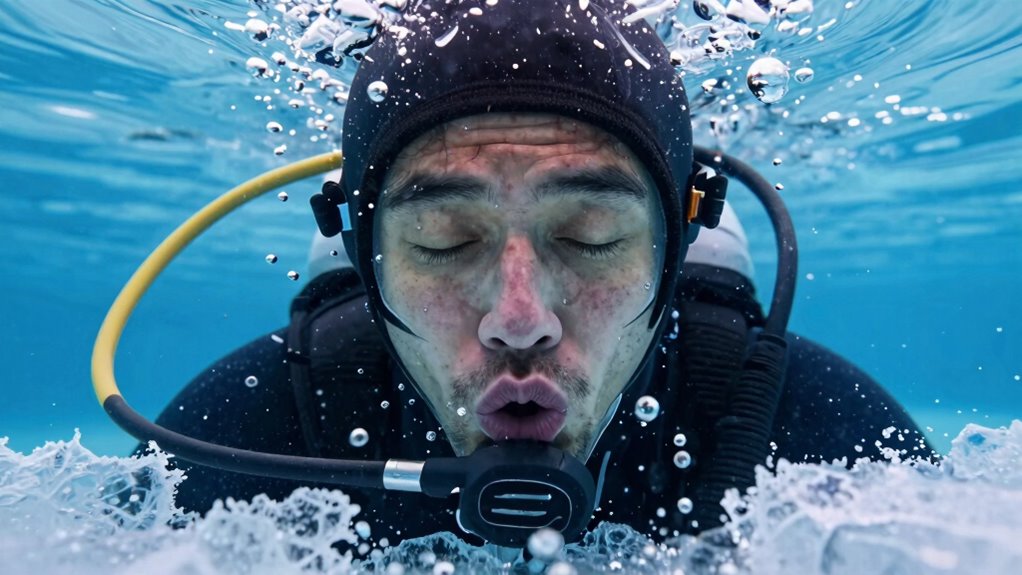
While practicing cold water breath-hold techniques can be rewarding, you should seek expert guidance whenever you experience persistent discomfort, dizziness, or difficulty controlling your breathing. An expert consultation is vital to guarantee your safety and proper technique. If you notice signs of distress or if breath-holding becomes uncomfortable, a professional can perform a thorough risk assessment, identifying potential hazards and tailoring guidance to your skill level. Avoid pushing through warning signs alone, as cold water activities carry risks that require careful evaluation. Seeking expert advice helps you learn safe practices, prevent accidents, and build confidence gradually. Remember, expert guidance is a crucial step in safely enjoying cold water breath-hold activities and avoiding unnecessary dangers.
Frequently Asked Questions
How Does Cold Water Affect My Body’s Oxygen Consumption?
When you immerse yourself in cold water, your body’s oxygen demand increases as your metabolic rate rises to maintain core temperature. Cold stimulates your sympathetic nervous system, causing vasoconstriction and rapid breathing, which boosts oxygen consumption. This heightened metabolic activity means you burn through oxygen faster, making breath-holding riskier. Staying relaxed and limiting exposure helps manage oxygen needs, reducing the risk of hypoxia during cold water immersion.
Can Cold Water Breath-Holding Improve Over Time Safely?
Did you know that experienced breath-hold divers can double their time with proper training? Yes, cold water breath-hold improvement can be safe if you focus on psychological adaptation and gradual breath hold training. By consistently practicing, you enhance your body’s tolerance and comfort, reducing risks. Always listen to your body, avoid pushing beyond limits, and consider professional guidance to make sure of safe progress over time.
What Are the Signs of Cold Shock During Breath-Hold Activities?
During breath-hold activities in cold water, you’ll notice signs of cold shock such as rapid breathing, increased heart rate, and a panic response. You might feel sensations of numbness or a sudden urge to gasp, which can lead to hyperventilation or loss of control. Recognizing these signs early helps you stay safe by controlling your breathing, avoiding panic, and gradually acclimating to cold water conditions.
Is It Safe to Practice Breath-Holding Alone in Cold Water?
Practicing breath-holding alone in cold water isn’t safe because solo safety risks increase, especially with cold shock. You need to be mentally prepared to handle unexpected reactions, like panic or involuntary inhalation. Always prioritize your safety by having a trained buddy nearby, and never push your limits without proper knowledge. Cold water can be unpredictable, so stay cautious, stay alert, and make certain you’re well-prepared mentally before attempting solo breath-holding.
How Do I Prevent Cold Water Narcosis During Extended Breath-Holds?
To prevent cold water narcosis during extended breath-holds, focus on your cold water adaptation by gradually increasing exposure. Use proper breathing techniques, like deep, controlled breaths before submersion, to optimize oxygen levels. Stay relaxed and avoid pushing your limits too quickly. Consistent cold water practice helps your body adapt, reducing narcosis risk. Always listen to your body, and never hold your breath alone in cold water.
Conclusion
Staying safe in cold water requires respect and preparation. Don’t bite off more than you can chew, and listen to your body’s signals. By understanding the risks, using proper gear, and knowing when to call it quits, you can enjoy the water without risking everything. Remember, safety isn’t just a precaution — it’s your lifeline. Protect yourself, stay vigilant, and keep your head above water — literally and figuratively.