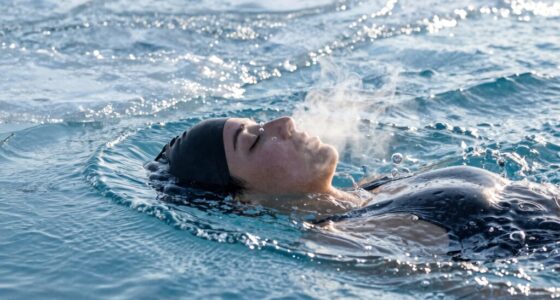

After cold plunges, track how your mental clarity and focus improve, noting your mood shifts and physical sensations during and afterward. Observe your emotional resilience by recording reactions to discomfort, stress levels, and how you handle fear or resistance. Be specific about your thoughts, feelings, and physical responses to identify patterns over time. Consistently noting these changes will help you uncover the mindset gains you’re building—keep exploring to learn how consistency deepens your growth.
Key Takeaways
- Record mental clarity, focus, and decision-making improvements immediately after each plunge.
- Note emotional responses, stress levels, and resilience shifts over time.
- Track physical sensations and physiological reactions during and post-immersion.
- Document mood changes and emotional strength development across days or weeks.
- Use detailed observations to recognize patterns and measure progress in mindset gains.

After a cold plunge, your mind is often sharp and clear, making it the perfect time to capture your thoughts and experiences through journaling. The immediate aftermath of stepping out of icy water can leave you feeling invigorated and focused—an ideal moment to reflect on your mental clarity and emotional resilience. When you journal right after a cold plunge, you’re tapping into a heightened state of awareness, where your mind is more receptive and your emotions are more tangible. This clarity helps you identify what thoughts are most prominent and how your mood shifts during and after the cold exposure. Incorporating mindfulness techniques into your journaling can further enhance your awareness and deepen your insights.
Tracking your mental clarity is essential because it reveals how consistent cold plunges influence your cognitive function over time. You might notice that after each plunge, your ability to concentrate improves or that you’re better at making decisions without second-guessing yourself. Jot down how you feel immediately afterward—perhaps you’re more alert, or maybe you experience a calming sense of focus. Over days and weeks, these notes enable you to see patterns and measure your progress, reinforcing your commitment to cold exposure as a tool for mental sharpening.
Tracking your cold plunges shows how they boost focus and decision-making over time.
In addition to mental clarity, journaling helps you monitor your emotional resilience. Cold plunges can be challenging, pushing you to confront discomfort and fear. When you record your reactions, you gain insight into how well you’re developing emotional strength. Do you notice a decrease in anxiety or stress during cold exposure? Are you better able to manage your feelings afterward? Writing about your emotional responses allows you to recognize small victories and areas for growth, fostering a mindset that embraces discomfort as a pathway to resilience.
Be specific in your journaling. Describe your physical sensations, thoughts, and feelings during the plunge. Did you experience resistance or excitement? How did your breath change? Afterward, note your mood—did you feel energized, calm, or even a bit irritable? Tracking these details helps you understand the nuanced effects of cold immersion on your mental and emotional state. Over time, you may find that your ability to stay composed during stressful situations outside the water improves, a direct benefit of building emotional resilience through this practice.
Ultimately, journaling after cold plunges isn’t just about recording your experiences; it’s a strategic way to cultivate mental clarity and emotional resilience. By consistently tracking how you feel before, during, and after the cold exposure, you create a personalized map of your growth. This process empowers you to refine your approach, celebrate progress, and deepen your understanding of how cold plunges contribute to your mindset. In doing so, you turn a simple act of immersion into a powerful tool for mental and emotional development.
Frequently Asked Questions
How Soon After a Cold Plunge Should I Start Journaling?
You should start journaling immediately after your cold plunge to capture authentic feelings and thoughts. Using effective timing strategies, you can jot down your physical and mental responses while they’re fresh. Incorporate journaling techniques like quick bullet points or prompts focused on mindset shifts. This immediate reflection helps you track progress, recognize patterns, and reinforce positive changes, making your journaling sessions more impactful for overall mindset gains.
Is It Better to Journal Before or After Cold Exposure?
Pre-journaling primes your mind, providing clarity before cold exposure, while post-exposure reflection offers real-time insights into your emotional and physical responses. You’ll benefit more from journaling after your cold plunge, capturing fresh feelings and thoughts, which helps track progress and mindset gains. This timing allows you to process sensations and shifts, making your journaling more meaningful and motivating for future cold challenges.
What Specific Mindset Benefits Can I Expect From Journaling?
You can expect increased self-awareness and better emotional regulation from journaling after cold plunges. As you reflect on your experience, you’ll notice patterns in your thoughts and feelings, helping you understand yourself more deeply. This practice also fosters resilience, as you learn to manage stress and discomfort better. Over time, journaling reinforces a mindset of growth and calmness, making it easier to face challenges with clarity and confidence.
Can Journaling Enhance Physical Recovery From Cold Plunges?
Journaling after cold plunges can indeed enhance your physical recovery by boosting mental clarity and emotional balance. As you reflect, you might notice patterns that help you optimize recovery strategies, like breathing techniques or rest periods. This mental clarity keeps you focused, while emotional balance reduces stress, both of which support faster healing. Over time, journaling becomes a crucial tool, making your recovery more efficient and your cold plunge practice more rewarding.
Are There Any Prompts to Improve Emotional Resilience Through Journaling?
Yes, journaling can boost your emotional resilience by increasing emotional awareness. You should prompt yourself to reflect on recent challenges, identifying your emotional reactions and coping strategies. Write about moments where you demonstrated resilience and areas for growth. Focus on recognizing patterns, strengths, and setbacks, which helps you build resilience. Regularly practicing these prompts deepens your understanding of yourself, fostering a stronger mindset to handle future adversity effectively.
Conclusion
By journaling after cold plunges, you reveal a superpower, transforming your mind into a fortress of resilience and clarity. Each note you jot down acts like a secret weapon, sharpening your focus like a laser beam and boosting your mood to superhero levels. Over time, you’ll feel unstoppable—like you’ve harnessed the icy depths of a frozen tundra and turned it into your personal power source. Keep tracking, and watch your mindset become an unstoppable force of nature.