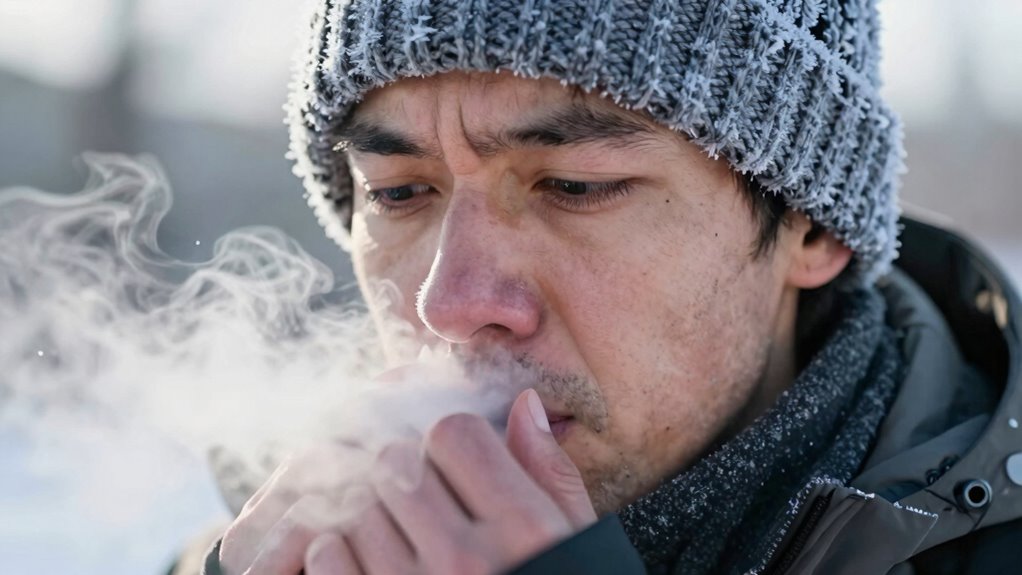

Nasal breathing in cold weather is tough because low temperatures make your nasal passages uncomfortable, causing your body to restrict airflow to conserve heat. This can lead to mouth breathing, which doesn’t warm or humidify the air well. To improve, you can practice slow, deep nasal breaths and gradually strengthen your nose’s ability to handle cold air. Keep going, and you’ll discover more ways to build cold resilience and breathe easier outdoors.
Key Takeaways
- Cold air causes nasal tissues to constrict, making nasal breathing uncomfortable and harder in low temperatures.
- Initial cold exposure triggers reflexes that favor mouth breathing, reducing nasal airflow.
- Cold adaptation gradually improves nasal tissues’ ability to warm and humidify air, easing breathing in winter.
- Consistent nasal breathing exercises strengthen nasal muscles, increasing tolerance to cold air over time.
- Patience and gradual exposure are essential to train your body to prefer nasal breathing in cold conditions.
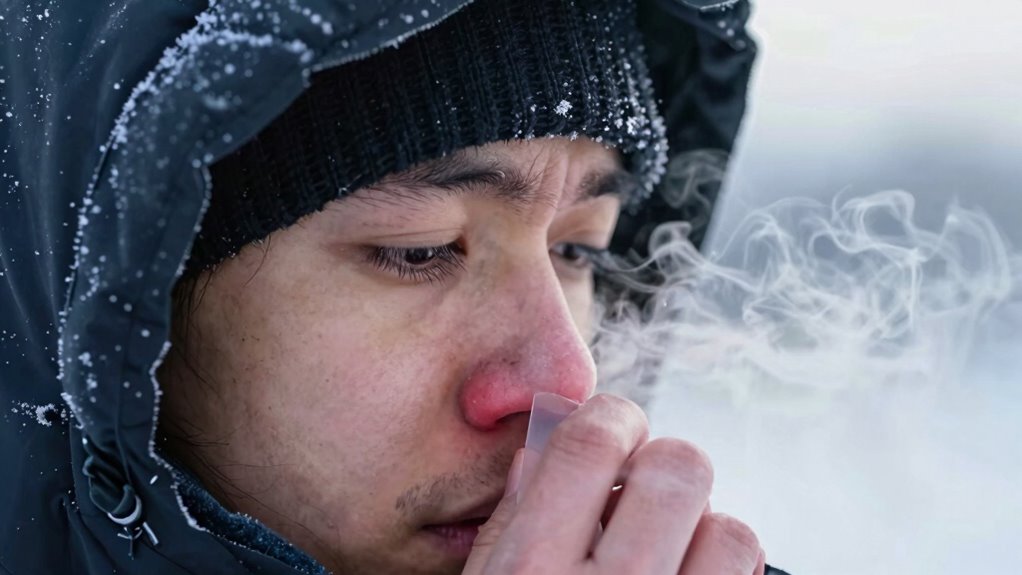
When it’s cold outside, breathing through your nose becomes especially important. Your nasal passages are designed to warm, humidify, and filter the air you breathe in, which is essential in chilly weather. However, cold adaptation can make nasal breathing feel more difficult until your body gets used to it. In cold conditions, your body instinctively tries to avoid losing heat, and that often means breathing through your mouth. But when you rely less on your nose, you’re missing out on the benefits of nasal breathing, such as filtering out pollutants and pathogens and maintaining ideal humidity levels. The challenge lies in training your body to adapt so that your nasal passages can handle cold air more comfortably. Cold adaptation is a process your body undergoes over time, helping your nasal passages become more resilient to low temperatures. Initially, the cold air causes discomfort, making you want to breathe through your mouth to avoid the sensation of chilled air passing through your nose. This reflex is tied to the sensitivity of your nasal passages, which respond to cold by constricting blood vessels to reduce heat loss. Over repeated exposure, however, your nasal tissues gradually adapt, and your nasal passages become more efficient at warming the air even in low temperatures. This adaptation not only improves your comfort but also enhances your overall respiratory health during winter months. Consistent practice and patience are essential for your body to develop this cold tolerance. Training yourself to breathe through your nose in cold weather involves conscious effort and regular exercises. Start by consciously closing your mouth and gently inhaling through your nose during daily activities, even when it feels uncomfortable. Over time, your nasal passages will become more accustomed to cold air, making nasal breathing feel more natural. Breathing exercises, such as slow, deep nasal inhales and exhales, can strengthen your nasal muscles and improve airflow. Additionally, focusing on maintaining good posture and opening up your nasal passages with techniques like gentle nasal clearing can facilitate easier nasal breathing in cold conditions. Remember that cold adaptation is an ongoing process that requires dedication and gradual exposure. It’s important to understand that nasal passages are adaptable, but patience and persistence are key. Your body needs time to build cold tolerance, especially if you’re used to mouth breathing. By gradually exposing yourself to cold air and reinforcing nasal breathing habits, you’ll notice less discomfort and better airflow through your nose. Ultimately, training your nasal passages to handle cold temperatures not only makes breathing more comfortable but also supports your respiratory health and endurance during winter activities. With consistent effort, nasal breathing in cold weather will become more natural, helping you stay healthier and more resilient against the winter chill.
Frequently Asked Questions
Does Nasal Breathing Improve Cold Weather Endurance?
Yes, nasal breathing can improve cold weather endurance. By practicing breathing techniques and focusing on cold adaptation, you strengthen your respiratory system and enhance oxygen efficiency. Over time, your body adapts, making it easier to breathe through your nose in cold conditions. This not only helps maintain core temperature but also boosts stamina, allowing you to perform longer in chilly environments.
Can Nasal Breathing Prevent Colds or Respiratory Infections?
Research shows nasal breathing can boost immune support, reducing your risk of colds and respiratory infections by filtering pathogens. When you breathe through your nose, you improve airflow and humidity, which helps manage allergies and irritants. While it can’t guarantee prevention, adopting nasal breathing can strengthen your defenses, especially during cold weather, making you less vulnerable to illness. Incorporate this habit for better respiratory health and overall resilience.
How Long Does It Take to Adapt to Cold Nasal Breathing?
It typically takes a few weeks of consistent breathing training to adapt to cold nasal breathing. During this cold adaptation period, your body learns to handle lower temperatures more efficiently, reducing discomfort. To speed up the process, focus on gradual exposure and mindful breathing exercises. Stay patient, and with regular practice, you’ll notice improved comfort and better resilience against cold air while nasal breathing.
Are There Specific Exercises to Enhance Nasal Breathing in Cold Environments?
Yes, you can enhance nasal breathing in cold environments with specific exercises like nasal dilation exercises and breath hold training. Practice nasal dilation exercises to open your nasal passages and improve airflow. Incorporate breath hold training to strengthen your breathing muscles and increase tolerance to cold air. Consistently doing these exercises helps your body adapt, making it easier to breathe through your nose in cold conditions over time.
Is Nasal Breathing Suitable for People With Nasal Obstructions?
Nasal breathing for someone with nasal obstructions can be like trying to sail against the wind. If you have nasal congestion or sinus issues, it might be uncomfortable or less effective, but not impossible. Consulting a healthcare professional is wise, as they can suggest treatments or exercises to improve airflow. While nasal breathing may be challenging, with proper care, you can still find ways to breathe more comfortably through your nose.
Conclusion
So, stay steadfast and soothe your struggles with steady nasal breathing. By practicing patience and persistence, you’ll peel back the cold’s challenge and perfect your breath. Embrace the icy inhale, ignite your inner resilience, and imagine icy air transforming into invigorating inspiration. With consistent effort, you’ll conquer the cold, cultivate calm, and crown your efforts with clear, confident breathing—because every exhale empowers your endurance and elevates your experience.