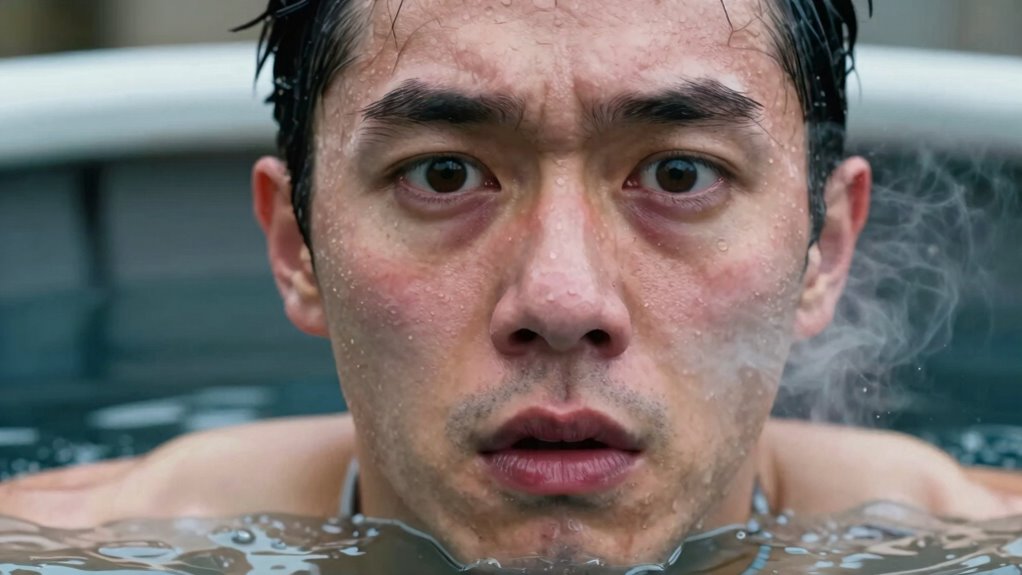

When you jump into a cold plunge, your face and jaw tighten because your body reacts automatically to cold exposure. This is a protective reflex triggered by the sudden cold, causing your muscles to contract to preserve heat and protect essential organs. Blood vessels constrict, reducing blood flow to the surface of your skin and muscles, which makes them feel tight and stiff. If you keep exploring, you’ll discover how your body adapts to these responses over time.

Get home appliances delivered free with Prime
- Fast, free delivery on millions of items
- Prime Video, Amazon Music and more included
- Member-only deals all year
Key Takeaways
- Cold exposure triggers involuntary muscle reflexes that cause face and jaw tightening to protect against heat loss.
- The body’s sympathetic nervous system responds by contracting muscles to conserve warmth during cold plunges.
- Blood vessel vasoconstriction reduces blood flow to the face and jaw, leading to stiffness and tightness.
- These reactions are automatic protective responses that help preserve core body temperature.
- Regular cold exposure can lessen these reflexes over time, making the tightening less noticeable.
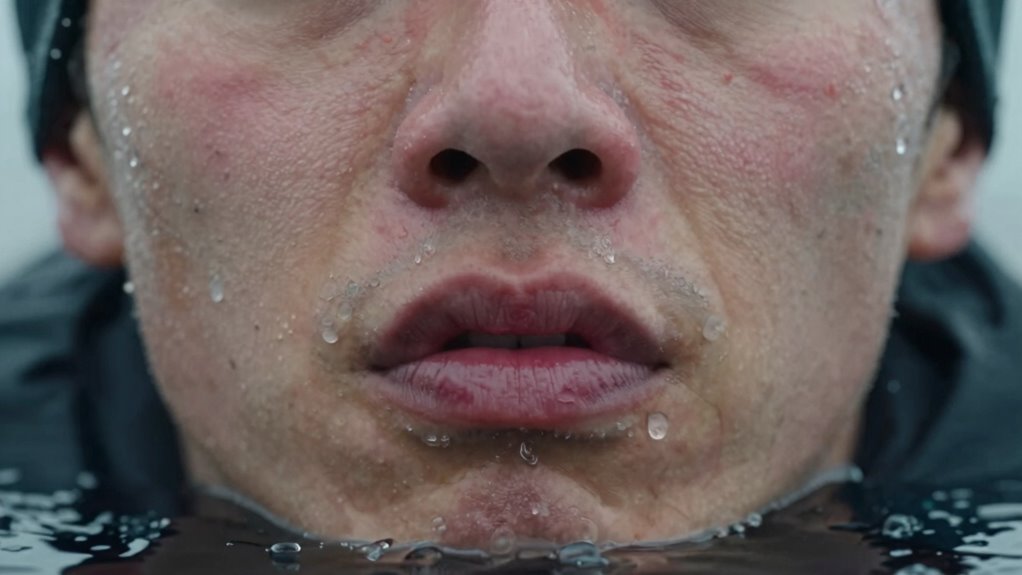
When you take a cold plunge, you might notice your face and jaw tighten unexpectedly. This reaction is your body’s way of responding to the sudden drop in temperature. Your muscles react instinctively, triggering what’s known as muscle reflexes. These reflexes are involuntary contractions that help protect your body from the cold. When exposed to cold water, your facial muscles, including those around your jaw, contract sharply, creating that tight feeling. It’s a natural reflex designed to preserve body heat and prevent heat loss.
One of the primary reasons your face and jaw tighten is because of the body’s effort to conserve warmth. When cold water hits your skin, your body perceives it as a threat, activating the sympathetic nervous system. This activation causes your muscles to contract, which is why you might feel your face becoming stiff or your jaw clenching. Essentially, your muscles are responding to a perceived stressor, and this reflexive action happens almost instantaneously. The tightening isn’t something you control consciously; it’s your nervous system at work, trying to protect your critical organs by limiting blood flow to the extremities and surface tissues. Additionally, muscle reflexes are a fundamental part of your body’s response to extreme temperature changes, helping to minimize heat loss quickly.
Blood circulation plays a significant role in this process. When exposed to cold, your blood vessels constrict—a process called vasoconstriction—in an effort to divert blood away from the surface of your body toward your core. This helps maintain your internal temperature but also contributes to the sensation of tightness in your face and jaw. As blood flow decreases to these areas, your skin and muscles receive less oxygen and nutrients temporarily, making them feel stiff and tight. It’s a protective response, but it can feel uncomfortable or startling if you’re not expecting it. Repeated cold exposure can also strengthen your body’s cold adaptation, gradually reducing the intensity of these reflexes over time.
Over time, with repeated cold plunges, your body can adapt, and these reflexes may become less intense. But initially, the combination of muscle reflexes and reduced blood circulation creates that characteristic feeling of tightness. It’s your body’s way of reacting to what it perceives as a threat—a rapid cooling of the skin and muscles. Understanding this helps you realize that the sensation isn’t harmful but rather a normal physiological response. As you get used to cold exposure, you might notice that the tightening becomes less severe, and your body adjusts its responses to cold water, allowing you to enjoy the experience with less discomfort.
As an affiliate, we earn on qualifying purchases.
Frequently Asked Questions
Can Cold Plunges Cause Long-Term Facial Damage?
Cold plunges generally won’t cause long-term facial damage if you use them properly. However, they can temporarily affect your skin elasticity and increase nerve sensitivity. Overexposure or extreme cold may lead to skin irritation or damage, especially if you have sensitive skin or underlying conditions. To avoid potential harm, limit your time in the cold water, listen to your body, and consult a healthcare professional if you experience persistent issues.
How Quickly Does Facial Tightening Occur During a Cold Plunge?
During a cold plunge, facial tightening can happen within seconds as your facial muscles contract rapidly to protect your skin. This response is due to decreased skin elasticity and the immediate reflex to cold exposure. You’ll notice your face becoming firmer almost instantly, often within 10-15 seconds. This quick reaction helps preserve warmth and skin integrity, but it’s temporary as your muscles relax once you exit the cold water.
Are There Specific Age Groups More Prone to Tightening?
You’re more prone to tightening if you’re in an age group with decreased skin elasticity, like middle-aged or older adults. Hormonal influences can also play a role, affecting how your skin responds to cold exposure. Younger individuals generally experience less tightening because their skin is more elastic and resilient. So, your age and hormonal levels directly impact how noticeably your face and jaw tighten during a cold plunge.
Does Facial Tightening Differ Between Men and Women?
You might notice that facial tightening differs between men and women due to gender-specific effects on facial muscle response. Men often experience more pronounced tightening because of generally thicker skin and stronger muscles, while women may have a subtler response. Coincidentally, these differences influence how each gender reacts to cold plunges, making your experience unique. Understanding these variations helps you tailor your cold therapy, optimizing benefits for your facial muscles.
Can Facial Exercises Prevent Tightening During Cold Plunges?
Facial exercises can help prevent tightening during cold plunges by promoting facial muscle relaxation and maintaining skin elasticity. Regularly practicing facial movements enhances blood flow and muscle tone, making your skin more resilient. While a skin elasticity comparison shows that well-trained muscles retain their flexibility better, exercises alone might not fully prevent tightening caused by cold exposure. Combining facial exercises with gradual cold exposure gives the best results for comfort.
cold exposure facial muscles relief
As an affiliate, we earn on qualifying purchases.
As an affiliate, we earn on qualifying purchases.
Conclusion
So, next time you take that cold plunge and feel your face and jaw tighten, remember—your body is reacting in ways you might not expect. But what if this seemingly simple response holds secrets to revealing even greater health benefits? Stay curious, because the more you learn about your body’s reactions, the more control you gain. And who knows? The next cold plunge could reveal something truly surprising about your resilience and strength. Are you ready to find out?
jaw and face cold therapy products
As an affiliate, we earn on qualifying purchases.
As an affiliate, we earn on qualifying purchases.
cold plunge accessories for recovery
As an affiliate, we earn on qualifying purchases.
As an affiliate, we earn on qualifying purchases.
Fall yard work Picks
leaf blowers
As an affiliate, we earn on qualifying purchases.