
Cold plunges involve immersing your body in water between 50°F and 59°F, offering a longer, natural cooling experience that promotes recovery, mood boost, and relaxation. Cryotherapy uses extremely cold air temperatures from -220°F to -250°F in quick, controlled sessions lasting just a few minutes, stimulating healing through rapid cooling. The main difference lies in environment, duration, and technology. To discover which suits your goals best, explore how each method impacts your body and mind in more detail.
Key Takeaways
- Cold plunges involve immersing the body in water at 50°F-59°F, while cryotherapy exposes the body to extremely cold air at -220°F to -250°F.
- Cold plunges are longer and natural; cryotherapy sessions are brief and use specialized chambers for rapid cooling.
- Both methods reduce inflammation and promote muscle recovery through vasoconstriction and neurochemical responses.
- Cold plunges enhance mood and relaxation through immersive cold water; cryotherapy offers similar benefits with quick, dry sessions.
- Cold plunges are more accessible and affordable; cryotherapy involves costly equipment and is less widely available.
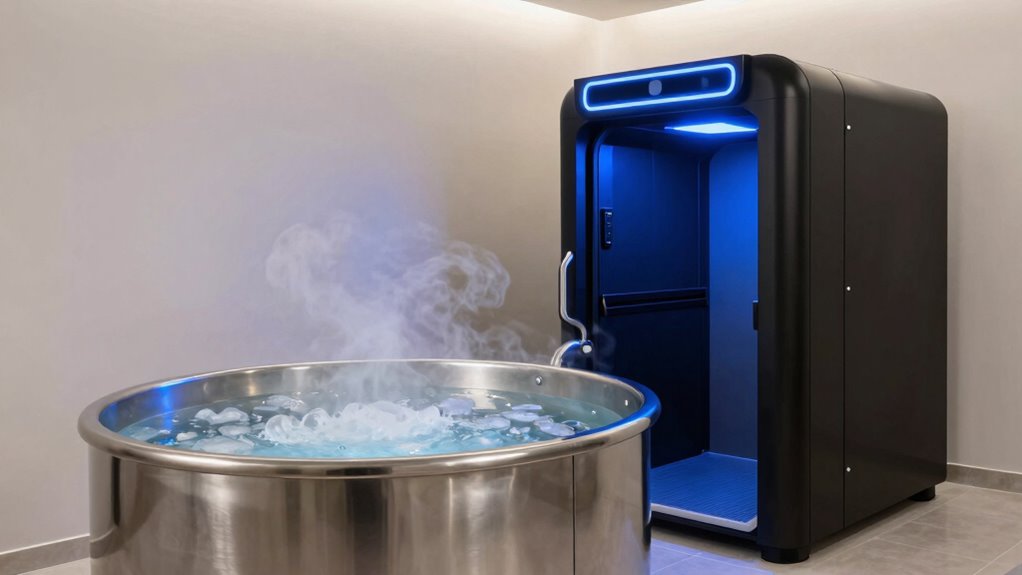
When it comes to recovery and wellness, cold plunges and cryotherapy are two popular methods that often get compared. Both aim to reduce inflammation, boost muscle recovery, and improve mental health, but they do so through different processes. Understanding their differences helps you decide which might be best for your goals.
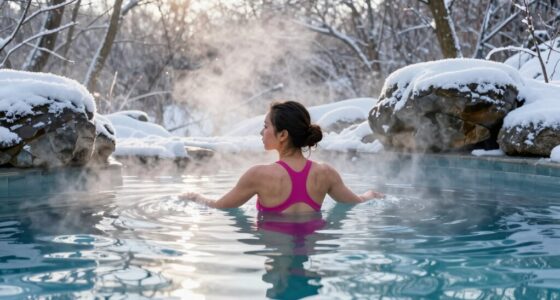
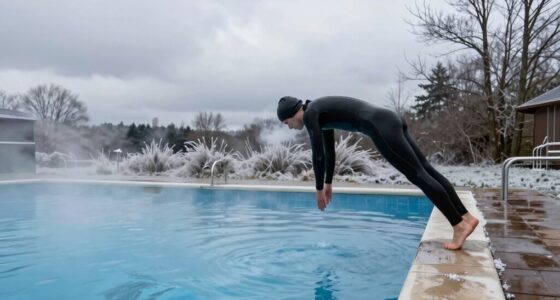
Cold plunges involve immersing your body in cold water, typically between 50°F and 59°F (10°C to 15°C). This method is simple and natural, relying on direct contact with cold water to induce physiological responses. When you dip into a cold plunge, your blood vessels constrict, which helps reduce inflammation and flush out metabolic waste from your muscles. This process accelerates muscle recovery, especially after intense workouts or physical strain. Cold water immersion also triggers the release of endorphins and norepinephrine, which can improve your mood and mental health. Many users report feeling more alert, less anxious, and more centered after a cold plunge, thanks to these neurochemical changes.
Immersing in cold water constricts vessels, reduces inflammation, and boosts mood through neurochemical responses.
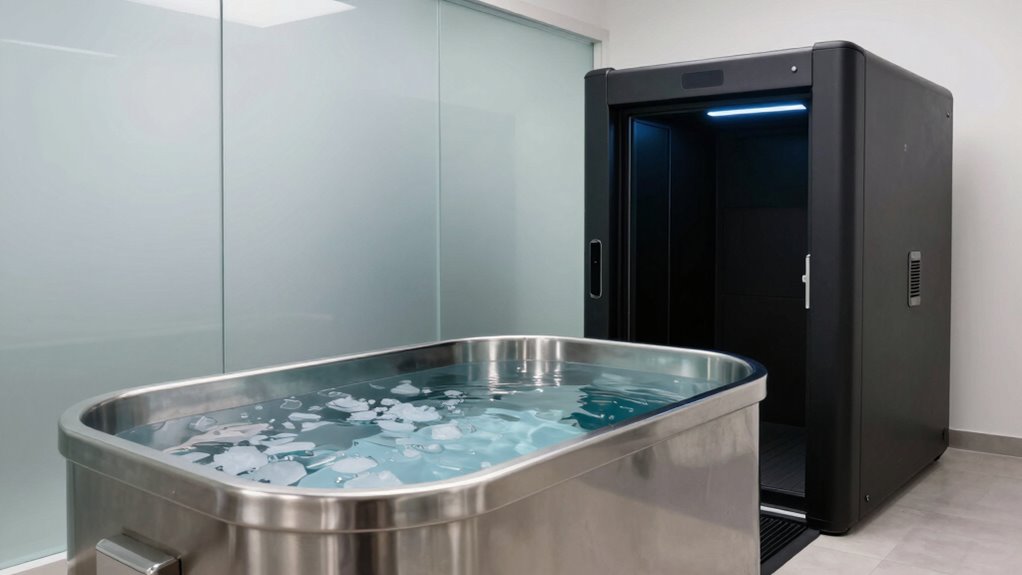
Cryotherapy, on the other hand, exposes your body to extremely cold temperatures in a controlled environment, usually between -220°F and -250°F (-140°C to -160°C). Unlike cold plunges, which immerse you fully in water, cryotherapy sessions are brief, typically lasting 2-3 minutes. During this time, your body is subjected to cold air in a chamber, which causes rapid cooling of your skin and underlying tissues. The intense cold triggers vasoconstriction similar to cold plunges but in a more controlled and localized manner. This stimulates your body’s natural healing processes, promoting faster muscle recovery and reducing soreness. *Additionally*, cryotherapy has strong links to mental health benefits, including increased endorphin levels and decreased stress hormones, helping you feel more relaxed and energized afterward. Moreover, the technology behind modern wellness devices like cryotherapy chambers exemplifies how automation and precise temperature control enhance safety and effectiveness.
While both methods support muscle recovery, cryotherapy’s quick sessions appeal if you’re pressed for time or prefer a dry approach. Cold plunges, however, offer a more immersive experience that some find more effective for deep relaxation and mental clarity. Cost, accessibility, and personal comfort also play roles in your choice. Cold plunges are often available at wellness centers and gyms, whereas cryotherapy requires specialized chambers, which can be more expensive and less common.
Ultimately, whether you choose cold plunges or cryotherapy, both can help you recover faster, boost your mental health, and enhance your overall wellness. Your decision depends on your preferences, schedule, and specific health goals.
Frequently Asked Questions
Can Cold Plunges Help With Mental Health Issues?
Cold plunges can boost your mental health benefits by reducing stress and improving your emotional well-being. The cold exposure triggers endorphin release, helping you feel more relaxed and energized. Regular cold plunges may also reduce symptoms of anxiety and depression by calming your nervous system. So, if you’re looking for a natural way to support your mental health, incorporating cold plunges into your routine might be worth trying.
How Long Does Each Treatment Typically Last?
Imagine stepping into a frozen lake or a brisk, icy chamber. Cold plunge sessions typically last 10 to 20 minutes, offering a full-body immersion that awakens your senses. Cryotherapy sessions are much shorter, usually 2 to 3 minutes, where you stand in a cold nitrogen chamber. The duration comparison shows cold plunges are longer, providing a gradual chill, while cryotherapy delivers a quick, intense burst of cold.
Are There Any Age Restrictions for These Therapies?
Age limitations for cold plunge and cryotherapy treatments vary, but safety considerations are key. Typically, these therapies are recommended for adults over 18, as younger individuals may have different safety needs. If you’re considering these treatments, check with your healthcare provider to confirm it’s safe based on your age and health history. Older adults should discuss potential risks with a professional to avoid adverse effects.
How Quickly Do Benefits Appear After Treatment?
Imagine you try cryotherapy today; many people notice recovery enhancement and skin tightening within hours. Typically, benefits like reduced inflammation and improved skin tone appear quickly, often right after the session or within a day. You might feel less soreness and see tighter skin almost immediately. However, for sustained results, repeated treatments are usually necessary. So, if you want rapid recovery or skin benefits, you’ll likely see some effects soon after each session.
Are There Any Long-Term Health Risks Involved?
Long-term risks from cold plunge and cryotherapy are minimal if you follow safety considerations, but some concerns exist. Cold plunges can cause hypothermia or skin damage if done improperly, while cryotherapy may pose risks like nerve damage or frostbite. Always stick to recommended durations, temperatures, and consult a healthcare professional beforehand. Staying aware of safety considerations helps you enjoy the benefits while minimizing potential long-term health risks.
Conclusion
So, whether you opt for the icy embrace of a cold plunge or the futuristic chill of cryotherapy, remember you’re stepping into a domain where your body defies the limits of human endurance. It’s not just about recovery; it’s about unleashing a superhuman resilience that’s almost mythical. Choose your weapon wisely—because in this battle of cold, you’re not just cooling down, you’re transforming into a force of nature. Prepare to redefine what your body can withstand.