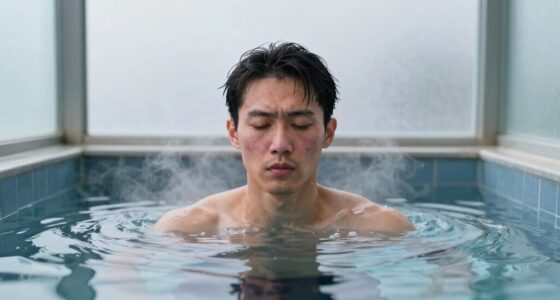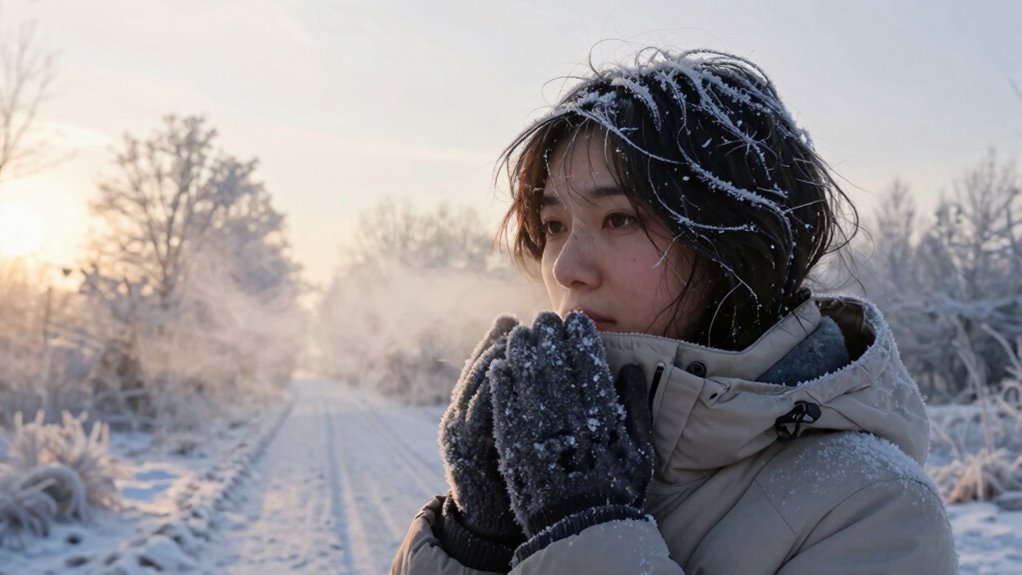

If you hate discomfort, think of cold exposure as a gradual challenge designed to build resilience without overwhelming yourself. Start small with easy steps like cold showers or face splashes, then slowly extend your time or lower the temperature. Focus on consistent progress, knowing that your body adapts over time through natural survival mechanisms. Embrace each small victory as a sign of your strength growing—if you keep going, you’ll discover simple ways to handle discomfort smarter, not harder.
Key Takeaways
- View cold exposure as a gradual, controlled process to build resilience without overwhelming yourself.
- Focus on small, consistent steps to reduce discomfort and foster a sense of achievement.
- Reframe discomfort as a growth opportunity that strengthens mental and physical adaptability.
- Remember that initial discomfort diminishes over time with regular practice.
- Use cold exposure as a strategic tool to improve stress management and overall well-being.

Have you ever wondered if cold exposure can actually benefit your health? It’s a question many people ask, especially those who dislike discomfort. The idea of stepping into icy water or braving chilly mornings might seem overwhelming, but understanding the broader picture can change your perspective. Instead of focusing on the immediate discomfort, think about how cold exposure can serve as a tool for building mental resilience and fostering physiological adaptation. These benefits aren’t just about feeling better physically; they cultivate a mindset that’s more resilient in everyday life.
When you expose yourself to cold, your body responds by activating various survival mechanisms. Over time, this leads to physiological adaptation, where your body becomes more efficient at handling cold stress. This process involves the activation of natural survival mechanisms, which enhances your body’s ability to respond to environmental challenges. This isn’t about forcing yourself into extreme conditions right away but gradually increasing exposure in manageable steps. As you do, your body learns to conserve heat more effectively, and your circulatory system improves, which can boost your overall health. Recognizing these changes helps you see cold exposure less as a source of discomfort and more as a form of self-improvement.
A key aspect often overlooked is how cold exposure strengthens your mental resilience. Facing something unpleasant, like cold water, and choosing to persist builds your capacity to handle stress and adversity. It’s about rewiring your mindset to see discomfort not as something to avoid but as an opportunity to grow stronger. When you intentionally step into cold environments, your brain learns that you can endure more than you might think. This mental toughness can translate into other areas of your life, helping you cope with challenges and setbacks more effectively. Additionally, understanding the physiological responses involved can help you better appreciate the process and stay motivated. Engaging in cold exposure also promotes neuroplasticity, which is essential for developing new mental pathways that enhance resilience.
To make cold exposure more approachable, start small. For instance, you might begin with brief cold showers or splashing cold water on your face. As you become accustomed to these small doses, you can gradually extend the duration or decrease the water temperature. Remember, it’s not about forcing yourself into freezing conditions immediately but about consistent, incremental steps that build both your physiological adaptation and mental resilience. Over time, you’ll notice that the initial discomfort becomes less daunting, and you start to appreciate the sense of achievement and strength that comes from facing the cold.
In essence, the best way to think about cold exposure if you hate discomfort is to see it as a strategic practice that nurtures your resilience—both mental and physical. It’s a journey of small victories, where each step helps you grow stronger and more capable of handling life’s inevitable stresses. Instead of dreading the cold, embrace it as an opportunity to develop a more resilient, adaptable you. Recognizing that consistent physiological adaptation can significantly contribute to overall well-being may motivate you to persevere through the initial challenges.

Cold Life Filtered Shower Head for Hard Water -Recommended by Gary Brecka
- Multi-stage Filtration: Removes chlorine, heavy metals, PFAS
- Hard Water Protection: Reduces dryness, irritation, mineral buildup
- High Pressure Flow: Maintains strong, consistent water pressure
As an affiliate, we earn on qualifying purchases.
As an affiliate, we earn on qualifying purchases.
Frequently Asked Questions
Can Cold Exposure Improve Mental Health or Reduce Anxiety?
Cold exposure can boost your mental health and reduce anxiety by triggering the release of endorphins and improving your stress response. As you face the cold, use mindfulness techniques to stay present and calm, and incorporate breathing exercises to manage discomfort. This combination helps reframe your perspective, making cold exposure feel less intimidating and more beneficial for mental clarity and emotional resilience.
How Quickly Can I See Physical Benefits From Cold Exposure?
You can start noticing physical benefits from cold exposure within a few days to weeks. As you build cold adaptation and improve skin tolerance, your body learns to handle cold better, reducing discomfort over time. Think of it like strengthening a muscle—you’ll see quicker results if you stay consistent. Regular exposure boosts circulation, enhances immunity, and may even improve your mood, making cold exposure a powerful, tangible tool for your health journey.
Is Cold Exposure Safe for People With Certain Health Conditions?
Cold exposure can be risky if you have certain health conditions, like cardiovascular issues or respiratory problems. You should always seek medical advice before starting cold exposure routines, as health risks might outweigh benefits. Monitoring how your body responds is essential. If you experience dizziness, chest pain, or shortness of breath, stop immediately. Consulting a healthcare professional guarantees you practice cold exposure safely, tailored to your individual health needs.
What Are the Best Times of Day to Practice Cold Exposure?
You might find mornings or early afternoons work best for cold exposure because of timing considerations and ideal windows for your body. These times often have more stable temperatures, making it easier to adapt without discomfort. Plus, practicing during these periods can boost your energy and mood for the day ahead. Avoid late evenings when your body’s natural temperature dips, which could make cold exposure more uncomfortable.
Do I Need Special Equipment or Clothing for Cold Exposure?
You don’t need special equipment for cold exposure, but wearing gear and clothing layers helps make it more comfortable. Start with lightweight, moisture-wicking base layers to keep sweat away, then add insulating layers like fleece or wool, and finish with a waterproof outer shell if needed. Proper clothing guarantees you maintain warmth while still experiencing the benefits of cold exposure, without feeling too uncomfortable or risking hypothermia.

Splashing cold water onto my face today
As an affiliate, we earn on qualifying purchases.
As an affiliate, we earn on qualifying purchases.
Conclusion
Think of cold exposure as a quiet voyage into your own resilience, much like Frodo’s perilous journey to Mordor—challenging yet transformative. Embrace the discomfort as Gandalf’s wise counsel: it’s temporary, and each brave step builds strength. With every shiver, you’re forging an inner armor, turning the cold from enemy to ally. Remember, even the harshest winter gives way to spring—your resilience will bloom when you face the chill.

Bubplay Ice Bath Cold Plunge Tub with Cover for Indoor Outdoor for Recovery, Cold Water Therapy, Athletes & Adults -105 Gallons, Black, XL
- Full-Body Cold Plunge: Roomy for most adults up to 6'7"
- Enhanced Insulation: 6-layer insulation with durable outer fabric
- Easy to Clean: Smooth inner liner for quick wiping
As an affiliate, we earn on qualifying purchases.
As an affiliate, we earn on qualifying purchases.

Polar Active Ice 3.0 Cold Therapy Ice Machine System with Programmable Timer, Shoulder Compression Pad, Lightweight 9 Quart Cooler Freeze Kit, Quiet Pump, Strong Cryotherapy Pain Relief Treatment
- Custom Programmable Timer: Personalized cooling cycles for safety and convenience
- All-Night Cold Therapy: Large 9-quart reservoir for extended relief
- Quiet, High-Performance Pump: Operates silently for undisturbed rest
As an affiliate, we earn on qualifying purchases.
As an affiliate, we earn on qualifying purchases.