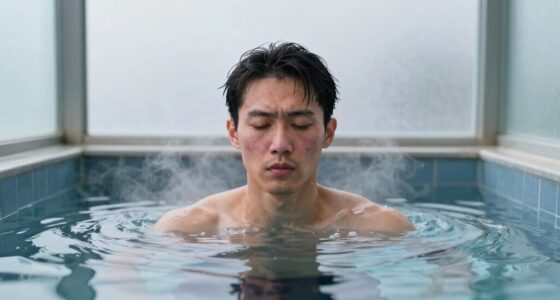
Many newbies think that just enduring cold is enough, but what really matters is how you approach it safely. Starting gradually, listening to your body, and avoiding overexposure is key. It’s about building tolerance step-by-step, not just pushing through the discomfort. Proper technique and respect for your limits will help you avoid risks and maximize benefits like improved mood, circulation, and stress resilience. Keep going, and you’ll discover even more effective strategies.

Get home appliances delivered free with Prime
- Fast, free delivery on millions of items
- Prime Video, Amazon Music and more included
- Member-only deals all year
Key Takeaways
- Beginners often worry about safety, but the first step is starting gradually to allow your body to adapt safely.
- The initial shock response is natural; focus on controlled breathing rather than panicking.
- Always listen to your body—stop immediately if you feel dizzy, numb, or uncomfortable.
- Proper technique and gradual exposure are more important than cold intensity for safe adaptation.
- Mistakenly fearing cold exposure is common; patience and consistency are key for benefits without risks.

If you’re new to cold exposure, it’s important to understand how it affects your body and how to do it safely. Many beginners wonder about the ice bath benefits and what happens during the cold shock response. These are key to making your experience both effective and safe. An ice bath can help reduce inflammation, improve recovery, and boost mental resilience. But jumping into icy water without preparation can trigger your body’s cold shock response—a sudden, involuntary reaction involving rapid breathing, increased heart rate, and a surge of adrenaline. This response is natural and can be intense, so understanding it is crucial before diving in.
When you first immerse yourself in cold water, your body perceives it as a threat, activating the cold shock response. You might gasp or hyperventilate, which can be dangerous if you’re not prepared. To manage this, start gradually. Instead of jumping straight into icy water, begin with cooler showers or short dips and steadily lower the temperature over time. This helps your body adapt and reduces the intensity of the cold shock response. Over time, your nervous system becomes more accustomed to cold exposure, making subsequent dips safer and more comfortable. Incorporating gradual exposure into your routine can significantly improve your adaptation process and safety. Recognizing the importance of thermoregulation can also help you better understand how your body maintains its internal temperature during cold exposure. Developing an understanding of your body’s response mechanisms can further help you anticipate and manage reactions effectively.
Understanding cold tolerance** can also help you set realistic goals and avoid overexposure that might lead to adverse effects. The benefits of an ice bath go beyond just muscle recovery. Regular cold exposure can enhance your body’s ability to regulate temperature and improve circulation. It also stimulates the production of norepinephrine, a hormone linked to improved mood and focus. Many athletes and wellness enthusiasts swear by ice baths for their recovery benefits, but it’s important to note that the benefits depend on consistency and proper technique. Simply jumping into cold water without preparation can cause more stress than benefit, especially if you panic or hyperventilate during initial exposure**.
Safety is paramount. Never plunge into cold water alone, especially if you’re new to it. Always listen to your body—if you feel dizzy, numb, or overly uncomfortable, get out immediately. Keep your exposure time limited at first—start with just a few minutes and gradually increase as your tolerance builds. Remember, the goal isn’t to endure extreme cold but to adapt safely while gaining the benefits. Understanding your body’s responses and respecting its limits will help you make cold exposure a sustainable part of your routine, unlocking all the potential benefits without risking your health. Additionally, being aware of your body’s cold shock response can help you recognize and manage these reactions more effectively.
As an affiliate, we earn on qualifying purchases.
Frequently Asked Questions
Can Cold Exposure Help With Weight Loss?
Cold exposure can boost your metabolism and aid in fat burning, especially if you do it regularly. Studies show that cold temperatures can increase brown fat activity, which helps burn calories to generate heat. This metabolic boost might support weight loss efforts, but it’s not a magic solution. Combine cold exposure with a healthy diet and exercise for the best results in burning fat and enhancing overall weight management.
How Long Should I Stay in Cold Water?
You should stay in cold water for about 5 to 10 minutes, but listen to your body. Use breath control to manage discomfort and prevent hyperventilation. Make sure you’re wearing clothing insulation, like a wetsuit or layers, to avoid rapid heat loss. Start slowly, gradually increasing exposure time as your tolerance builds, and always exit if you feel dizzy or numb. Proper preparation helps you safely enjoy the benefits of cold water exposure.
Is Cold Exposure Safe for Everyone?
Cold exposure isn’t safe for everyone; it can turn your day into a survival movie if you’re not careful. Your cold tolerance varies, so safety precautions are essential. People with heart conditions or poor circulation should avoid cold exposure altogether. Always start slow, listen to your body, and consult a healthcare professional. Ignoring safety precautions risks hypothermia or other serious health issues—so don’t underestimate the cold!
What Are the Mental Benefits of Cold Exposure?
Cold exposure boosts your mental health by increasing mindfulness benefits and reducing stress. As you endure the chill, you become more present, sharpening your focus and calming your mind. This practice triggers the release of endorphins, which lift your mood and lower anxiety levels. Over time, cold exposure helps you develop resilience, making it easier to handle daily stressors with a clearer, more centered mindset.
Can Cold Exposure Improve Athletic Performance?
Yes, cold exposure can improve your athletic performance by aiding muscle recovery and boosting your immune system. When you expose yourself to cold, it reduces inflammation and soreness after workouts, helping you recover faster. Additionally, cold exposure stimulates your immune response, making you less prone to illness. This combination allows you to train more consistently and perform at your best, supporting your athletic goals effectively.
As an affiliate, we earn on qualifying purchases.
Conclusion
As you start your cold exposure journey, remember it’s like planting a seed—you need patience, consistency, and listening to your body. Don’t rush into extreme cold or push too hard too fast. Instead, gradually build your tolerance, just like watering a delicate plant. Over time, you’ll notice your resilience growing, and the chill will become less intimidating. Keep it safe, stay curious, and enjoy the invigorating boost that cold exposure can bring to your life.
As an affiliate, we earn on qualifying purchases.
cold shock response training equipment
As an affiliate, we earn on qualifying purchases.
As an affiliate, we earn on qualifying purchases.
Cold & flu season Picks
humidifiers
As an affiliate, we earn on qualifying purchases.