
TL;DR

Get home appliances delivered free with Prime
- Fast, free delivery on millions of items
- Prime Video, Amazon Music and more included
- Member-only deals all year
A DIY idea featured by Hunker uses a curtain rod, rings and a shower curtain in front of existing glass shower doors, allowing users to open or close the curtain as needed. The report recommends measuring carefully and warns against attaching hardware to the glass; details such as installation conditions and costs are not provided.
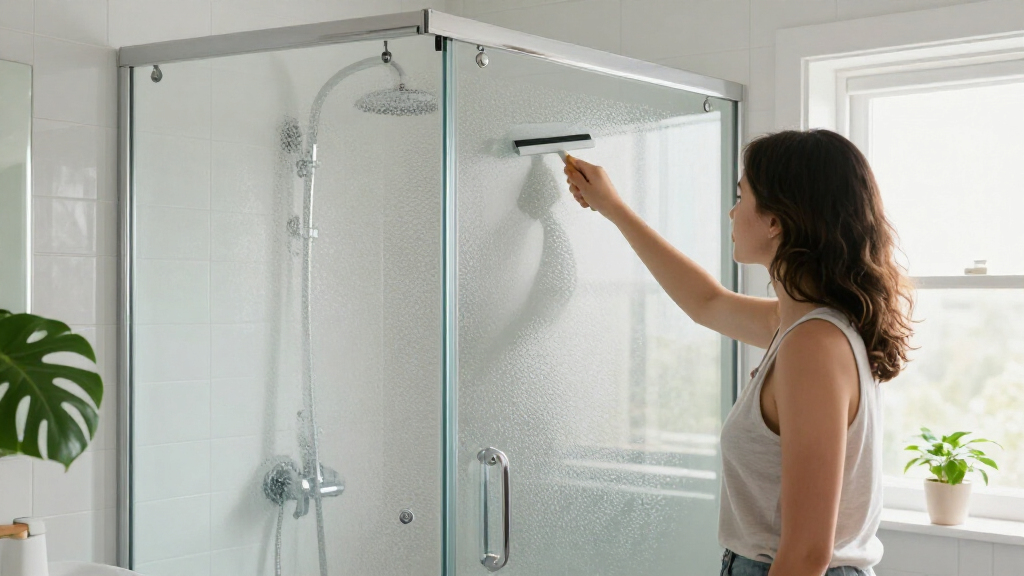
A DIY idea featured in a Hunker report adds a curtain rod and shower curtain in front of existing glass shower doors, giving bathroom users a way to close off the shower when they want privacy without replacing the enclosure. The approach is presented as a small, adjustable change rather than a major renovation.
The idea comes from Instagram DIYer @daysofapril, whose setup places a rod above the shower and hangs a curtain in front of the glass. The curtain can be drawn closed when privacy is wanted and pushed aside afterward. Hunker describes the shopping list as a rod, curtain and rings; the report does not give prices or identify particular products.
Before choosing a rod, the report advises measuring the shower width and deciding how high the rod should sit. In the example, it is positioned about a foot above the glass, though ceiling height and curtain length may call for a different placement. Measure down to the intended curtain hem and check that the fabric will not drag on the floor or create a tripping hazard.
A tension rod is described as the easiest and least expensive option, while a mounted rod may suit a more permanent installation. Hunker cautions against attaching hardware directly to the glass door or enclosure, citing the possibility of glass failure. Once the rod is secure, the curtain and rings can be installed and tested to confirm that the fabric slides freely.
Privacy Without Replacing the Doors
The proposal addresses a practical limitation of transparent shower enclosures: they can leave the person showering visible to others using a shared bathroom. A curtain placed in front of the glass offers privacy on demand while retaining the existing doors and allowing the curtain to be opened when the shower is not in use.
For renters or homeowners who do not want to undertake a bathroom renovation, the setup may be a comparatively simple way to change the room’s appearance and function. The result depends on the bathroom’s layout and a secure rod installation, however, and the report does not establish that the method suits every enclosure. The curtain also adds fabric to an area that regularly gets humid, a practical consideration not discussed in the source.
Products Worth Considering

Ring Alarm 5-Piece Kit

Philips Hue Smart Light Starter Kit with Bridge and 4 White and Color A19 Bulbs

Levoit Vital 100 Air Purifier for Home Bedroom
As an affiliate, we earn on qualifying purchases.
How the Curtain Setup Works
The Hunker report frames the curtain as an addition to, rather than a replacement for, the glass enclosure. That distinction matters: the doors remain in place, and the curtain sits in front of them as a movable screen. Users can choose an opaque curtain for greater coverage or select a color or pattern to alter the bathroom’s look.
The report suggests soft white or beige for a subdued, spa-like appearance, or a bolder design for a more decorative effect. It also notes that curtain rings come in different styles. Those choices are aesthetic suggestions from the report, not claims that any particular color or fabric performs better.
“She hangs a curtain rod above the shower and adds a shower curtain in front of the glass”
— Hunker, describing the Instagram DIY
Installation Limits and Open Questions
The report does not specify the shower’s dimensions, the rod’s load rating, the curtain material, or how the pictured rod is supported. It also gives no cost estimate, installation time, or evidence that the arrangement has been tested across different bathroom layouts. The suggested position of about one foot above the glass is an example, not a universal measurement.
Whether a tension rod will stay in place depends on the available surfaces and fit, while a mounted rod requires choosing suitable attachment points. The source warns against drilling or fastening into the glass but does not provide a detailed installation guide. Readers should follow the rod manufacturer’s instructions and avoid treating the social-media example as a substitute for assessing their own shower structure.
Measure Before Buying Hardware
The next step for anyone considering the setup is to measure the shower width and the distance from the proposed rod position to the desired curtain hem. Those measurements can guide the choice of rod and curtain length and help prevent fabric from dragging underfoot. The rod should be installed according to its instructions, with no hardware attached directly to the glass.
After installation, slide the curtain in both directions to check that it moves freely and does not obstruct entry or exit. The Hunker report does not announce a product launch or a follow-up test; it presents a DIY idea for readers to adapt to their bathrooms.
Key Questions
What does this shower-door DIY involve?
It places a curtain rod and shower curtain in front of existing glass shower doors. The curtain can be closed for privacy and pulled aside when it is not needed.
What materials are needed?
The report lists a rod, shower curtain and rings. It does not recommend specific brands or provide a price estimate.
How high should the rod be?
The example places it roughly a foot above the glass, but the report says ceiling height and curtain length may require another position. Measure to make sure the curtain does not drag on the floor.
Can the rod be attached to the glass?
No. Hunker warns against attaching hardware directly to the glass door or enclosure. Follow the rod’s installation instructions and use suitable support points.
Does the curtain replace the glass doors?
No. The idea keeps the existing doors in place and adds a movable curtain in front of them for adjustable privacy.
Source: hunker.com