
TL;DR

Get home appliances delivered free with Prime
- Fast, free delivery on millions of items
- Prime Video, Amazon Music and more included
- Member-only deals all year
A Hunker writer reported that a locksmith recommended trying dry lock lubricant before replacing a sticky lock, and that 3-IN-ONE Dry Lock Lube from Lowe’s made the key move smoothly in her lock. The account describes one household test; it does not establish that the product will fix every lock or that annual lubrication is suitable for all hardware.
A Hunker writer says a locksmith recommended trying dry lock lubricant before paying to replace a sticky door lock, and that a bottle of 3-IN-ONE Dry Lock Lube from Lowe’s made her key slide in easily. The account offers a practical maintenance tip, but it is a report of one lock’s response, not independent evidence that the product will resolve every sticking or damaged lock.
The writer described a lock that had been difficult to use for years: inserting the key could require force, and the household avoided locking the doorknob. After a key broke in the lock, the household paid for an emergency locksmith visit. A year later, when the writer contacted another locksmith about replacing the hardware, the locksmith suggested trying a roughly $7 bottle of dry lock lube first. The price is the writer’s estimate in the report and may not reflect current Lowe’s pricing.
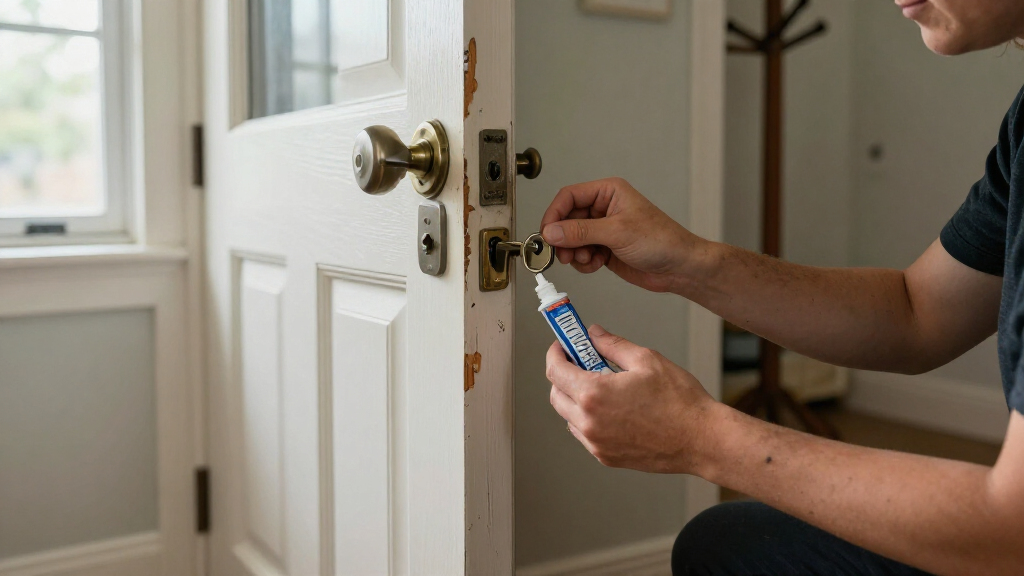
The writer bought 3-IN-ONE Dry Lock Lube at Lowe’s and followed the product directions described in the article: shake the can, aim its narrow nozzle at the keyhole, and spray. She reported that some liquid dripped out but appeared to dry within seconds. Afterward, she inserted the key and said it moved smoothly, a change she described as immediate. The report does not include a controlled comparison, a product test by an independent lab, or follow-up measurements over time.
The article distinguishes a dry lock lubricant from general-purpose products such as WD-40. It says oil-based formulas may attract dust and debris as time passes, while the specific dry lubricant is intended to leave a film and avoid buildup. Those are product-use claims presented in the source, not a guarantee of performance for every lock. The writer also applied the product to other home locks and outdoor padlocks, but did not report a systematic assessment of those locks or a longer-term durability test.
A Low-Cost Step Before Replacement
The report matters to homeowners because a lock that sticks can lead to a broken key, a lockout, or an unnecessary service call if the problem is caused by debris or insufficient lubrication. In the writer’s case, a locksmith offered a relatively inexpensive thing to try before replacing the hardware. That advice may help readers ask whether maintenance is appropriate before authorizing a replacement, particularly when a lock is stiff but otherwise intact.
However, a spray is not a substitute for diagnosing a lock that is damaged, misaligned, corroded, or failing internally. The source documents one person’s result and does not show that lubrication avoided a locksmith visit for the original emergency or that the lock will remain trouble-free. If a key is bending, getting stuck, or at risk of breaking, readers should avoid forcing it and consult a locksmith rather than treating the account as a guaranteed repair.
Products Worth Considering

Shark HydroVac Reveal Cordless Wet-Dry Vacuum and Mop, Lilac, WD321

Bose Lifestyle Ultra Soundbar and Ultra Subwoofer Bundle

Dyson V8 Cyclone Cordless Vacuum
As an affiliate, we earn on qualifying purchases.
The Locksmith’s Suggested First Try
The Hunker report is written as a first-person account rather than a product review based on a broad sample. The writer had dealt with the sticky lock for about seven years, according to the article, and had previously paid for emergency help after a key broke. The later locksmith’s suggestion was to try dry lock lubricant before spending money on replacing the lock.
The article says dry lock lubricant is designed to dry quickly and leave a protective film, while warning that some oil-based lubricants can gather dust over time. It also notes that graphite-based products may not suit every older lock. These descriptions do not establish that all products sold as dry lubricants have the same ingredients or directions. The source’s specific example is 3-IN-ONE Dry Lock Lube; readers should follow the label on the product they buy and check compatibility with their lock.
“Try a quick, easy $7 solution from the hardware store first before spending money on his services.”
— The locksmith, as recounted by the Hunker writer
What One Lock Test Cannot Establish
The account does not identify the lock’s make, age, internal condition, or the exact cause of its sticking. It is not clear whether the problem came mainly from dust, worn parts, alignment, or another issue. The writer also does not provide a long-term follow-up showing how long the improvement lasted.
The source gives no independent test of the lubricant, no comparison with other products, and no confirmation that the locksmith’s suggestion is appropriate for every lock type. Current product price and availability at Lowe’s are also not established by the report. A lock that remains stiff after using a product according to its label, or shows signs of damage, may need professional inspection rather than repeated spraying.
Check the Label and Test the Lock
For readers considering the same approach, the immediate next step is to check the lock and the lubricant’s label for compatibility and application directions. Apply only as instructed, use the nozzle carefully, and test the key gently rather than forcing it. If the lock still sticks, the key catches, or the hardware appears loose or damaged, contact a qualified locksmith to identify the cause.
The Hunker report does not announce a product update or a broader test. The practical follow-up is whether the writer’s lock continues to work smoothly and whether product manufacturers or locksmiths provide guidance specific to different lock designs. Until then, the reported result remains a useful example of one low-cost attempt—not a universal fix or a substitute for repair.
Key Questions
What product did the Hunker writer use?
The writer used 3-IN-ONE Dry Lock Lube, purchased at Lowe’s. The article describes it as a dry lubricant intended for locks; readers should check the current product label and confirm it is suitable for their hardware.
Did the lubricant fix the sticky lock?
The writer said the key slid in easily after application. That is a single personal test; the report does not establish that the product will fix locks with worn, damaged, or misaligned parts.
Why does the article say it is not WD-40?
The report says some oil-based lubricants can attract dust and debris over time, while dry lock lubricant is intended to leave a film that dries quickly. This is the article’s product guidance, not a guarantee about every formulation or lock. Follow the label for whichever product you use.
How often should a lock be lubricated?
The writer suggests a yearly application for main locks, but the supplied article does not cite manufacturer instructions or testing for a universal schedule. Follow the lock and lubricant manufacturers’ guidance, and address a specific sticking problem rather than relying on a calendar alone.
When should I call a locksmith?
Seek a locksmith’s help if the key bends, catches, or risks breaking, or if the lock remains difficult to operate after following the lubricant directions. Do not force a key into a lock that may be damaged.
Source: hunker.com