TL;DR

Get home appliances delivered free — and shop member deals
- Fast, free delivery on millions of items
- Access to Prime Big Deal Days deals on October 6–7
- Prime Video, Amazon Music and more included
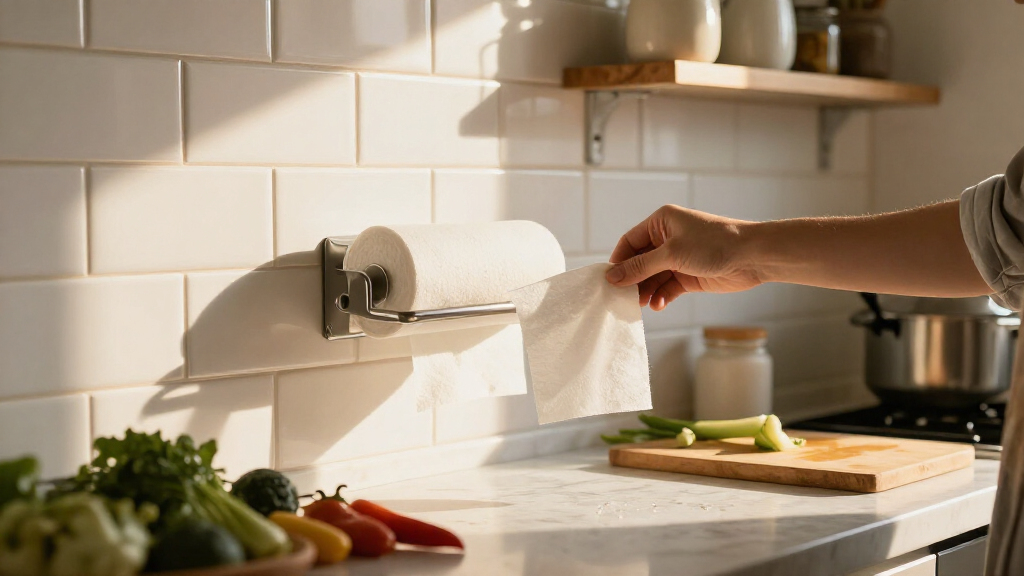
A Hunker home design report describes a wooden paper towel holder mounted beneath a cabinet as an alternative to a freestanding metal holder. The setup keeps the roll off the counter and, in a video by Overkill Woodcraft, allows sheets to be torn away more easily. Installation depends on the surface and hardware.
Hunker has highlighted a wall-mounted wooden paper towel holder shown in a video by professional woodworker and YouTube creator Overkill Woodcraft, presenting it as a way to free counter space and make sheets easier to tear off. The holder is fitted beneath an overhead cabinet, keeping the roll within reach while removing a freestanding metal holder from the work surface.
In the video described by Hunker, Overkill Woodcraft first demonstrates the difficulty of pulling a sheet from a standing metal holder. The roll can resist a quick tear, the report says, sometimes requiring two hands or more than one attempt. The mounted wooden design holds the roll above the counter and lets the user pull a sheet down while the holder stays in place. Hunker presents the arrangement as a practical option for kitchens where counter space is limited.
The report says homeowners can buy a ready-made holder rather than build one. It names a handcrafted acacia wood model listed on Etsy for $85 and an adhesive-mounted option listed on Amazon for $25. Those prices and product listings are details cited by the report and may change. Some products include mounting hardware; the article says drywall anchors may need to be purchased separately.
Installation varies by location and wall material. For a cabinet installation, Hunker advises checking screw length so screws do not pass through the cabinet. For a wall installation, the report describes positioning the holder level, drilling holes and securing it with appropriate hardware. It also identifies adhesive strips as an option for tile, avoiding drilled holes in that setup.
A Clearer, More Usable Counter
The practical appeal is counter space and access. A paper towel roll is a routine kitchen item, but its holder occupies part of the work surface and can shift or tip when someone pulls a sheet. Moving the roll beneath a cabinet can leave more room for food preparation and reduce the number of objects on the counter.
The video also focuses on the mechanics of tearing a sheet. A fixed holder may keep the roll steady as a user pulls, which can make one-handed use easier than with the freestanding metal holder shown in the demonstration. That is the report’s description of the design and video; it does not cite testing comparing different holders or establish that every wall-mounted model will work equally well.
For renters or people who do not want to drill into tile, the adhesive option cited by Hunker offers another mounting approach. Its suitability depends on the particular product, surface and installation instructions. The choice is less about a broad kitchen renovation than about matching a small storage change to the available surface and the user’s needs.
Mounting Options by Surface
Hunker’s report places the holder among ways to manage bulky kitchen essentials in a limited work area. It focuses on one example: Overkill Woodcraft mounts a wooden holder on the underside of a cabinet above the counter. The report does not describe a wider product launch or a change in building standards; it is a home improvement recommendation based on the video and product examples.
The mounting surface determines what hardware is needed. Hunker describes screws and expansion tubes for a conventional wall installation, drywall anchors for drywall, and an adhesive-strip product for tile. For an under-cabinet mount, screw length matters because the fasteners enter the cabinet base. The source lists particular products and prices, but does not provide independent durability tests or a comparison of their load limits.
“A wall-mounted paper towel holder”
— Hunker
Fit and Durability Depend on Setup
The source does not give the video’s publication date, provide independent tests of the holder, or report how well the setup performs across different roll sizes and cabinet designs. It also does not establish that the listed products remain available at the cited prices. Hunker’s description of easier tearing reflects the video and the article’s assessment, not a controlled comparison of holder types.
Adhesive performance, anchor strength and screw suitability depend on the product and mounting surface. The report does not specify weight limits, installation measurements for each kitchen, or how long an adhesive mount lasts. Readers would need to check the product instructions and assess their own surface before installation.
Check the Surface Before Installing
Anyone considering the change can start by choosing a spot within reach that will keep the roll clear of the counter and nearby cabinet doors. Before drilling beneath a cabinet, measure the cabinet base and check that the screws supplied or selected will not pass through it. For drywall, use an anchor suited to the wall and the holder; for tile, follow the adhesive product’s surface preparation and curing instructions.
Hunker does not announce a follow-up, broader product release or scheduled next step. The immediate decision for readers is whether a fixed mount suits their kitchen and, if so, which mounting method matches the surface.
Key Questions
What is the alternative to a tabletop metal paper towel holder?
Hunker describes a wall-mounted or under-cabinet holder, including a wooden model shown in a video by Overkill Woodcraft. It keeps the roll off the counter.
Does a mounted holder make tearing sheets easier?
In the video described by Hunker, the mounted holder stays in place as a sheet is pulled. The report says the setup is easier to use, but it does not cite a controlled test comparing holders.
Can the holder be installed without drilling?
The report cites an adhesive-strip holder as an option for tile. Whether that method suits a particular surface depends on the product instructions and surface condition.
What should be checked before mounting one under a cabinet?
Check the screw length before installation. Hunker warns that screws that are too long could pass through the cabinet base.
Source: rss
Fall yard work Picks
leaf blowers
As an affiliate, we earn on qualifying purchases.