
TL;DR

Get home appliances delivered free — and shop member deals
- Fast, free delivery on millions of items
- Access to Prime Big Deal Days deals on October 6–7
- Prime Video, Amazon Music and more included
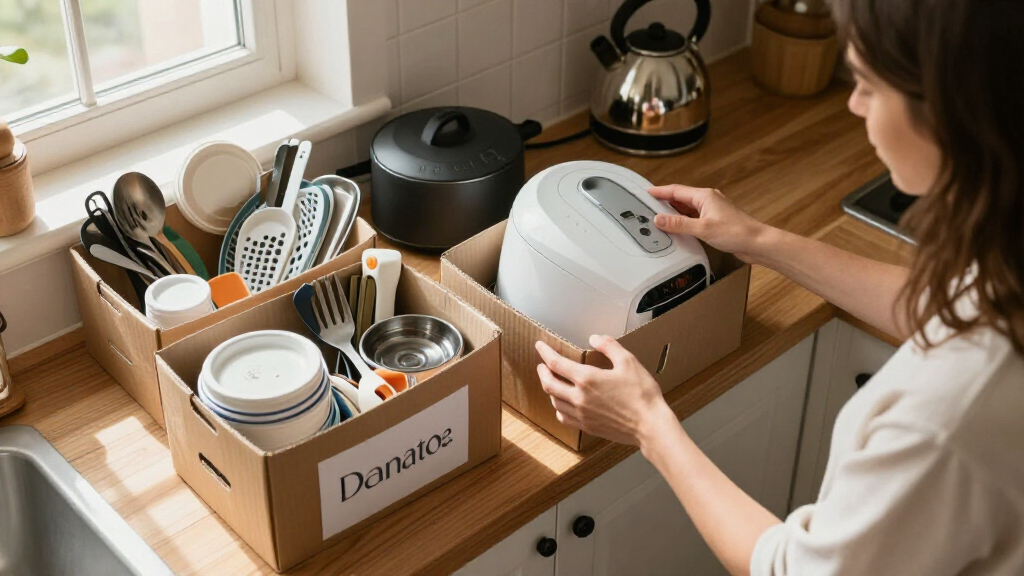
A House Beautiful report citing professional organizers challenges two familiar decluttering rules: removing an item every time a new one enters the home, and discarding clothing that has not been worn in a year. The organizers say regular reviews, available storage and whether items suit a person’s life are more useful guides than fixed deadlines.
A House Beautiful report based on interviews with professional organizers says people can stop treating two familiar decluttering guidelines as strict requirements: the “one in, one out” rule and the advice to discard clothes not worn in a year. The organizers’ point is not that people should ignore clutter, but that regular reviews and practical needs can be better guides than automatic purges or fixed time limits.
The first rule recommends removing one possession whenever a new item comes into the home. Organizers Kenika Williams, founder of Tidied by K., and Jayna Lattimore, founder of Ordered Professional Organizing, told House Beautiful that the approach can be too rigid. Williams said a purchase does not have to trigger a purge, while Lattimore described decluttering as a continuing household routine rather than a reaction to each new item.
Instead, Lattimore said, people can conduct regular sweeps to identify things they no longer use or need. Williams said the practical test for a new purchase is whether it has a functional place in the home. Lattimore added that storage systems work better when they leave some space for future items, rather than being filled to capacity as soon as organizing is done.
The second rule sets a one-year deadline for clothing that has not been worn. Millie Naor, founder of Bella Organizers, told the publication that some pieces may still be worth keeping even if they are rarely worn, provided people limit those items and know why they matter to them. Beth Ruck, founder of Conquering Clutter, said a calendar cutoff alone is not the best way to decide. She recommended considering whether a garment works with other clothes and fits the owner’s current lifestyle.
Flexible Rules Can Ease Home Upkeep
The advice matters because rigid rules can turn organizing into a series of forced decisions: a new purchase prompts an immediate discard, or a date on the calendar determines whether a garment stays. The organizers interviewed by House Beautiful suggest that these shortcuts do not account for available storage, actual use, personal attachment or changing needs.
Their alternatives still involve limits. A home needs workable places for its belongings, and keeping rarely worn clothing does not mean retaining every item indefinitely. The emphasis is on making decisions based on space and function, then revisiting them periodically. That can help households maintain an organization system without treating every purchase or unused season as a reason for an automatic purge.
modular storage bins for home organization
As an affiliate, we earn on qualifying purchases.
As an affiliate, we earn on qualifying purchases.
The Two Rules Under Review
Both guidelines offer simple tests for managing possessions. The one-in, one-out approach links household volume to shopping, while the one-year clothing rule uses a defined period of non-use to prompt a decision. The report does not say these practices never work; Williams explicitly said people who find the first approach useful can continue using it.
Instead, the organizers describe them as optional tools, not universal standards. Their comments focus on applying the rules flexibly: make space for belongings and new purchases, review items over time, and judge clothing by whether it serves the person who owns it. The report offers expert perspectives rather than research comparing decluttering methods or measuring their results.
“I don’t think every purchase needs to trigger a purge.”
— Kenika Williams, founder of Tidied by K., as quoted by House Beautiful
clothing storage solutions with adjustable shelves
As an affiliate, we earn on qualifying purchases.
As an affiliate, we earn on qualifying purchases.
No Universal Test for Keeping Items
The report does not establish a single replacement rule or specify how often households should review their belongings. It also provides no data showing how many people use these guidelines or whether one approach leads to better organization than another. The recommendations are professional organizers’ views, not a finding that the two rules fail in every home.
Decisions about sentimental clothing, limited storage and future needs will differ among households. The source material also does not define how much unused clothing is reasonable to keep or how much spare capacity a home should retain. Readers are left to apply the organizers’ principles to their own circumstances.
home decluttering review organizer
As an affiliate, we earn on qualifying purchases.
As an affiliate, we earn on qualifying purchases.
Apply the Advice at Home
The report does not announce a formal program or a future development. Its practical next step for readers is to review possessions on a recurring basis, check that belongings have workable storage, and decide whether clothing suits their current lives. Anyone who finds a one-in, one-out system useful can keep using it; the organizers’ point is that it need not be followed automatically.
For a purchase, that means considering where the item will live before bringing it home. For clothing, it means weighing usefulness, outfit compatibility and personal value rather than relying on the one-year mark alone. A later review can revisit those choices if needs or available space change.
As an affiliate, we earn on qualifying purchases.
Key Questions
Which two decluttering rules does the report challenge?
It questions the “one in, one out” rule and the advice to discard clothes that have not been worn in a year.
Should I stop using the one-in, one-out rule?
Not necessarily. Williams told House Beautiful that people who find it useful can keep using it. The organizers’ objection is to treating it as a requirement for every purchase.
What should I consider before keeping unworn clothes?
The organizers suggest weighing whether an item is special, works with other clothes and fits your current lifestyle. They also advise limiting the number of rarely worn pieces.
What do the organizers recommend instead of strict deadlines?
Lattimore recommends regular household sweeps, while Williams stresses having a functional place for new items. The report does not prescribe a specific review schedule.
Source: rss
Halloween Picks
halloween
As an affiliate, we earn on qualifying purchases.