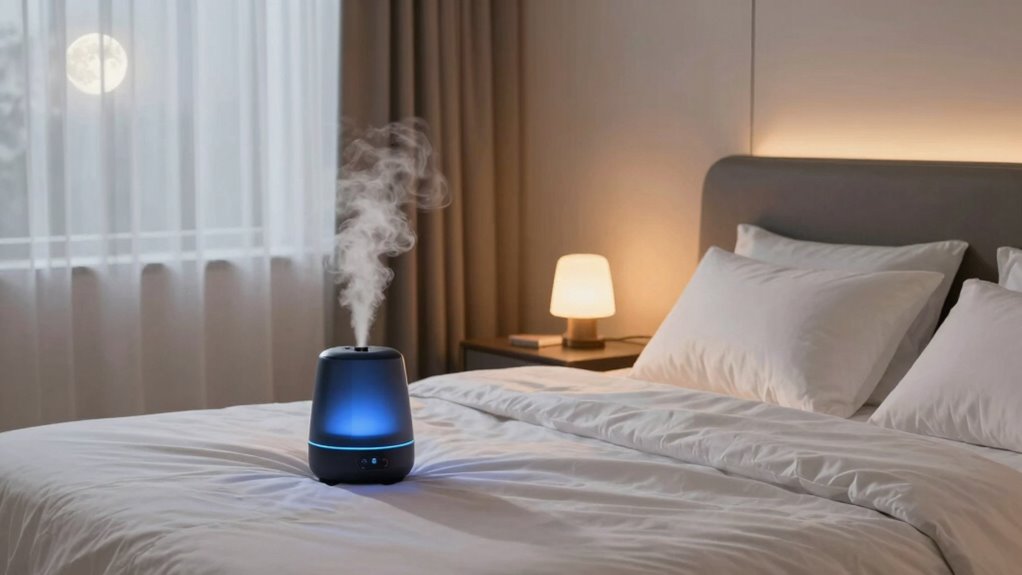

To support recovery, keep your room cool between 60-67°F using fans or cooling mattress pads. Improve air quality with HEPA filters and proper ventilation to reduce pollutants and promote deep, restful sleep. Dim the lights before bed or use smart lighting to support melatonin production and circadian rhythms. By controlling temperature, air quality, and lighting, you create a prime environment for healing and rejuvenation. Keep exploring these tips to access even better sleep during recovery.

Get home appliances delivered free with Prime
- Fast, free delivery on millions of items
- Prime Video, Amazon Music and more included
- Member-only deals all year
Key Takeaways
- Maintain a cool room temperature between 60-67°F to promote restorative sleep and faster recovery.
- Use HEPA air purifiers and ensure proper ventilation to improve indoor air quality and reduce pollutants.
- Create a dark sleep environment with blackout curtains or sleep masks to enhance melatonin production.
- Limit blue light exposure from screens before bedtime to support circadian rhythm and recovery processes.
- Utilize sleep tech devices that regulate temperature and lighting for optimal environmental conditions.
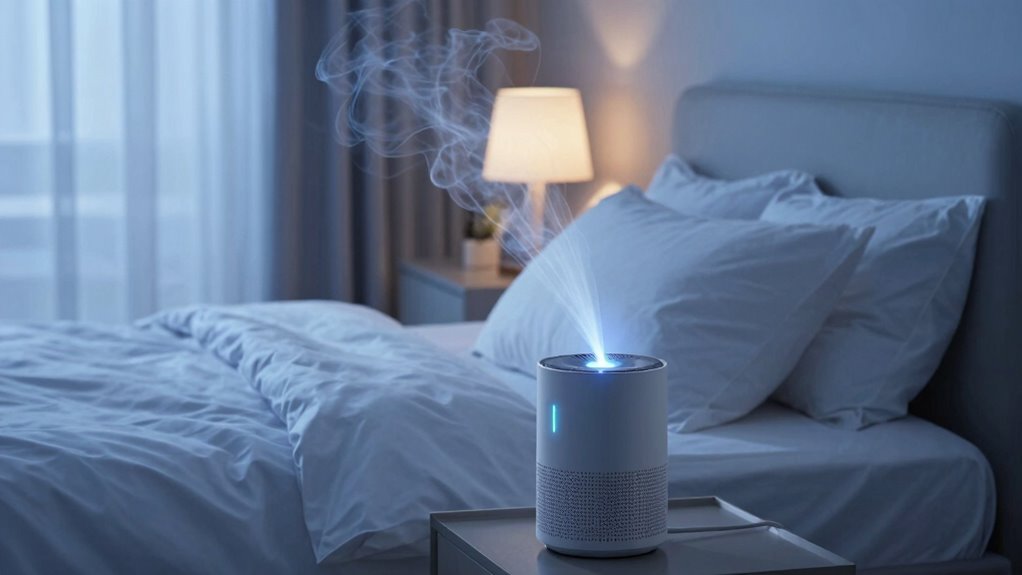
Getting quality sleep is essential for recovery, and optimizing your environment can make a significant difference. Sleep technology has advanced to help you create the perfect sleeping conditions, but understanding how environmental factors influence your rest is equally important. When you focus on adjusting your surroundings, you’re not just making it more comfortable—you’re actively supporting your body’s ability to heal and restore itself.
One of the most effective ways to improve your sleep environment is by controlling temperature through sleep cooling solutions. A cool room, generally between 60-67°F (15-19°C), helps lower your core body temperature, which is crucial for falling asleep and staying asleep. Using a cooling mattress pad or a dedicated fan can help maintain this ideal temperature. These sleep technology devices are designed to regulate heat without creating discomfort or noise. When your environment stays cool, you’ll notice less tossing and turning, and your sleep cycles become more restorative, leading to faster recovery from physical exertion or illness.
Keeping your room cool with sleep tech promotes restful, restorative sleep and faster recovery.
Air quality is another essential environmental factor that influences your sleep quality. Poor air quality can cause disruptions, restless nights, or shallow breathing, which hampers your body’s ability to recover. Air purifiers equipped with HEPA filters remove allergens, dust, and pollutants, ensuring cleaner air in your bedroom. Proper ventilation also plays a role—opening a window or using an air exchange system can bring in fresh air and reduce indoor toxins. Additionally, air quality has a direct impact on your overall health and recovery, making it a vital aspect of a restorative sleep environment. Improving air quality can also reduce the presence of indoor pollutants, which are known to affect sleep quality and overall well-being. Incorporating air purification devices is especially beneficial in areas with high pollution levels or limited natural ventilation. Maintaining optimal indoor air quality can also help prevent respiratory issues that interfere with restful sleep. Furthermore, understanding the importance of air quality monitoring can help you make informed adjustments to your environment for better health outcomes.
Lighting conditions directly impact your sleep, especially in the evening. Exposure to bright light, such as blue light from screens, suppresses melatonin production—the hormone responsible for regulating sleep-wake cycles. To support recovery, you should aim to create a dark environment by using blackout curtains or sleep masks. Additionally, employing dim, warm lighting in the hours before bed helps signal to your body that it’s time to wind down. Sleep technology, like smart lighting systems, can automate this changeover, gradually dimming lights to promote melatonin release and improve sleep quality. Adjusting your lighting environment is a simple yet powerful step toward aligning your circadian rhythms with natural sleep patterns.
As an affiliate, we earn on qualifying purchases.
Frequently Asked Questions
Can Sleep Cooling Help With Insomnia?
Yes, sleep cooling can help with insomnia. When your sleep environment maintains a ideal temperature through temperature regulation, it becomes easier to fall asleep and stay asleep. Cooler temperatures promote better sleep quality by preventing overheating, which often disrupts rest. By adjusting your sleep environment with cooling techniques, you create a more comfortable setting, making it easier for your body to relax and achieve restorative sleep, especially if you struggle with insomnia.
What Is the Ideal Room Temperature for Recovery Sleep?
Think of your sleep environment like a cozy nest; if it’s too hot or cold, your rest gets disrupted. The ideal room temperature for recovery sleep is around 60-67°F (15-19°C). Proper temperature regulation helps your body relax and promotes deep, restorative sleep. When your room’s just right, you wake up refreshed, knowing you’ve created the perfect setting for your body’s recovery.
How Does Air Quality Affect Sleep Cycles?
Air quality directly impacts your sleep cycles by affecting respiratory health. Poor air quality, with high air pollution, can cause breathing difficulties, leading to frequent awakenings and disrupted sleep stages. When your respiratory system struggles, your body spends more energy fighting off irritants, making it harder to reach deep, restorative sleep. Improving air quality helps maintain steady breathing, promotes uninterrupted sleep, and supports better recovery overall.
Are There Specific Light Colors That Promote Faster Recovery?
Blue light, for instance, is known to promote faster recovery by supporting circadian rhythms through light therapy. A hypothetical case shows athletes using blue light therapy post-workout, which speeds muscle repair and reduces fatigue. Color psychology suggests that cool colors like blue and green help relax your mind and body. Incorporating these light colors into your sleep environment can enhance recovery, making rest more effective and revitalizing.
How Often Should I Change My Air Filters?
You should change your air filters every 90 days to maintain ideal air quality. This filter maintenance schedule can vary based on household factors like pets or allergies, so check your filters regularly. The air filter lifespan is typically around three months, but if you notice reduced airflow or increased dust, it’s a good idea to replace them sooner. Staying on top of filter maintenance helps support your recovery and overall health.
As an affiliate, we earn on qualifying purchases.
Conclusion
Optimizing your sleep environment can substantially boost your recovery. By maintaining a cool room, ensuring good air quality, and controlling light exposure, you create ideal conditions for your body to heal and recharge. Did you know that poor sleep quality can reduce recovery rates by up to 30%? Small adjustments in your sleep setup can make a big difference, helping you feel more energized and resilient. Start implementing these tips today for faster, more effective recovery.
As an affiliate, we earn on qualifying purchases.
sleep environment temperature controller
As an affiliate, we earn on qualifying purchases.
As an affiliate, we earn on qualifying purchases.
Fall yard work Picks
leaf blowers
As an affiliate, we earn on qualifying purchases.