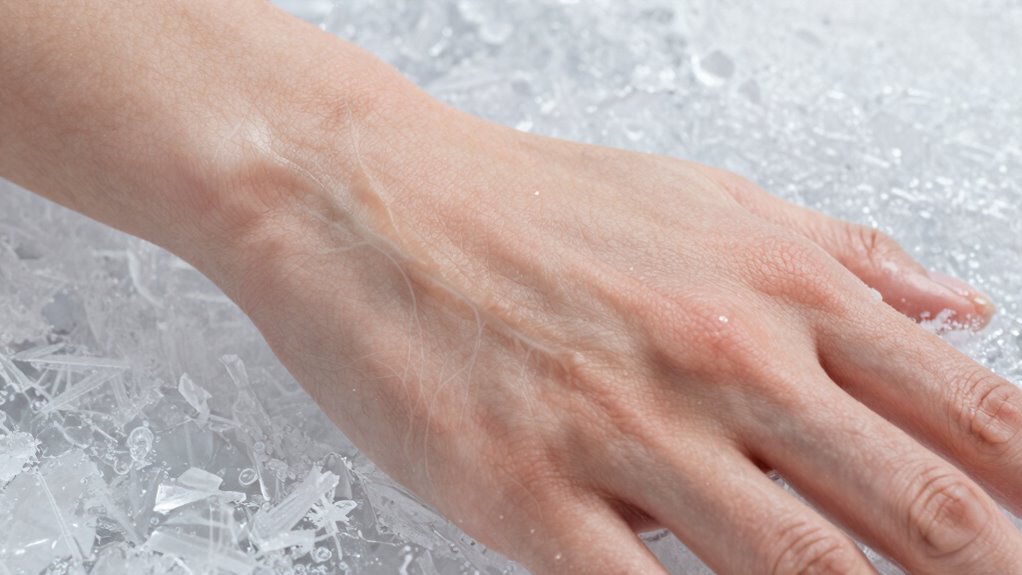

Your nervous system can adapt to cold over time by gradually becoming less reactive to the sensations. Through neural adaptation and sensory modulation, your brain recalibrates how it perceives cold, filtering out less critical signals and reducing discomfort. This slow process is driven by neural plasticity, allowing your body to handle cold stimuli more effectively. Keep exploring, and you’ll uncover how these mechanisms help you build greater tolerance and resilience to cold environments.

Get home appliances delivered free — and shop member deals
- Fast, free delivery on millions of items
- Access to Prime Big Deal Days deals on October 6–7
- Prime Video, Amazon Music and more included
Key Takeaways
- Neural adaptation reduces nerve and brain reactivity to repeated cold stimuli, making cold sensations less overwhelming.
- Sensory modulation filters and suppresses less critical signals, preventing sensory overload during cold exposure.
- Gradual exposure promotes neural plasticity, reorganizing pathways for improved cold tolerance over time.
- Sensory filtering prioritizes important signals, decreasing perceived cold discomfort through ongoing recalibration.
- The nervous system’s capacity for change enhances cold environment tolerance through adaptive neural processes.

When your nervous system shifts, you might notice a sudden or persistent cold sensation that feels out of place. This experience often signals your body’s attempt to adjust to new or changing stimuli, a process driven by neural adaptation. Your nervous system is remarkably flexible, capable of fine-tuning its responses through sensory modulation. This means that over time, your brain and nerves learn to interpret signals differently, making sensations like cold less overwhelming or distressing.
Neural adaptation plays a vital role here. When you’re exposed to a cold environment or a cold stimulus repeatedly, your nerves and brain gradually become less reactive to these sensations. Instead of triggering intense discomfort or a feeling of shock, the nervous system begins to dampen its response. This process isn’t about ignoring the cold but about recalibrating your sensory pathways so that what once felt startling or painful now feels more manageable. Through continuous exposure, your nervous system effectively “learns” to tolerate cold stimuli better, leading to fewer and less intense sensations over time.
Sensory modulation also contributes notably to this adjustment. It’s the nervous system’s way of regulating the intensity of sensory signals, ensuring that you’re not overwhelmed by every stimulus. When you consistently experience cold, your nervous system may enhance its ability to filter or suppress redundant or less critical signals. This modulation helps you remain calmer and more focused, even in environments that once caused discomfort. It’s similar to turning down the volume on a loud radio—your nervous system adjusts so that the sensation of cold becomes less intrusive.
This shift doesn’t happen overnight. It’s a gradual process where neural adaptation and sensory modulation work hand in hand. As your nervous system becomes more accustomed to cold stimuli, your perception changes. You might notice that activities like swimming in cold water or stepping outside on a chilly day feel less intimidating. Over time, your body’s response to cold becomes more controlled, and the sensation feels less intense or distracting. The brain’s ability to adapt is rooted in its neural plasticity, which allows it to reorganize and strengthen pathways in response to repeated stimuli. Additionally, this process is influenced by sensory filtering, which helps prioritize certain signals over others to prevent sensory overload.
Understanding this process can help you appreciate why some discomfort diminishes with repeated exposure. Your nervous system is actively learning to handle sensations better, making cold environments more tolerable. This adaptation isn’t just about physical tolerance; it’s a sign of your nervous system’s incredible ability to recalibrate itself, ensuring you can navigate your environment with greater ease and less discomfort.
As an affiliate, we earn on qualifying purchases.
Frequently Asked Questions
How Long Does It Take for the Nervous System to Adapt?
It typically takes a few weeks to a few months for your nervous system to adapt, thanks to neural plasticity. During this adaptation timeline, your body gradually becomes less sensitive to cold stimuli as your nervous system rewires itself. Consistent exposure and patience are key, as your nervous system slowly adjusts, making cold sensations feel less intense over time. Stay persistent, and you’ll notice the changes happening gradually.
Can This Shift Be Accelerated Intentionally?
You can accelerate this nervous system shift through deliberate cold exposure and mental training. Regularly exposing yourself to cold conditions, like cold showers or ice baths, helps your body adapt faster. Combine this with mental techniques such as focused breathing and visualization to enhance resilience. Over time, these practices strengthen your nervous system, making cold feel less intense more quickly. Consistency and patience are key to speeding up this process.
Does Age Affect the Nervous System’s Adaptability?
Think of your nervous system as a garden; neural plasticity is the soil, allowing new growth. As you age, there’s an age-related decline in this plasticity, making your nervous system less adaptable. So, yes, age affects your nervous system’s ability to adapt, but you can still nurture it through challenges and learning. Though it might slow down, your brain’s capacity to rewire remains, just like a garden that still blooms with care.
Are There Risks Associated With the Nervous System Shift?
Yes, there are risks associated with nervous adaptation, especially if you push your cold tolerance too quickly or without proper precautions. Rapid changes can strain your nervous system, potentially leading to discomfort or even injury. To safely improve cold tolerance, gradually increase exposure and listen to your body’s signals. This mindful approach helps your nervous system adapt effectively while minimizing risks like hypothermia or nerve stress.
Is This Process Permanent or Temporary?
This process is mostly temporary, thanks to neuroplasticity adaptation, which allows your nervous system to adjust and improve cold tolerance over time. With continued exposure, your body evolves its response, making cold feel less intense. However, these changes aren’t necessarily permanent, as they depend on ongoing exposure and adaptation. If you stop practicing, your cold tolerance may decrease, highlighting that this is an evolving aspect of your cold tolerance evolution.
As an affiliate, we earn on qualifying purchases.
Conclusion
As you experience this nervous system shift, cold no longer feels like an icy beast attacking your senses. Instead, it becomes a manageable whisper of sensation, almost like a gentle breeze on a chilly day. Over time, your body’s adaptation is so powerful, it’s as if you’ve revealed a secret weapon against the cold’s icy grip. Keep pushing through; your nervous system is transforming you into a true master of resilience, fearless in the face of winter’s harshest challenges.
As an affiliate, we earn on qualifying purchases.
neural plasticity training tools
As an affiliate, we earn on qualifying purchases.
As an affiliate, we earn on qualifying purchases.
NFL season / tailgating Picks
team gear
As an affiliate, we earn on qualifying purchases.