
Daily cold exposure isn’t necessarily too much if you listen to your body and progress gradually. Pay attention to physical signals like persistent pain, numbness, dizziness, or excessive shivering—these mean you may need to scale back. Monitor your stress levels and recovery; feeling energized and recovering quickly are good signs. Practice controlled breathing to manage discomfort. Staying honest with yourself helps prevent overexposure and boosts the benefits—if you want to learn more, keep exploring these key strategies.
Key Takeaways
- Monitor your body’s signals for persistent pain, numbness, dizziness, or disorientation to avoid overexposure risks.
- Assess your recovery speed and energy levels; quick recovery and sustained energy indicate safe practice.
- Observe your breathing pattern; controlled, steady breathing suggests proper adaptation while gasping signals overexertion.
- Gradually increase exposure duration and intensity, listening to how your body responds to prevent stress overload.
- Be honest in self-evaluation, adjusting frequency or intensity based on individual tolerance and physical feedback.
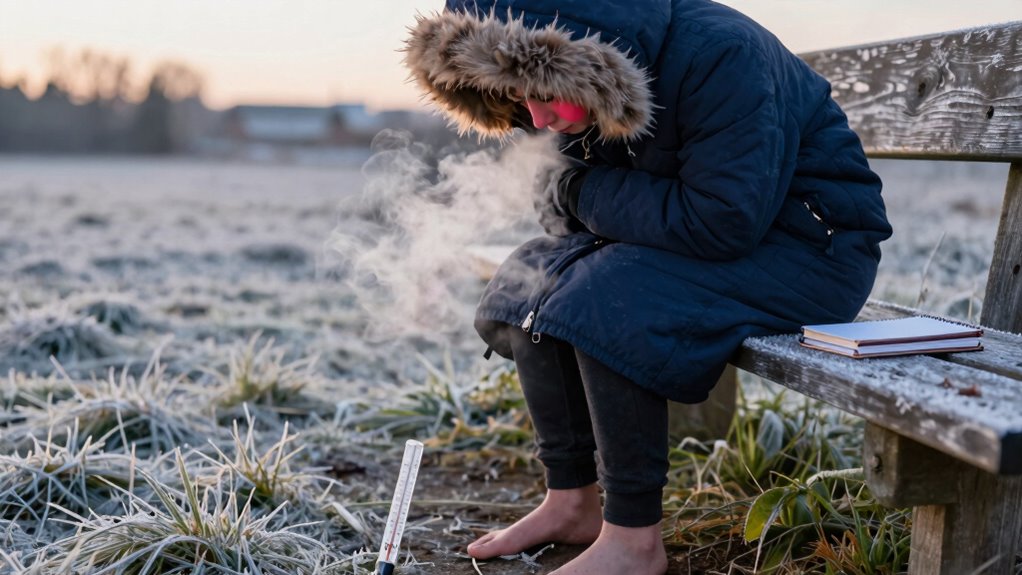
Daily cold exposure can offer numerous health benefits, but understanding how to monitor your body’s response safely is essential. When you start incorporating cold exposure into your routine, you’re engaging in a process called cold adaptation. This means your body gradually becomes more efficient at handling lower temperatures, which can improve your resilience and overall stress management. However, pushing too hard or not paying attention to how you feel can backfire, leading to negative effects rather than benefits. That’s why self-assessment is vital. You need to tune into your body’s signals to determine if you’re progressing safely or risking overexposure.
As you practice daily cold exposure, pay close attention to how your body responds during and after each session. Mild discomfort is normal, especially in the beginning, but persistent pain, numbness, or excessive shivering can indicate you’re pushing too far. If you notice your heart racing beyond what feels manageable or if you feel dizzy and disoriented afterward, it’s a sign to scale back. Cold adaptation isn’t about enduring extreme cold but gradually building your tolerance over time. Listening to your body’s cues helps you avoid stress overload, which can counteract the benefits of cold exposure, such as improved immune function and mental clarity. Additionally, tracking your progress can help you identify when you’re ready to increase the intensity safely.
Monitoring your stress levels is another key aspect of self-assessment. Cold exposure triggers a stress response, activating your sympathetic nervous system. A well-managed stress response can strengthen your resilience, but if you experience prolonged fatigue, irritability, or difficulty recovering, it could mean you’re overdoing it. Take note of how you feel in the hours or days following exposure. If you’re recovering quickly and feel energized, you’re likely on the right track. Conversely, if you feel drained or your sleep quality suffers, it might be time to reduce the frequency or intensity of your cold sessions.
Monitor your recovery and energy levels to avoid overdoing cold exposure.
Your breathing is also a useful indicator. During cold exposure, controlled, steady breathing helps manage discomfort and promotes relaxation. If you notice yourself gasping or holding your breath frequently, you might need to slow down and reassess your approach. Over time, with consistent practice, your cold adaptation improves, but the key is gradual progress and honest self-evaluation. Remember, the goal isn’t to endure suffering but to build resilience safely. By staying attentive to your body’s responses and adjusting accordingly, you can enjoy the many benefits of daily cold exposure without risking overstress or injury. Recognizing individual tolerance levels is crucial to maintaining a safe and effective cold exposure routine.

vistashine Cold Water Therapy Pad for Ice Therapy Machine Suitable for Knee, Shoulder, Lumbar, Ankle, Cervical, Back, Leg and Hip (Knee pad)
The ice therapy machine models suitable for this product for cold therapy pad machine
As an affiliate, we earn on qualifying purchases.
As an affiliate, we earn on qualifying purchases.
Frequently Asked Questions
Can Cold Exposure Strengthen My Immune System Long-Term?
Cold exposure can boost your immune benefits by stimulating your body’s response and increasing white blood cell production, which may strengthen your immune system long-term. However, consistency and moderation matter; overdoing it might lead to stress or illness. Pay attention to how your body reacts, and gradually increase exposure while listening to your signals. This balanced approach helps you enjoy the potential long-term immune benefits safely.
Are There Specific Health Conditions That Contraindicate Cold Exposure?
If you have heart conditions or circulatory disorders, cold exposure might not be safe for you. For example, someone with a history of angina experienced chest pain during cold dips, highlighting risks. Always consult your doctor before starting cold exposure routines, especially if you have cardiovascular issues. Your health depends on personalized advice, so don’t ignore symptoms or medical advice that could prevent serious complications.
How Does Cold Exposure Affect Mental Health and Mood?
Cold exposure can boost your mental clarity and emotional resilience by releasing mood-enhancing endorphins. You might notice improved focus and a more positive outlook after regular exposure. However, pay attention to how you feel; overdoing it could cause stress or anxiety. Self-assess by tracking your mood changes and physical reactions, adjusting your cold exposure routine to support your mental health without overwhelming you.
Is There an Ideal Duration for Daily Cold Exposure?
The ideal cold duration varies for each person, but generally, keep exposure limits between 1 to 5 minutes to avoid adverse effects. Start with shorter periods and gradually increase as your body adapts. Pay attention to your body’s signals—if you feel numb, dizzy, or overly uncomfortable, cut back on the cold duration. Consistent, mindful exposure helps maximize benefits without risking overexposure.
Can Cold Exposure Replace Traditional Exercise Benefits?
Cold exposure can’t fully replace traditional exercise benefits, but it can support cold adaptation and boost circulation. While it offers some advantages like increased alertness and stress resilience, it doesn’t provide the same muscle strengthening or cardiovascular improvements as exercise. To get the most out of both, incorporate cold exposure as a supplement, not a substitute, ensuring you maintain a balanced routine that targets overall health and fitness.

The Pod Company Ice Pod Pro Cold Plunge Tub, 110 Gallon (420L) Inflatable Ice Bath for Adults, Fits Up to 6'7", Insulated, Chiller Compatible, BPA-Free, UV-Resistant Nylon, Dual Drain Hoses
NEXT-LEVEL COLD PLUNGING – The Ice Pod Pro delivers a premium at-home cold therapy experience with upgraded materials,…
As an affiliate, we earn on qualifying purchases.
As an affiliate, we earn on qualifying purchases.
Conclusion
So, you’ve braved the icy waters of daily cold exposure—bravo! But remember, too much of a good thing can turn into a frosty nightmare. Keep listening to your body, and if you start feeling like a human popsicle, it’s time to warm up. After all, who knew that turning into a human polar bear might come with some unexpected side effects? Stay balanced, stay warm, and don’t let the cold turn you into a frozen statue.

Blueleaf Mens Thermal Compression Pants Fleece Lined Athletic Running Tights Leggings Cold Weather Sports Base Layer Bottoms Winter Gear Navy M
Thermal Insulation: Crafted from 88% Polyester and 12% Spandex, featuring a cold-resistant outer layer and fleece-lined inner to…
As an affiliate, we earn on qualifying purchases.
As an affiliate, we earn on qualifying purchases.

Bas Rutten O2Trainer: Breathing Muscle Training Device | Lung Power & Endurance Tool for Athletes, Singers & High-Altitude Performance | Diaphragmatic Respiratory Trainer | 16 Resistance Caps | Blue
DESIGNED BY UFC LEGEND BAS RUTTEN: Created by world champion fighter and conditioning expert Bas Rutten, the O2Trainer…
As an affiliate, we earn on qualifying purchases.
As an affiliate, we earn on qualifying purchases.