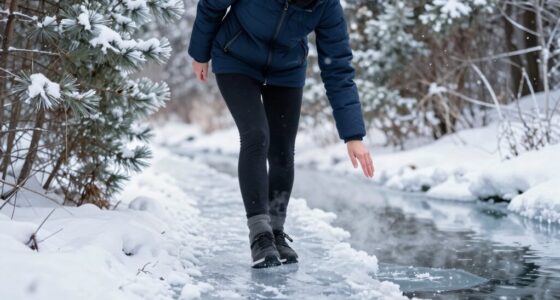

To progress safely in cold water, start gradually by increasing exposure over time, allowing your body and mind to adapt. Focus on staying calm and mindful during each session, using breathing techniques to manage shock. Be patient and avoid rushing into colder waters or longer durations, which can cause setbacks. Consistent, moderate practice helps build both physiological resilience and mental toughness, leading to lasting benefits. Keep going, and you’ll discover more about how to optimize your cold water journey.
Key Takeaways
- Gradually increase cold exposure duration and intensity to allow physiological and mental adaptation.
- Incorporate mindfulness and breathing techniques to stay calm and present during cold immersion.
- Prioritize patience and consistency over intensity to prevent shock and promote safe progress.
- Listen to your body’s signals and avoid rushing into colder or longer sessions prematurely.
- Focus on building mental resilience alongside physiological changes for sustainable growth.
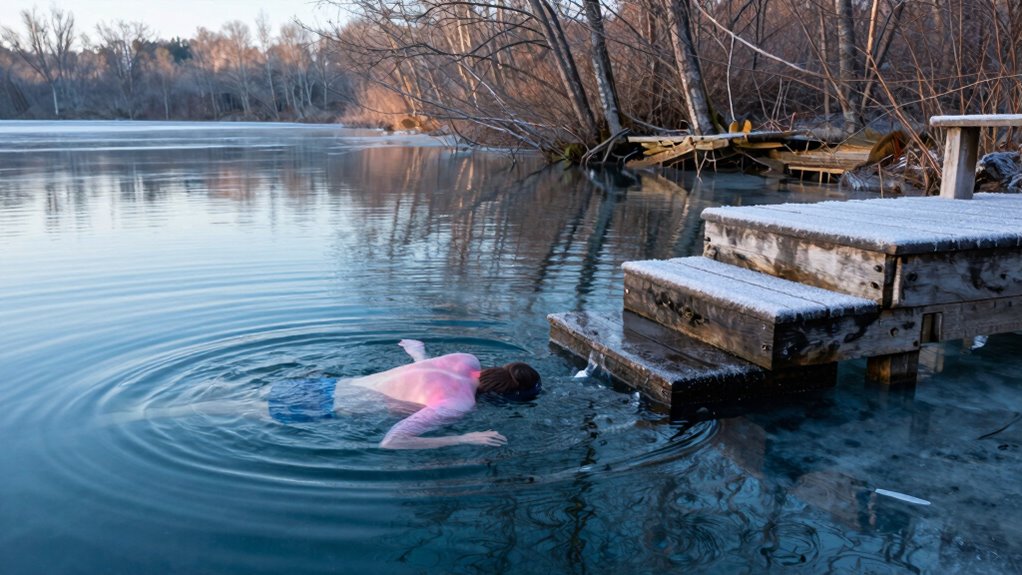
Progressing safely and effectively in cold water requires more than just brute effort; it demands a smart approach that builds resilience gradually. When you start immersing yourself, your body responds with immediate stress, but over time, your physiological adaptation kicks in. This process enhances your tolerance, making cold exposure less daunting and more manageable. The key to sustainable progress lies in developing your mental resilience as much as your physical capacity. You need to stay calm amidst the initial shock and avoid rushing into colder waters before your body and mind are prepared. Patience becomes your greatest ally, allowing your body to adapt naturally without risking injury or burnout.
Building mental resilience involves training your mind to stay focused and composed during cold exposure. Instead of fighting the discomfort, you learn to accept it, which reduces anxiety and panic. Breathing techniques, such as slow, controlled inhales and exhales, can help you stay present and grounded. Over time, as you repeat cold immersions with consistency, your mental resilience strengthens. You begin to associate the experience with calm rather than fear, which makes subsequent sessions easier and more effective. This mental shift is crucial because it influences your physiological adaptation. When your mind remains steady, your body responds more efficiently to the cold, activating your parasympathetic nervous system to promote recovery and resilience. Recognizing the importance of gradual progression**** can help you avoid setbacks and maintain motivation.
Training your mind to stay calm during cold exposure enhances both mental resilience and physiological adaptation.
Furthermore, understanding the physiological mechanisms behind cold adaptation can deepen your commitment and help you tailor your approach for optimal results. Physiological adaptation is the body’s way of becoming more efficient at handling cold stress. It involves improvements in circulation, increased brown fat activity, and enhanced metabolic responses. To foster this adaptation safely, you should follow a gradual progression—start with brief exposures in mildly cold water and slowly increase duration and coldness over weeks. This slow buildup allows your body to develop protective mechanisms without overwhelming your system. Remember, rushing into intense cold exposure can cause shock, hyperventilation, or hypothermia, undermining your progress and risking safety. Consistency is vital; regular, moderate sessions help your body recognize cold as less threatening, leading to more profound physiological changes. Additionally, understanding the importance of physiological adaptation can motivate you to stay committed to a gradual and mindful practice. Incorporating mindful practice throughout this process encourages better awareness of your body’s signals, which is crucial for safe progression.
Ultimately, your progress depends on balancing mental resilience and physiological adaptation. When you approach cold water with patience, mindfulness, and a structured plan, you enable your body and mind to evolve together. This smarter method ensures you build tolerance safely and sustainably, transforming cold water challenges into opportunities for growth—both physically and mentally. By respecting your body’s signals and gradually increasing your exposure, you set yourself up for long-term success, making cold water immersion a manageable, even enjoyable, part of your routine. Emphasizing mindful practice can help prevent setbacks and foster a positive experience throughout your journey.

Mustang Cold Water Immersion Suit with Harness
Approval: USCG – UL1197 – Immersion Suits 160.171 – USCG/MED SOLAS 2010
As an affiliate, we earn on qualifying purchases.
As an affiliate, we earn on qualifying purchases.
Frequently Asked Questions
How Long Should I Stay in Cold Water Initially?
Start with just 1 to 2 minutes in cold water, focusing on breath control to stay calm. As you get comfortable, gradually increase your time by about 15-30 seconds each session. Remember, gradual exposure is key to building tolerance safely. Pay attention to your body’s signals, and don’t push too hard too fast. Consistency and mindful breathing help you extend your cold water stays comfortably over time.
What Are the Signs of Hypothermia in Cold Water?
Imagine you’re in a cold bath, feeling like a Victorian explorer. Signs of hypothermia include shivering responses that become uncontrollable, skin color changes like pallor or bluish tint, and numbness. You might also feel confusion, fatigue, or difficulty speaking. If you notice these symptoms, it’s vital to get out of the water immediately, warm up gradually, and seek medical attention to prevent serious health risks.
Can Cold Water Exposure Improve Mental Health?
Cold water exposure can improve your mental health by boosting mood and reducing stress. Engaging in mindfulness training during cold water practices helps you stay present and manage anxiety. Sensory deprivation, like immersing yourself quietly, enhances relaxation and mental clarity. Regular exposure, done safely, can build resilience, promote dopamine release, and foster a sense of accomplishment, all contributing positively to your overall mental well-being.
How Does Breathing Technique Affect Cold Water Adaptation?
Imagine standing at the edge of icy water; your breath control becomes your shield. When you practice breathing techniques, you regulate oxygen intake, helping your body adapt faster to cold. Proper oxygen regulation calms your mind and prevents shock, allowing you to stay longer in cold water. This deliberate breathing strengthens your resilience, making each immersion feel more manageable and empowering, turning cold exposure into a controlled, even invigorating experience.
Is Cold Water Immersion Safe for Everyone?
Cold water immersion isn’t safe for everyone, especially if you have heart conditions or blood pressure issues. You should prioritize cold water safety by consulting a healthcare professional before starting. While immersion benefits include improved circulation, boosted immunity, and mental clarity, it is crucial to listen to your body and avoid prolonged exposure. Always ease into cold water and never push yourself beyond your comfort zone to prevent risks.

Airtrim Cold-Weather Breathing Mask, Black, with 2 Replacement Filters
WARMS & HUMIDIFIES INHALED AIR IN EXTREME COLD: Airtrim uses warmth and moisture from your exhaled breath to…
As an affiliate, we earn on qualifying purchases.
As an affiliate, we earn on qualifying purchases.
Conclusion
As you gently embrace the subtle dance of cold water, remember that every small step takes you further along your journey. With patience and consistency, you’ll find yourself gradually steering through colder waters with greater ease. Trust in the quiet progress, and don’t rush the process—every wave, no matter how tiny, brings you closer to mastery. Over time, what once felt daunting becomes simply part of your growing confidence in the chill.

findmal 10 x 10ft Sports Training Net with Nylon Rope
Convenient Storage: No rigid sharp threads exposed, so users avoid palm scratches during setup, adjustment and storage. The…
As an affiliate, we earn on qualifying purchases.
As an affiliate, we earn on qualifying purchases.

Cold Plunge Therapy for Beginners: The Complete Guide to Cold Water Immersion for Recovery, Resilience, and Longevity
As an affiliate, we earn on qualifying purchases.
As an affiliate, we earn on qualifying purchases.