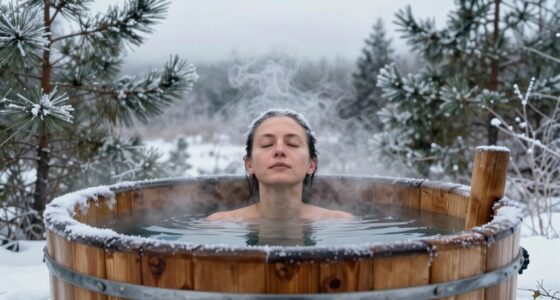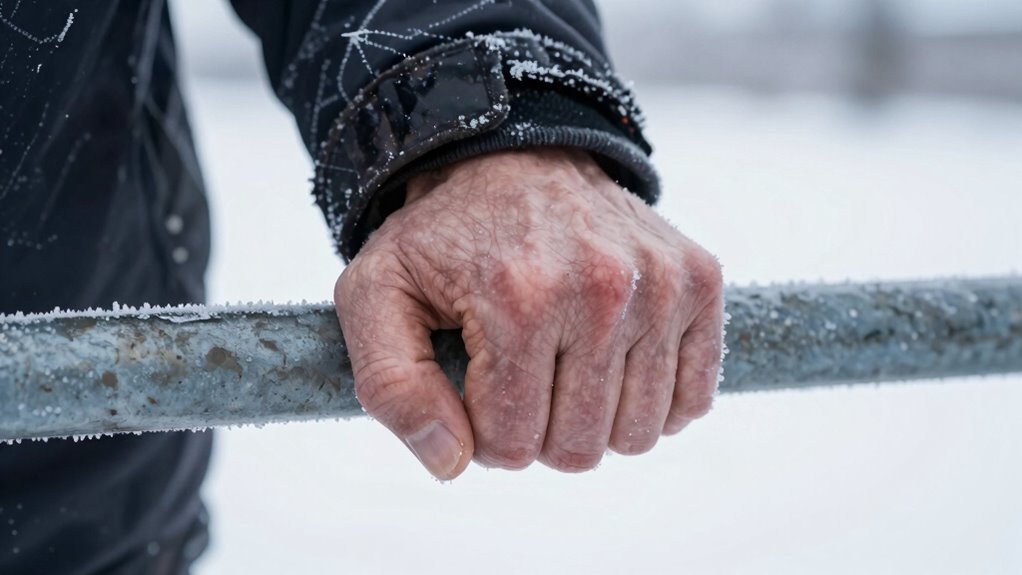

When managing cold exposure, aim for a discomfort level around 2 to 4 on a scale of 10, where 1 is minimal sensation and 10 is extreme pain. You should feel alert but not overwhelmed or in pain, allowing your body to adapt gradually. Listening to your sensations helps prevent overdoing it. As you progress, discomfort might lessen, signifying increased tolerance. Keep an eye on your feelings, and if you’re curious about fine-tuning this balance, there’s more to explore.
Key Takeaways
- Aim for a discomfort rating of 2-4 to ensure safe and manageable cold exposure.
- Avoid reaching discomfort levels above 5 to prevent overexposure and potential health risks.
- Monitor sensations regularly; decrease intensity if discomfort spikes beyond your target range.
- Use the discomfort scale to gradually increase exposure as tolerance improves.
- Balance effort to promote adaptation while preventing pain or severe cold stress.
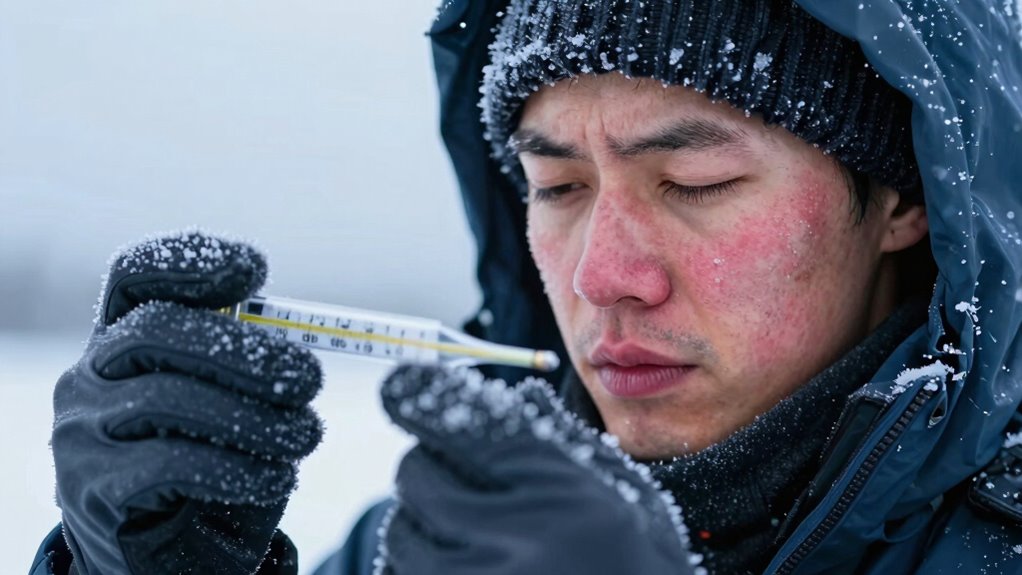
Ever wondered how you can gauge your effort during cold exposure? It’s a common question, especially as you start to explore how your body responds to the chill. When it comes to cold adaptation, understanding how hard it should feel is essential to avoiding overexposure or under-stimulation. That’s where the discomfort scale comes into play. This subjective method helps you assess how intense your cold experience is, giving you a practical way to manage your exposure without relying solely on temperature readings.
The discomfort scale is simple but effective. It encourages you to rate how cold or uncomfortable you feel during your exposure session. Think of it as a way to translate physical sensations into a numerical value, making it easier to track progress and adjust your efforts. For example, you might rate a mild shiver as a 2 or 3 out of 10, indicating a light discomfort that’s manageable. As you become more experienced, you’ll notice that your perception of cold shifts—what once felt intense might now feel moderate, thanks to cold adaptation. This process involves your body gradually acclimating, so you can tolerate colder temperatures or longer durations with less discomfort over time.
Using the discomfort scale helps prevent pushing too hard, which is vital for safety. Cold exposure can be beneficial, but pushing into severe discomfort or pain can lead to hypothermia or other health issues. By regularly checking in with your discomfort level, you maintain a balanced approach. You’re training your body to adapt, not to be overwhelmed by the cold. When you notice your discomfort decreasing at the same temperature and duration, it’s a good sign that your cold adaptation is progressing. Conversely, if discomfort spikes unexpectedly, it’s a cue to dial back and give your body time to adjust. Incorporating training principles from fitness routines can help you develop a sustainable and effective cold exposure practice.
Frequently Asked Questions
How Does Individual Tolerance Affect RPE During Cold Exposure?
Your individual variability and tolerance thresholds play a big role in how you perceive cold exposure. If you’re more tolerant, you might rate the effort lower on the RPE scale, feeling less discomfort. Conversely, if your tolerance is lower, cold might feel more intense, raising your RPE. Recognizing your unique limits helps you adjust exposure safely and avoid overexertion or cold-related risks.
Can RPE Be Used to Prevent Hypothermia Risks?
Think of RPE as your internal compass in cold exposure. It can help you recognize early signs of hypothermia, allowing you to act before danger strikes. By paying attention to your perceived exertion, boosted by psychological resilience and proper clothing insulation, you stay alert and avoid overdoing it. RPE isn’t a foolproof tool, but it’s a valuable guide to keep your body safe and prevent hypothermia risks.
How Does Acclimatization Influence Perceived Exertion in Cold?
Cold acclimatization reduces your perceived exertion by improving sensation regulation, making cold feel less intense over time. As you adapt through cold exposure, your body’s response diminishes, so you notice less discomfort at the same intensity. This process, known as cold adaptation, helps you manage sensations better, allowing you to tolerate cold longer and perform more effectively without overestimating effort or risking hypothermia.
Are There Specific RPE Guidelines for Extreme Cold Conditions?
In extreme cold conditions, there aren’t strict RPE guidelines, but you should rely on perception scales to gauge effort. Aim for a moderate effort level, around 3-4 on a 10-point scale, to prevent overexertion and hypothermia. Listen to your body’s signals and adjust accordingly, recognizing that cold weather can distort perception. Staying within a safe RPE range helps you maintain endurance without risking health.
How Should RPE Adjustments Vary for Different Activity Types?
You should adjust your RPE based on activity type by considering your metabolic rate and clothing insulation. For high-intensity activities, you’ll likely perceive effort as higher even if the cold isn’t as intense, so lower RPE might be appropriate. Conversely, during low-intensity or static activities, increased clothing insulation and a lower metabolic rate can make efforts feel harder, prompting you to decrease your RPE to stay safe and comfortable.
Conclusion
Remember, listening to your RPE during cold exposure helps you stay safe and optimize your experience. Most people report feeling around a 5-6 on the RPE scale after 10-15 minutes in cold water, which indicates a manageable challenge. Keep in mind, only about 10% of cold exposure enthusiasts push beyond an RPE of 7, reducing the risk of hypothermia. Stay mindful of your body’s signals and adjust accordingly for safe, effective cold training.