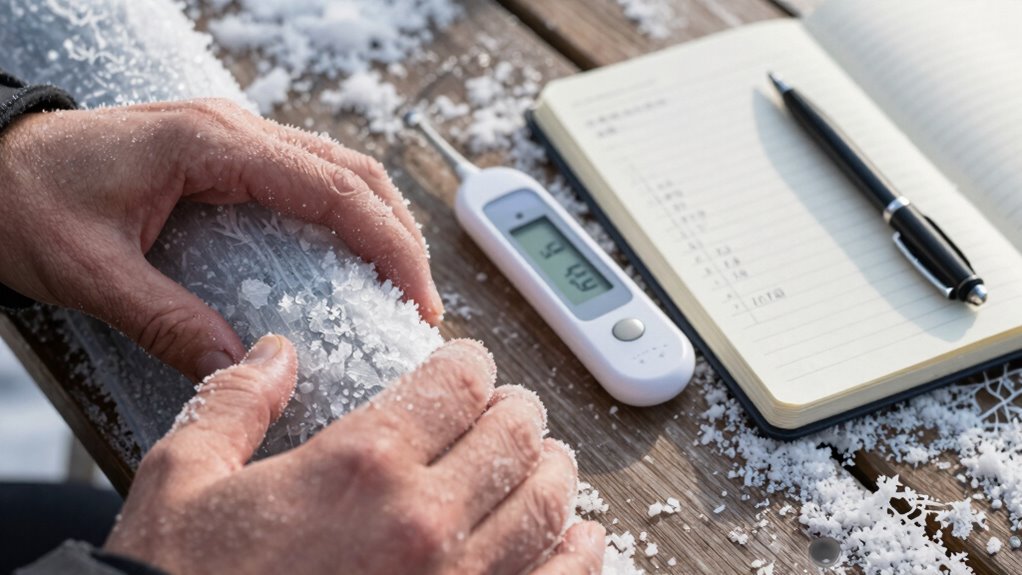

You’ll see better cold exposure progress when you track your temperature, sensations, and physiological responses. Recording water or outdoor temps helps you notice tolerance patterns and adapt your approach. Noting how your body feels during each session reveals shifts in comfort and muscle responses. Monitoring heart rate, breathing, and recovery offers insights into your nervous system’s adaptation. Stay consistent with these logs, and you’ll discover key trends that boost your confidence—plus, there’s more to explore to optimize your journey.

Get home appliances delivered free with Prime
- Fast, free delivery on millions of items
- Prime Video, Amazon Music and more included
- Member-only deals all year
Key Takeaways
- Tracking water or outdoor temperatures helps establish baseline tolerance and monitor improvements over time.
- Recording sensations and comfort levels guides active adjustments to prevent overstress and support adaptation.
- Monitoring recovery and post-session effects reveals benefits like mood and sleep improvements, reinforcing motivation.
- Observing physiological responses such as heart rate and breathing patterns indicates nervous system adaptation.
- Documenting overall progress and mindset fosters resilience, confidence, and tailored recovery strategies.
Beginning a cold exposure journey can seem intimidating at first, but progress comes with consistency and mindful practice. As you immerse yourself in cold therapy, you’ll notice that tracking certain aspects of your experience can markedly accelerate your growth. When you pay attention to these details, you develop a deeper understanding of how your body responds, which fosters positive mindset shifts and improves your recovery strategies.
Tracking your cold exposure fosters understanding, resilience, and positive mindset shifts through mindful practice and consistency.
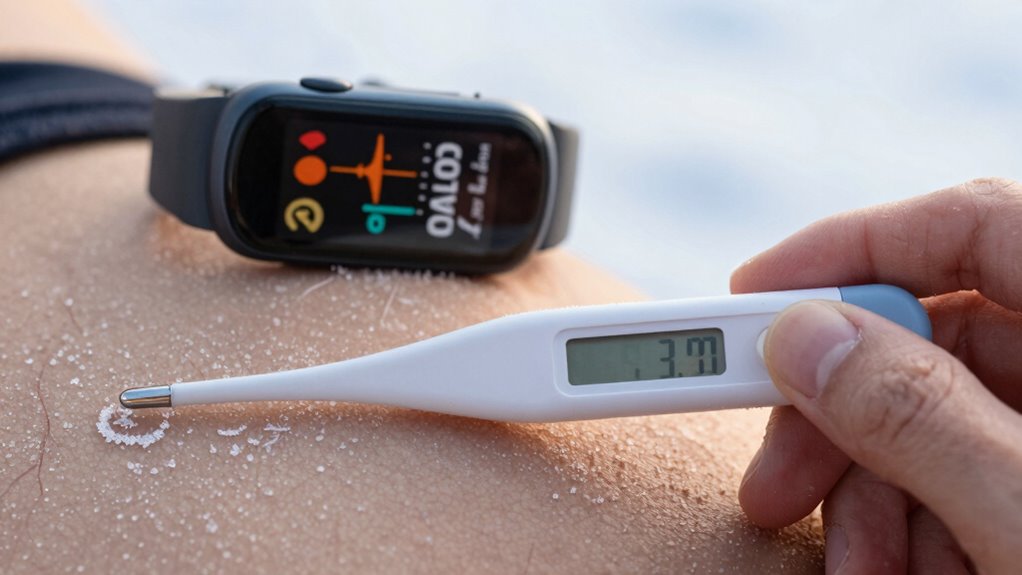
One of the most important things to track is your temperature exposure. Whether you’re stepping into an ice bath or braving cold outdoor conditions, noting the temperature helps you establish a baseline and observe how your body adapts over time. You’ll start to see patterns emerge—perhaps you tolerate colder water or longer durations as your resilience grows. This insight encourages a mindset shift from fear of the cold to confidence in your ability to handle it, reinforcing your commitment to regular practice.
Next, keep a log of your perceived intensity and comfort levels during each session. How cold do you feel? Are your muscles tightening or relaxing? Do you experience shivering or a tingling sensation? Recording these sensations not only helps you refine your approach but also empowers you to make smarter recovery strategies. For example, if you notice excessive shivering or discomfort, you might decide to shorten your exposure or warm up gradually afterward. This active adjustment prevents overstress and supports your body’s adaptation process, making cold exposure a sustainable part of your routine. Recognizing these sensations can also help you better understand your body’s adaptive responses and how they influence your overall progress.
Another critical element is tracking your recovery. After each session, pay attention to how you feel physically and mentally. Do you notice reduced soreness, quicker mood improvements, or better sleep? Documenting these effects helps you associate specific exposure durations or temperatures with positive outcomes, reinforcing your motivation. Over time, these observations build a mindset rooted in resilience and self-awareness, shifting your perspective from discomfort to empowerment. Recognizing your body’s adaptive responses can also motivate you to explore additional recovery techniques that enhance your progress. Incorporating consistent tracking of these factors can further deepen your understanding of your body’s unique responses and optimize your cold exposure regimen.
Finally, don’t forget to track your breathing and heart rate before, during, and after cold exposure. Being mindful of these physiological responses gives you insight into your nervous system’s state and how it adapts. Recognizing improvements in your recovery rate or a calmer heart rate over time can boost your confidence and help you develop effective recovery strategies, such as breathwork or gentle movement, to optimize your cold exposure sessions. Incorporating data collection related to your physiological responses can further enhance your understanding and progress.
cold water immersion thermometer
As an affiliate, we earn on qualifying purchases.
As an affiliate, we earn on qualifying purchases.
Frequently Asked Questions
How Soon Can I Expect to See Progress From Cold Exposure?
You can start noticing cold exposure benefits like improved circulation and mental clarity within just a few days to a week. While ice bath benefits may take longer to manifest fully, consistent practice helps. Be aware of cold exposure myths—such as instant results—so you’re patient. Tracking your progress allows you to see subtle changes over time, ensuring you stay motivated as your body adapts gradually to cold exposure.
What Are the Risks of Tracking Cold Exposure Data?
You might notice some risks when tracking cold exposure data, especially if you’re not careful. Coincidentally, inaccuracies in data accuracy can lead you to misjudge your progress or push too hard. Privacy concerns also come into play if your data isn’t secured properly, risking exposure of personal information. Stay cautious, use reliable tools, and understand how your data is stored to minimize these risks and keep your cold exposure journey safe.
Which Tools Are Best for Monitoring Cold Exposure?
You should use tools with high sensor accuracy and clear data visualization for monitoring cold exposure. Devices like waterproof fitness trackers or specialized temperature sensors provide reliable readings, helping you track your progress precisely. Look for tools that visualize data over time, making it easier to see patterns. Accurate sensors guarantee your data reflects reality, so you can adjust your cold exposure routines effectively and safely.
How Does Cold Exposure Affect Sleep Quality?
Cold exposure can improve your sleep quality by helping regulate sleep cycles and hormonal impacts. Studies show that spending time in cold environments can increase melatonin production, which promotes restful sleep. You might notice deeper sleep and fewer awakenings. By tracking these effects, you’ll see how cold exposure enhances your overall sleep pattern, making it easier to wake up refreshed and energized. Keep monitoring your sleep quality for consistent benefits.
Can Tracking Improve Motivation for Cold Exposure Routines?
Yes, tracking can boost your motivation for cold exposure routines. When you monitor your progress, you reinforce your mindset consistency, making it easier to stick with the habit. Seeing improvements motivates you to continue, turning cold exposure into a rewarding habit. Regular tracking helps you stay accountable, build confidence, and develop a stronger mental connection to your routine, ultimately making it easier to maintain and improve over time.
cold exposure temperature log journal
As an affiliate, we earn on qualifying purchases.
As an affiliate, we earn on qualifying purchases.
Conclusion
Imagine trying to navigate a foggy landscape; without a compass, every step feels uncertain. Tracking your cold exposure progress is that compass. By monitoring your duration, temperature, and how you feel, you gain clarity and confidence in your journey. Just like a seasoned explorer, you’ll find that each small data point guides you closer to better resilience and comfort. Keep these metrics in sight, and watch your cold mastery sharpen with every step forward.
heart rate monitor for cold therapy
As an affiliate, we earn on qualifying purchases.
As an affiliate, we earn on qualifying purchases.
As an affiliate, we earn on qualifying purchases.
NFL season / tailgating Picks
team gear
As an affiliate, we earn on qualifying purchases.