


When discussing cold exposure during injury rehab with a pro, tell them about your specific injury and health history. Ask about safe methods like ice packs or cryotherapy and how long you should apply cold each session. Check if there are any risk factors or conditions that might affect you. Be sure to discuss personalized temperature settings and necessary precautions. Knowing these details can help you maximize benefits safely—if you keep going, you’ll discover more essential tips.
Key Takeaways
- Discuss your specific injury type and severity to determine if cold therapy is appropriate.
- Review safe cold application methods, including temperature, duration, and use of barriers.
- Identify any health conditions that may contraindicate cold exposure or require special precautions.
- Establish a personalized treatment plan with professional guidance and monitoring for adverse effects.
- Understand signs of skin or nerve damage to stop cold therapy immediately if symptoms occur.
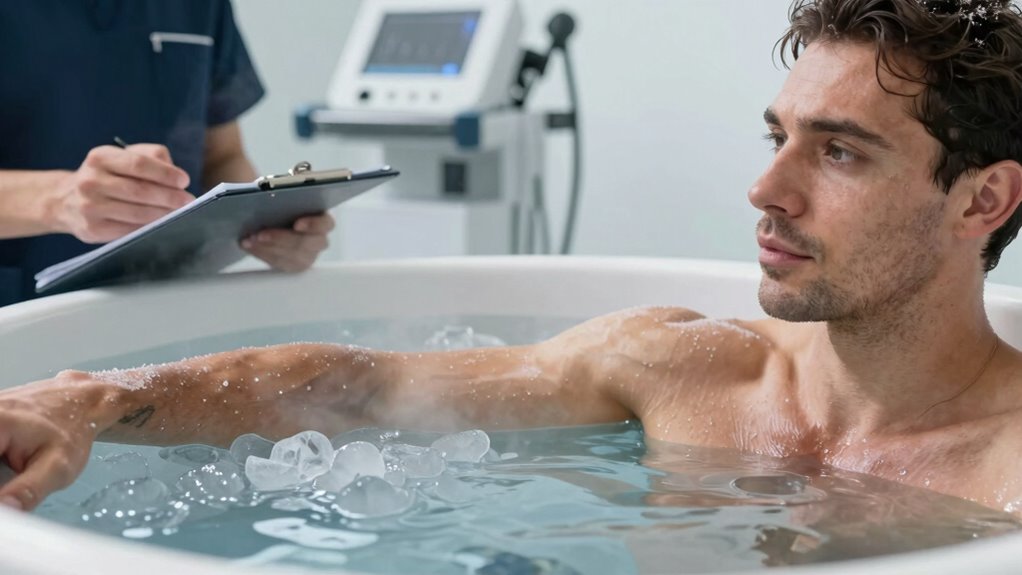
When you’re recovering from an injury, incorporating cold exposure into your rehab routine can offer notable benefits. Many people turn to cryotherapy or cold therapy to reduce swelling, alleviate pain, and speed up healing. Cryotherapy benefits are well-documented; it can constrict blood vessels, which minimizes inflammation and limits tissue damage. It also dulls nerve activity, decreasing pain sensations, and can even boost your mood by releasing endorphins. However, it’s important to understand that cold therapy isn’t without risks. Cold therapy risks include frostbite, nerve damage, or skin irritation if applied improperly or for too long. That’s why discussing your plan with a healthcare professional is essential before jumping into any cold exposure routine. They can help you determine the appropriate duration, temperature, and method suited to your injury and overall health.
Injury recovery benefits from cold exposure, but proper application and professional guidance are essential to avoid risks like frostbite and nerve damage.
You should know that cold therapy can be delivered in various forms, such as ice packs, cold compresses, or whole-body cryotherapy chambers. Each has its advantages and potential pitfalls. For example, ice packs are accessible and easy to use but can cause skin damage if left on the skin for extended periods. Whole-body cryotherapy offers a more extensive treatment but requires specialized equipment and supervision. No matter which method you choose, it’s crucial to apply cold therapy correctly to maximize benefits and minimize risks. Always start with shorter sessions—typically 10-15 minutes—and monitor how your body responds. Additionally, understanding the science behind cold exposure can help you make more informed decisions about its safe use during recovery.
It’s equally important to be aware of the cold therapy risks. Improper application can lead to frostbite, especially if the cold source is directly on the skin without a barrier. Overuse can cause nerve damage or worsen your injury, counteracting the benefits. If you’re feeling numb, tingly, or uncomfortable, it’s a sign to remove the cold source immediately. People with certain conditions like circulatory issues or cold sensitivities should consult a healthcare provider before proceeding. Not everyone responds the same way to cold exposure, so personalized guidance is key.
Involving a professional ensures you’re using cold therapy safely and effectively. They can help you develop a tailored plan that includes the right timing, duration, and temperature. They’ll also monitor your progress and adjust the protocol if necessary. Remember, cold therapy is a powerful tool, but it’s only one part of a thorough injury rehab plan. When used correctly under professional supervision, it can greatly enhance recovery and reduce discomfort, helping you return to normal activity more swiftly and safely. Learning about safety considerations and proper application techniques can further improve your outcomes and prevent complications.
Frequently Asked Questions
Can Cold Exposure Worsen My Injury?
Cold exposure can worsen your injury if it reduces blood flow or increases nerve sensitivity. When you apply cold, it constricts blood vessels, potentially slowing healing or causing numbness. If your nerves become more sensitive, cold might intensify pain or discomfort. Always talk to a healthcare professional before using cold therapy, especially during rehab, to guarantee it benefits your recovery without risking further damage.
How Often Should I Use Cold Therapy?
Imagine a chilly breeze gently numbing your skin—that’s the feeling you want from your cold therapy. You should typically limit your cold sessions to 10-15 minutes, 2-3 times daily, depending on your injury and your body’s response. Focus on ice frequency and how your body reacts during each session. Always listen to your body, and discuss your cold therapy schedule with a healthcare professional for best results.
Are There Risks With Cold Exposure During Rehab?
There are risks with cold exposure during rehab, such as nerve damage, skin irritation, or delayed healing if not used appropriately. Benefits considerations include pain relief and reduced inflammation, but you should also explore alternative therapies. Always discuss your cold therapy plan with a pro to ensure it’s safe and effective for your specific injury and recovery stage, avoiding potential complications.
Is Cold Exposure Suitable for All Injury Types?
Research shows cold exposure can aid recovery, but it’s not suitable for all injury types—only about 60% of cases benefit. You should discuss with a pro whether cold therapy fits your specific injury, considering alternative therapies and individual differences. Some injuries, like open wounds or nerve damage, may worsen with cold, so personalized advice guarantees safe, effective rehab. Always consult a specialist before trying cold exposure.
How Do I Know if Cold Therapy Is Effective?
You’ll know cold therapy is effective if you notice reduced pain and improved mobility within a short time. Pay attention to ice penetration; if the cold reaches deep tissues, it can provide pain relief and decrease inflammation. However, if you experience increased discomfort or numbness that persists, it may not be functioning well. Always consult a professional to guarantee cold therapy is suitable and to adjust the treatment for ideal results.
Conclusion
Remember, when it comes to cold exposure during injury rehab, you’re playing with fire if you don’t consult a pro. While it can aid recovery, doing it wrong can set you back instead of moving you forward. Don’t put all your eggs in one basket—trust expert guidance to avoid throwing good money after bad. Stay informed, stay safe, and don’t let your injury become a mountain out of a molehill.