
Cold temperatures make your soreness feel worse because they cause your muscles to tighten, restrict blood flow, and heighten nerve sensitivity. This increased nerve response amplifies pain signals, making discomfort seem more intense. When it’s cold, your body’s natural warning system kicks in, and soreness becomes more noticeable. Understanding how cold affects your nerves and muscles helps you manage pain better. Keep going to discover simple ways to reduce cold-induced soreness and stay comfortable.

Get home appliances delivered free — and shop member deals
- Fast, free delivery on millions of items
- Access to Prime Big Deal Days deals on October 6–7
- Prime Video, Amazon Music and more included
Key Takeaways
- Cold increases nerve reactivity, making muscles feel more sore and tender.
- Thermoreceptors send stronger pain signals to the brain during cold conditions.
- Vasoconstriction reduces blood flow, leading to stiffness and heightened soreness perception.
- Cold amplifies pain signals, causing soreness to feel worse even if tissue damage is unchanged.
- Warming muscles can help reduce cold-induced soreness by improving blood flow and nerve response.
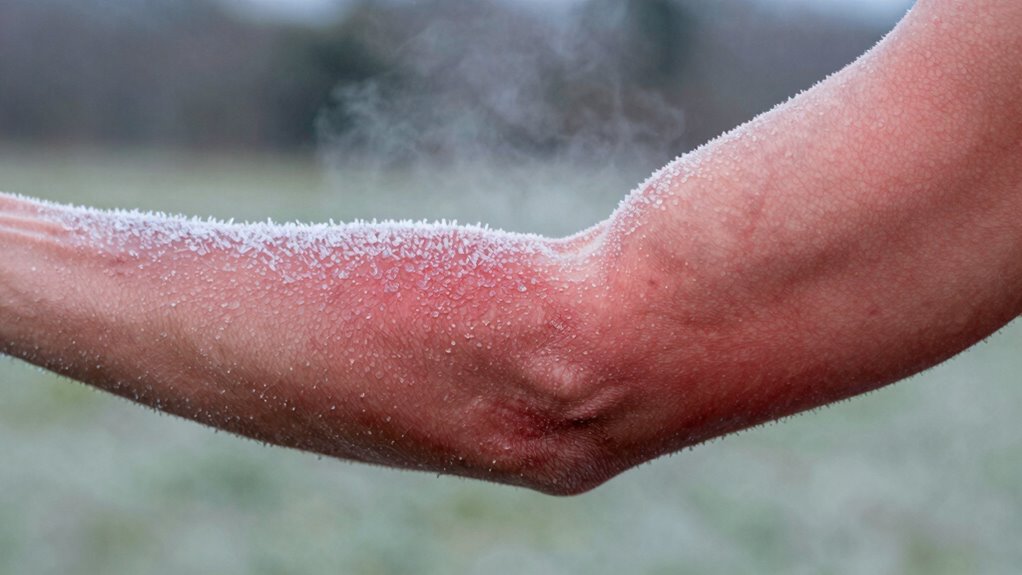
Many people notice that their muscles feel more sore and tender when they’re cold, but understanding why this happens can help you manage discomfort better. Cold sensitivity plays a significant role here, affecting how your body perceives soreness. When your environment drops in temperature, your nerves respond by becoming more reactive, which heightens your perception of pain and tenderness. This nerve response is a natural part of your body’s way of warning you to protect yourself from further harm or injury in cold conditions.
Your body’s nerve response to cold involves the activation of specific sensory receptors in your skin and muscles. These receptors, known as thermoreceptors, detect temperature changes and send signals to your brain about the cold environment. When it’s cold, these signals can amplify pain sensations, making soreness feel more intense. Essentially, your nervous system becomes more alert to discomfort, and the perception of soreness intensifies because your brain interprets the signals differently under cold conditions.
Cold activates thermoreceptors, amplifying pain signals and heightening soreness perception.
Furthermore, cold sensitivity can cause your muscles to tighten or contract involuntarily, a reflex known as vasoconstriction. This process reduces blood flow to the muscles, limiting oxygen and nutrient delivery while impeding waste removal. The result is that your muscles may feel stiffer and more tender, and soreness can seem amplified. When blood flow is restricted, muscles don’t recover as quickly, and minor injuries or strains become more noticeable, further increasing perceived soreness.
Understanding this relationship is vital because it explains why your soreness might feel worse during colder days or in chilly environments. It’s not just in your head; your nerve response genuinely alters how pain signals are processed. Recognizing this can help you adjust your expectations and strategies for recovery. For instance, warming up your muscles with gentle activity or using heat can help counteract these cold-induced effects by relaxing muscles and improving blood flow, thereby reducing perceived soreness.
In practical terms, paying attention to your body’s signals in cold weather can guide you to better manage discomfort. Wearing appropriate clothing, staying active, and keeping your muscles warm can minimize the heightened nerve response caused by cold sensitivity. Additionally, incorporating warming techniques can be especially beneficial in preventing or alleviating increased soreness. Ultimately, understanding that your nerves react differently in the cold empowers you to take proactive steps to alleviate soreness and avoid unnecessary discomfort. Your body’s response to cold is a natural, protective mechanism—learning to work with it, rather than against it, can make a significant difference in how you experience soreness during colder conditions.

SuzziPad Microwave Heating Pad for Muscle Soreness Fatigue, 7"X16", Purple
- Deep Moist Heat for Muscle Relief: Penetrates deeper to soothe fatigue
- Dual-Texture Design: Ultra-soft Minky and Dutch Velvet
- Quick Heating in 60 Seconds: Provides 20 minutes of warmth
As an affiliate, we earn on qualifying purchases.
As an affiliate, we earn on qualifying purchases.
Frequently Asked Questions
Can Cold Therapy Actually Reduce Muscle Soreness?
Yes, cold therapy can reduce muscle soreness, partly through the placebo effect and mental distraction. When you apply cold, it numbs nerve endings, which can lessen pain perception. Additionally, focusing on the cold provides a mental distraction from discomfort, making soreness feel less intense. While cold therapy isn’t a magic fix, these psychological factors, combined with physical effects, help you recover faster and feel better sooner.
How Quickly Does Cold Impact Soreness Perception?
You might be surprised, but cold can shift your perception of soreness in just minutes. As you lower the temperature past certain thresholds, your perception shifts rapidly, making soreness feel less intense. This rapid change is ironic—cold doesn’t heal, it just masks the pain temporarily. Within 5-10 minutes, your perception shifts considerably, but real recovery still takes longer. So, cold offers quick relief, but don’t rely on it for lasting healing.
Are There Risks to Using Cold for Soreness Relief?
Using ice application for soreness relief can pose risks if you’re temperature sensitive. You might experience frostbite or skin damage if you leave cold packs on too long or use them directly on skin. Always limit ice application to 15-20 minutes and protect your skin with a cloth. If you notice numbness or skin discoloration, remove the ice immediately. Be cautious, especially if you’re sensitive to cold temperatures.
Does Cold Therapy Work for All Types of Soreness?
Cold therapy isn’t a magic wand for all soreness types. It’s effective for acute injuries and inflammation, but myths about it curing every pain can lead you astray. Think of cold therapy as a toolbox rather than a one-size-fits-all fix. For alternative pain relief, you might need other methods like stretching or heat. Always consider the soreness type, and don’t rely solely on cold to soothe every ache.
How Does Individual Tolerance Affect Cold Treatment Effectiveness?
Your individual tolerance greatly impacts cold treatment effectiveness because personal thresholds vary. If you’re more sensitive, colder temperatures might provide quicker relief, but if you’re less tolerant, extreme cold could cause discomfort or even tissue damage. Temperature variability plays a role too; adjusting cold therapy to match your comfort level guarantees maximum benefits. Listen to your body, start with milder temperatures, and gradually increase to find what works best for you.

Coldest Extra Large Ice Pack for Back and Full Body – Cold Compress for Pain Relief, Ice Blanket for Sleeping or Ice Pad Physical Therapy – Folds Compact (53" x 13" – Full Body)
- THE COLDEST FULL BODY ICE PACK – Specially…
- ENGINEERED FOR COLDEST – Aids in recovery in…
- FASTER RECOVERY -Alternative to messy Ice Baths, visits…
As an affiliate, we earn on qualifying purchases.
As an affiliate, we earn on qualifying purchases.
Conclusion
Next time you feel sore in cold weather, remember that your perception might be skewed by the temperature. Studies show that cold can make soreness feel up to 30% more intense, even if your muscles aren’t actually more damaged. So, when training outdoors in chilly conditions, factor in how cold might amplify your discomfort. Staying warm or adjusting your expectations can help you better manage soreness and keep moving forward confidently.

Skylety 4 Pcs Thermal Compression Arm Warmers,Medium,Black
- Winter Windproof Protection: Retains warmth and blocks cold wind
- Non-Slip Silicone Strip: Keeps sleeve securely in place during activity
- Universal Fit for Men and Women: Elastic design fits most arm sizes
As an affiliate, we earn on qualifying purchases.
As an affiliate, we earn on qualifying purchases.

Papillon Back Massager with Heat,Shiatsu Pillow for Body Pain Relief Black
- Powerful 3D Massage Nodes: Targets neck, shoulders, back, legs, feet
- Adjustable Speed Settings: 3 speeds for personalized comfort
- Infrared Heating: Gentle 113℉/45℃ warmth
As an affiliate, we earn on qualifying purchases.
As an affiliate, we earn on qualifying purchases.
Fall Picks
fall essentials
As an affiliate, we earn on qualifying purchases.