
Endurance athletes use cold exposure deliberately to boost performance and resilience. They gradually adapt through structured routines, like cold immersions or outdoor workouts, focusing on improving circulation and reducing injury risk. They also incorporate breathing techniques and mental training to stay calm and focused in cold conditions. After training, they often use cold therapy to recover faster. If you want to understand how to tailor these strategies for your goals, keep exploring these methods further.

Get home appliances delivered free — and shop member deals
- Fast, free delivery on millions of items
- Access to Prime Big Deal Days deals on October 6–7
- Prime Video, Amazon Music and more included
Key Takeaways
- Endurance athletes incorporate gradual cold exposure to enhance circulation and thermal regulation over time.
- They structure cold immersion and outdoor workouts within their training routines for optimal adaptation.
- Athletes utilize mental and breathing techniques to stay calm and focused during cold challenges.
- Cold exposure is strategically used post-training for recovery, reducing soreness and inflammation.
- They monitor physiological responses closely to balance cold adaptation with performance and safety.
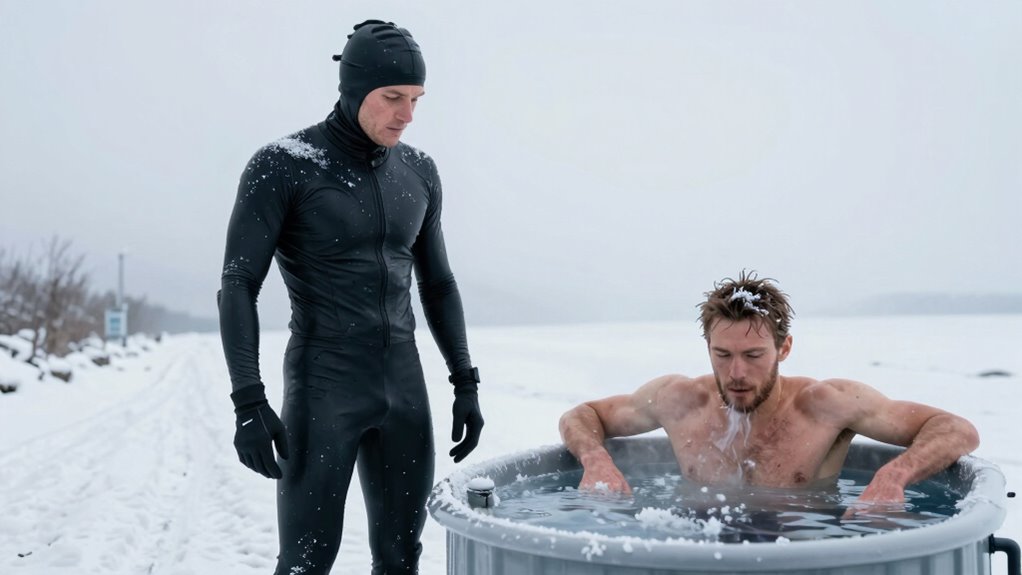
Endurance athletes often face extreme conditions, and cold exposure is a common challenge they must learn to manage. Unlike the general population, you tend to develop specific strategies to handle the cold, often focusing on cold adaptation to improve your performance and resilience. Cold adaptation involves gradually exposing yourself to lower temperatures, which helps your body become more efficient at regulating core temperature and reducing shivering. This process not only enhances your physical endurance but also minimizes the risk of cold-related injuries. As you become more acclimated, your body produces less of the stress hormones associated with cold stress, allowing you to perform better in chilly environments.
Endurance athletes develop cold adaptation strategies to boost performance and reduce injury risk in chilly conditions.
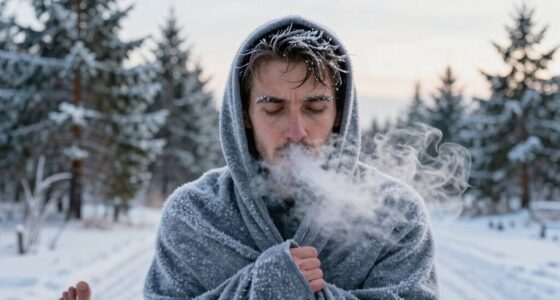
Your approach to cold exposure is usually intentional and structured, often integrated into your training routine. You might start with brief cold immersions or outdoor workouts in cooler weather, progressively increasing exposure duration. This adaptation helps your circulatory system become more effective at directing blood flow to vital organs and extremities, preventing frostbite and hypothermia. Over time, your body becomes more efficient at conserving heat and maintaining core temperature, which directly contributes to your endurance during long events in cold conditions. Additionally, understanding the importance of cold acclimatization can help you better tailor your training to maximize resilience and safety. Incorporating proper hydration and nutrition is also crucial, as these factors support your body’s ability to adapt and recover from cold exposure. Recognizing the role of body temperature regulation can further improve your strategies for managing cold environments effectively.
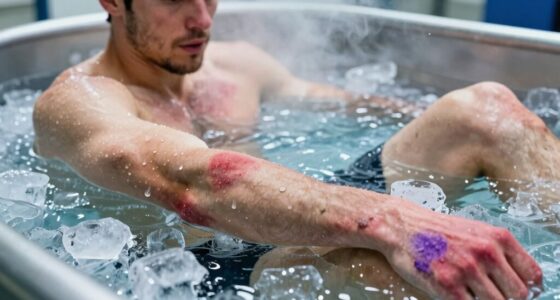
Furthermore, some athletes utilize breathing techniques to better control their core temperature and reduce the effects of cold stress, which can be an effective supplement to physical adaptation. Developing effective mental strategies can also help you stay calm and focused during cold exposure, reducing the risk of panic or hypothermia. When it comes to recovery strategies, you recognize that cold exposure isn’t just about pushing limits—it’s also about recovery. Cold baths or ice immersion are common tools you use post-training to reduce inflammation and muscle soreness. These recovery strategies can accelerate healing, allowing you to train more consistently and with less downtime. You understand that cold therapy helps constrict blood vessels, flushing out metabolic waste products from your muscles, and then, when you warm up, blood flow increases, delivering nutrients needed for repair. This cycle of constriction and dilation is essential for effective recovery, especially after intense cold exposure during your workouts or competitions.
You also pay close attention to how your body responds after cold exposure, adjusting your recovery strategies accordingly. If you notice increased stiffness or prolonged soreness, you might incorporate additional warm-up routines or active recovery to restore circulation. Conversely, if cold exposure has left you feeling refreshed and less sore, you stick with similar protocols. Your goal is to optimize recovery while maintaining the benefits of cold adaptation, ensuring your body stays resilient against the physical demands of endurance events in cold environments. Overall, your approach to cold exposure is a carefully balanced mix of adaptation, strategic training, and recovery, designed to enhance your performance and prevent injury in challenging weather conditions.
cold immersion bath for athletes
As an affiliate, we earn on qualifying purchases.
As an affiliate, we earn on qualifying purchases.
Frequently Asked Questions
How Often Should Endurance Athletes Expose Themselves to Cold Conditions?
You should expose yourself to cold conditions about 2-3 times a week to promote effective cold adaptation and improve thermal regulation. Regular cold exposure helps your body adapt by enhancing blood flow and insulating mechanisms. Keep sessions moderate—around 10-15 minutes—so you don’t risk hypothermia. Consistent practice allows your body to better manage temperature fluctuations, boosting endurance and recovery during intense training or competitions.
Are There Specific Cold Exposure Techniques That Benefit Endurance Performance?
Cold exposure techniques like cold showers and ice baths act like a wake-up call for your body, boosting resilience. You can benefit from breath-focused methods such as Wim Hof breathing to manage cold sensitivity and improve circulation. These techniques activate your nervous system, sharpening mental clarity and endurance. Incorporating controlled breathing with cold exposure helps your body adapt faster, making you more prepared for extreme conditions during long-distance events.
Can Cold Exposure Replace Traditional Warm-Up Routines for Athletes?
Cold exposure can’t replace traditional warm-up routines, but it can complement them by enhancing cold adaptation and building mental resilience. You should still perform dynamic warm-ups to prepare your muscles and increase blood flow. Incorporating cold exposure after your warm-up may improve recovery and boost your mental toughness, but it’s not a substitute. Use cold exposure as an additional tool to strengthen your endurance, not a complete replacement.
What Are the Risks of Excessive Cold Exposure for Endurance Athletes?
Excessive cold exposure puts you at risk of hypothermia and frostbite. When you overdo it, your body struggles to maintain core temperature, leading to dangerous drops in warmth and potential tissue damage. Frostbite dangers increase if you expose extremities like fingers and toes for too long in freezing conditions. Always monitor your exposure, dress appropriately, and listen to your body to prevent these serious health risks.
How Does Cold Exposure Impact Recovery Times After Training?
Cold exposure can speed up your recovery times after training by reducing inflammation and muscle soreness. It boosts your metabolic rate, helping your body clear out waste products faster. Additionally, cold exposure can enhance immune function, making you less prone to infections that could delay recovery. However, balance is key; excessive cold can hinder muscle repair, so use cold exposure strategically to support your overall recovery process.
As an affiliate, we earn on qualifying purchases.
Conclusion
As an endurance athlete, you might picture cold exposure as a harsh winter storm—unpredictable and intimidating. Yet, with controlled, strategic use, it becomes a invigorating breeze that sharpens your focus and speeds recovery. Just as a mountain stream swiftly flows past icy stones, your body adapts and thrives through deliberate cold exposure. Embrace this contrast: harness the chill not as an obstacle, but as a tool to elevate your performance and resilience.
As an affiliate, we earn on qualifying purchases.
cold exposure training equipment
As an affiliate, we earn on qualifying purchases.
As an affiliate, we earn on qualifying purchases.
Fall Picks
fall essentials
As an affiliate, we earn on qualifying purchases.