
To test if cold exposure benefits your recovery, start by establishing a baseline of soreness, fatigue, and energy levels after workouts. Use consistent cold immersion sessions at 10-15°C for 10-15 minutes, tracking how you feel during and after each session. Alternate weeks with and without cold exposure, and compare your progress over 2-3 weeks. Pay attention to your body’s responses and adjust accordingly to find what truly works for you. Keep exploring for more detailed strategies.

Get home appliances delivered free — and shop member deals
- Fast, free delivery on millions of items
- Access to Prime Big Deal Days deals on October 6–7
- Prime Video, Amazon Music and more included
Key Takeaways
- Establish a personal baseline by monitoring soreness, fatigue, and energy levels before starting cold exposure sessions.
- Maintain consistent cold immersion parameters (temperature, duration, timing) to ensure reliable comparisons over time.
- Use subjective feedback and objective measures (performance tests, biomarkers) to evaluate recovery improvements.
- Incorporate controlled periods without cold exposure to compare recovery outcomes and isolate cold immersion effects.
- Track personal responses systematically and adjust based on whether recovery indicators improve, decline, or remain unchanged.
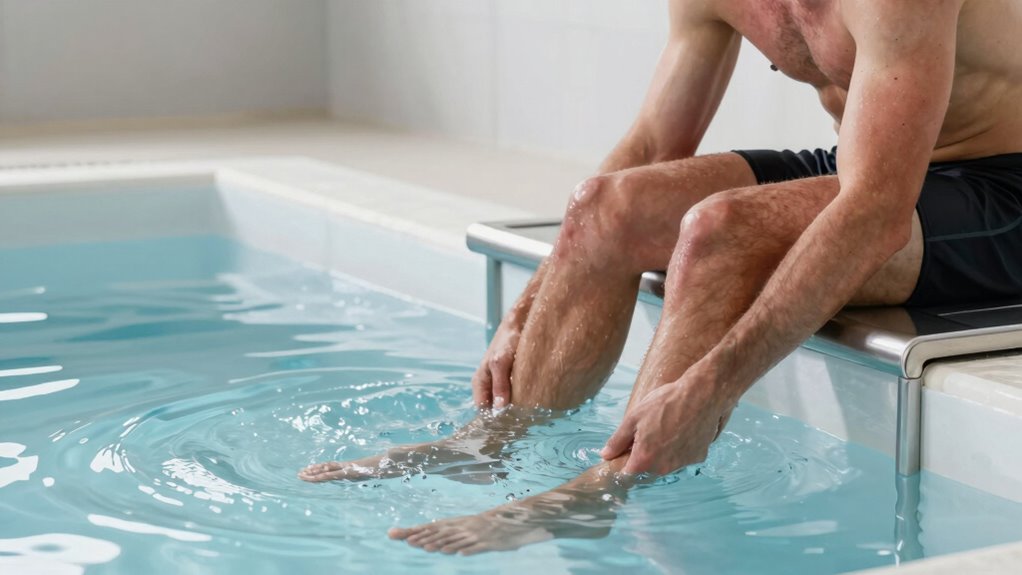
Cold exposure can be be a powerful tool for recovery, but knowing how to test its effectiveness is essential. If you’re considering cold immersion as part of your recovery routine, understanding whether it truly benefits you can save time and enhance your results. The first step is to establish a clear baseline for your recovery. Before starting cold exposure, pay attention to how your body feels after workouts: note your soreness levels, fatigue, and overall energy. This baseline will help you compare later to see if cold immersion makes a difference.
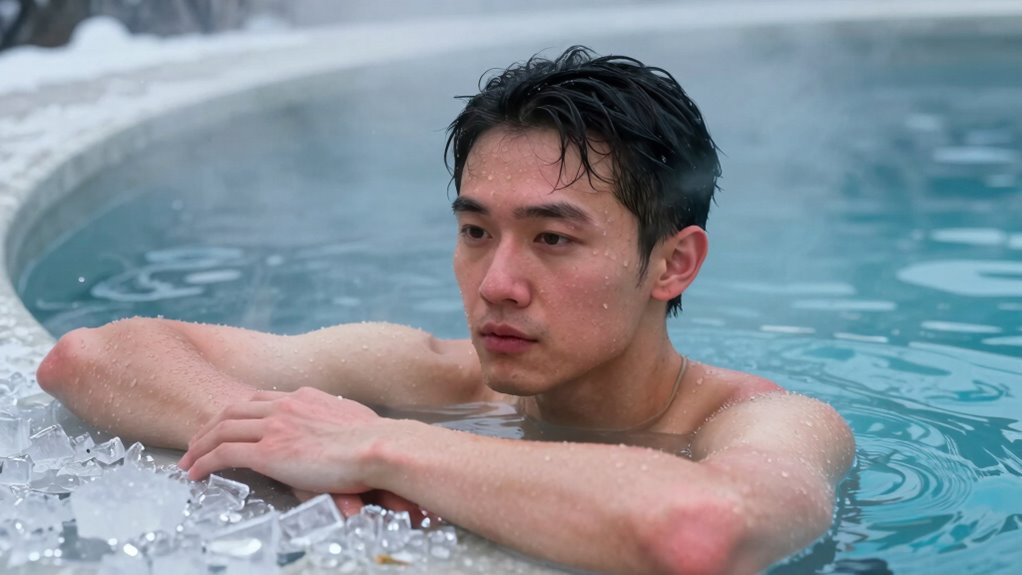
Once you’ve established a baseline, incorporate cold immersion sessions systematically. For example, immerse yourself in cold water—around 10 to 15°C (50-59°F)—for a set period, such as 10-15 minutes, after training. Keep track of each session, noting how you felt during and afterward. It’s important to be consistent with timing, duration, and the type of workouts you do beforehand. Consistency allows you to attribute changes in recovery to the cold immersion rather than external factors. Additionally, understanding the biodiversity of responses among individuals can help tailor your approach more effectively. Recognizing that individual responses can vary significantly underscores the importance of personalized testing.
Incorporate cold water immersion (10-15°C) for 10-15 minutes post-workout, maintaining consistency to accurately assess recovery benefits.
After several sessions—say, two to three weeks—you can start assessing recovery benefits. Compare your current soreness levels, energy, and performance to your baseline. Do you notice less muscle soreness? Are you feeling more energized and ready for subsequent training sessions? These subjective feelings are valuable indicators, but for a more objective assessment, consider using tools like muscle soreness surveys, performance tests, or even tracking biomarkers if you’re into more detailed analysis. Additionally, understanding the effects of cold exposure on muscle recovery can help optimize your routine. Incorporating personalized testing methods can further refine your approach to maximize benefits.
Another effective way to test whether cold exposure helps your recovery is to implement a controlled “no cold” period. Alternate between a week of cold immersion and a week without it, maintaining all other variables like diet, sleep, and training intensity. By comparing your recovery data during these periods, you can determine if cold immersion actually contributes to faster or more complete recovery. Pay close attention to how your body responds during each phase, and be honest in your assessments.
Finally, listen to your body. If you notice consistent improvements in soreness, fatigue, and performance when incorporating cold immersion, it’s likely beneficial for you. Conversely, if you don’t see significant changes or feel worse, you might want to reconsider or tweak your approach. Remember, recovery benefits from cold immersion can vary among individuals, so personalized testing is key. By systematically tracking your responses, you’ll gain a clearer picture of whether cold exposure is a valuable addition to your recovery strategy.
As an affiliate, we earn on qualifying purchases.
Frequently Asked Questions
How Long Should Cold Exposure Sessions Last for Optimal Recovery?
For ideal recovery, you should aim for cold exposure sessions like an ice bath or cold plunge lasting around 10 to 15 minutes. This duration allows your body to benefit from the anti-inflammatory effects without risking hypothermia or discomfort. Start with shorter sessions if you’re new, and gradually increase as your tolerance builds. Always listen to your body and avoid overexposure to prevent adverse effects.
What Temperature Range Is Ideal for Cold Exposure Recovery?
Think of cold exposure like Goldilocks’ porridge—finding what’s “just right.” For recovery, aim for a temperature range between 50-59°F (10-15°C). This helps your body develop cold adaptation without risking hypothermia. Stay within temperature thresholds that challenge your recovery process yet keep safety in mind. Experiment gradually, listening to your body, to discover what works best for your unique needs.
Are There Any Risks Associated With Cold Exposure Therapy?
Cold exposure therapy does carry potential risks, like hypothermia or skin damage if not done properly. To keep safe, you should follow safety precautions such as limiting exposure time, monitoring your body’s response, and avoiding extreme temperatures. Always start gradually and consult a healthcare professional if you have underlying health conditions. Being cautious helps you enjoy the benefits without risking your safety.
Can Cold Exposure Benefit All Types of Injuries?
Ever wonder if cold exposure benefits all injuries? It mostly helps with acute injuries like strains, sprains, or bruises, where reducing inflammation is key. But for chronic injuries or infections, cold adaptation might not be suitable and could even slow healing. You should consider the injury type carefully and consult a healthcare professional before using cold exposure, especially if you’re unsure how your body responds to cold therapy.
How Soon After Exercise Should I Try Cold Exposure?
You should try cold exposure, like ice baths or cold showers, within 30 minutes to an hour after exercise. This window helps reduce inflammation and muscle soreness effectively. Immediately jumping into cold exposure can be beneficial, but avoid doing it too long — 10 to 15 minutes is enough. If you’re new, start with cold showers to gauge your comfort level before progressing to ice baths.
As an affiliate, we earn on qualifying purchases.
Conclusion
Remember, the proof is in the pudding. Try cold exposure yourself and monitor how your body responds—keep a journal or track your recovery times. If it works for you, it’s worth the effort. But if not, don’t force it—every body is different. Sometimes, the best way to find what helps you heal is to test and learn. After all, Rome wasn’t built in a day, and neither is the perfect recovery routine.
As an affiliate, we earn on qualifying purchases.
temperature controlled cold plunge
As an affiliate, we earn on qualifying purchases.
As an affiliate, we earn on qualifying purchases.
Fall Picks
fall essentials
As an affiliate, we earn on qualifying purchases.