
When starting cold plunging, safety is vital. You should prepare your body by staying hydrated, calming your mind, and gradually acclimating to cold exposure. Approach the water slowly, focus on steady breathing, and listen to your body for warning signs like dizziness or numbness. Exiting gently and warming up afterward help prevent shock or injury. Following these steps can keep you safe, and if you continue exploring, you’ll discover how to make all stages safer and more effective.
Key Takeaways
- Prepare mentally and physically with breathing techniques and hydration before entering cold water.
- Enter slowly, focusing on steady breathing to minimize cold shock and avoid rushing.
- Monitor body signals for warning signs like dizziness or numbness; exit immediately if discomfort occurs.
- Use gentle movements and dry clothing to warm up gradually after exiting the plunge.
- Always have a safety buddy, set time limits, and consult a doctor if you have health concerns.
Why Safety Is Key When Starting Cold Water Immersion
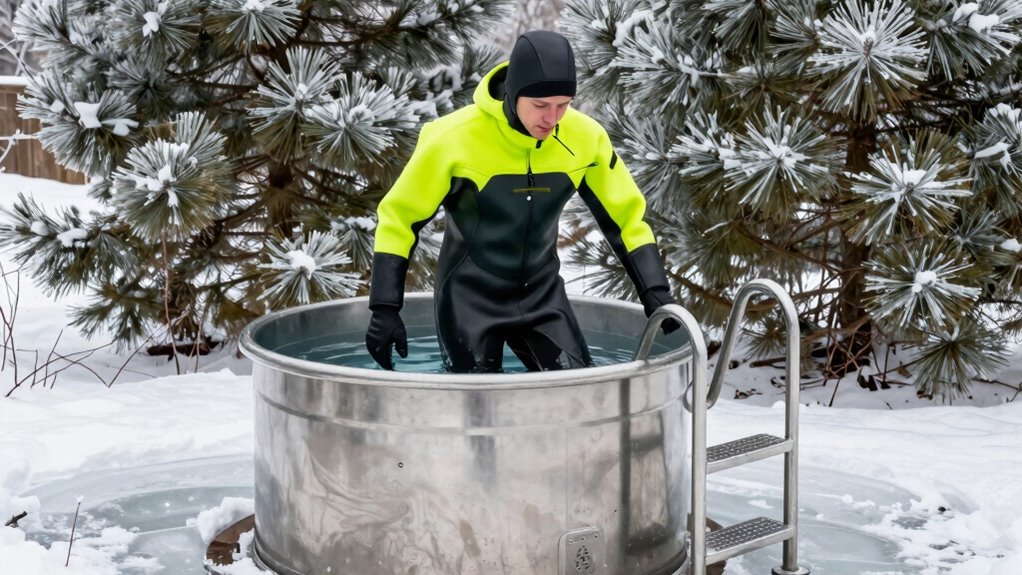
Starting cold water immersion without proper safety measures can be dangerous, especially for beginners. One of the biggest risks is cold shock, which occurs when your body reacts suddenly to the cold, causing involuntary gasping, rapid heartbeat, or even hyperventilation. Mental preparedness is essential; if you’re not mentally ready, you might panic during the initial dip, increasing the risk of injury or drowning. Recognizing your limits and staying calm helps control your body’s response to the cold. Safety isn’t just about avoiding accidents—it’s about ensuring you can handle the shock and discomfort safely. Proper precautions and a clear mindset help you stay in control, making your cold plunge experience both safe and beneficial. Additionally, understanding free floating techniques can aid in relaxing your body and maintaining composure during the immersion. Developing body awareness can further improve your ability to respond calmly and effectively to the cold, especially when combined with mindfulness practices that support mental resilience. Incorporating mental resilience strategies can also prepare you better for the initial shock and help you stay calm in unexpected situations.
How to Prepare Your Body and Environment for Cold Plunging
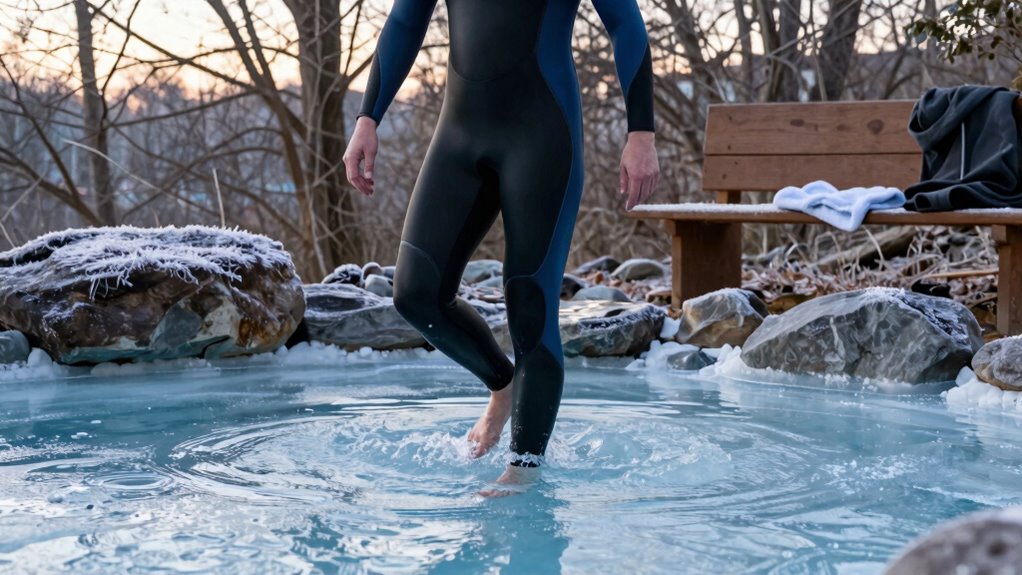
Preparing your body and environment properly sets the foundation for a safe and effective cold plunge. Start with mental preparation by calming your mind and setting clear intentions. Focus on breathing techniques like deep, controlled breaths to help manage shock and anxiety. These techniques slow your heart rate and promote relaxation, making the experience safer. Confirm your environment is safe: check the water temperature, secure the area, and have a timer nearby. Avoid alcohol or heavy meals beforehand, as they can affect your body’s response. Hydrate well and do light stretching if needed. Be aware of your body’s response to cold to prevent overexposure and ensure safety. Recognizing cold tolerance levels can help you adjust your immersion time appropriately. Developing mindful awareness can improve your ability to listen to your body’s signals during cold plunging. Building cold adaptation gradually can enhance your resilience and safety over time. By mentally preparing yourself and creating a safe setting, you’re more likely to stay calm, control your response, and enjoy the benefits of cold plunging safely. Additionally, understanding the importance of solar energy in supporting renewable power can inspire a sustainable mindset for your health journey.
The Step-by-Step Way to Enter a Cold Plunge Safely
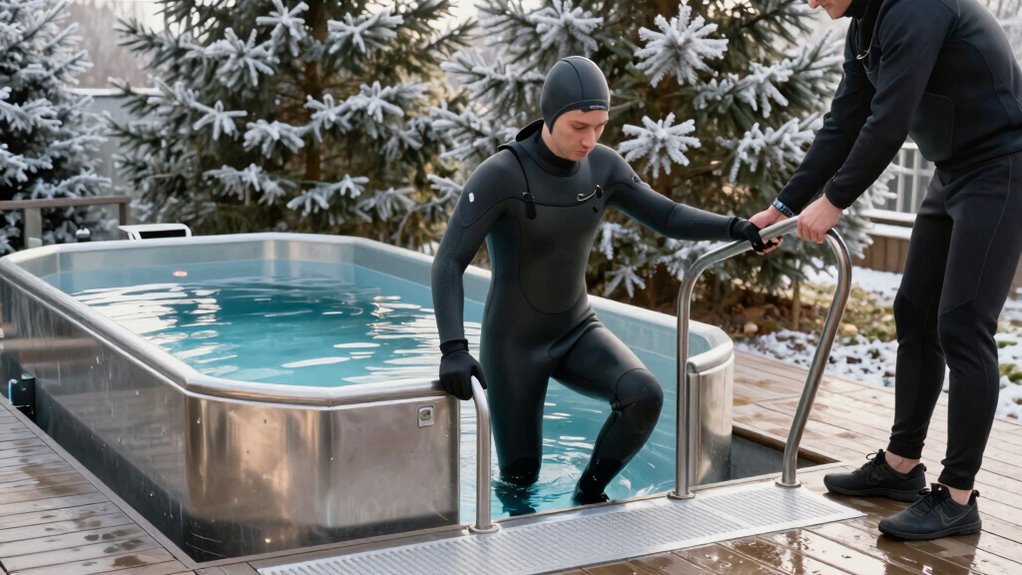
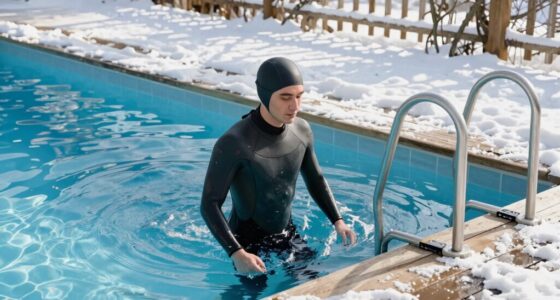
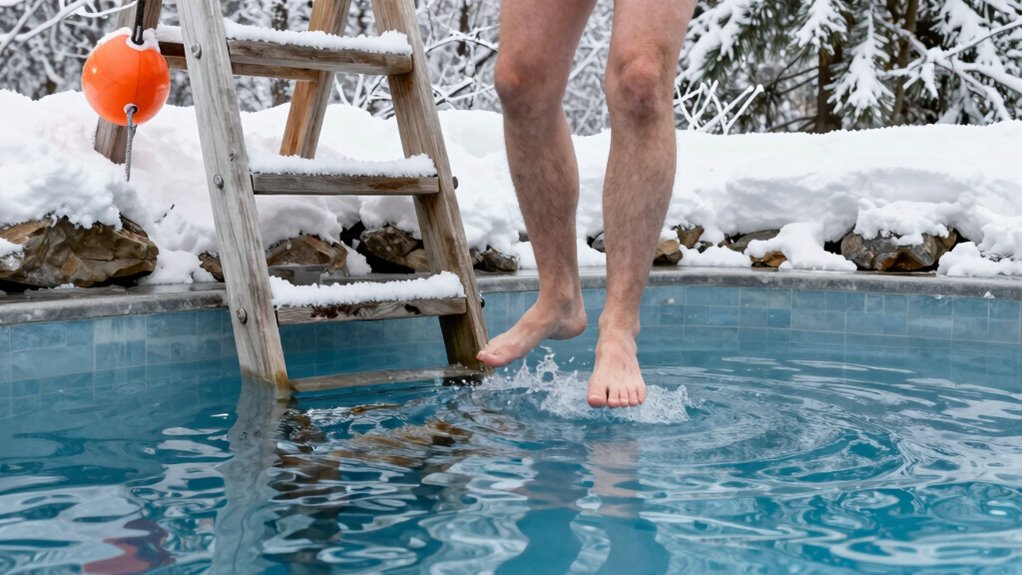
To enter a cold plunge safely, approach the water gradually rather than rushing in all at once. Focus on your breathing techniques to stay calm, taking slow, deep breaths to reduce shock. Mentally prepare yourself by visualizing a smooth entry and maintaining positive focus. Step in slowly, keeping your body relaxed to adapt to the cold. Use the following table as a quick guide:
| Step | Action | Key Tip |
|---|---|---|
| 1. Prepare | Take deep breaths, steady mind | Visualize a smooth entry |
| 2. Entry | Inch in gradually | Focus on breathing deeply |
| 3. Adjust | Get comfortable with cold | Relax muscles to avoid shock |
| 4. Sit or submerge | Fully submerge when ready | Maintain steady breathing |
This mindful approach ensures a safe, controlled cold plunge experience. Additionally, understanding the importance of proper preparation and connected fitness can help minimize risks and make the experience more enjoyable. Being aware of body temperature regulation can further enhance safety during this practice. Incorporating body awareness techniques can also improve your ability to respond to cold exposure safely.
How to Monitor Your Body and Recognize Warning Signs
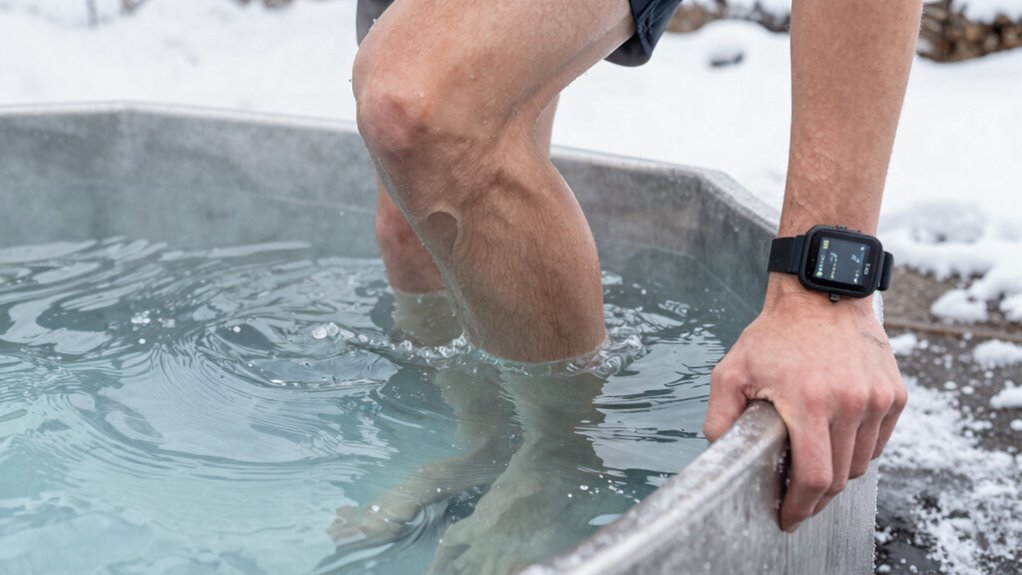
As you start your cold plunge, pay close attention to how your body feels. Recognize physical symptoms like dizziness, numbness, or tingling, which signal you might be overheating or getting too cold. If discomfort arises, respond immediately by exiting the water and warming up to stay safe. Monitoring body temperature regulation is essential to prevent adverse effects during your cold therapy sessions.
Recognize Physical Symptoms
Monitoring how your body responds during a cold plunge is essential to stay safe. Pay close attention to physical symptoms that indicate your body is reacting strongly. Here are key warning signs to watch for:
- Increased muscle tension, which can signal your body is entering a stress response.
- Skin pallor or turning unusually pale, indicating poor circulation or shock.
- Persistent shivering beyond initial cold response, suggesting your body is struggling to maintain warmth.
- Dizziness or lightheadedness, which could lead to fainting if ignored.
Recognizing these symptoms early helps prevent overexposure and ensures you can exit safely if needed. Staying alert to these signs keeps your cold plunge experience safe and beneficial.
Respond to Discomfort
Pay close attention to how your body feels during a cold plunge, and respond promptly to any signs of discomfort. If you notice shivering, numbness, dizziness, or a rapid heartbeat, stop and exit the water immediately. Use breathing techniques like slow, controlled inhales and exhales to help manage discomfort and stay calm. Developing mental resilience allows you to recognize early warning signs without panicking. Staying attuned to your body’s signals and avoiding pushing beyond your limits is crucial for safety. Remember, listening to your body is essential for safety. By monitoring sensations and practicing calming breathing techniques, you can better respond to discomfort and prevent potential cold-related risks. Prioritizing safety over endurance, and never ignoring warning signs during your cold plunge, is vital. Being aware of body signals helps you stay safe and respond appropriately to changing conditions. Additionally, cultivating mindfulness during your cold plunge can improve your ability to detect subtle cues from your body, enhancing your overall safety. Recognizing the importance of safety precautions ensures you take the necessary steps to protect yourself in challenging conditions. Incorporating knowledge of AI ethics and safety can also remind you to stay cautious and aware of risks in all activities. Developing a self-awareness practice can further improve your ability to respond effectively to your body’s needs.
Exiting Your Cold Plunge and Post-Session Tips
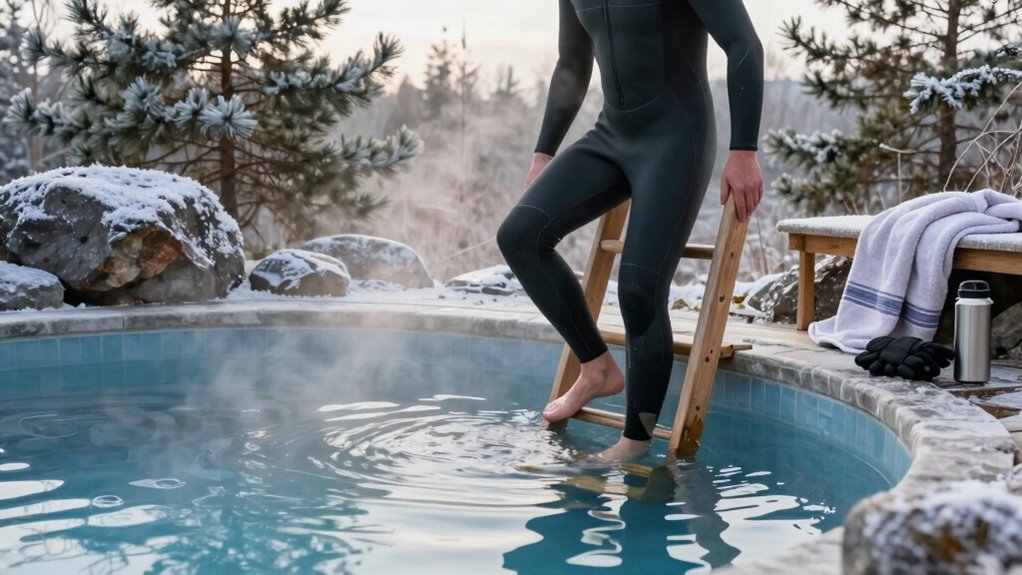
When you’re ready to exit your cold plunge, take your time to do so carefully. Focus on your breathing techniques to stay calm and steady. Mental preparation helps ease the transition, reducing shock and dizziness. To make the process smoother, consider these tips:
- Gradually warm your body with gentle movements and dry off slowly.
- Practice deep, controlled breaths to restore normal breathing patterns.
- Keep your mind focused on relaxing, not rushing. Incorporate proper breathing techniques to help your body adjust.
- Replenish your fluids and enjoy a warm drink to support recovery.
- Post-session care is crucial for recovery, ensuring your body adjusts safely and comfortably.
Exiting mindfully ensures your body adjusts safely, minimizing discomfort. Post-session care is essential for recovery, so stay attentive to how you feel and prioritize gentle, deliberate actions.
Common Mistakes Beginners Make and How to Avoid Them
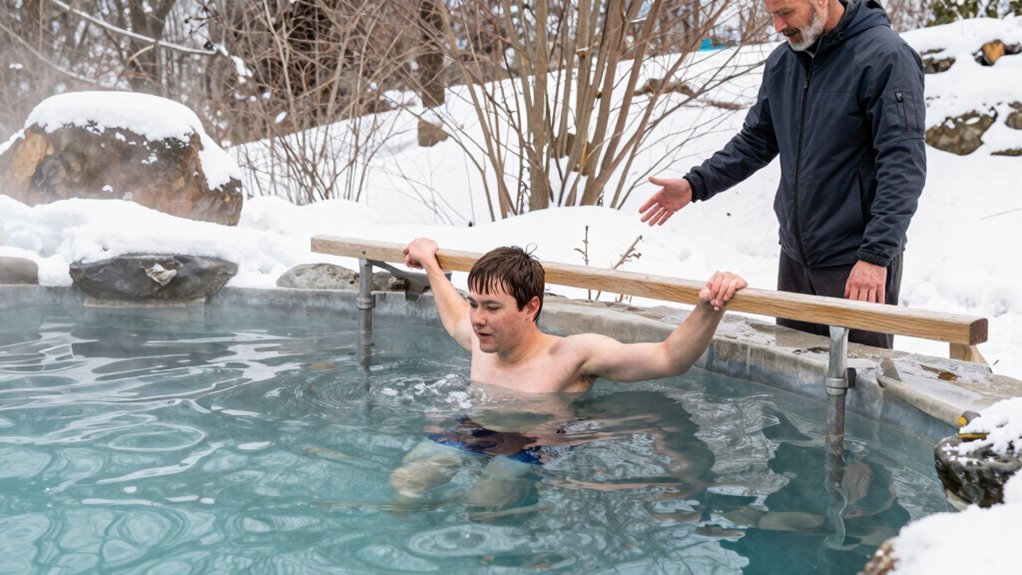
Many beginners overlook common pitfalls that can make cold plunges less safe and less effective. One mistake is neglecting breath control, which is vital for managing shock and discomfort. Without proper breathing, you might panic or hyperventilate, increasing risk. Another error is skipping mental preparedness; entering the water without calming your mind can lead to impulsive movements or anxiety. To avoid these mistakes, focus on slow, steady breaths before and during your plunge. Prepare mentally by visualizing a calm, controlled entry. Avoid rushing in or staying in too long initially—gradual exposure helps your body adapt. Staying mindful of your breath and mental state ensures a safer, more comfortable experience. Recognizing your body’s signals and knowing your limits are crucial for cold water adaptation and safety. Incorporating proper safety protocols such as having a buddy nearby or setting time limits is essential for a secure cold plunge. Developing mindfulness techniques can further enhance your awareness and control during cold water immersion. Remember, patience and awareness are key to mastering cold water immersion safely. Additionally, understanding industry trends can help you stay informed about best practices and new safety equipment. Being aware of emerging safety innovations can further improve your cold plunge experience and safety measures.
Who Should Talk to a Doctor Before Trying Cold Water Therapy
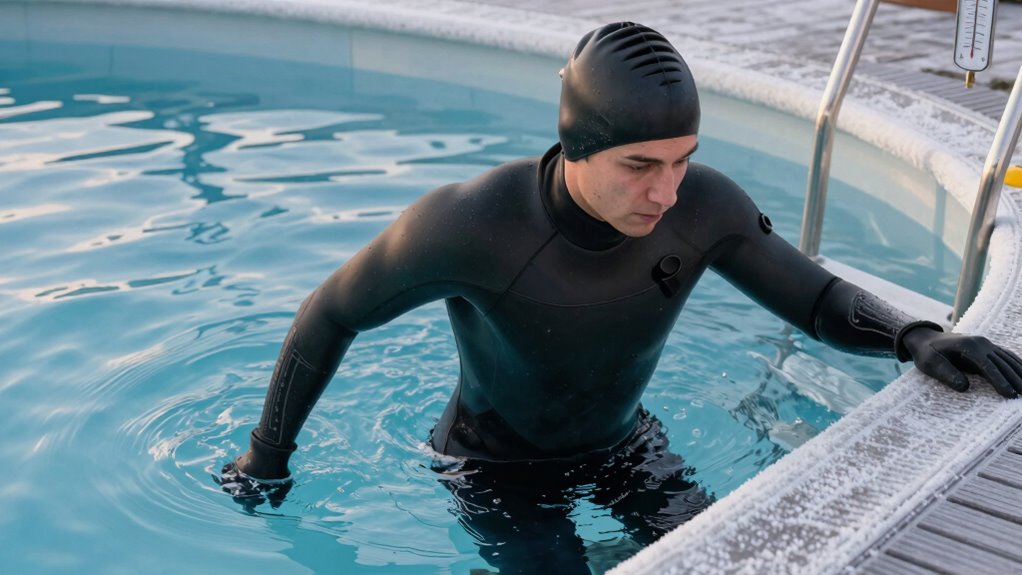
Before trying cold water therapy, it’s essential to consult a doctor if you have certain health conditions or concerns. This is especially important because of potential contraindications that could make cold plunges risky for you. A medical consultation helps identify underlying issues and guarantees safety. You should speak to your doctor if you experience:
- Heart problems or high blood pressure
- Circulatory or respiratory conditions
- Diabetes or nerve-related issues
- Pregnancy or recent surgery
These conditions may increase the risk of adverse reactions during cold immersion. Always prioritize safety by understanding your health status before starting cold water therapy. A professional’s advice ensures you avoid contraindications and enjoy the benefits safely.
Frequently Asked Questions
How Long Should a Beginner Stay in Cold Water?
As a beginner, you should start by staying in cold water for about 1 to 3 minutes. This helps you avoid cold shock and muscle cramps, which can occur with prolonged exposure. Pay attention to how your body feels and don’t push beyond your comfort level. Gradually increase your time as you become more accustomed to the cold, always listening to your body’s signals.
Can Cold Plunging Cause Any Long-Term Health Issues?
Cold plunging can pose some long-term effects if not done correctly, but generally, it’s safe for most people. You might experience health risks like skin irritation or cardiovascular stress if you plunge too often or stay in the water too long. To minimize these risks, listen to your body, limit exposure, and consult a healthcare professional if you have underlying health conditions. Proper technique helps promote benefits without long-term health issues.
What Should I Wear During Cold Water Immersion?
Think of your clothing as your armor against the cold. You should wear thermal clothing or a well-fitting swimsuit to stay comfortable and safe during cold water immersion. Opt for swimwear options like a wetsuit or neoprene gear if you plan longer dips, as they provide extra insulation. Avoid cotton, which traps moisture and chills your skin. Proper attire helps you enjoy the experience while minimizing risks.
How Often Should I Cold Plunge for Optimal Benefits?
You should cold plunge 2 to 3 times a week for maximum benefits, following the frequency guidelines. This allows your body to recover and adapt without overdoing it. For best results, do it in the morning or after workouts, aligning with your body’s natural rhythm. Always listen to how you feel, and gradually increase exposure time to avoid stress or injury. Consistency is key for reaping the full benefits.
Are There Specific Times of Day Best for Cold Plunging?
You should cold plunge in the morning or late afternoon, aligning with your daily routines for ideal timing considerations. Morning plunges can boost your energy and alertness, while evening sessions may help you relax and unwind. Consistency matters most, so choose a time that fits seamlessly into your schedule, ensuring you maintain regularity and enjoy the full benefits of cold plunging without disrupting your daily rhythm.
Conclusion
Starting cold water immersion can be invigorating and beneficial, but safety should always come first. Did you know that nearly 30% of beginners experience adverse reactions due to improper practices? By following proper steps and listening to your body, you can enjoy the benefits safely. Remember, taking it slow and consulting a doctor if needed ensures your cold plunge becomes a positive, energizing experience rather than a risky one. Stay safe and enjoy your cold journey!