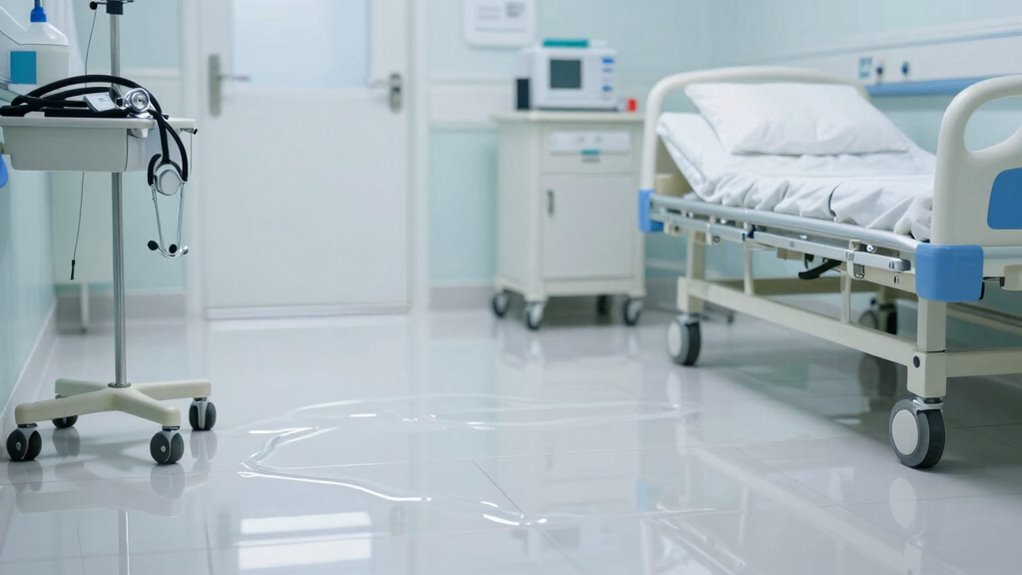

In recovery rooms, many people unintentionally create slip hazards by neglecting to promptly clean up spills from routine activities like water, antiseptics, or patient care products. These wet spots can quickly become slippery if not marked or cleaned right away. By paying attention to these small details and acting quickly, you can prevent falls and injuries. Keep in mind, understanding more about common hazards can help you create a safer environment for everyone.
Key Takeaways
- Staff often forget to promptly clean and mark wet spots caused by routine activities or spills.
- Inadequate use of slip-resistant mats in high-traffic or wet areas increases slipperiness unnoticed.
- Overlooking small leaks from medical equipment or containers can create hidden slip hazards.
- Insufficient attention to wet spots during patient movement or cleaning routines leads to unnoticed hazards.
- Failing to regularly inspect and address minor spills or wet patches allows hazards to accumulate.

Recovery rooms are supposed to be safe spaces where patients can rest and regain strength after surgery, but hazards can sometimes lurk unnoticed. One of the most common yet overlooked dangers is the slippery floor caused by everyday activities and routine procedures. While it may seem harmless, this hazard can lead to falls, injuries, and even serious complications. You might not realize it, but many of your actions or the way you handle certain tasks can inadvertently create a slippery environment, putting patient safety at risk.
Slippery floors in recovery rooms can cause falls and injuries if spills aren’t promptly cleaned and marked.
For instance, spilling liquids like water, antiseptics, or cleaning solutions on the floor is often unavoidable during cleaning or patient care. However, if these spills aren’t promptly cleaned and properly marked, they turn the recovery room into a slip hazard. You might think a quick wipe-up is enough, but neglecting to use warning signs or slip-resistant mats can be dangerous. Additionally, the use of certain medical protocols, like applying ointments or creams, can contribute to slick surfaces if they drip or are spilled. These small lapses in protocol adherence can have significant consequences.
Proper training and awareness are essential in preventing these hazards. You should be familiar with the hospital’s safety protocols, especially those related to cleaning, spill management, and patient movement. Regularly inspecting the recovery room for wet spots and ensuring that they’re cleaned up immediately helps maintain a safe environment. Using appropriate signage, such as “Wet Floor” signs, warns staff and patients alike, reducing the risk of falls. Furthermore, placing non-slip mats in high-traffic areas or near sinks and cleaning stations adds an extra layer of protection. Incorporating proper safety procedures into daily routines minimizes the chances of accidents caused by overlooked hazards. It’s also beneficial to understand the importance of hazard recognition to prevent potential accidents before they happen. Developing a culture of safety among staff encourages proactive measures and shared responsibility for maintaining a secure environment.
You also play an important role in maintaining safety by encouraging proper footwear among staff and visitors. Shoes with good grip reduce the likelihood of slipping, especially in a setting where liquids are often present. Ensuring that all personnel follow strict medical protocols for spill management and patient handling is essential. These protocols are designed not only to promote hygiene but also to uphold safety standards that protect everyone in the recovery room. Regular safety training helps reinforce best practices and keeps staff updated on new procedures. Additionally, fostering awareness of hazards can motivate staff to be more vigilant in identifying and addressing potential risks before they cause accidents.
Ultimately, awareness and vigilance are your best tools. By recognizing how everyday activities can inadvertently create slip hazards, you help foster a safer environment. The goal is to prevent falls before they happen, preserving patient safety and ensuring recovery rooms stay as secure as they’re intended to be. Small actions, adherence to protocols, and careful attention to detail make all the difference in avoiding the slippery recovery room hazard most people create without realizing it.
slip-resistant hospital floor mats
As an affiliate, we earn on qualifying purchases.
As an affiliate, we earn on qualifying purchases.
Frequently Asked Questions
How Common Are Accidents Caused by This Recovery Room Hazard?
Accidents caused by this recovery room hazard are quite common if you’re not vigilant. Patient awareness plays a big role—many overlook the risk, leading to slips or falls. Clear signage is essential to remind everyone to proceed carefully. If you pay attention to signage clarity and stay alert, you can considerably reduce your chances of an accident. Being informed and cautious makes a big difference in maintaining safety in recovery areas.
What Specific Items in Recovery Rooms Pose the Greatest Risk?
In recovery rooms, specific items like spilled liquids, wet floor mats, and unsecured equipment pose the greatest risk to patient safety. You should stay alert and practice hazard awareness to prevent slips and falls. Always clean up spills immediately, secure loose cords, and guarantee mats are dry and properly positioned. By recognizing these hazards, you help create a safer environment, reducing the chance of accidents and promoting better recovery outcomes.
Are There Any Legal Liabilities Associated With This Hazard?
Yes, there are liability concerns and legal implications if someone slips and gets injured in a recovery room due to this hazard. As a healthcare provider or facility, you’re responsible for maintaining a safe environment, which means addressing potential risks like wet floors or slippery substances. Failing to do so can lead to legal actions, damages, or penalties, emphasizing the importance of proactive safety measures to protect both patients and your practice.
How Can Staff Be Trained to Prevent This Hazard?
You should train staff through regular sessions focused on staff awareness and safety protocols. Emphasize proper cleaning procedures, immediate spill cleanup, and correct footwear use. Encourage active participation and discussions about potential hazards, ensuring everyone understands their role in prevention. Conduct routine drills to reinforce these practices, making safety an integral part of daily routines, so staff can effectively prevent slippery hazards and create a safer recovery environment.
What Immediate Steps Should Be Taken if an Accident Occurs?
Act quickly like a lightning bolt to protect patient safety. First, guarantee the area is safe to approach, then alert emergency protocols immediately. Check the patient’s condition, provide first aid if needed, and document the incident thoroughly. Notify medical staff without delay, and follow established procedures to prevent further accidents. Your swift response helps minimize harm and keeps everyone safe, reinforcing the importance of emergency protocols in critical moments.
As an affiliate, we earn on qualifying purchases.
Conclusion
So, next time you’re in the recovery room, remember to tread gently and stay mindful. A little extra caution can turn a potential slip into a smooth sailing experience. By being aware of those subtle hazards, you help keep the environment safe and comfortable for everyone. Sometimes, the smallest changes make the biggest difference. Stay alert, stay careful, and you’ll find that what’s meant to be a quick recovery can be just as peaceful as it is swift.
non-slip shoes for healthcare workers
As an affiliate, we earn on qualifying purchases.
As an affiliate, we earn on qualifying purchases.
spill cleanup kit for medical facilities
As an affiliate, we earn on qualifying purchases.
As an affiliate, we earn on qualifying purchases.