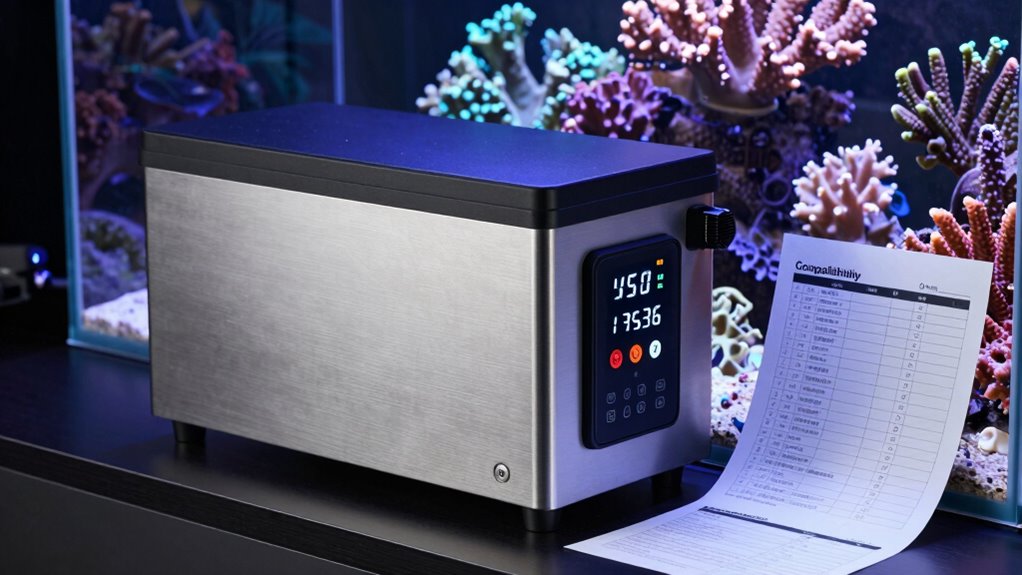

To determine if your aquarium chiller can handle a cold plunge, check its cooling capacity and match it to your water volume. Make certain it’s made from corrosion-resistant materials safe for cold water, and that the temperature controls are precise. Compatibility depends on your system’s specs and proper setup for cold temperatures. Ensuring safety, performance, and durability is essential—if you continue exploring, you’ll discover how to optimize your chiller for safe, effective cold plunges.
Key Takeaways
- Verify the chiller’s capacity matches the water volume to ensure effective temperature control and prevent overheating.
- Confirm materials are corrosion-resistant, like stainless steel or high-grade plastics, safe for prolonged low-temperature contact.
- Check compatibility with cold water environments, ensuring the chiller’s components can handle extreme low temperatures without damage.
- Ensure precise temperature regulation with reliable sensors to maintain safe, consistent cold plunge conditions.
- Regularly maintain and monitor the chiller to prevent malfunctions, overcooling, and ensure user safety during cold plunge use.
Can My Aquarium Chiller Handle a Cold Plunge?
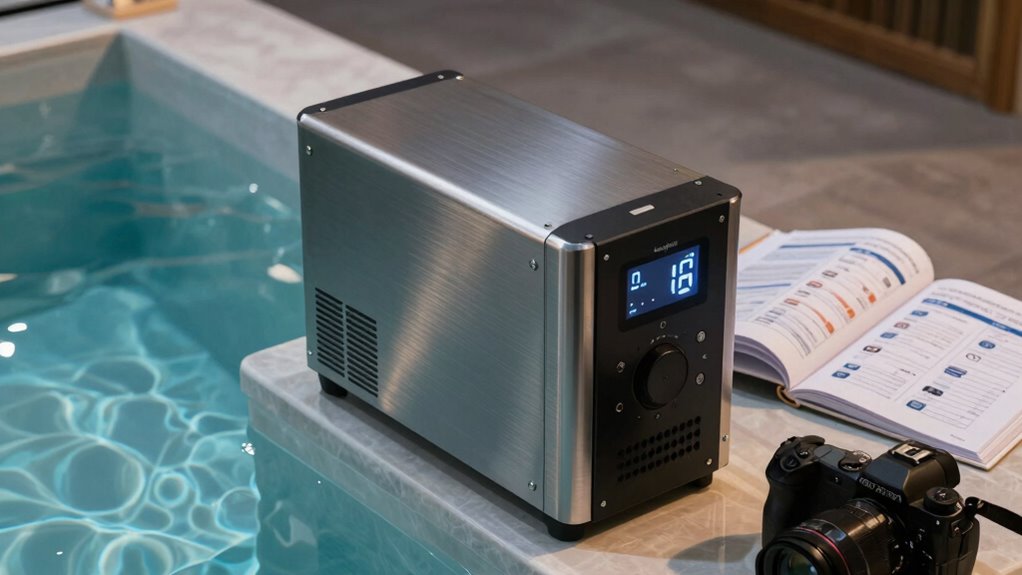
If you’re considering using your aquarium chiller for a cold plunge, it’s important to determine whether it can handle the lower temperatures involved. Start by checking the chiller capacity, ensuring it’s rated for the volume of water you’ll be cooling. Lower temperatures demand more from your device, so verify that the chiller’s specifications align with your needs. Water safety is also vital; extremely cold water can cause tubing or seals to become brittle or crack over time. If your chiller isn’t designed for such low temperatures, risking damage or leaks increases. Always review the manufacturer’s guidelines to see if cold plunges are recommended. Proper assessment of chiller capacity and water safety considerations will help prevent equipment failure and ensure a safe, effective cold plunge experience. Additionally, consulting with specialists in water cooling systems can provide valuable insights into thermal tolerance and safety measures for your setup. Being aware of equipment durability is crucial to avoid unexpected malfunctions during use. Understanding system limitations can help you make informed decisions and avoid potential hazards.
Does Your Chiller Have Enough Cooling Power?
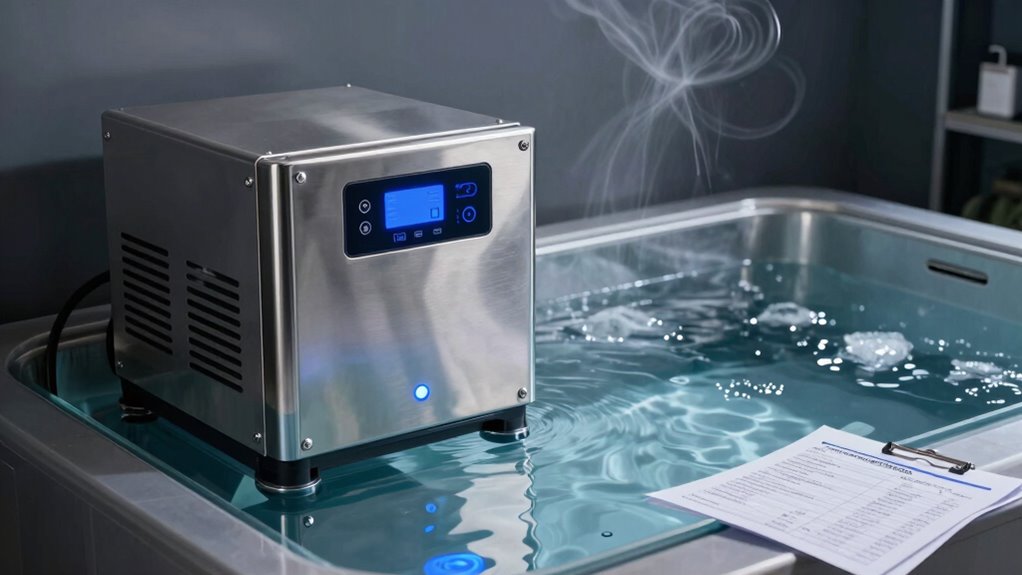
To guarantee your aquarium chiller can handle your cooling needs, you need to verify that it has enough cooling power for the volume of water you’re trying to cool. Check the chiller capacity and ensure it matches your water volume; underestimating this can leave your water temperature too high. A chiller with inadequate capacity struggles to reach your target cold water temperature, leading to inconsistent results. Consider how much cooling is necessary and whether the chiller can maintain a stable, low water temperature over time. It’s essential to select a chiller rated for your specific water volume and desired temperature drop. Proper sizing prevents constant running and guarantees efficient cooling, keeping your cold plunge safe and comfortable. Additionally, understanding cooling capacity helps ensure your chiller is appropriately matched to your needs. Being aware of chiller specifications can also aid in selecting the most effective unit for your setup. To optimize performance, regularly monitor water temperature and adjust your system as needed to maintain consistent coldness. Furthermore, choosing a chiller with adequate power can improve energy efficiency and prolong the lifespan of your equipment. Ensuring your setup includes smart monitoring tools can enable real-time temperature adjustments for optimal performance.
Is Your Chiller Built for Cold Water? Safety and Material Checks
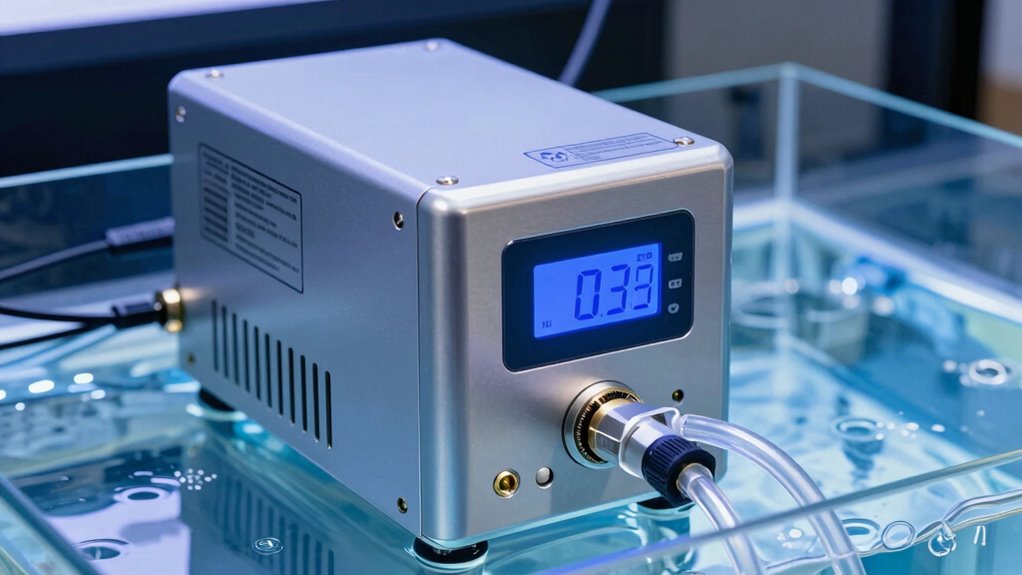
Ensuring your chiller is built for cold water is essential for both safety and durability. Check that the materials used are safe for prolonged contact with low temperatures to prevent corrosion or leaks. Look for chillers with corrosion-resistant components like stainless steel or high-grade plastics designed for cold environments. Material safety is critical to avoid contaminants leaching into the water, which could harm your aquatic life or pose health risks. Additionally, verify that the chiller’s temperature control system is accurate and reliable, maintaining consistent cold water temperatures without fluctuations. A well-built chiller designed for cold water guarantees safe operation, reduces maintenance issues, and prolongs its lifespan. Always prioritize quality and safety features when choosing a unit for your cold plunge setup. Material compatibility with cold water is a key factor in ensuring longevity and safety, and selecting components tested for cold environment durability can further enhance performance. Furthermore, inspecting for corrosion resistance in parts can help prevent premature failure and ensure the system remains effective over time. Incorporating appropriate insulation can also improve energy efficiency and maintain consistent water temperatures. Additionally, checking the manufacturer’s specifications can provide insights into the chiller’s suitability for sustained cold water use.
How to Safely Convert Your Aquarium Chiller Into a Cold Plunge
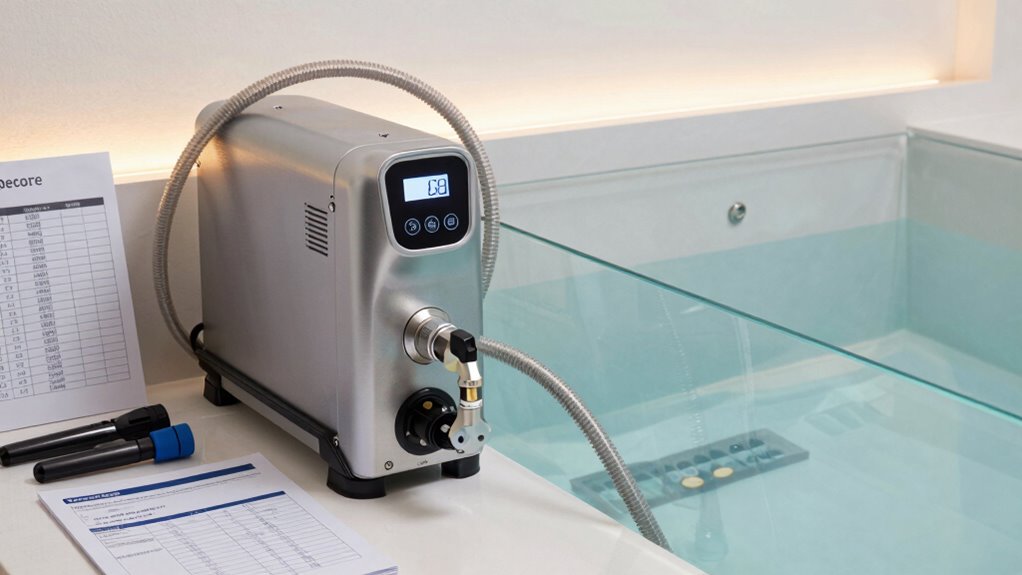
Converting your aquarium chiller into a safe and effective cold plunge requires careful planning and execution. First, assess your equipment’s compatibility with colder temperatures to prevent damage. Next, focus on precise temperature control to maintain a consistent, safe water level for your plunge. Additionally, consider the contrast ratio of your system to ensure the visuals are clear and detailed, especially if monitoring temperatures visually. Proper temperature regulation is essential to avoid sudden temperature fluctuations that could be unsafe. Maintaining optimal connected device settings can enhance safety and performance during the conversion process. Lastly, follow these steps:
- Verify that your chiller can operate at the desired low temperatures without risking damage.
- Adjust the thermostat carefully to prevent sudden drops that could harm you or the unit.
- Regularly monitor the system’s performance to ensure consistent temperature control and avoid equipment failure.
- Understanding the compatibility of your chiller with extreme cold conditions is crucial to prevent operational issues during use. Additionally, reviewing the vetted status of your equipment can provide assurance of its reliability under these modified conditions.
Essential Tips for a Safe and Cool Cold Plunge Experience

Taking steps to stay safe during your cold plunge is essential for enjoying the experience without risking health issues. Regular chiller maintenance guarantees ideal cooling and prevents malfunctions. Always monitor the temperature closely to avoid overcooling, which can cause hypothermia. Use reliable sensors and keep a thermometer handy. Maintain a consistent temperature by checking your chiller regularly and addressing any irregularities promptly. Ensuring proper chiller function can significantly enhance your safety and comfort. Additionally, staying informed about tanning tips can help you maintain healthy skin despite exposure to cold conditions. Understanding sleep comfort factors can also contribute to more restful recovery after your cold plunge sessions.
Frequently Asked Questions
Can I Use an Aquarium Chiller for Continuous Cold Plunges?
Yes, you can use an aquarium chiller for continuous cold plunges if you prioritize chiller efficiency and temperature stability. Make certain the chiller’s capacity matches your plunge volume, and check its ability to maintain consistent temperatures over extended periods. Regular maintenance and monitoring are essential to prevent temperature fluctuations and guarantee reliable performance. With proper selection and care, an aquarium chiller can effectively support your cold plunge needs.
What Maintenance Is Required for Cold Water Compatibility?
Think of your cold plunge setup as a delicate dance, requiring regular maintenance to stay in sync. You should frequently check water quality, ensuring it’s clean and free of algae or debris, and monitor temperature stability to prevent fluctuations. Regularly clean filters, test water parameters, and top up with dechlorinated water when needed. These steps keep your system running smoothly, protecting your equipment and ensuring a invigorating, consistent plunge every time.
Are There Specific Brands Recommended for Cold Plunge Setups?
For cold plunge setups, you should consider brand recommendations like JBJ, AquaEuro, or Hailea, as they’re known for reliable chillers with proven cold plunge compatibility. These brands offer units that handle the low temperatures and continuous operation needed for safe, effective plunges. When choosing, verify the chiller’s capacity matches your tank size and check user reviews for durability. This way, you get a dependable system that keeps your cold plunge consistent and safe.
How Does Ambient Room Temperature Affect Chiller Performance?
Your chiller’s cooling efficiency skyrockets or crashes based on room temperature! If your room is scorching hot, your chiller will work overtime, struggling to keep the water cold, which could lead to overheating or equipment failure. Conversely, cooler ambient temperatures boost performance, making cooling easier and more energy-efficient. Controlling room temperature helps maintain ideal chiller efficiency, ensuring your cold plunge stays icy without overloading your system.
Can I DIY Modify My Chiller for Lower Temperatures Safely?
You can attempt DIY modifications to lower your chiller’s temperature, but you must prioritize temperature safety. Carefully research how to modify your specific model, ensuring modifications won’t cause damage or unsafe operation. Use proper insulation and avoid overcooling, which could harm your aquarium or cold plunge. Always test modifications gradually, monitor temperatures closely, and consult professional advice if uncertain. Safety should always come first in DIY projects.
Conclusion
So, next time you marvel at your chilly masterpiece, remember: turning your aquarium chiller into a cold plunge isn’t as simple as flipping a switch. It’s amusing how we assume equipment designed for delicate aquatic life can handle the icy depths we crave. Just don’t be surprised if your “cold plunge” becomes a frosty fiasco—proof that even the coolest gadgets need careful consideration before diving into the deep end. Stay safe, stay smart, and embrace the irony.