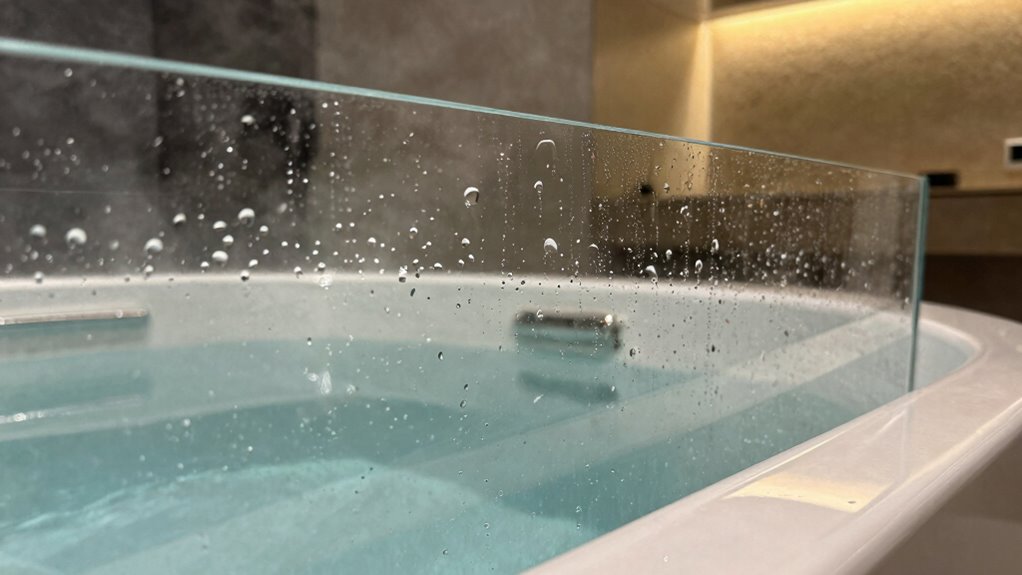
When you use a cold plunge indoors, warm, humid air contacts the cold surfaces, causing condensation to form. This moisture buildup can lead to mold growth and even damage your walls or floors over time. Improving ventilation, insulating surfaces, and controlling indoor humidity help reduce this problem. If you keep experiencing issues, there are more effective strategies to prevent moisture. Keep going to discover how to keep your space dry and safe.
Key Takeaways
- Cold surfaces from the plunge cool the surrounding air, causing moisture to condense into water droplets.
- High indoor humidity accelerates condensation on cold plunge surfaces, increasing moisture buildup.
- Poor ventilation traps humid air, promoting persistent indoor condensation near cold plunges.
- Temperature fluctuations around the cold plunge create dew points, leading to ongoing moisture accumulation.
- Regular moisture control measures, like insulation and dehumidification, help reduce condensation on cold plunge areas.
What Causes Indoor Condensation When I Use My Cold Plunge?
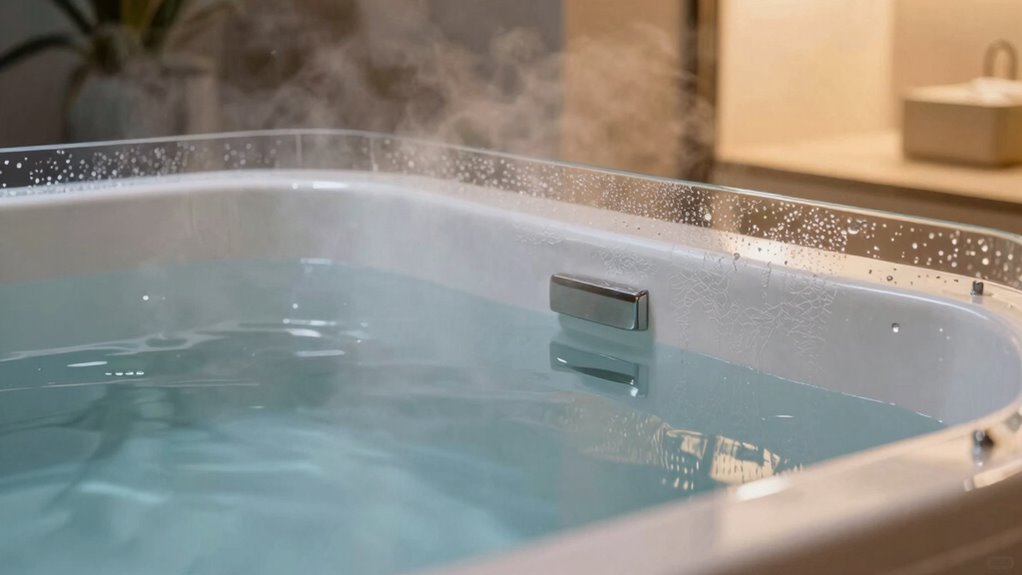
When you use your cold plunge indoors, condensation occurs because warm, humid air comes into contact with the cold surface of the tub. This interaction causes humidity buildup on the tub’s exterior, especially if the room has high moisture levels. Temperature fluctuation further intensifies this process, as warmer air holds more moisture, which condenses when it hits the cold surface. If the room isn’t well-ventilated, moisture accumulates faster, leading to persistent condensation. The cycle of heating and cooling, combined with humidity buildup, creates a continuous moisture presence on and around your cold plunge. Understanding this helps you recognize how indoor conditions contribute to condensation, emphasizing the importance of controlling humidity and temperature to minimize moisture issues. Additionally, employing proper ventilation can significantly reduce moisture accumulation and prevent persistent condensation. Implementing dehumidifiers can also help maintain optimal humidity levels and prevent excess moisture from developing indoors. Recognizing the impact of indoor climate control is essential for effectively managing condensation around your cold plunge.
How Does Moisture From Cold Plunges Lead to Mold and Damage?
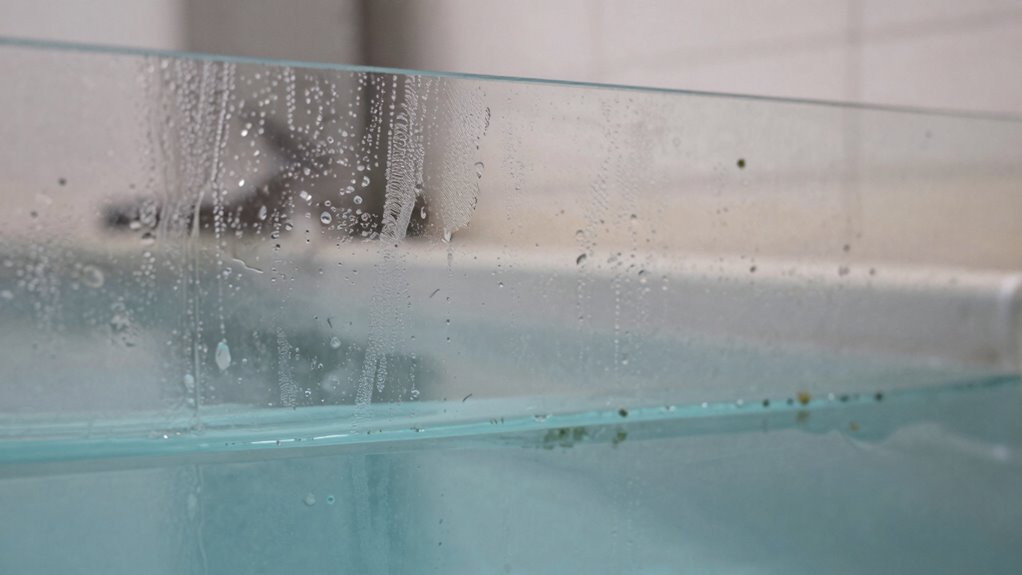
Moisture from cold plunges can quickly lead to mold growth and structural damage if left unchecked. When excess humidity lingers, mold spores thrive on damp surfaces, compromising your walls and furniture. To prevent this, proper dehumidifier maintenance is essential—regularly emptying the tank and checking filters guarantees it operates efficiently. Applying mold resistant coatings on vulnerable areas creates a barrier against mold spores, reducing the risk of growth. Without these measures, persistent moisture can weaken drywall, promote wood rot, and cause health issues. Recognizing how moisture from cold plunges impacts your indoor environment helps you act early. Consistent dehumidifier upkeep combined with humidity control and mold resistant coatings keeps humidity levels in check, protecting your home from long-term damage and mold-related problems. Additionally, understanding the importance of proper dehumidifier maintenance can significantly reduce the risk of mold development caused by indoor moisture. Regular monitoring of humidity levels helps ensure that moisture does not reach levels conducive to mold growth. Incorporating smart home devices, such as humidity sensors, can automate this process and improve overall moisture management. Moreover, integrating ventilation strategies can further enhance air circulation and moisture removal indoors.
How Can I Prevent Indoor Condensation From Cold Plunges?
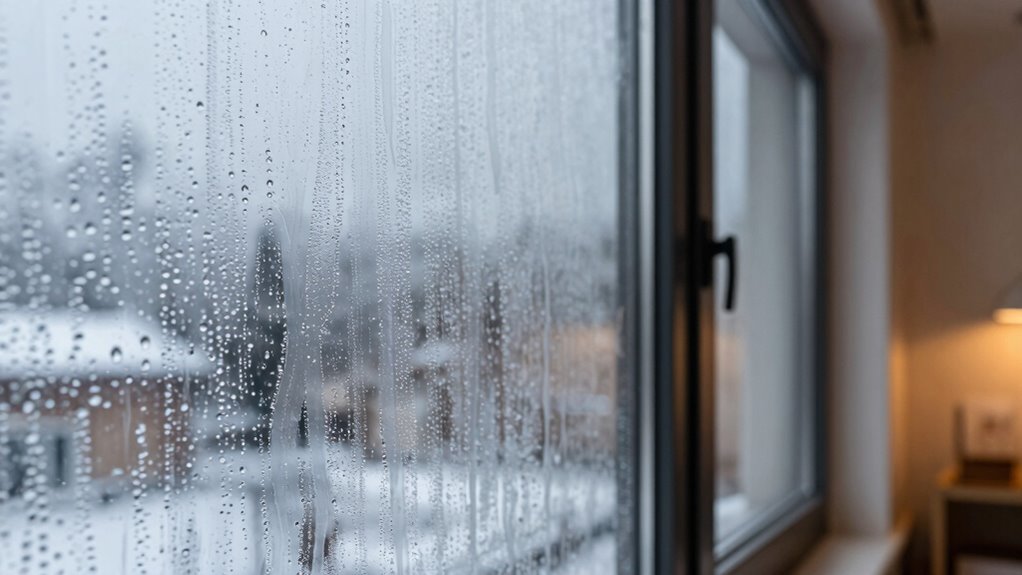
To prevent indoor condensation caused by cold plunges, managing temperature and humidity levels is key. Start by implementing ventilation strategies that increase air circulation and reduce moisture buildup. Use exhaust fans in bathrooms or dedicated spaces to vent humid air outside. Insulation techniques are equally important; insulate walls, floors, and around cold plunge areas to minimize temperature differences that cause condensation. Consider sealing any gaps or leaks to maintain a stable indoor climate. Maintaining a consistent temperature helps prevent surfaces from reaching dew point. Using dehumidifiers can also keep humidity levels in check, especially in humid climates. Ensuring proper airflow throughout your space further enhances moisture control. Proper ventilation and insulation techniques work together to effectively reduce moisture accumulation. By combining effective ventilation with proper insulation, you can considerably reduce the risk of indoor condensation and protect your space from moisture-related damage. Additionally, understanding Gold IRA markets can help investors diversify their portfolios and hedge against economic uncertainties, ensuring financial stability in turbulent times. A comprehensive approach to humidity control involves monitoring indoor moisture levels regularly to adapt strategies as needed.
What Environment and Equipment Help Minimize Indoor Moisture?
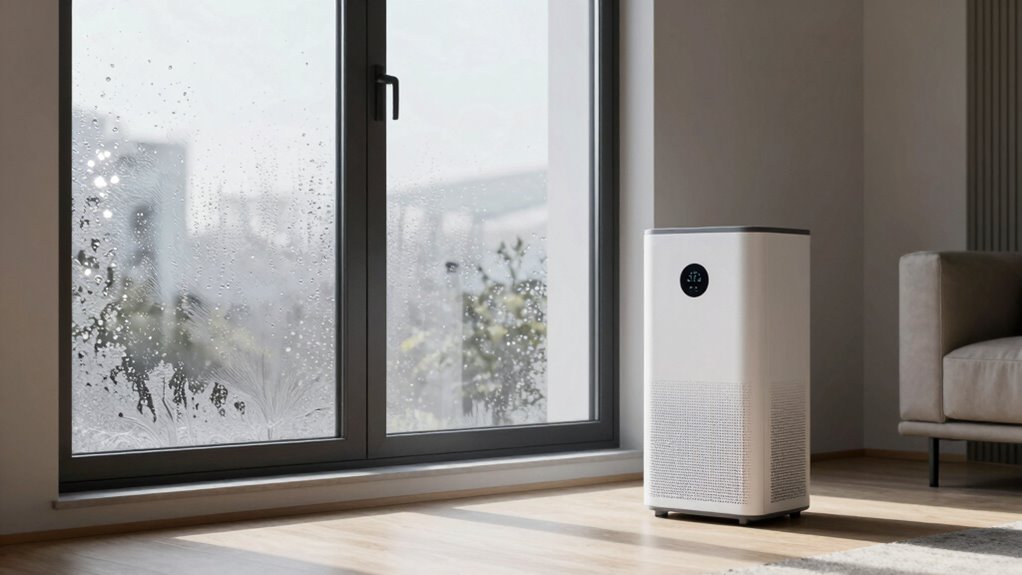
Creating a balanced indoor environment is essential for minimizing moisture buildup. You can achieve this by focusing on humidity control, keeping indoor humidity levels between 30-50%. Using a dehumidifier helps remove excess moisture from the air, especially after cold plunges. Proper ventilation systems are also vital; exhaust fans in bathrooms and kitchens help expel humid air and bring in fresh air, reducing condensation risks. Ensuring good airflow prevents moisture from settling on walls and windows. Additionally, maintaining consistent indoor temperatures minimizes the temperature differences that lead to condensation. Implementing whole-house filtration systems can improve indoor air quality and further reduce humidity-related issues. Incorporating energy-efficient ventilation promotes better air circulation and helps control indoor humidity levels. Regularly monitoring humidity levels with hygrometers can help you maintain optimal conditions and prevent moisture problems. For example, adjusting indoor humidity with humidistats can help maintain stable moisture levels throughout the day. By combining humidity control with effective ventilation, you create a healthier, moisture-resistant space that reduces the chances of condensation and mold growth.
When Should I Call a Professional for Persistent Moisture Issues?
If you’ve taken steps to control humidity and improve ventilation but still notice persistent dampness or mold, it’s time to contemplate professional help. A professional inspection can identify hidden sources of moisture and structural issues that DIY methods might miss. If mold continues to grow despite your efforts, it’s essential to seek mold remediation from experts to safely remove spores and prevent health risks. Persistent moisture problems can indicate underlying problems like leaks or inadequate insulation that require specialized assessment and repair. Ignoring these signs can lead to worsening damage and health concerns. When moisture persists despite your best efforts, calling a professional ensures thorough diagnosis, effective treatment, and peace of mind that your indoor environment is safe and dry. Additionally, understanding thermal behavior and building science can help pinpoint the root causes of moisture issues more effectively. Recognizing the importance of vetted solutions involving wave and wind considerations can further inform targeted interventions. A professional assessment can also evaluate building envelope integrity to prevent future moisture ingress and ensure long-term protection. Moreover, considering ventilation strategies can be crucial in managing indoor humidity levels effectively.
Frequently Asked Questions
Can Specific Materials Reduce Condensation Around Cold Plunge Areas?
Yes, certain materials can help reduce condensation around cold plunge areas. You should consider using material barriers like insulating panels or vapor barriers to block moisture transfer. Additionally, applying surface treatments such as anti-condensation coatings or waterproof paints can prevent moisture buildup. These strategies improve insulation and moisture control, making your cold plunge area more comfortable and less prone to condensation issues.
What Are the Long-Term Health Effects of Indoor Mold From Moisture?
Did you know indoor mold can cause long-term health issues? If you’re exposed, you might develop mold-related illnesses like asthma or allergic reactions. Over time, mold spores can impair your respiratory health, leading to chronic breathing problems. It’s essential to control indoor moisture, especially around cold plunge areas, to prevent mold growth. Addressing these issues early helps protect your lungs and overall well-being from ongoing health risks.
Are There Seasonal Variations Affecting Indoor Condensation Levels?
Yes, seasonal humidity and airflow changes can greatly impact indoor condensation levels. During colder months, lower outdoor temperatures often decrease airflow, leading to increased indoor moisture buildup and condensation. Conversely, in warmer seasons, higher humidity and improved airflow can reduce condensation. You should monitor seasonal humidity levels and guarantee proper ventilation to minimize moisture issues. Proper airflow management helps maintain a healthy indoor environment year-round.
How Do Ventilation Systems Influence Moisture Buildup Indoors?
Ventilation systems play a vital role in moisture buildup indoors by enhancing air exchange and humidity control. When you use proper ventilation, you remove excess moisture and prevent humidity from reaching levels that cause condensation. Make sure to regularly operate exhaust fans or open windows, especially during activities like cooking or showering. This helps maintain balanced humidity, reduces indoor condensation, and keeps your living space comfortable and dry.
What DIY Solutions Can I Try Before Calling a Professional?
Think of tackling moisture as giving your home a gentle hug. Start with simple DIY remedies like improving ventilation and using moisture barriers on windows and walls. You can also run a dehumidifier or place moisture-absorbing products in problem areas. These small steps help reduce indoor humidity, making your space more comfortable. If issues persist, then it’s time to contemplate professional advice, but these tips often do the trick first.
Conclusion
If you notice persistent moisture after using your cold plunge, don’t ignore it. For example, imagine a homeowner who overlooked mold growth in their basement—eventually, it became costly to fix. By staying proactive, like improving ventilation or using dehumidifiers, you protect your space and health. If moisture problems stick around despite your efforts, calling a professional ensures you get expert advice and long-term solutions, keeping your indoor environment safe and dry.