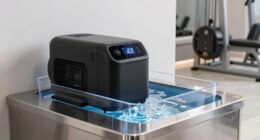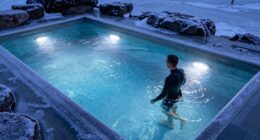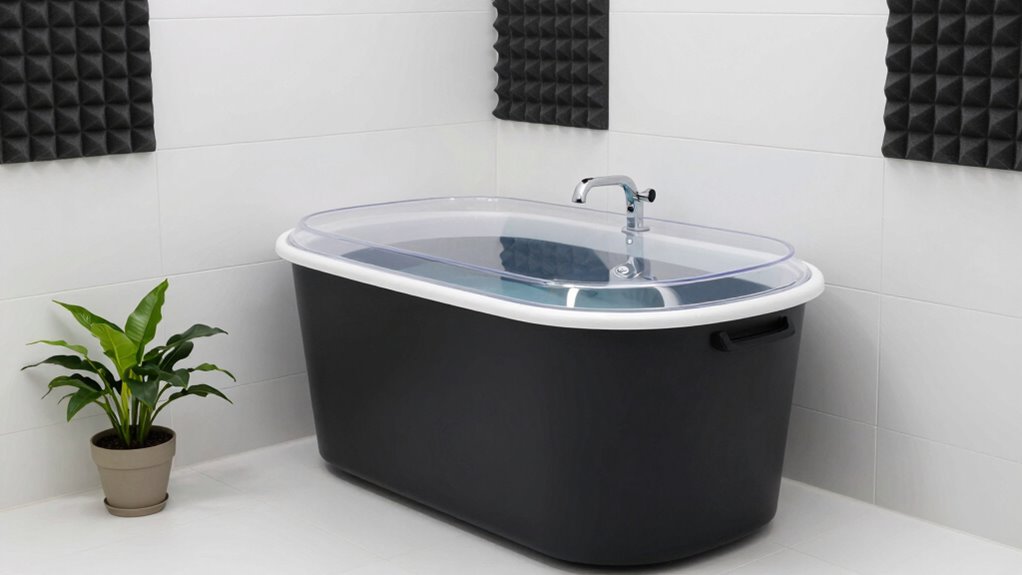
To make your cold plunge setup apartment-friendly, focus on reducing vibrations and noise. Choose equipment with quiet pumps, and place them on vibration-dampening pads or soundproof enclosures. Position your setup in rooms like bathrooms or basements, away from shared walls or bedrooms. Use DIY soundproofing tricks like foam panels, rugs, or acoustic curtains. Regular maintenance also keeps noise to a minimum. Keep exploring to discover more tips for a quieter, neighbor-friendly cold plunge experience.
Key Takeaways
- Place the cold plunge on vibration-dampening pads and away from shared walls to reduce noise transmission.
- Choose quiet pump models with soundproof enclosures and adjustable flow settings for minimal operational noise.
- Use soundproofing materials like acoustic panels, mass-loaded vinyl, and dense mats to absorb and block sound.
- Position the setup in rooms with good ventilation, minimal foot traffic, and natural sound barriers like corners or furniture.
- Regularly maintain equipment, clean filters, and check for loose parts to prevent mechanical noise and ensure quiet operation.
Why Noise Is a Major Concern When Cold Plunging in Apartments

Cold plunging can be an invigorating way to boost your health, but in apartments, noise often becomes a major concern. The vibrations from the pump and motor can generate loud sounds that disturb neighbors or violate building noise policies. To avoid issues, focus on vibration reduction techniques that minimize sound transmission. Proper placement of your cold plunge on vibration-dampening pads or mats can profoundly reduce noise levels. Additionally, noise mitigation measures like insulating around the equipment or installing sound barriers help contain the sound within your space. By addressing vibration and noise early, you create a more harmonious environment, allowing you to enjoy your cold plunge without worrying about disturbing others or facing complaints. Considering the importance of soundproofing materials, investing in quality insulation can significantly enhance noise control. Implementing vibration isolation solutions further minimizes transfer of mechanical vibrations into your apartment structure, enhancing overall noise reduction efforts. Incorporating additional noise-reducing techniques such as acoustic panels or white noise machines can further improve your space’s tranquility. Using soundproofing techniques effectively can make a substantial difference in maintaining neighborly peace, especially when combined with appropriate vibration management strategies.
How to Choose Quiet, Apartment-Friendly Cold Plunge Equipment

To keep noise levels down, start by selecting cold plunge equipment with quiet pump options. Proper insulation and strategic placement can also markedly reduce sound transmission. Additionally, choosing a room with good soundproofing can significantly enhance noise reduction and prevent sound from traveling to other areas. Consider choosing a room with good soundproofing and avoid placing your unit near thin walls or shared spaces. Incorporating soundproofing techniques such as acoustic panels or insulation materials can further enhance noise reduction. For optimal results, also consider the home energy aspects that can influence where and how you set up your equipment to minimize disturbances. Being mindful of energy efficiency can help reduce operational noise and lower energy consumption.
Quiet Pump Options
If you’re living in an apartment, choosing a quiet pump for your cold plunge is vital to avoid disturbing neighbors and maintain a peaceful environment. Look for pumps specifically designed with noise reduction in mind, focusing on low pump noise levels. Vibration dampening features are also essential; pumps with rubber mounts or isolation pads help minimize vibrations that can amplify noise. Consider models that operate quietly during extended use and produce minimal sound during startup and shutdown. Some pumps are engineered with sound-dampening enclosures or insulation, further reducing noise transmission. Prioritize pumps with adjustable flow rates, allowing you to fine-tune noise levels while maintaining effective circulation. Additionally, selecting a pump with noise-dampening technology can significantly enhance your setup’s quietness. When selecting equipment, paying attention to noise level specifications ensures you meet your quietness standards. Choosing a pump with sound insulation features can help prevent noise leakage into surrounding spaces. For optimal performance and minimal disruption, selecting a pump with advanced noise control is highly recommended. Incorporating proper installation techniques can further reduce operational noise and vibration, making your cold plunge setup even more apartment-friendly.
Insulation for Soundproofing
When selecting equipment for your apartment cold plunge, insulating it effectively is essential for reducing noise transmission. Acoustic panels are a practical solution, as they absorb sound and prevent it from echoing through walls. Installing these panels around your cold plunge helps contain vibrations and muffles noise. Additionally, consider adding sound barriers, like dense mats or specialized insulation materials, beneath or around the equipment to block sound from escaping. Proper insulation minimizes disturbance to neighbors and creates a quieter environment inside your apartment. Focus on sealing gaps and using layered insulation methods to enhance soundproofing. Incorporating soundproofing techniques such as layered insulation methods can further improve noise reduction and ensure a peaceful environment. Using sound insulation materials that are designed for apartment settings can provide extra noise control and improve overall soundproofing effectiveness. An understanding of acoustic properties can help you select the most effective insulation for your specific setup. Additionally, choosing equipment with quiet operation features can significantly reduce noise levels and enhance your overall experience.
Placement and Room Choice
Choosing the right spot for your cold plunge is essential for maintaining a quiet, apartment-friendly environment. Select a room with good ventilation and minimal foot traffic to reduce noise. A dedicated bathroom or laundry area often works best, as they typically have space for water filtration systems that keep noise levels down and water clean. Ensure the room has stable temperature control to prevent fluctuations that could lead to increased noise from pumps or heaters. Position your cold plunge away from bedrooms or living areas to limit disturbance. Avoid placing it near thin walls or shared ceilings, which can amplify sound. Proper room choice not only minimizes noise transmission but also makes maintenance easier, ensuring your setup remains discreet and quiet. Additionally, considering soundproofing measures can further diminish noise impact and enhance your overall experience. Incorporating noise reduction techniques can help create an even more peaceful environment for your cold plunge setup. Selecting a space with minimal external noise can also contribute significantly to maintaining a serene environment. To further optimize your setup, consider using vibration dampening materials to reduce operational noise transmission.
Easy Soundproofing Tips to Keep Cold Plunge Noise Down
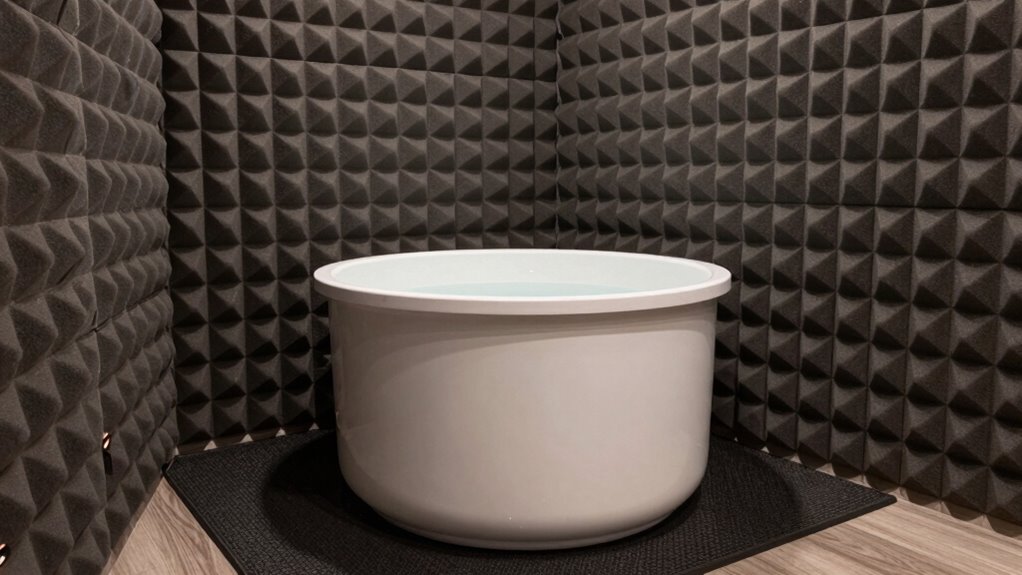
Reducing the noise from your cold plunge doesn’t have to be complicated or expensive. Simple soundproofing techniques can make a big difference. Using noise barriers like foam panels or thick curtains absorbs sound and prevents it from traveling. You can also add soft furnishings such as rugs or cushions to enhance sound absorption, reducing echo and noise levels. For a more effective solution, consider combining barriers with sound absorption materials. Here’s a quick comparison:
| Noise Barriers | Sound Absorption |
|---|---|
| Foam panels | Thick rugs or blankets |
| Weatherstripping | Acoustic curtains |
| Mass-loaded vinyl | Soft furniture (cushions) |
| Soundproof mats | Wall tapestries |
These approaches are easy to implement and cost-effective for keeping cold plunge noise contained.
Best Placement Strategies to Minimize Noise Disturbance
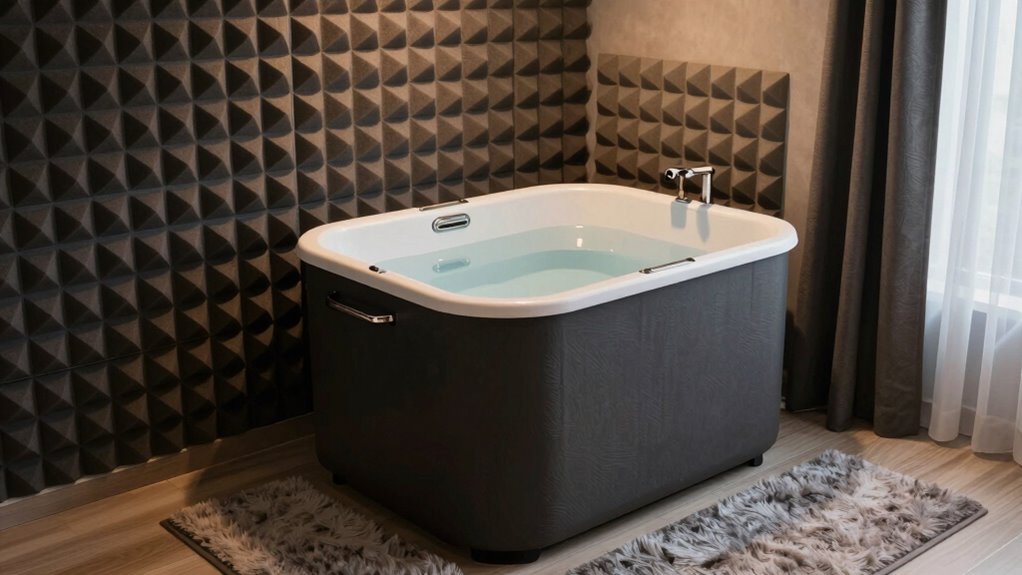
Choosing the right placement locations can substantially reduce noise disturbance in your space. You should consider positioning noisy equipment away from quiet areas and using barriers to block sound. Incorporating soundproofing techniques alongside strategic placement will give you the best results.
Optimal Placement Locations
To effectively minimize noise disturbance, placing sound sources away from sensitive areas is essential. You want your cold plunge setup close enough for convenience but positioned to reduce noise impact. Choose locations where acoustic treatment can enhance sound absorption, like corners or behind furniture. Avoid placing the setup near shared walls or thin floors that transmit sound easily. Instead, find a spot with natural barriers or create your own with bookshelves, rugs, or curtains. Proper placement helps contain noise and makes your apartment more peaceful. Here’s a quick guide to ideal spots:
| Location | Pros | Cons |
|---|---|---|
| Corner of room | Better sound absorption, less echo | May feel cramped |
| Away from shared wall | Reduces noise transfer | Less convenient access |
| Near soft furnishings | Absorbs sound naturally | Might require additional treatment |
| Basement or lower level | Minimizes disturbance | Less accessible |
Soundproofing Techniques
Effective soundproofing begins with strategic placement of your equipment to minimize noise transmission. Position your cold plunge setup away from shared walls or neighbors to reduce sound travel. Adding acoustic panels around the unit can absorb noise and prevent echoes, further lowering sound levels. Consider installing sound barriers, such as thick curtains or foam panels, on walls behind the setup to block noise from escaping. Elevate the equipment off the floor using sturdy platforms to diminish vibrations. Sealing gaps around doors and windows also helps contain noise. Combining these placement strategies with acoustic panels and sound barriers creates a more peaceful environment, ensuring your cold plunge remains a private, disturbance-free experience in your apartment.
How to Maintain Your Cold Plunge for Quiet Operation
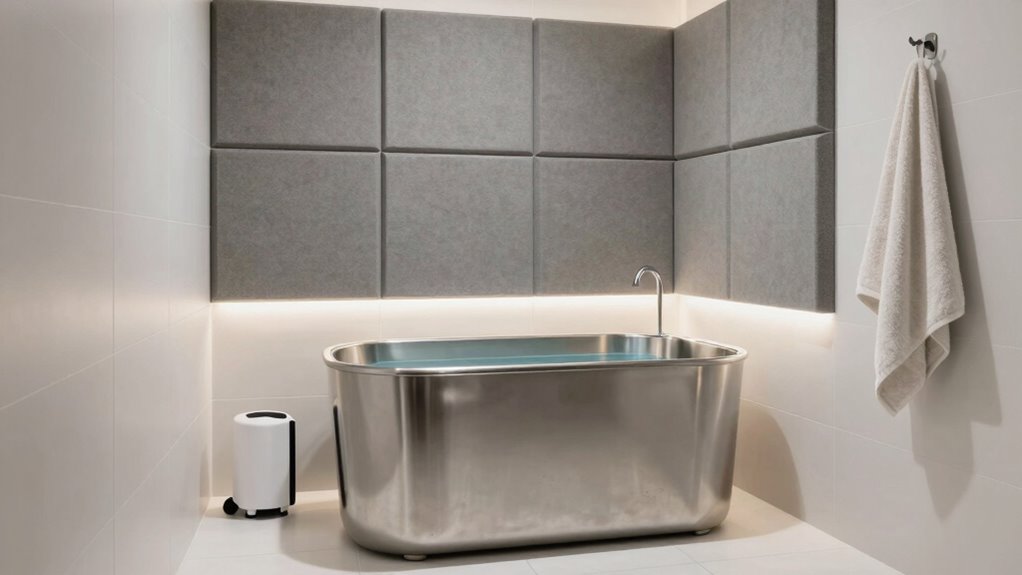
Regular maintenance is essential to keep your cold plunge operating quietly. Regularly check your water chemistry to prevent buildup that can cause noisy pump strain or vibrations. Maintaining proper pH levels and cleanliness reduces the risk of debris or algae that might interfere with pump performance. Additionally, verify electrical safety by inspecting cords, plugs, and connections for wear or damage. Secure loose wiring and avoid water contact with electrical components to prevent malfunctions that could increase noise. Clean your filters and pump areas regularly to prevent blockages that cause loud operation. By staying on top of these routine tasks, you minimize mechanical noise and ensure smooth, quiet operation, making your cold plunge a peaceful part of your apartment routine.
DIY Modifications to Make Your Cold Plunge Quieter
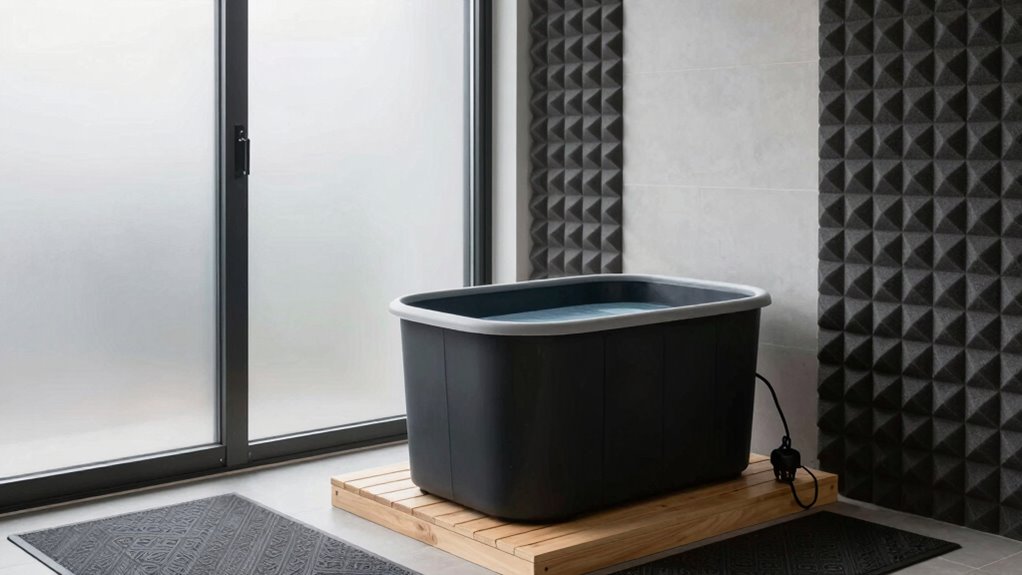
If you want to reduce the noise your cold plunge makes, DIY modifications can make a noticeable difference. Start by adding noise barriers around your setup, such as foam panels or thick curtains, to block sound from escaping. Using materials with good sound absorption properties, like acoustic foam or mass-loaded vinyl, can dampen vibrations and reduce overall noise levels. Placing these barriers strategically behind the pump and motor helps prevent sound from traveling through walls or floors. Additionally, wrapping noisy components with insulation or soundproofing mats can further minimize vibrations. These simple DIY steps don’t require professional tools and can profoundly improve the quietness of your cold plunge, making it more apartment-friendly and less disruptive to your household.
Troubleshooting Noise Issues and When to Seek Help
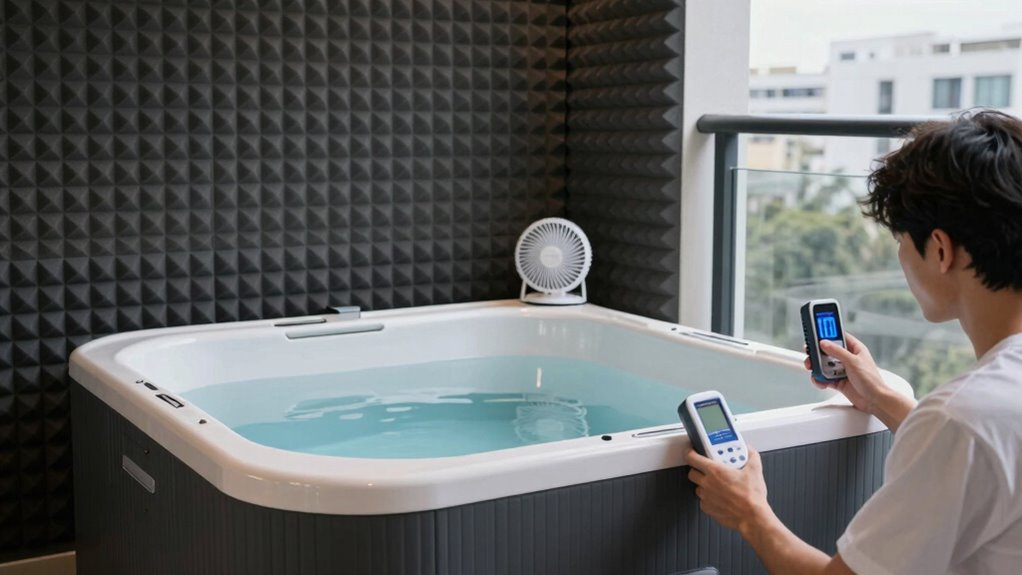
When your cold plunge suddenly becomes much noisier than usual, it’s important to identify the cause promptly. Noise mitigation often involves checking for loose parts, worn belts, or vibrating components. Regular equipment maintenance can prevent most issues, but some problems require expert help. Here’s a quick guide:
| Issue | Possible Cause | Solution |
|---|---|---|
| Unusual loud noise | Loose or worn parts | Tighten or replace components |
| Vibrations | Unbalanced equipment | Relevel or secure equipment |
| Humming or buzzing | Motor or pump malfunction | Seek professional repair |
| Sudden silence | Equipment failure | Contact a technician |
If troubleshooting doesn’t resolve the issue, don’t hesitate to seek help to avoid further damage or noise complaints.
Frequently Asked Questions
Can I Use Noise-Canceling Headphones While Cold Plunging?
Yes, you can use noise-canceling headphones while cold plunging. They help block out surrounding noise, making your experience more relaxing. For added soundproofing, consider installing soundproof curtains around your setup and placing vibration mats under the plunge tub to minimize vibrations and noise transfer. Just make certain your headphones are waterproof or water-resistant, so they stay safe if splashes occur.
Are There Specific Materials That Absorb Cold Plunge Noise Better?
A chain is only as strong as its weakest link, so choosing the right materials matters. You should use soundproof drywall and install acoustic foam panels around your cold plunge setup. These materials absorb cold plunge noise better by dampening sound waves and reducing echo. Combining these options creates a quieter environment, making your apartment-friendly cold plunge setup more discreet and less disruptive to neighbors.
How Long Does It Typically Take to Notice Noise Reduction After Modifications?
You’ll usually notice noise improvement within a few days to a week after making modifications, depending on the materials used and how effectively they absorb sound. Keep in mind, timing expectations can vary based on the setup’s size and the noise source. To speed up the process, add soft, dense materials like foam or carpets around your cold plunge area, which will enhance noise reduction and make your setup more apartment-friendly.
Does the Size of the Cold Plunge Influence Noise Levels Significantly?
You’ll find that the size of your cold plunge can subtly influence noise levels, with larger models potentially emitting more sound due to increased surface area and components. Smaller cold plunges tend to operate more quietly, making them friendlier for apartment settings. When choosing your setup, consider the balance between size and noise, and explore soundproofing options to keep the tranquility you desire.
Are There Legal Noise Restrictions for Cold Plunging in Apartments?
Yes, there are legal restrictions on apartment noise that you should be aware of. Local ordinances typically limit noise levels, especially during quiet hours, to prevent disturbances. When cold plunging, make certain your setup doesn’t produce excessive apartment noise that could violate these legal restrictions. To stay compliant, consider soundproofing measures or timing your cold plunges during hours when noise is less likely to cause issues.
Conclusion
While a cold plunge can invigorate your routine, its noise can disrupt your peaceful home. Embrace quiet solutions, and your plunge becomes more than just a refresh—it’s a sanctuary. Balance the chill with calm, turning a noisy machine into a serene retreat. In the end, silence isn’t just the absence of sound; it’s the presence of comfort, reminding you that even the loudest moments can be softened into tranquility.