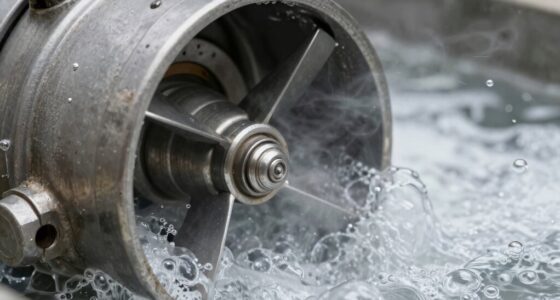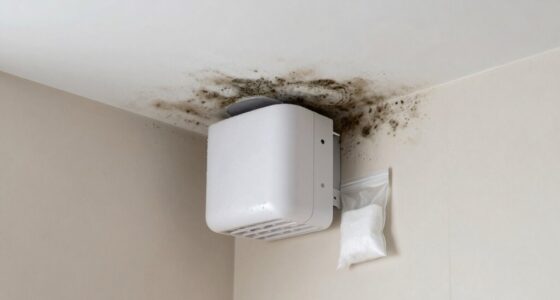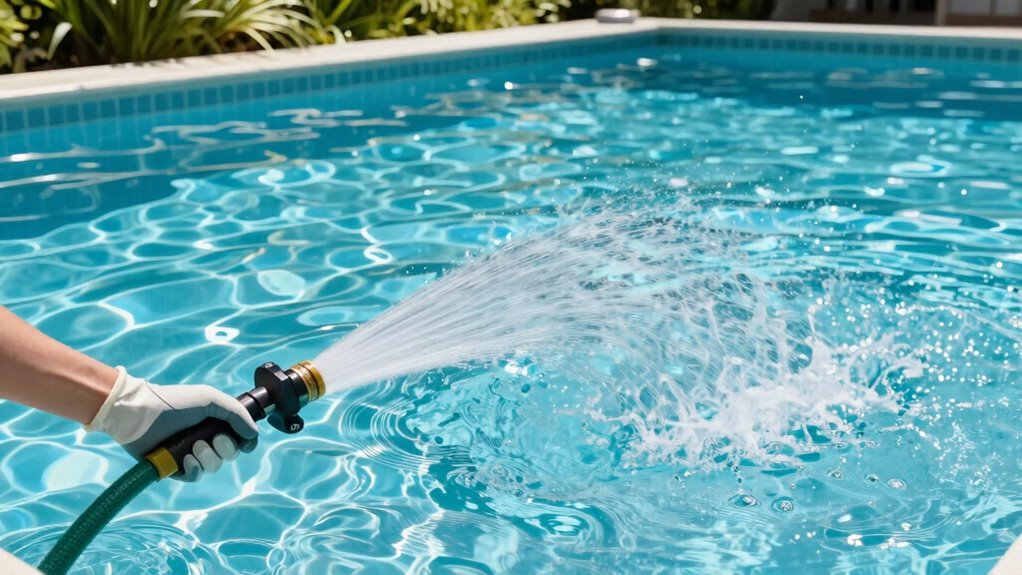

Backwashing is a crucial maintenance step that keeps your filter working effectively by flushing out dirt, debris, oils, and organic matter that collect over time. You should backwash when the pressure rises considerably or water clarity decreases, usually every few weeks. Proper technique involves turning off the pump, setting the valve to backwash, running it until water runs clear, then rinsing briefly before returning to normal. Keep your system in top shape—learn how to do it right and avoid common mistakes by continuing on.
Key Takeaways
- Regularly monitor filter pressure and visual cues like cloudiness or odors to determine when backwashing is needed.
- Perform backwashing when pressure rises 8-10 psi above normal, running the pump until water runs clear.
- Follow proper procedures: set the valve to “backwash,” run for 2-3 minutes, then rinse for about one minute.
- Use correct filter media and maintain the system to prevent damage and ensure effective cleaning.
- Dispose of backwash water responsibly, adhering to local regulations and environmental considerations.
What Is Backwashing and Why Is It Important?

Have you ever wondered how a pool stays clean and clear? The answer lies in proper filter maintenance and water filtration. Backwashing is a key process that helps keep your filter functioning effectively. When your filter traps dirt, debris, and oils, it gradually becomes less efficient, reducing water filtration. Backwashing involves reversing the flow of water through the filter to flush out the accumulated dirt and debris. This process restores the filter’s ability to trap contaminants, ensuring your pool water stays sparkling and healthy. Without regular backwashing, your filter can become clogged, impairing water filtration and making your pool look dull. Additionally, understanding the importance of filter efficiency in maintaining your pool can help you optimize your cleaning routine. Proper backwashing also helps prevent filter damage, extending the lifespan of your equipment and reducing long-term costs. Regular backwashing is a crucial part of pool maintenance that keeps your water clean and inviting. Moreover, maintaining filter flow rate is essential to ensure the backwashing process is effective and does not put undue stress on your system. So, understanding what backwashing is and why it’s essential helps you maintain a clean, inviting pool all season long.
How Often Should You Backwash Your Pool or Spa Filter?

Knowing when to backwash your pool or spa filter helps keep your water sparkling without overdoing it. Typically, backwash when the pressure gauge rises 8-10 psi above the normal operating level. Factors like pool chemicals, usage, and debris impact how often you need filter maintenance. For example, a heavily used spa may require more frequent backwashing than a seldom-used pool. Regularly check your filter’s pressure and cleanliness to prevent clogging. Proper maintenance ensures optimal filter performance and extends the lifespan of your equipment. Additionally, understanding the horsepower of your pump can help determine if your filter system is functioning effectively. Monitoring these factors can also help you identify signs of filter wear before major issues develop. Incorporating routine visual inspections can further assist in maintaining a healthy pool environment.
How to Backwash Your Pool or Spa Filter Step by Step
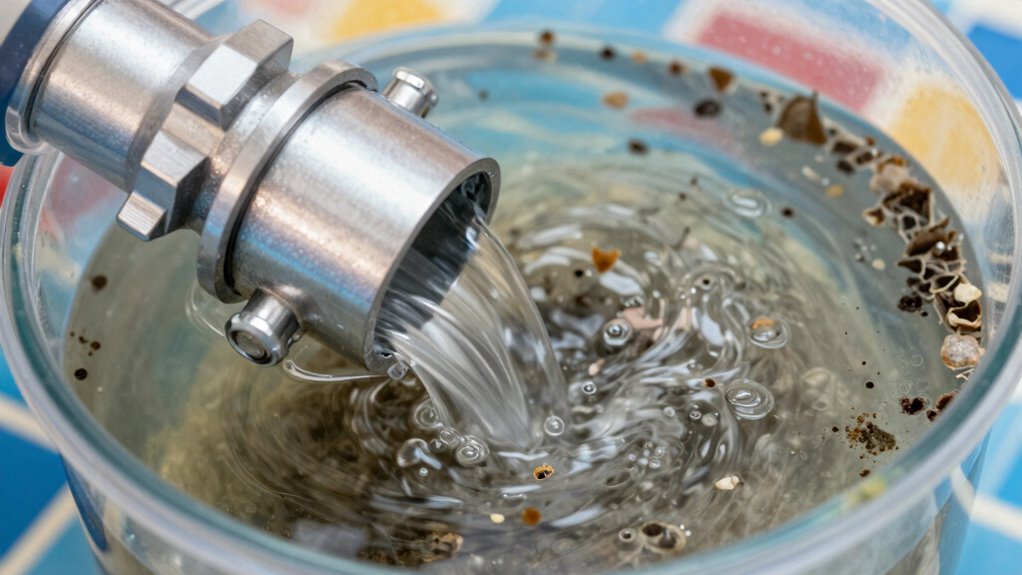
To properly backwash your pool or spa filter, start by turning off your pump to prevent damage and guarantee safety. Next, locate the filter’s backwash valve and set it to the “backwash” position. Turn the pump back on and run it for about two to three minutes, or until the water in the sight glass runs clear. Then, turn off the pump again and set the valve back to the “rinse” setting, running the pump for another minute to settle the media. Afterward, switch the valve to the “filter” position and restart the pump. Remember, regular filter maintenance is essential, but don’t forget to check and balance your chemicals afterward to keep your water clear and safe. Additionally, inspecting and maintaining your filter media can extend the lifespan of your filter system and improve its efficiency. Incorporating proper maintenance practices can contribute to the overall sustainability and longevity of your filtration system. Performing routine filter inspections can help identify potential issues early and prevent costly repairs down the line.
Signs That It’s Time to Backwash Your Filter

You’ll notice when it’s time to backwash your filter if the water becomes cloudy or less clear. A rise in pump pressure indicates debris clogging the system, signaling it’s overdue for cleaning. Additionally, if you detect an unpleasant odor in the water, it’s a clear sign that your filter needs attention.
Water Clarity Deteriorates
As water clarity begins to decline, it’s a clear sign that your filter needs backwashing. When your pool water looks cloudy or hazy, it indicates that the water filtration system isn’t effectively removing debris and contaminants. Regular filter maintenance is essential to keep your water clear and safe. If you notice a reduction in visibility or a dull appearance to the water, it’s time to backwash. Neglecting this step can lead to clogged filters, reducing their efficiency and causing water quality issues. Keep an eye on water clarity as an easy, visual cue that your filtration system needs a clean. Proper backwashing restores proper water flow, improves water quality, and ensures your filter continues to do its job effectively. Monitoring filter performance regularly helps prevent long-term issues and maintains optimal water clarity.
Increased Pump Pressure
When your pool pump starts running harder than usual, it’s a clear sign that your filter may be clogged and needs backwashing. Increased pump pressure indicates resistance in the filter, often caused by debris buildup. If you notice the pressure gauge rising above the normal range, it’s time for filter maintenance. Ignoring this sign can strain your pump and reduce circulation.
| Pump Issues | Symptoms |
|---|---|
| High pressure readings | Difficulty maintaining flow |
| Reduced water flow | Cloudy or murky water |
| Frequent cycling of pump | Increased noise |
| Longer filtering times | Filter clogging |
| Strained pump motor | Potential damage |
Addressing these signs promptly guarantees your filter stays efficient and prolongs your equipment’s lifespan.
Unpleasant Water Odor
A sudden, unpleasant odor emanating from your pool water often signals that your filter needs backwashing. This foul smell typically indicates that debris and organic matter have built up in the filter, reducing its effectiveness. When your filter isn’t properly maintained, it can’t adequately trap contaminants, causing the water to develop a musty or swampy smell. Proper filter maintenance and backwashing help remove trapped debris, restore proper water flow, and eliminate odors. If you detect a persistent smell, it’s a clear sign you should backwash your filter promptly to keep your pool water clean, clear, and odor-free. Regular pool care routines, including backwashing, are essential to prevent issues like odors from recurring. Proper air quality in your environment also supports overall health and well-being.
Common Mistakes to Avoid When Backwashing Your Pool or Spa Filter

Even experienced pool owners can make mistakes during backwashing that compromise filter performance. One common error is neglecting to check the filter media type, which affects cleaning effectiveness. Failing to maintain proper chemical balance can lead to algae buildup and muddy water after backwashing. Additionally, you might backwash too often or not enough, risking damage or poor filtration. Other mistakes include using the wrong valve settings, which can cause water to bypass the filter, and ignoring the manufacturer’s instructions. Finally, rushing through the process without inspecting the system may overlook issues that need attention, like worn-out parts. To keep your filter working ideally, focus on proper timing, correct settings, and maintaining your filter media and chemical balance. Proper filter maintenance and regular system checks are also essential to prevent costly repairs and keep your pool or spa water clean and clear. Regular inspection of the filter media type ensures that it functions optimally and extends its lifespan. Incorporating professional guidance can help you avoid common pitfalls and optimize your backwashing routine. Using the correct filter media based on your system specifications can significantly improve cleaning efficiency and longevity. Understanding the filter cycle and its impact on cleaning results can further improve your maintenance routine.
How to Properly Dispose of Backwash Water Safely
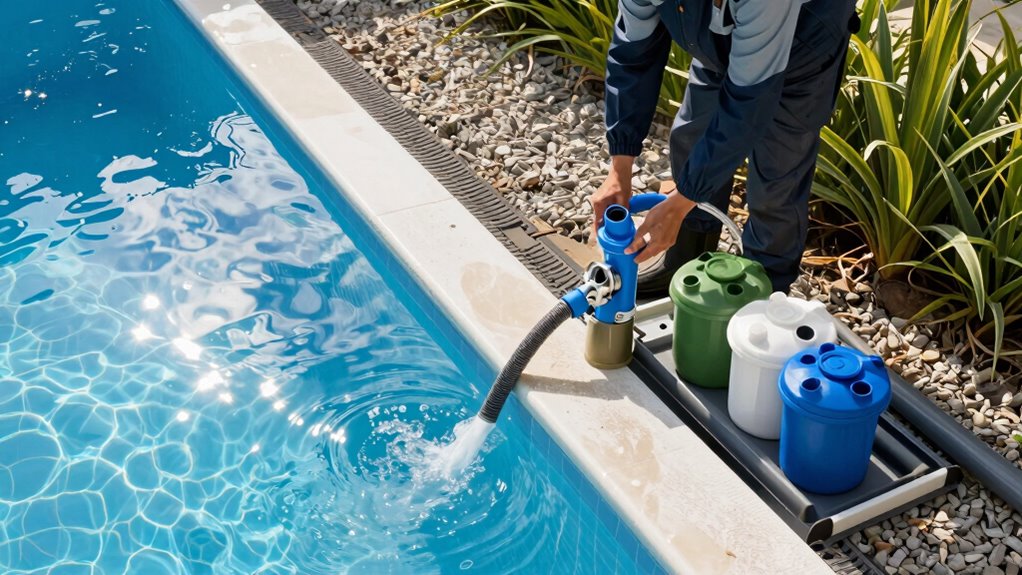
You need to dispose of backwash water responsibly to protect your property and the environment. Check your local disposal regulations to make certain you’re following the rules. Using environmentally friendly methods can help minimize the impact on your surroundings and keep your pool maintenance eco-conscious. Additionally, being aware of environmental impact considerations can guide you in choosing the most sustainable disposal practices.
Local Disposal Regulations
Have you considered how local disposal regulations impact the safe and legal handling of backwash water? It’s essential to understand your area’s specific rules to avoid fines or environmental harm. Local regulations often dictate how and where you can dispose of waste water, emphasizing safe waste disposal practices.
Be sure to:
- Check with local authorities for waste disposal guidelines
- Obtain necessary permits if required
- Use designated disposal sites
- Avoid discharging into storm drains or natural water bodies
- Follow specific limits on contaminant levels
Ignoring these regulations can lead to severe penalties and environmental issues. Always stay informed about your local regulations to ensure your backwash water disposal remains compliant and safe for everyone.
Environmentally Friendly Methods
Implementing environmentally friendly methods for disposing of backwash water helps protect ecosystems and promotes sustainable pool management. Before disposal, ensure the water’s chemical balancing is appropriate, with safe pH and chlorine levels, to prevent environmental harm. Consider using filtration systems or settling tanks to reduce contaminants and sediment, making the water safer to discharge. Avoid releasing backwash water directly into storm drains or natural bodies of water unless permitted by local regulations. Regular equipment maintenance minimizes the risk of leaks or spills, supporting eco-friendly disposal. When in doubt, consult local guidelines and opt for approved treatment facilities that can handle pool water safely. These practices not only safeguard the environment but also extend the lifespan of your pool equipment.
How Backwashing Affects Water Quality and Filter Longevity

Backwashing plays a crucial role in maintaining water quality and extending filter life by removing accumulated debris and contaminants. When done properly, it helps preserve filtration efficiency and supports the chemical balance in your water system. Regular backwashing prevents clogs that can reduce flow and cause bacteria buildup. It also helps maintain ideal chemical levels, reducing the need for chemical treatments. Proper backwashing:
- Restores filter media’s capacity to trap particles
- Prevents buildup of harmful bacteria and algae
- Maintains consistent water clarity
- Keeps filtration efficiency high
- Extends the lifespan of your filter system
What to Do When Backwashing Doesn’t Improve Water Clarity
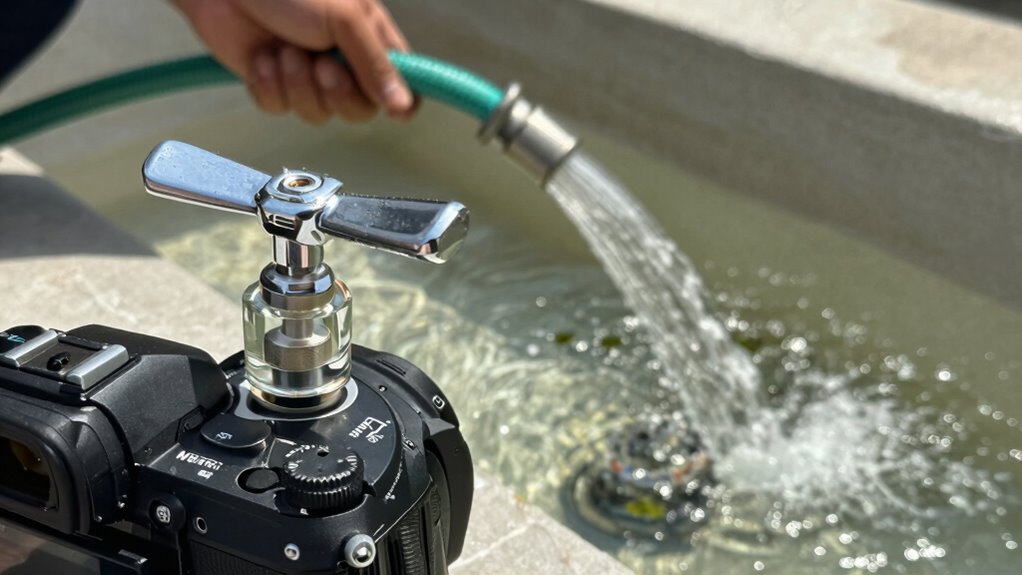
When backwashing fails to improve water clarity, it’s a sign that deeper issues may be affecting your system. A common cause is a chemical imbalance in your pool or spa, which can lead to poor filtration results. Test and adjust pH, alkalinity, and sanitizer levels to guarantee optimal water chemistry. Additionally, incorrect equipment calibration can hinder backwashing efficiency; verify that the valve positions, pressure gauges, and flow rates are set properly. If the system isn’t calibrated correctly, debris may not be effectively removed during backwash cycles. Address these issues first, then try backwashing again. If water clarity still doesn’t improve, consider inspecting the filter media or seeking professional assistance to diagnose underlying problems. Proper chemical balance and calibration are vital for effective filtration.
Tips to Keep Your Filter Working Well Between Backwashes
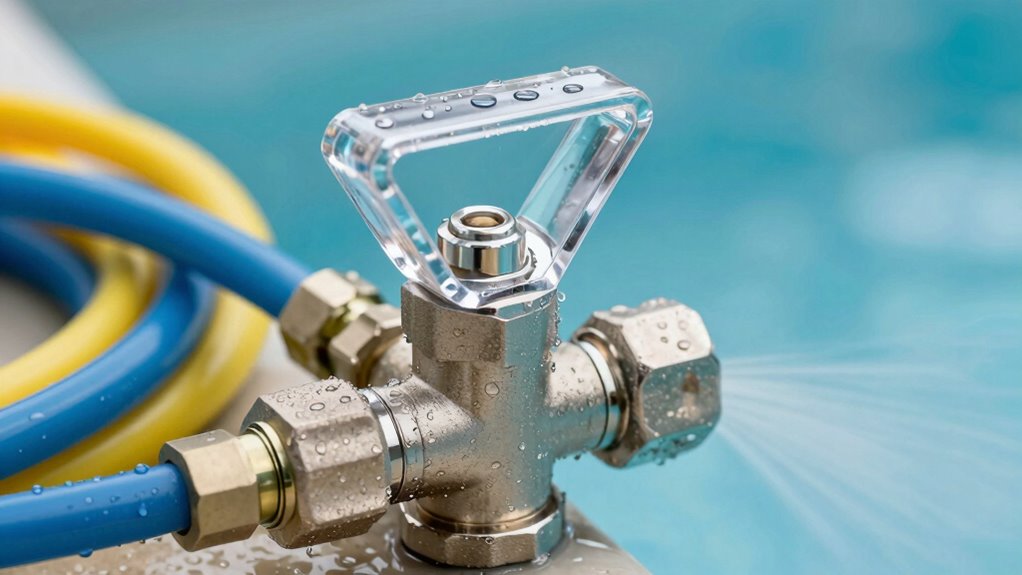
To keep your filter functioning effectively between backwashes, regular maintenance and mindful practices are essential. Proper filter maintenance helps prevent buildup and guarantees ideal flow. Maintaining the chemical balance in your pool also reduces strain on the filter, keeping it cleaner longer. Here are some tips:
Regular maintenance and proper chemical balance keep your filter running smoothly longer.
- Regularly check and clean your skimmer and pump baskets
- Maintain proper chemical balance to reduce debris and algae
- Rinse the filter media periodically to remove dirt buildup
- Avoid over-using chemicals that can clog the filter
- Monitor water flow and pressure to catch potential issues early
Frequently Asked Questions
Can I Backwash My Filter Too Often?
You shouldn’t backwash your filter too often, as it can reduce its lifespan and waste water. Aim to backwash only when the pressure gauge indicates a buildup or as recommended by your filter’s instructions. Doing so helps conserve water and keeps your filter functioning properly. Over-backwashing can lead to unnecessary wear, so finding a balanced schedule guarantees your system stays efficient without sacrificing water conservation.
What Tools Are Needed for Effective Backwashing?
To effectively backwash your filter, you’ll need basic equipment like a garden hose, a filter valve, and possibly a backwash hose. These tools make filter cleaning easier and guarantee your equipment maintenance is thorough. Make sure your filter valve is compatible with your system. Regularly check and clean the equipment to keep your filter functioning properly, preventing buildup and maintaining clean water.
How Does Backwashing Impact Energy Consumption?
Backwashing impacts your energy consumption like a ripple in a pond, influencing your system’s energy efficiency and power usage. When you backwash, it temporarily increases energy use because the pump works harder to clear out debris. However, regular backwashing actually helps maintain ideal filter function, reducing long-term energy costs. Properly timed backwashing ensures your system runs smoothly, saving power and keeping your pool or system efficiently energy-conscious.
Is There a Difference Between Backwashing and Cleaning the Filter?
Yes, there is a difference. Backwashing is a specific part of filter maintenance that involves reversing water flow to remove dirt and debris from the filter media, ensuring efficient water filtration. Cleaning the filter, on the other hand, can include manual scrubbing or replacing filter media. Both steps are essential for proper filter maintenance to keep your water filtration system running smoothly and maintain water quality.
Can Backwashing Remove Algae or Bacteria From the Filter?
Coincidentally, backwashing primarily focuses on removing debris, but it also helps with algae removal and bacteria elimination. By forcing clean water through the filter in reverse, you dislodge accumulated algae and bacteria, flushing them out of the system. Regular backwashing prevents these contaminants from building up, maintaining water clarity and safety. While it’s effective for surface algae and bacteria, significant contamination may require additional chemical treatments.
Conclusion
Regularly backwashing your filter keeps your pool or spa clean and your equipment running smoothly. By staying on top of this maintenance step, you’ll enjoy clearer water and longer-lasting filters. Remember, neglecting backwash can lead to poor water quality and costly repairs. So, are you ready to keep your backyard oasis sparkling and your filter in top shape? Just follow these simple steps and enjoy worry-free swimming all season long!