To troubleshoot slow cooling in your cold plunge, start by checking and replacing dirty filters to improve water flow. Make sure your insulation is intact and adding more if needed, especially around the tank. Inspect the pump, hoses, and thermostat for leaks or malfunctions. Also, consider the placement—moving it to a shaded area can help. Addressing these common issues quickly can boost cooling performance, and you’ll discover more tips to optimize your setup if you keep going.
Open a free Amazon Business account
Business pricing, bulk buying and tax-exempt orders.
As an affiliate, we earn on qualifying purchases.
Key Takeaways
- Regularly check and replace filters to prevent debris buildup and ensure water flow.
- Improve insulation and add reflective covers to reduce external heat transfer.
- Inspect pumps, hoses, and thermostats for leaks, blockages, or calibration issues.
- Move the setup to a shaded area and minimize direct sunlight exposure.
- Maintain system components and clean filters to optimize cooling efficiency.
If your cold plunge isn’t cooling as quickly as it should, it can be frustrating and disrupt your routine. Slow cooling often points to issues that are manageable once you identify the root cause. One common reason is water filtration problems. If your water isn’t filtered properly, debris, algae, or mineral buildup can interfere with the cooling process. Dirty or clogged filters reduce water flow and make it harder for the system to reach the desired temperature. Check your filtration system regularly, replace filters as recommended, and verify there’s no blockage. Clean the filter housing thoroughly to remove any buildup that could restrict water circulation. Proper water filtration isn’t just about keeping the water clean; it also helps your cooling system operate efficiently. Additionally, ensuring the filtration system is functioning correctly can prevent further issues down the line. Regular maintenance of your filtration system can significantly improve overall cooling performance. Maintaining a clean and efficient filtration system is crucial for optimal operation and longevity. Ensuring that your water quality remains high can also prevent buildup and extend the lifespan of your system components.
Another factor that can slow down cooling is inadequate insulation. If your cold plunge isn’t insulated well, external heat sources like sunlight, warm air, or even nearby equipment can raise the water temperature, making it harder for the system to cool the water effectively. Review your insulation techniques to see if your setup has gaps or thin insulation layers. Adding more insulation around the tank or using reflective covers can considerably improve cooling efficiency. Insulation helps maintain a steady cold temperature by reducing heat transfer, so investing in quality insulation materials can make a noticeable difference in the cooling speed. Ensuring proper insulation techniques can also prevent heat transfer from nearby objects or environments, optimizing cooling performance.
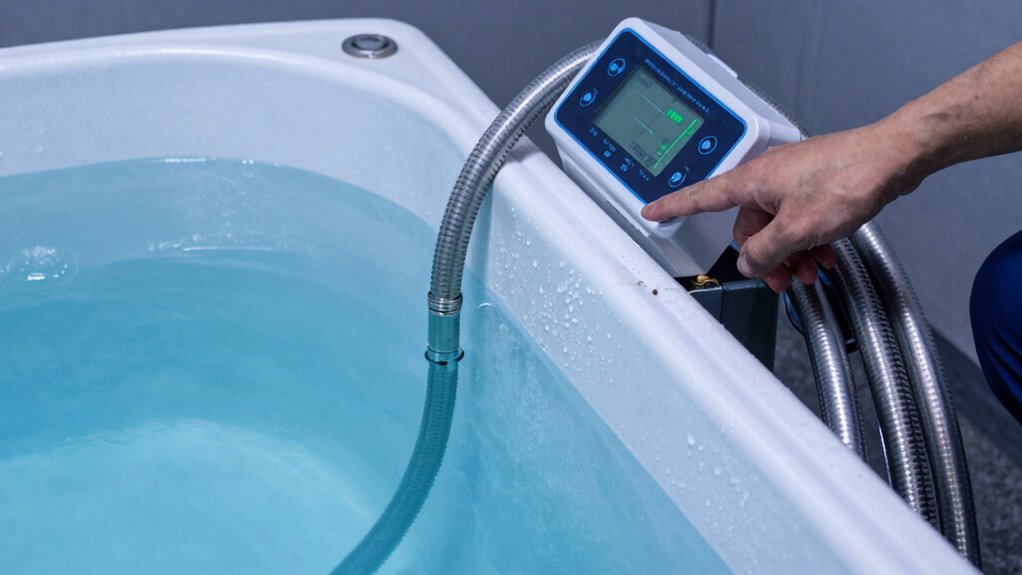
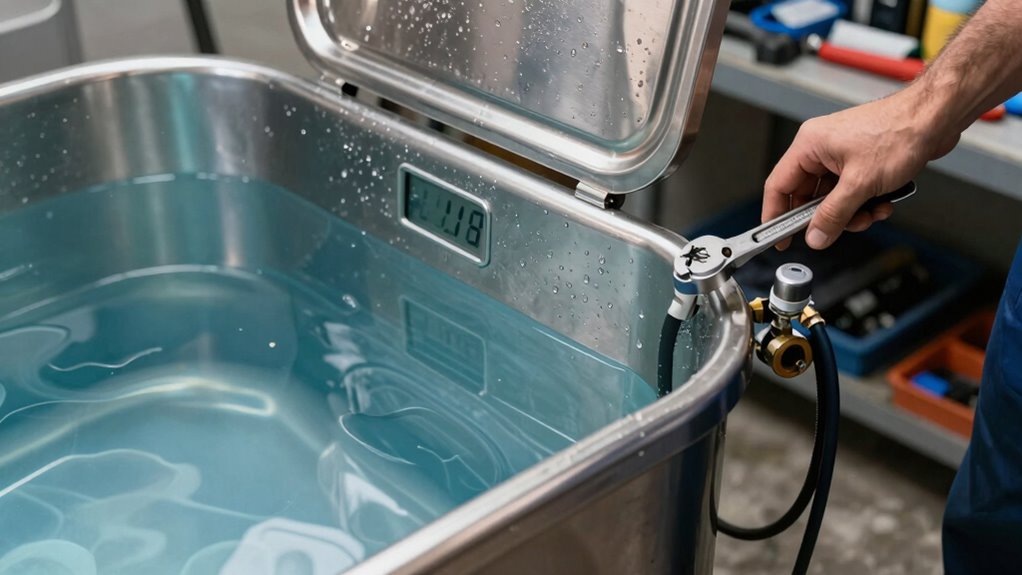
In addition to water filtration and insulation, check your cooling system components. Make sure the pump is functioning properly and that there are no leaks or blockages in hoses or pipes. A malfunctioning pump can reduce water circulation, which means the cold water isn’t evenly distributed and the system takes longer to reach ideal temperatures. Also, verify that your thermostat is calibrated correctly; an inaccurate reading can cause the system to run longer or shorter than necessary. Proper system maintenance can help identify potential issues before they impact cooling efficiency.
Lastly, consider the placement of your cold plunge. If it’s positioned in a hot environment or exposed to direct sunlight, it’ll naturally take longer to cool down. Moving your setup to a shaded area or installing a cover can help maintain a lower ambient temperature, speeding up the cooling process. Combining these troubleshooting steps—checking water filtration, improving insulation techniques, inspecting system components, and optimizing placement—can restore your cold plunge’s efficiency and get it cooling as it should. Proper water filtration is essential for optimal cooling performance and long-term maintenance.
cold plunge water filter replacement
As an affiliate, we earn on qualifying purchases.
As an affiliate, we earn on qualifying purchases.
Frequently Asked Questions
Can Ambient Room Temperature Affect Cold Plunge Cooling Efficiency?
Ambient influence definitely affects your cold plunge’s cooling efficiency. If the room temperature fluctuates or is too warm, it can slow down the cooling process because the environment isn’t helping maintain consistent temperature stability. To optimize cooling, keep the room cool and stable, avoiding drafts or heat sources nearby. This guarantees your cold plunge works effectively, maintaining the desired cold temperature and providing a better, more consistent experience.
How Often Should the Coolant Be Replaced or Topped Up?
Your coolant needs regular attention—think of it like a ticking time bomb ready to slow your cooling efficiency! Typically, you should top up the coolant every few months, depending on usage and coolant quality. Keep an eye out for signs of coolant degradation, like discoloration or strange smells. Regular topping frequency guarantees your cold plunge stays icy cold, maximizing performance and preventing any sluggish cooling issues.
Does the Size or Volume of the Plunge Impact Cooling Speed?
Yes, plunge size does impact cooling efficiency. A larger plunge volume takes longer to cool because more water needs to lose heat, slowing down the process. Conversely, smaller plunges cool faster due to the reduced volume. To improve cooling speed, consider adjusting the size of your plunge or optimizing your cooling system to handle the volume effectively. This guarantees quicker, more effective cooling sessions.
Are There Specific Brands of Chillers Better for Fast Cooling?
Certain brands of chillers, like Koolance and Tecumseh, are known for faster cooling due to better efficiency. To optimize performance, you should prioritize chiller maintenance, ensuring all parts work smoothly, and select the right coolant, such as a high-quality refrigerant. Proper coolant selection improves heat transfer, and regular maintenance prevents issues that slow cooling, helping you achieve quicker chilling times in your setup.
How Do You Prevent Frost Buildup on the Cooling System?
To prevent frost buildup on your cooling system, focus on frost prevention methods and insulation techniques. Regularly defrost and clean the system to avoid ice accumulation. Insulate cold pipes thoroughly to minimize condensation and temperature fluctuations that cause frost. Additionally, guarantee proper airflow and maintain ideal humidity levels around the setup. These steps help keep frost at bay, ensuring your cold plunge functions efficiently without ice forming on essential components.
As an affiliate, we earn on qualifying purchases.
Conclusion
As you stand beside your cold plunge, imagine the icy water finally swirling swiftly, embracing you with crisp freshness. When cooling slows, it’s like watching a mountain stream lose its rush—frustrating but fixable. By checking your heater, pump, and insulation, you’re clearing the path for that invigorating chill to return. Soon, your plunge will hum with life again, inviting you to plunge into its revitalizing embrace, turning each cold soak into a invigorating escape.
As an affiliate, we earn on qualifying purchases.
reflective pool cover for cooling efficiency
As an affiliate, we earn on qualifying purchases.
As an affiliate, we earn on qualifying purchases.
NFL season / tailgating Picks
team gear
As an affiliate, we earn on qualifying purchases.