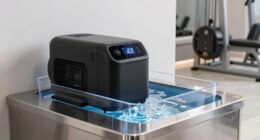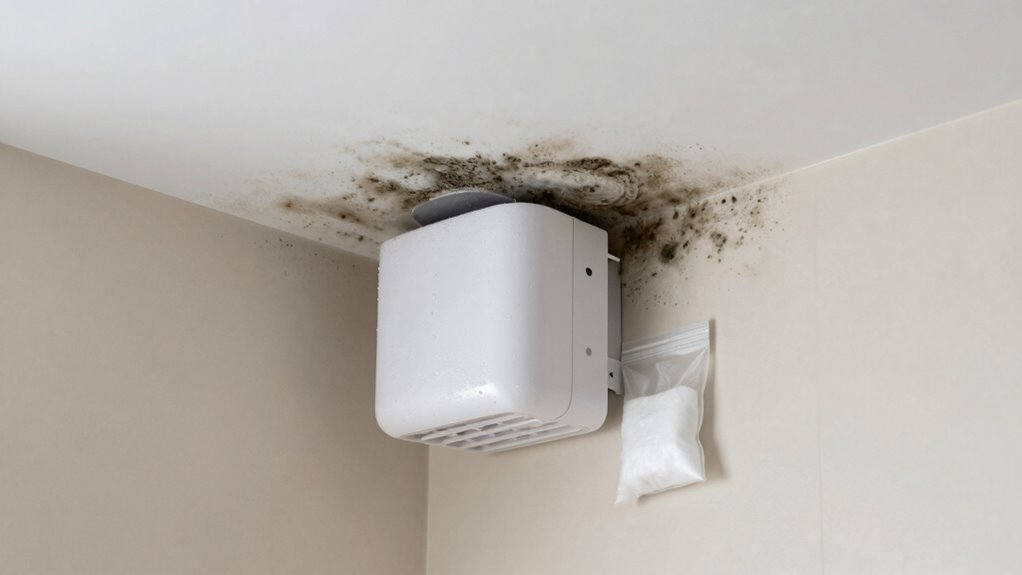

To prevent mold around your setup, address excess moisture by improving ventilation, sealing leaks, and controlling indoor humidity with dehumidifiers and fans. Make sure your space is well-insulated and use moisture-resistant materials. Regularly clean surfaces and inspect for damp spots or mold signs. Moisture absorbers like silica gel can help, and if mold persists or spreads, it’s best to seek professional assistance. Keep these tips in mind, and you’ll be able to keep your environment mold-free.
Key Takeaways
- Ensure proper ventilation with exhaust fans, open windows, or ventilation systems to reduce indoor humidity.
- Use dehumidifiers and fans to maintain humidity levels between 30-50%, preventing mold growth.
- Seal cracks, improve wall insulation, and install vapor barriers to block moisture entry around equipment.
- Regularly inspect for signs of mold, condensation, and damp spots; clean surfaces promptly.
- Seek professional help for persistent or extensive mold to ensure effective removal and health safety.
What Causes Moisture and Mold Around Your Setup?
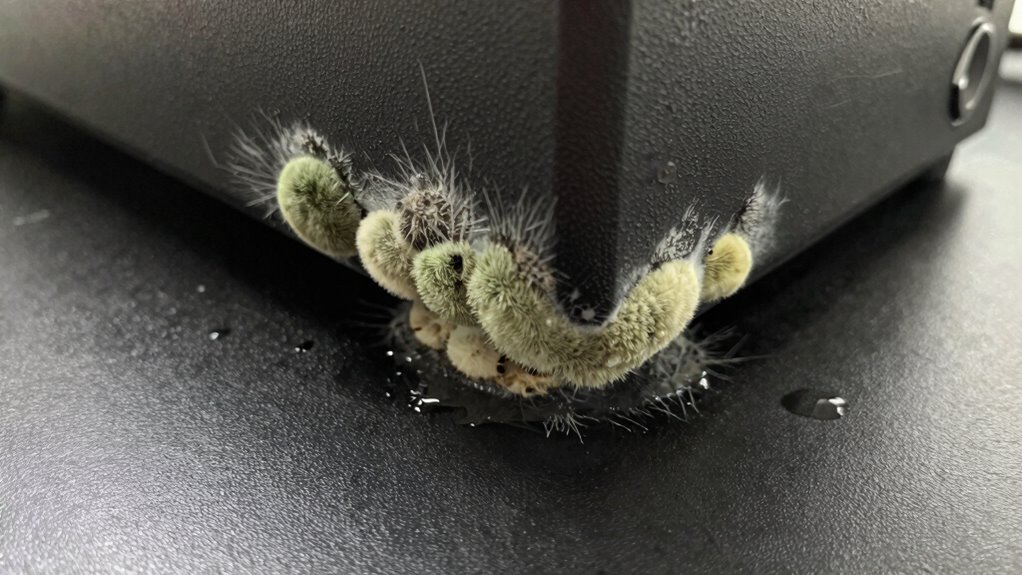
Moisture and mold around your setup often develop because of poor ventilation and high humidity levels. When air isn’t circulating properly, moisture gets trapped, creating the perfect environment for mold growth. Without effective climate control, humidity can rise quickly, especially in enclosed spaces or during humid seasons. This can also lead to damage to equipment, further emphasizing the importance of controlling moisture. Excess moisture condenses on surfaces, feeding mold spores and making cleanup more difficult. To prevent this, you need to implement mold prevention strategies like improving airflow and regulating temperature and humidity. Using dehumidifiers, fans, or air conditioners helps maintain ideal conditions and reduces moisture buildup. Keeping the area dry and well-ventilated is essential to stopping mold before it starts, saving you from potential damage and health issues later on. Additionally, understanding the importance of air quality can help you identify early signs of moisture problems before mold becomes visible. Maintaining good ventilation practices is crucial to ensure consistent air movement and moisture control in your space. Recognizing humidity levels and monitoring them regularly can also significantly reduce the risk of mold growth.
How to Spot Mold Growth Before It Becomes a Problem?
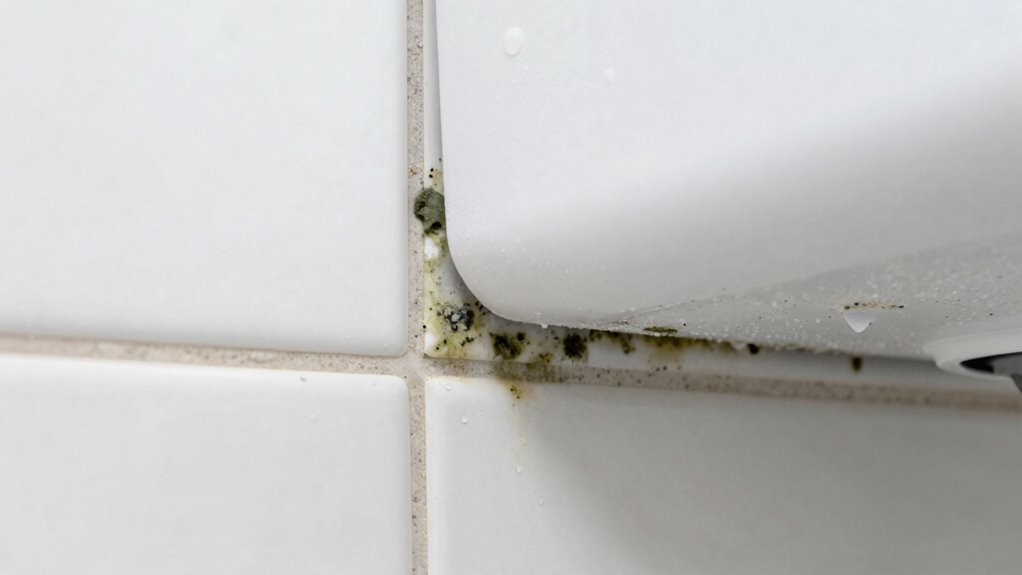
Detecting mold early is crucial, especially since it can start growing before you notice any visible signs. Keep an eye on changes in air quality, such as a musty smell or increased dust. Pay attention to any discoloration on walls, ceilings, or around your setup, especially in hidden corners or behind equipment. Regularly inspect areas prone to moisture buildup, like basements or around pipes. Using a mold test kit can help identify hidden growth before it spreads. Improving mold prevention starts with vigilance—monitor your environment for excess humidity or condensation, which signals potential mold issues. Maintaining proper indoor air quality is essential to prevent mold growth and protect your health. Incorporating moisture control strategies can significantly reduce the likelihood of mold development. Being aware of early warning signs allows you to respond promptly and prevent more extensive problems. Consistently managing humidity levels is a key part of effective mold prevention. Additionally, understanding mold growth conditions can help you identify and eliminate the factors that foster mold development. By catching mold early, you can address problems quickly, protect your indoor air quality, and prevent costly repairs down the line.
How to Improve Ventilation to Keep Humidity in Check?
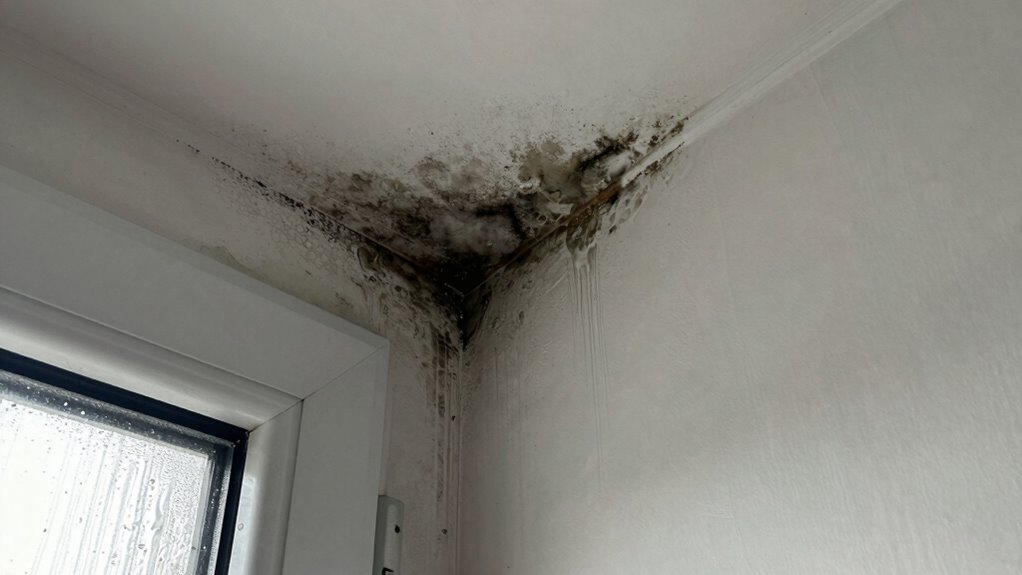
Improving ventilation is key to controlling humidity and preventing mold. You can use exhaust fans, open windows regularly, or install proper ventilation systems to keep air circulating. These steps help reduce moisture buildup and protect your setup from mold growth. Additionally, maintaining consistent indoor temperatures can aid in moisture control and further inhibit mold development proper ventilation systems. Ensuring proper airflow is essential for climate control, which contributes to a healthier environment. Regularly inspecting and maintaining your humidity levels can also prevent mold from taking hold over time. Proper air circulation plays a vital role in maintaining a dry and mold-resistant space.
Use Exhaust Fans
Have you considered how exhaust fans can substantially boost your ventilation efforts? Installing exhaust fans in areas prone to moisture, like bathrooms and kitchens, is a key ventilation best practice. They actively draw humid air out, reducing indoor humidity levels that promote mold growth. When used correctly, exhaust fans are highly effective mold prevention techniques, especially during activities that generate excess moisture. Make sure your fans vent outdoors, not into attics or crawl spaces, to prevent spreading mold spores. Regularly run exhaust fans during and after showers or cooking to keep humidity in check. Proper use of these fans improves air circulation and minimizes dampness, creating a less hospitable environment for mold. Additionally, choosing exhaust fans with high airflow capacity ensures more effective moisture removal. Proper ventilation and air exchange rates are essential for maintaining a healthy indoor environment and preventing mold growth. Ensuring proper humidity control through these measures helps sustain a mold-free setup. Integrating humidity sensors can help monitor and optimize moisture levels automatically. Combining exhaust fans with other ventilation strategies ensures a healthier, mold-free setup.
Open Windows Regularly
Opening windows regularly is a simple yet effective way to enhance your home’s ventilation and control humidity levels. By allowing fresh air to circulate, you improve air quality and reduce moisture buildup that can lead to mold growth. Proper airflow helps carry away excess humidity, preventing damp conditions where mold thrives. It’s especially helpful during activities that generate moisture, like cooking or laundry. Keep in mind, opening windows for a few minutes each day can markedly lower indoor humidity and refresh the environment. This simple habit not only boosts air quality but also acts as a natural mold prevention method, safeguarding your home’s integrity. Additionally, passive ventilation techniques can provide passive ventilation and humidity control in certain spaces. Regular ventilation ensures your space stays dry, healthy, and mold-free, making it a key step in moisture management.
Install Ventilation Systems
Wondering how to effectively reduce indoor humidity and prevent mold? Installing proper ventilation systems is key. Good ventilation improves air quality and helps control moisture levels. When you add ventilation, you allow moist air to escape and fresh air to circulate, reducing the chances of mold growth. Incorporating local automation can optimize ventilation based on real-time humidity readings, further enhancing indoor air quality. Additionally, selecting the right ventilation type ensures efficient moisture removal tailored to your space.
Controlling Indoor Humidity With Dehumidifiers and Fans?
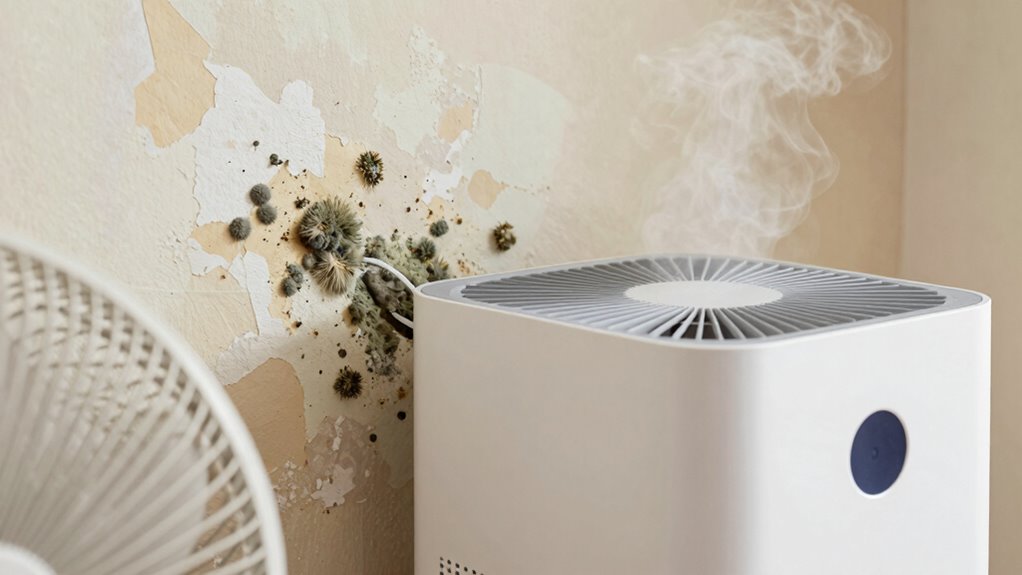
Controlling indoor humidity is essential to prevent mold growth, and using dehumidifiers and fans can be highly effective tools. Dehumidifiers reduce moisture levels in the air, making your environment less inviting for mold spores to settle and grow. Fans help circulate air, preventing stagnant spots where humidity can accumulate. Together, these devices improve air quality by maintaining a balanced humidity level, ideally between 30-50%. Proper air circulation also helps remove excess moisture released during daily activities, such as cooking or showering. Regularly using dehumidifiers and fans in areas prone to dampness minimizes mold risk and creates a healthier space. By managing humidity effectively, you protect your setup from mold and ensure a safer, fresher environment.
Sealing Leaks and Insulating to Prevent Moisture Intrusion?
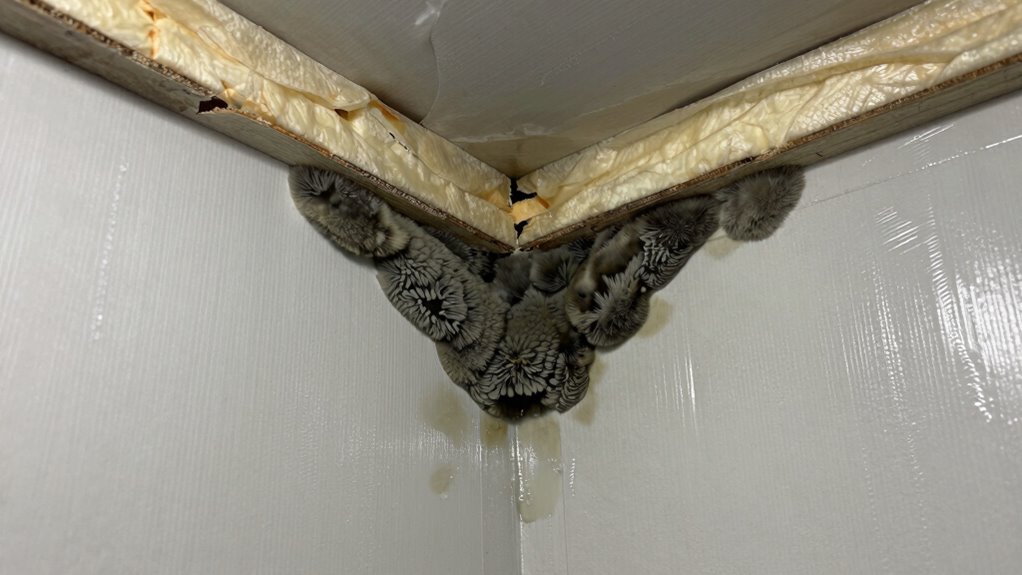
Sealing cracks and gaps around your setup keeps moisture from sneaking in. Improving wall insulation adds an extra layer of defense against temperature changes that cause condensation. Using vapor barriers helps stop dampness from reaching your equipment, protecting it from mold growth. Additionally, ensuring proper shop layout and airflow can further reduce humidity levels and prevent moisture buildup. Proper ventilation is also essential to maintain a dry environment and reduce the risk of mold development. Incorporating moisture control techniques can improve overall effectiveness in preventing mold issues. Implementing protective styling methods with crochet or knitting techniques can also help shield your equipment from external humidity.
Seal Cracks and Gaps
Cracks and gaps in your setup can serve as entry points for moisture, leading to mold growth and structural damage. To prevent this, focus on effective crack sealing, which improves ventilation efficiency and blocks moisture infiltration. Properly sealing these openings helps maintain a dry environment and reduces mold risk. Consider these actions:
- Use high-quality sealants to fill small cracks and gaps
- Inspect regularly for new or expanding openings
- Prioritize sealing around windows, doors, and vents
- Maintain consistent crack sealing to ensure long-term protection
Enhance Wall Insulation
Enhancing wall insulation is a crucial step in preventing moisture intrusion and mold growth. Proper wall insulation helps keep indoor humidity levels stable, reducing the risk of condensation that encourages mold. Make sure your wall insulation is up to code and properly installed, filling all gaps and voids. Adding moisture barriers within wall cavities can further block water vapor from penetrating walls, especially in high-humidity areas. Consider using high-quality insulation materials that resist moisture, like spray foam or rigid foam boards. These not only improve thermal efficiency but also act as a defense against moisture infiltration. Regularly inspect your walls for signs of dampness or leaks and upgrade insulation as needed to maintain a dry, mold-free environment.
Use Vapor Barriers
To effectively prevent moisture from infiltrating your walls, installing vapor barriers is essential. These barriers block moisture-laden air from passing through walls, reducing the risk of mold growth. Proper sealing leaks and adding insulation behind vapor barriers enhances moisture prevention. When installing vapor barriers, keep these points in mind:
- Use high-quality vapor barriers suitable for your climate
- Seal all seams tightly with compatible tape or sealant
- Ensure the barrier overlaps with existing insulation
- Maintain proper ventilation to avoid trapped moisture
Choosing Mold-Resistant Materials and Adding Protective Barriers?
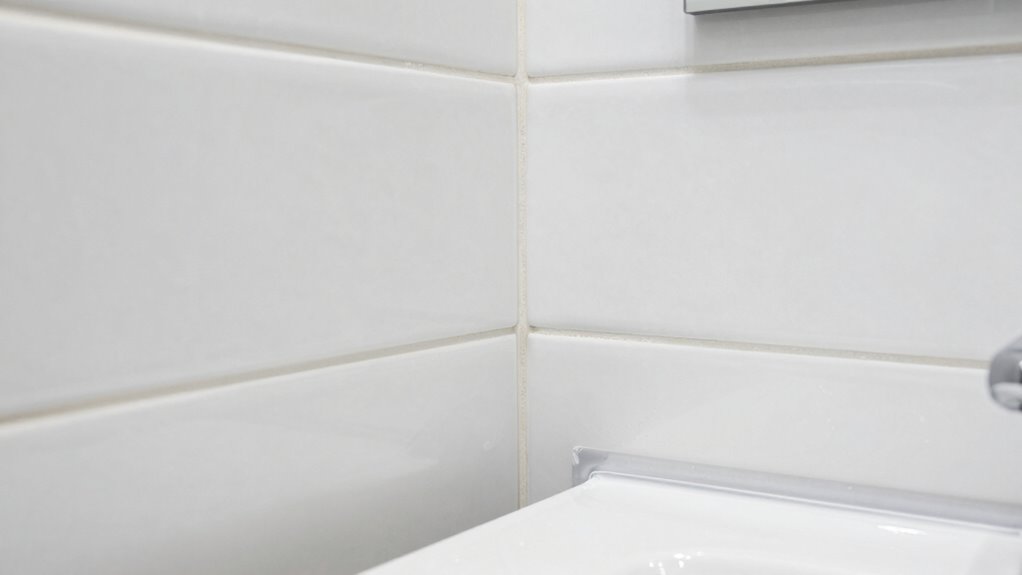
Choosing mold-resistant materials is a smart first step in preventing mold growth around your setup. Materials like PVC, treated wood, and ceramic resist moisture and inhibit mold development. Adding protective barriers, such as plastic sheeting or sealants, creates an extra layer of defense. These barriers prevent moisture from seeping in and reaching vulnerable surfaces. To help you decide, here’s a quick comparison:
| Material Type | Benefits | Best Use Case |
|---|---|---|
| Mold Resistant Drywall | Prevents mold growth | Indoor walls |
| Treated Wood | Resists moisture, rot | Framing or shelving |
| Plastic Sheeting | Acts as moisture barrier | Floor covering, sealing gaps |
| Sealants | Waterproof, seals cracks | Around windows, seams |
| Ceramic Tiles | Mold-resistant surface | Bathrooms, kitchens |
Choose wisely to keep your setup dry and mold-free.
Regularly Cleaning and Inspecting Your Setup for Moisture and Mold?

Regular cleaning and inspection are essential steps to prevent moisture buildup and mold growth around your setup. By maintaining humidity control and staying vigilant, you can catch issues early. Regularly check for condensation or damp spots, especially in hidden corners. Keep surfaces dry and free of dust, which can trap moisture. Use a dehumidifier if needed to maintain ideal humidity levels. Inspect for signs of mold, such as discoloration or a musty smell. Pay attention to areas prone to moisture, including vents and seams.
- Wipe down surfaces weekly
- Look for hidden mold spots
- Ensure proper airflow and ventilation
- Replace or clean filters regularly
Consistent inspection and cleaning are your best mold prevention tools to protect your setup from moisture damage.
Using Moisture Absorbers and Other Practical Strategies?
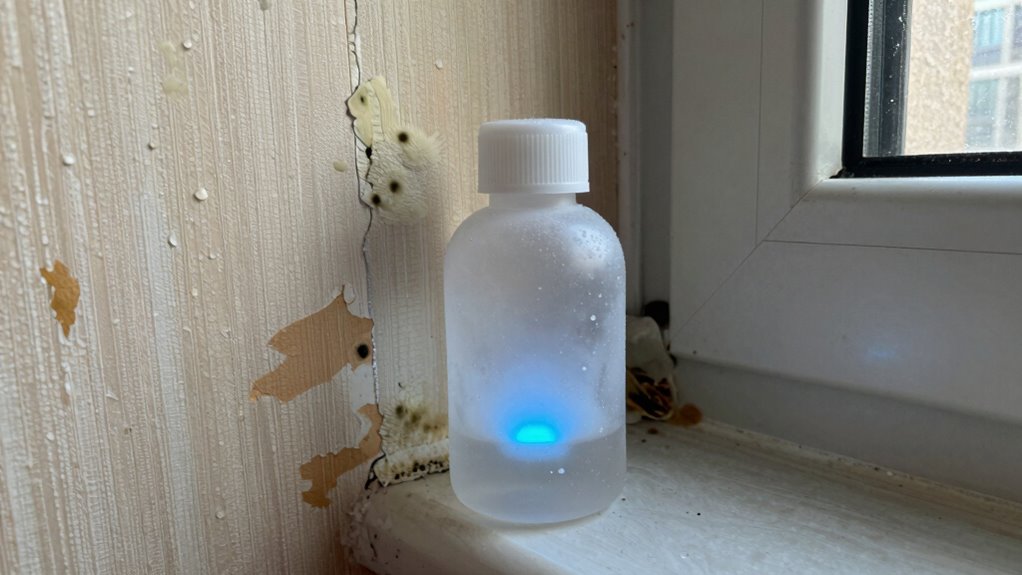
Using moisture absorbers can be a highly effective way to keep humidity levels in check and prevent mold growth around your setup. These small, portable devices trap excess moisture, aiding in humidity control and mold prevention. Place them in spots prone to dampness, like corners or near equipment. To visualize, consider this setup:
| Room Area | Absorber Type | Effectiveness |
|---|---|---|
| Computer Desk | Silica Gel Pack | Low humidity boost |
| Closet | Clay-Based Dispenser | Extended use |
| Storage Shelf | Activated Charcoal | Odor & moisture control |
| Basement | Rechargeable Beads | Cost-effective |
| Near Windows | Desiccant Bags | Quick moisture draw |
Using these strategies regularly helps maintain a dry environment, reducing mold risk and protecting your equipment.
When to Call a Professional for Severe Mold Issues?
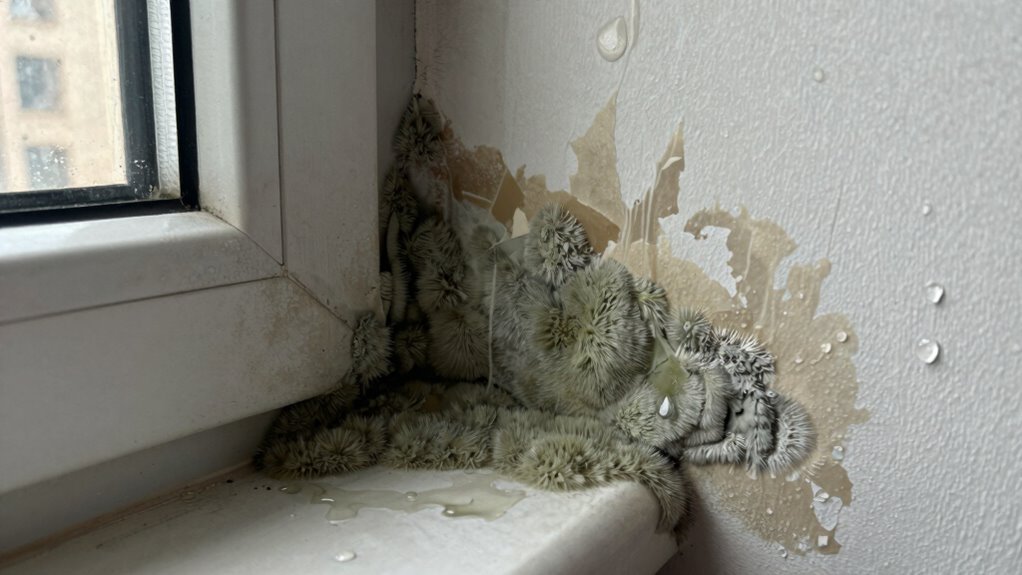
Have you noticed persistent mold growth despite your ongoing efforts to control humidity? If so, it’s time to consider calling a professional. Severe mold issues often require expert intervention, especially when standard mold prevention strategies and ventilation techniques aren’t enough. You should call a professional if:
- Mold covers a large area or keeps spreading despite cleaning
- You experience health symptoms like allergies or respiratory issues
- Mold is hidden behind walls or under flooring
- DIY methods haven’t resolved the problem after repeated attempts
A professional can assess the situation thoroughly, identify hidden sources, and implement effective remediation. They’ll also advise on proper ventilation techniques to prevent future mold growth. Don’t ignore severe mold—get expert help to protect your health and property.
Frequently Asked Questions
Can Mold Spores Be Harmful to Health Even if Unseen?
Yes, mold spores can be harmful to your health even if you don’t see them. These tiny particles float in the air and can cause health risks like allergies, asthma, and respiratory issues. You might not notice symptoms right away, but exposure over time can worsen your health. It’s essential to address moisture problems and keep your environment dry to reduce mold spores and protect your well-being.
Are There Natural Remedies to Prevent Mold Growth?
Yes, you can use DIY remedies and natural barriers to prevent mold growth. Regularly clean surfaces with vinegar or baking soda, which are natural mold inhibitors. Keep humidity low with proper ventilation, and use natural barriers like charcoal or silica gel packets to absorb excess moisture. These simple steps help create an environment less conducive to mold, protecting your space without harsh chemicals.
How Long Does It Take for Mold to Develop Visibly?
Imagine a damp corner, quietly lurking in the shadows—mold growth can appear within 24 to 48 hours under perfect conditions. You might start noticing visible signs like black spots or fuzzy patches in just a few days. The key is to catch these early signs quickly, as mold develops rapidly when moisture persists, turning hidden threats into visible problems faster than you might expect. Stay vigilant to prevent it from spreading.
Does the Type of Setup Affect Moisture Accumulation?
Yes, the type of setup affects moisture accumulation. You need to take into account ventilation strategies and setup materials, as they influence how much moisture builds up. For example, setups with poor ventilation trap humidity, promoting mold growth. Using breathable, moisture-resistant materials and ensuring proper airflow help reduce moisture. Regularly checking and improving your ventilation strategies keeps humidity levels low, preventing mold from developing around your setup.
Can Plants Help Reduce Indoor Humidity Effectively?
Yes, plants can help reduce indoor humidity effectively. Their benefits include absorbing moisture through their leaves and roots, which aids in humidity control. By adding houseplants, you create a natural way to regulate moisture levels and improve air quality. Keep in mind, though, that for significant humidity reduction, you’ll need a good number of plants and proper placement, but they’re a helpful and aesthetic solution overall.
Conclusion
Don’t wait until mold takes over completely—stay vigilant and act now. The tiniest sign of moisture can turn into a major problem if ignored. Keep an eye out, take preventive steps, and address issues early. Your setup’s health depends on it. But what if the mold’s already beyond your reach? The next move could save your space or cost you dearly. Are you prepared to act before it’s too late?