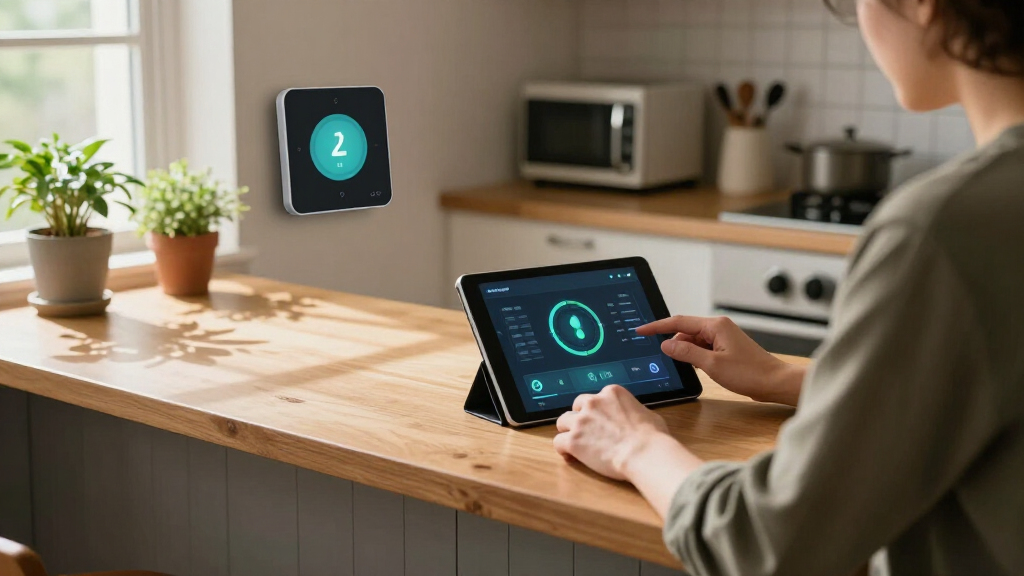

Smart home energy monitors clamp onto your electrical panel and show exactly where every kilowatt-hour goes, and the right one can pay for itself in a single season of reduced waste. After comparing the full field, Emporia’s Vue 3 stands out as the best overall pick thanks to its accurate real-time tracking, polished app, and modular design that grows from whole-home monitoring down to individual circuits. If privacy and local control matter more than app polish, the Refoss with Open API is the strongest no-cloud alternative, while budget shoppers get surprisingly capable tracking from Meross at a fraction of the price. The main tradeoff in this category is between whole-home simplicity and circuit-level detail, plus whether you want a cloud-dependent app or a fully local setup tied to Home Assistant. Keep reading for the full breakdown of all 13 monitors and which one fits your panel, budget, and patience for installation.

Get home appliances delivered free with Prime
- Fast, free delivery on millions of items
- Prime Video, Amazon Music and more included
- Member-only deals all year
Key Takeaways
- Emporia‘s Vue 3 appears three times in this lineup for a reason: its combination of sub-$170 pricing, reliable real-time data, and an expandable sensor system makes it the default recommendation for most homes, though it depends on Emporia‘s cloud for full functionality.
- Circuit-level monitoring is the single biggest price and complexity divider in this category — 16-sensor models like the Smart Home Energy Monitor with 16 50A sensors cost more and take longer to install, but they’re the only way to find the specific loads driving your bill.
- The Refoss Open API model is the clear pick for Home Assistant users who refuse cloud dependence, offering local control that Emporia can’t match, at the cost of a rougher out-of-box experience.
- Budget two-channel monitors (the 2×80A dual-channel and Meross units) reliably answer ‘how much am I using right now’ but can’t isolate circuits, making them better as whole-home bill trackers than diagnostic tools.
- Z-Wave and pro-grade options like the Aeotec HEM8 and Siemens Inhab cost noticeably more per sensor than WiFi competitors, and only make sense if you already run a Z-Wave hub or want installer-grade hardware.
| Emporia Vue 3 Home Energy Monitor – Smart Home Automation Module and Real-Time Electricity Usage Monitor |  | Best Overall | Certification: UL Listed, CE Listed | Installation: Circuit panel; single-phase, split-phase, 2-wire, 3-wire, 3-phase | Sensors: 16 x 50A branch sensors | VIEW LATEST PRICE | See Our Full Breakdown |
| Smart Home Energy Monitor 2×80A, Dual-Channel WiFi Electricity Usage Tracker with App Control |  | Best Budget Pick | Channels: 2 | Current per Channel: 80A | Connectivity: WiFi (2.4GHz) | VIEW LATEST PRICE | See Our Full Breakdown |
| Refoss Smart Home Energy Monitor with Open API, Home Assistant, No Cloud |  | Best for Smart Home Tinkerers | Model: EM16P | Current Sensors: 2 main (200A each), 16 branch (1–60A each) | Connectivity: Built-in Web UI, Open API, MQTT | VIEW LATEST PRICE | See Our Full Breakdown |
| Smart Home Energy Monitor with 8 50A Circuit Sensors, Compatible with Home Assistant |  | Best Mid-Range Compromise | Sensor Count: 8 | Sensor Current Rating: 50A | Supported Voltages: 120/240VAC, 415Y/240VAC (no Delta) | VIEW LATEST PRICE | See Our Full Breakdown |
| Emporia Vue 3 Home Energy Monitor – Smart Home Automation Module and Real-Time Electricity Usage Monitor |  | Best Value Starter Kit | Certification: UL Listed | Installation: Circuit panel | Supported Systems: Single phase, split phase, 2-wire, 3-wire, 3-phase, 4-wire Wye with earthed neutral | VIEW LATEST PRICE | See Our Full Breakdown |
| Smart Home Energy Monitor with 16 50A Circuit Sensors, Real-Time Power Usage & Cost Tracking |  | Best for Rental Properties and Shared Living | Sensor Count: 16 | Sensor Current: 50A per circuit | Supported Voltages: 120/240VAC, 415Y/240VAC (no Delta) | VIEW LATEST PRICE | See Our Full Breakdown |
| Aeotec Home Energy Meter 8 – Smart Electricity Monitor with Z-Wave Long Range |  | Best for Z-Wave Smart Home Ecosystems | Current Rating: 200A | Measuring Range: 80V–150V, 0A–200A | Measurement Accuracy: +/- 0.5% | VIEW LATEST PRICE | See Our Full Breakdown |
| Refoss Smart Home Energy Monitor with 16 60A Circuit Sensors |  | Best for Long-Term Analytics and Data Privacy | Number of Sensors: 16 (up to 18 circuits) | Sensor Capacity: 60A | Supported Systems: Single-phase, Split-phase, 3-phase 4-wire Wye | VIEW LATEST PRICE | See Our Full Breakdown |
| WiFi Home Energy Monitor with 2 x 120A CTs and Power Tracking |  | Best Value for Whole-Home Solar Monitoring | CT Rating: 2 x 120A | Connectivity: WiFi | Compatibility: Smart Life app | VIEW LATEST PRICE | See Our Full Breakdown |
| SIEMENS Inhab Smart Home Energy Monitor with Circuit Level Sensors |  | Best Brand-Backed Pick for North American Homes | Main Sensors: 2 x 200A | Circuit Sensors: 16 x 50A | Regional Compatibility: USA and Canada only | VIEW LATEST PRICE | See Our Full Breakdown |
| Meross Smart Home Energy Monitor, Real-Time Power & Cost Tracking |  | Best for Smart Home Tinkerers | Certification: ETL, UL 61010 | Supported Systems: Single-phase 2-wire, single-split phase 3-wire, 3-phase 4-wire Wye | Max Main Circuits: 200A | VIEW LATEST PRICE | See Our Full Breakdown |
| WiFi Home Energy Monitor with 3 80A CT Clamps, Circuit-Level Monitoring, and App Control |  | Best Budget Entry Point | Model: PW03 | Clamps Included: 3 CT clamps, 80A each | Input Voltage: AC 100–240V | VIEW LATEST PRICE | See Our Full Breakdown |
| Emporia Vue 3 Home Energy Monitor – Smart Home Automation Module and Real-Time Electricity Usage Monitor |  | Best Mainstream Pick | Part Number: EMV3A-2P-8 | Certification: CE, UL | Supported Systems: Single phase, single-split phase, 2-wire, 3-wire, 3-phase, 4-wire Wye | VIEW LATEST PRICE | See Our Full Breakdown |
| smart home energy monitor | Connectivity | Dimensions | Warranty |
|---|---|---|---|
| Emporia Vue 3 Home Energy Moni | 2.4 GHz Wi-Fi, internet required | 10 x 5 x 5 inches | 1 year |
| Smart Home Energy Monitor 2×80 | WiFi (2.4GHz) | — | — |
| Refoss Smart Home Energy Monit | Built-in Web UI, Open API, MQTT | 4.5 x 3.5 x 1.1 inches | 2 years |
| Smart Home Energy Monitor with | WiFi (2.4GHz) | 3.1 x 1.2 x 4.2 inches | 1 year |
| Emporia Vue 3 Home Energy Moni | 2.4 GHz Wi-Fi | 10 x 5 x 5 inches | 1 year |
| Smart Home Energy Monitor with | WiFi 2.4GHz | 3.1 x 1.2 x 4.18 inches | 1 year |
| Aeotec Home Energy Meter 8 | Z-Wave Long Range (up to 1 mile) | 3.48 x 2.14 x 1.5 inches | — |
| Refoss Smart Home Energy Monit | WiFi | 4.5 x 3.5 x 1.1 inches | 2 years |
| WiFi Home Energy Monitor with | WiFi | — | — |
| SIEMENS Inhab Smart Home Energ | — | 1.1 x 5.71 x 2.76 inches | — |
| Meross Smart Home Energy Monit | WiFi, Open API, Web Control, Home Assistant | 4.5 x 3.48 x 1.1 inches | 2 years |
| WiFi Home Energy Monitor with | WiFi 2.4GHz, Smart Life/Tuya app | 4.2 x 2.5 x 1.2 inches | — |
| Emporia Vue 3 Home Energy Moni | 2.4 GHz WiFi | 10 x 5 x 5 inches | — |
More Details on Our Top Picks
Emporia Vue 3 Home Energy Monitor – Smart Home Automation Module and Real-Time Electricity Usage Monitor
The Emporia Vue 3 earns the top spot because it balances whole-home coverage, solar-ready tracking, and a polished app in one package. Unlike the dual-channel Tuya tracker, its sixteen 50A branch sensors come included, so buyers see circuit-level detail from day one instead of paying extra. The UL certification also gives it a safety credibility edge over generic clamp monitors. Where it falls short is cloud dependence: minute-level data lives on Emporia’s servers, and historical granularity drops off after a week, which frustrates anyone wanting long-term analysis. Compared with the Refoss EM16P, it’s friendlier for casual users but far less appealing to privacy-focused Home Assistant enthusiasts. Still, for most households the tradeoff works — a slick interface beats raw local data for everyday bill-slashing.
Pros:- Sixteen 50A branch sensors included in the box
- UL Listed and CE certified for safe panel installation
- Solar and net metering support for bi-directional tracking
- Polished mobile app with real-time automation controls
Cons:- Cloud and internet connection required for full functionality
- Minute-level data retained only 7 days, then reduced to hourly
- 3-phase systems with neutral require an additional sensor
Best for: Homeowners who want full circuit-level monitoring with solar support and an easy app out of the box
Not ideal for: Privacy purists and Home Assistant tinkerers who refuse cloud reliance for energy data
- Certification:UL Listed, CE Listed
- Installation:Circuit panel; single-phase, split-phase, 2-wire, 3-wire, 3-phase
- Sensors:16 x 50A branch sensors
- Connectivity:2.4 GHz Wi-Fi, internet required
- Data Retention:Minute data 7 days; hourly data indefinite
- Dimensions:10 x 5 x 5 inches
- Warranty:1 year
Our verdict“The most complete package for mainstream homeowners who want detailed, solar-capable monitoring without a steep learning curve.”
Smart Home Energy Monitor 2×80A, Dual-Channel WiFi Electricity Usage Tracker with App Control
This dual-channel tracker is the cheapest entry point into real energy awareness, and that’s exactly its role in this lineup. Two 80A channels are enough to watch a main feed or a pair of hungry appliances like an HVAC unit and a water heater — something the sixteen-sensor Emporia Vue 3 does more thoroughly at several times the price. The clamp-style sensors attach externally, so renters or cautious DIYers can install it without opening wiring, and its bi-directional monitoring handles solar and backup power surprisingly well for a budget device. The catch is ecosystem lock-in: it lives entirely inside Tuya and Smart Life, which annoys anyone already invested in Home Assistant, where the Refoss EM16P or the 8-sensor monitor integrate far more naturally. If the goal is simply spotting which appliance drives the bill, this covers the essentials.
Pros:- Most affordable way to add real-time energy monitoring
- Bi-directional sensing supports solar and backup power systems
- External clamp sensors install without wiring modifications
- Works with widely used Tuya and Smart Life apps
Cons:- Only two channels — no whole-home circuit-level detail
- Locked to the Tuya/Smart Life ecosystem with no open API
- Requires 2.4GHz Wi-Fi, with no offline local access
Best for: Budget-conscious homeowners or renters who want to track two high-draw circuits or a solar feed without a panel rewiring project
Not ideal for: Smart home hobbyists running Home Assistant or non-Tuya hubs who need open local integration
- Channels:2
- Current per Channel:80A
- Connectivity:WiFi (2.4GHz)
- App Compatibility:Tuya / Smart Life
- Installation:External clamp-style sensors
- Supported Systems:Standard household circuits, solar panels, backup power
Our verdict“A low-cost way to identify your two biggest energy hogs, as long as you don’t need whole-home granularity or open integrations.”
Refoss Smart Home Energy Monitor with Open API, Home Assistant, No Cloud
The Refoss EM16P is the pick for people who treat their energy monitor as infrastructure rather than an app. No cloud dependency means data stays on the LAN, exposed via MQTT, an open API, and a built-in web UI — the opposite philosophy of the Emporia Vue 3, which routes everything through Emporia’s servers. With ±1% accuracy, dual 200A mains plus sixteen branch sensors, it out-specs the budget dual-channel tracker in every measurable way and pairs naturally with Home Assistant automations, including solar self-consumption logic. The honest tradeoff: setup demands real technical comfort, and some buyers report a rocky initial configuration, which is the price of an open local platform. Compared with the cloud-first Emporia, this is the monitor for builders who’d rather script their own dashboards than accept someone else’s retention limits.
Pros:- Fully local control with no cloud account required
- Open API and MQTT for Home Assistant and custom integrations
- ±1% measurement accuracy with 2 x 200A mains and 16 branch sensors
- Solar automation support to maximize self-consumption
Cons:- Setup requires genuine technical knowledge and can be finicky
- Branch sensors capped at 60A, lower than the Vue 3’s 50A-class peers for some loads
- No turnkey consumer app experience for casual users
Best for: Home Assistant users and automation hobbyists who want local-only, API-accessible circuit-level energy data
Not ideal for: Non-technical buyers who expect plug-and-play setup and a consumer-friendly mobile app
- Model:EM16P
- Current Sensors:2 main (200A each), 16 branch (1–60A each)
- Connectivity:Built-in Web UI, Open API, MQTT
- Accuracy:±1%
- Safety Certification:ETL, UL 61010
- Dimensions:4.5 x 3.5 x 1.1 inches
- Weight:4.24 pounds
- Warranty:2 years
Our verdict“The clear choice for tinkerers who want their energy data local, scriptable, and free of cloud accounts — everyone else should look at the Emporia.”
Smart Home Energy Monitor with 8 50A Circuit Sensors, Compatible with Home Assistant
This monitor occupies the sensible middle ground between the two-channel budget tracker and the sensor-stacked Emporia Vue 3. With eight 50A circuit sensors, it covers the circuits that actually matter — kitchen, HVAC, water heater, laundry — without paying for sixteen. What sets it apart is the optional local-only mode: unlike the Vue 3, which demands the cloud, this device lets privacy-minded users keep data in-house while still offering Home Assistant compatibility, landing between Emporia’s walled garden and the Refoss EM16P’s full-on tinkerer orientation. Installation uses the same clamp-on approach as its rivals, though panel work still demands comfort around live electricals. The notable gap is Delta electrical configurations aren’t supported, and pricing transparency is thin. For a focused eight-circuit view without over-buying sensors, it’s the pragmatic middle pick.
Pros:- Eight 50A sensors cover major household circuits affordably
- Local-only operation option for privacy-focused setups
- Home Assistant compatibility for smart home integration
- Clamp-on sensors work with most residential panels
Cons:- Half the circuit coverage of the Emporia Vue 3’s sixteen sensors
- No Delta electrical configuration support
- Installation and setup demand electrical comfort
Best for: Buyers who want targeted monitoring of 6-8 key circuits with local-only privacy option and Home Assistant support
Not ideal for: Homes needing exhaustive whole-home coverage or Delta-configured electrical systems
- Sensor Count:8
- Sensor Current Rating:50A
- Supported Voltages:120/240VAC, 415Y/240VAC (no Delta)
- Connectivity:WiFi (2.4GHz)
- Installation:Circuit panel with clamp-on sensors
- Dimensions:3.1 x 1.2 x 4.2 inches
- Weight:2.8 pounds
- Warranty:1 year
Our verdict“A right-sized choice for homeowners who want key-circuit insight and privacy options without paying for sensors they won’t use.”
Emporia Vue 3 Home Energy Monitor – Smart Home Automation Module and Real-Time Electricity Usage Monitor
This version of the Emporia Vue 3 is the same UL-certified platform as the Best Overall pick, but configured as a lower-cost base unit — sensors are sold separately, up to sixteen. That makes it the smartest entry point for buyers who aren’t sure how much circuit detail they need: start with whole-home and solar tracking, then add branch sensors only where it pays off. Compared with buying the sixteen-sensor bundle upfront, the upfront cost drops sharply; compared with the budget dual-channel tracker, you get the full Emporia app and ecosystem with room to grow. The tradeoffs mirror the platform’s known quirks — cloud dependency for full functionality and data retention limits unless you export. Homes on 3-phase 4-wire Wye systems are explicitly supported, which many cheap monitors skip entirely.
Pros:- Lowest-cost entry into the Emporia ecosystem
- Expandable up to 16 branch sensors as needs grow
- UL-certified with solar and net metering support
- Handles 3-phase 4-wire Wye systems that budget monitors exclude
Cons:- Branch sensors sold separately, raising total cost for full coverage
- Requires Wi-Fi and cloud connectivity for full features
- Data retention limits unless users export history
Best for: First-time buyers who want whole-home and solar monitoring now, with the option to add circuit sensors later
Not ideal for: Buyers who want maximum circuit detail immediately — the sensor costs add up and exceed the bundled version’s value
- Certification:UL Listed
- Installation:Circuit panel
- Supported Systems:Single phase, split phase, 2-wire, 3-wire, 3-phase, 4-wire Wye with earthed neutral
- Connectivity:2.4 GHz Wi-Fi
- Sensors:Up to 16 branch sensors (sold separately)
- Dimensions:10 x 5 x 5 inches
- Warranty:1 year
Our verdict“The smart way to start with whole-home monitoring on a budget and expand only where circuit detail justifies the cost.”
Smart Home Energy Monitor with 16 50A Circuit Sensors, Real-Time Power Usage & Cost Tracking
What sets this monitor apart from the pack is its focus on circuit-level billing transparency, which makes it unusually well suited to rental homes, duplexes, and shared apartments where splitting utility costs fairly is a recurring headache. Where the Refoss 16-channel monitor leans on long-term analytics and fault alerts, this option prioritizes cost tracking per circuit right out of the box, so a landlord or roommate can see exactly which tenant’s HVAC unit drove the monthly bill. It runs entirely locally — no cloud account needed — which is a genuine privacy advantage, though it means you’ll lean on Home Assistant or MQTT to unlock the richer dashboards. Compared with the WiFi-only 2×120A dual-CT monitor, its sixteen sensors give far more granularity, but its 50A-per-circuit ceiling is lower.
Pros:- Circuit-level cost tracking ideal for splitting bills in rentals and shared spaces
- Runs fully local with no cloud or internet dependency for privacy
- Sixteen sensors cover most residential panels with room for large appliances
- Supports multiple phases and 120/240VAC plus 415Y/240VAC systems
Cons:- Setup requires comfort opening a circuit panel and configuring integrations
- 2.4GHz WiFi only, with no 5GHz support
- Advanced dashboards realistically depend on Home Assistant or MQTT knowledge
Best for: Landlords, property managers, and roommates who need per-circuit cost attribution for fair billing
Not ideal for: Casual users without any Home Assistant or MQTT familiarity — the local-first design means the polished app experience of cloud products isn’t here
- Sensor Count:16
- Sensor Current:50A per circuit
- Supported Voltages:120/240VAC, 415Y/240VAC (no Delta)
- Connectivity:WiFi 2.4GHz
- Compatibility:Home Assistant, MQTT
- Warranty:1 year
- Dimensions:3.1 x 1.2 x 4.18 inches
Our verdict“This is the pick when accurate per-roommate or per-tenant energy accounting matters more than turnkey simplicity.”
Aeotec Home Energy Meter 8 – Smart Electricity Monitor with Z-Wave Long Range
Most monitors in this roundup speak WiFi; the Aeotec Home Energy Meter 8 speaks Z-Wave with long-range reach of up to a mile, which completely changes where you can install it. If your electrical panel sits in a detached garage or basement where 2.4GHz WiFi from options like the 16-sensor 50A monitor struggles to connect, this is the unit that stays reliably connected. Its +/- 0.5% measurement accuracy is among the tightest here, and its ability to measure surplus solar production — not just consumption — makes it a natural companion to the 2×120A solar-ready monitor for buyers already committed to Z-Wave hubs like SmartThings. The tradeoff is structural: without a compatible hub, this meter does very little, and with only two phases supported it can’t match the sixteen-circuit granularity of the Refoss or Siemens options.
Pros:- Z-Wave Long Range reaches up to a mile for outbuildings and detached panels
- +/- 0.5% accuracy is best-in-class among these monitors
- Tracks both consumption and solar surplus production
- Secure data encryption and encrypted Z-Wave communication
Cons:- Requires a compatible Z-Wave hub for full functionality
- Only two-phase support with no per-circuit sensor expansion
- Installation is more involved than plug-and-play WiFi alternatives
Best for: SmartThings or Home Assistant users with existing Z-Wave hubs, especially those with panels far from the router
Not ideal for: Buyers without a Z-Wave hub — the meter is nearly nonfunctional standalone, and adding a hub adds cost and complexity
- Current Rating:200A
- Measuring Range:80V–150V, 0A–200A
- Measurement Accuracy:+/- 0.5%
- Phases Supported:Up to 2
- Connectivity:Z-Wave Long Range (up to 1 mile)
- Mounting Type:Clamp mount
- Dimensions:3.48 x 2.14 x 1.5 inches
Our verdict“The right choice only if Z-Wave is already your smart home backbone — otherwise a WiFi monitor offers more circuits for less hassle.”
Refoss Smart Home Energy Monitor with 16 60A Circuit Sensors
Of the two sixteen-channel monitors in this batch, the Refoss is the one built for serious, multi-year energy analysis. Its five years of onboard data storage dwarfs what the 50A rental-focused monitor or the Siemens Inhab offer, and its smart appliance-fault alerts can flag a failing HVAC compressor or a sump pump running constantly before it shows up on your bill. The local web UI and open API mean your consumption history never touches a cloud server — the same privacy posture as the other local-first picks, but with more polish. Its 60A sensors also out-rate the 50A clamps on the competing 16-channel unit, covering heavy circuits like EV chargers on some loads. The cost: a higher price and a steeper integration learning curve that casual users may not want to climb.
Pros:- Five years of local data storage for genuine long-term trend analysis
- 60A sensors handle heavier circuits than comparable 50A systems
- Smart alerts detect appliance faults and abnormal consumption
- Local web UI and open API with no cloud account required
Cons:- Price sits above what casual monitoring justifies
- Getting the most from it requires Home Assistant or API know-how
- No cellular fallback if your WiFi network goes down
Best for: Data-driven homeowners who want years of circuit-level history, open API access, and zero cloud dependency
Not ideal for: Casual users who just want a quick app readout — the price and technical integration overhead are wasted on light use
- Number of Sensors:16 (up to 18 circuits)
- Sensor Capacity:60A
- Supported Systems:Single-phase, Split-phase, 3-phase 4-wire Wye
- Data Storage:5 years local
- Connectivity:WiFi
- Warranty:2 years
- Dimensions:4.5 x 3.5 x 1.1 inches
Our verdict“The strongest pick for homeowners who treat energy data as a long-term project rather than a casual curiosity.”
WiFi Home Energy Monitor with 2 x 120A CTs and Power Tracking
Not everyone needs sixteen circuits of granularity. This two-channel monitor takes the opposite approach: two 120A clamps on your mains, whole-home totals, and a lower price than the multi-sensor heavyweights. Where the Aeotec Meter 8 also handles bi-directional solar measurement, this one adds genuinely useful solar-specific modes — dynamic load balancing and a zero grid export mode that helps solar owners avoid pushing surplus power back to the utility. Installation is the friendliest in this batch, with split-core CTs that clip on without disconnecting wires and pluggable terminals that make wiring forgiving. The catch is coverage: two channels means you’ll see your home’s total draw but not which circuit caused it, and its ecosystem is effectively limited to the Smart Life app, with far less documented third-party integration than the Refoss or Aeotec offer.
Pros:- Bi-directional monitoring handles solar production and grid export
- Dynamic load balancing and zero grid export modes add real solar value
- Split-core CTs and pluggable terminals make DIY installation approachable
- Configurable reporting intervals via the Smart Life app
Cons:- Only two channels — no circuit-level breakdown whatsoever
- Smart Home ecosystem compatibility is limited and poorly documented
- Depends entirely on WiFi and the Smart Life cloud app
Best for: Solar owners and budget-minded buyers who want accurate whole-home totals and export tracking without circuit-level detail
Not ideal for: Buyers trying to identify which specific appliance is driving up bills — two CTs simply can’t isolate circuits
- CT Rating:2 x 120A
- Connectivity:WiFi
- Compatibility:Smart Life app
- Power Monitoring:Bi-directional (consumption and export)
- Special Modes:Dynamic load balancing, zero grid export
- Installation:Split-core CTs with pluggable terminals
Our verdict“A smart, low-cost entry point for whole-home and solar monitoring, as long as per-circuit detail isn’t on your wish list.”
SIEMENS Inhab Smart Home Energy Monitor with Circuit Level Sensors
Most monitors here come from smart-home startups; the Siemens Inhab carries the backing of one of the world’s largest electrical equipment makers, and that shows in the hardware design. Its sensor package — two 200A main clamps plus sixteen 50A circuit sensors — means you get whole-home totals and per-circuit detail simultaneously, something the two-channel solar monitor can’t approach and the Aeotec Meter 8 matches only at the whole-home level. The companion app delivers personalized alerts for unusual usage patterns, and installation is designed around standard North American panels. The limitations are real though: app functionality is restricted to the USA and Canada, unlike the globally usable Refoss and Aeotec units, and Siemens’ ecosystem is more closed — there’s no open API or Home Assistant path comparable to the Refoss, which will frustrate tinkerers who want their energy data inside a larger automation setup.
Pros:- Dual 200A main sensors plus 16 circuit sensors for complete coverage
- Backed by Siemens, a major established electrical manufacturer
- Personalized mobile alerts for abnormal consumption
- Straightforward retrofit into existing North American panels
Cons:- Mobile app limited to USA and Canada only
- No open API or documented Home Assistant integration
- Requires panel access and comfort with electrical work
Best for: US and Canadian homeowners who value an established electrical brand and polished app over open integration
Not ideal for: International buyers (the app won’t function) and Home Assistant enthusiasts who need open API access
- Main Sensors:2 x 200A
- Circuit Sensors:16 x 50A
- Regional Compatibility:USA and Canada only
- Model Number:INHEM1216
- Dimensions:1.1 x 5.71 x 2.76 inches
- Weight:4.8 pounds
Our verdict“The most reassuring choice for North American buyers who want brand accountability and full panel coverage, provided they stay within Siemens’ closed app ecosystem.”
Meross Smart Home Energy Monitor, Real-Time Power & Cost Tracking
What separates the Meross Energy Monitor from plug-and-play rivals is its willingness to hand over the keys. With an Open API, web control, and native Home Assistant integration, this option stands out for buyers who want their energy data living inside their own automation setup rather than locked in a vendor app. The up to 5 years of local data storage is a genuine advantage over the Emporia Vue 3, which retains 1-minute data for only a week.
The tradeoff is front-loaded effort. Installation in the breaker panel and initial configuration demand a level of comfort that casual users may not have, and unlike the 3-circuit WiFi monitor lower on this list, this unit covers 16 branch circuits — more capability, more wiring complexity. This pick makes the most sense for someone who views energy monitoring as one component of a larger smart home project, not a standalone gadget.
Pros:- Open API and native Home Assistant integration for full local control
- Circuit-level monitoring across 16 branch circuits
- Up to 5 years of local data storage keeps history private and accessible
- Works with single-phase, split-phase, and 3-phase Wye systems
Cons:- Setup is genuinely complex for non-technical users
- No built-in cloud storage or companion analytics ecosystem
- Limited to compatible US electrical configurations
Best for: Home Assistant users and DIY smart home builders who want local control, open APIs, and long-term historical data without cloud dependence
Not ideal for: Renters or non-technical buyers who want app-based insights in an afternoon — panel installation and configuration assume real electrical confidence
- Certification:ETL, UL 61010
- Supported Systems:Single-phase 2-wire, single-split phase 3-wire, 3-phase 4-wire Wye
- Max Main Circuits:200A
- Branch Circuits:16 circuits up to 60A
- Data Storage:Up to 5 years (local)
- Connectivity:WiFi, Open API, Web Control, Home Assistant
- Dimensions:4.5 x 3.48 x 1.1 inches
- Warranty:2 years
Our verdict“Buy this if you already run Home Assistant and want deep, private, long-history energy data — skip it if you want a one-tap app experience.”
WiFi Home Energy Monitor with 3 80A CT Clamps, Circuit-Level Monitoring, and App Control
Not everyone needs sixteen circuits of granularity. This PW03 monitor takes a simpler bet: three 80A clamps covering the big energy hogs — HVAC, water heater, maybe a solar feed — at a price well below full-panel systems like the Meross Energy Monitor. For many households, those three loads account for the majority of the bill, which makes the reduced scope feel like focus rather than compromise.
The kicker is the remote ON/OFF relay control and temperature alerts, features the Meross and Emporia Vue 3 don’t offer at the device level — you can actually cut power to a overheating appliance, not just watch it. Compared with similar options here, though, the ceiling is low: if you later want whole-home visibility or local data storage, you’ll be replacing rather than expanding this unit.
Pros:- Circuit-level monitoring for the three biggest household loads
- Remote ON/OFF relay control plus temperature alerts
- Historical consumption tracking via Smart Life/Tuya app
- Lightweight 13.4 oz design with included external temperature sensor
Cons:- Hard limit of 3 monitored circuits
- Panel wiring likely requires an electrician
- Dependent on 2.4GHz WiFi and the Tuya cloud ecosystem
Best for: Budget-conscious homeowners who mainly want to track and remotely control two or three major loads like HVAC and a water heater
Not ideal for: Whole-home data seekers — three circuits is the hard limit, and there’s no path to expand to full-panel monitoring later
- Model:PW03
- Clamps Included:3 CT clamps, 80A each
- Input Voltage:AC 100–240V
- Relay Current:Up to 15A
- Connectivity:WiFi 2.4GHz, Smart Life/Tuya app
- Temperature Alert:Yes, above 50°C
- External Temperature Sensor:Yes
- Dimensions:4.2 x 2.5 x 1.2 inches
Our verdict“The cheapest credible way to watch and control your biggest appliances — as long as three circuits is genuinely enough.”
Emporia Vue 3 Home Energy Monitor – Smart Home Automation Module and Real-Time Electricity Usage Monitor
The Emporia Vue 3 is the balanced middle of this lineup: more polished and app-friendly than the Meross monitor, far more capable than the 3-circuit budget option. Its UL listing and support for nearly every residential electrical configuration — single phase through 3-phase Wye — mean most homes can install it without compatibility guesswork. This model is better suited to buyers who want dependable whole-home numbers through a mature app rather than a tinkerer’s project.
The compromise is data depth. The Vue 3 keeps 1-minute data for only 7 days before dropping to hourly resolution indefinitely, while the Meross holds years of local history — a real difference if you’re analyzing seasonal usage. It’s also cloud-dependent, so WiFi outages blind you, and 3-phase systems with earthed neutral need extra sensors. For straightforward whole-home monitoring, though, the balance of safety cert, app quality, and system support is hard to beat.
Pros:- UL and CE listed for verified safety
- Supports single-phase, split-phase, and 3-phase Wye configurations
- Mature app with real-time usage and automation features
- Straightforward setup compared with API-driven alternatives
Cons:- 1-minute resolution data retained for only 7 days
- Requires WiFi and cloud connectivity for full functionality
- Additional sensors needed for 3-phase systems with earthed neutral
Best for: Homeowners who want reliable whole-home energy tracking through a polished app with broad electrical system compatibility
Not ideal for: Data historians and privacy-first users — 7-day 1-minute retention and cloud dependence make the Meross a better fit for long-term local analysis
- Part Number:EMV3A-2P-8
- Certification:CE, UL
- Supported Systems:Single phase, single-split phase, 2-wire, 3-wire, 3-phase, 4-wire Wye
- Connectivity:2.4 GHz WiFi
- Data Retention:7 days (1-minute), indefinite (1-hour), 3 hours (live)
- Item Weight:3.36 pounds
- Dimensions:10 x 5 x 5 inches
Our verdict“The safest all-around choice for mainstream whole-home monitoring — pick the Meross instead if local data and long history matter more than app polish.”
How We Picked
I evaluated these monitors against the criteria that actually determine long-term satisfaction: data accuracy and granularity (whole-home versus per-circuit, and how second-by-second the readings actually are), app and ecosystem quality (how usable the companion app is, whether it integrates with Home Assistant, Alexa, or Google Home), installation burden (clamp-on CTs versus hardwired leads, and whether an electrician is realistically required), and ongoing costs and cloud dependence (subscription-free operation and whether the device still works if the manufacturer’s servers go down).
The ranking reflects a simple philosophy: a monitor that tracks your whole home accurately for under $100 beats an expensive system you never finish installing. That’s why Emporia’s Vue 3 variants dominate the top of this list while pro-grade options like the Siemens Inhab sit lower despite better hardware — their value depends on infrastructure most homeowners don’t have. Circuit-count, sensor amperage rating, and WiFi versus Z-Wave connectivity were used to differentiate picks within each tier rather than as absolute ranking factors.
Factors to Consider When Choosing Smart Home Energy Monitors
Choosing an energy monitor comes down to matching the tool to the question you’re trying to answer. These are the factors that separate a satisfying purchase from a device that ends up unplugged in a drawer.Whole-Home vs. Circuit-Level Monitoring
The first decision is whether you need a total consumption number or a circuit-by-circuit breakdown. A two-channel monitor clamped to your mains tells you what your house is drawing right now and roughly what it costs per day — useful for spotting phantom loads and verifying your utility bill, but useless for figuring out whether the hot tub or the HVAC is the culprit. Circuit-level monitors with 8 or 16 sensors answer that question directly, but they cost two to three times more and turn a fifteen-minute install into a panel-labeling project. My advice: start whole-home if you’ve never monitored before, because many homeowners discover the aggregate view alone changes their habits. If your bill has a mystery you can’t explain, that’s the moment circuit-level detail earns its price.
Cloud Dependence and Local Control
Most budget monitors route every reading through the manufacturer’s cloud, which means your data lives on someone else’s servers and dies if the company shuts down — a real risk in this category, where several brands have already disappeared. Local-control options like the Refoss Open API model push data straight to Home Assistant over your LAN, with no cloud account required. The tradeoff is setup complexity: local integrations demand more configuration and some technical comfort. If you’re already running Home Assistant or a similar hub, prioritize local control without hesitation. If your smart home is just an app on your phone, cloud-based monitors like Emporia’s offer a smoother experience you’ll actually use, and their cloud has proven stable enough to trust for now.
Connectivity Protocol: WiFi vs. Z-Wave
WiFi monitors dominate this price range because they need no extra hardware, but they saturate your router with constant traffic and rely on 2.4GHz coverage reaching your electrical panel — often in a garage or basement where signal is weakest. Z-Wave options like the Aeotec HEM8 require an existing hub but create a more robust, interference-resistant mesh. The honest assessment: most buyers should choose WiFi unless they already own a Z-Wave hub, in which case the HEM8 integrates far more cleanly than bolting a WiFi monitor onto a Z-Wave-centric smart home. Also check whether the monitor supports the 2.4GHz-only band limitation common to nearly every budget option, since modern mesh routers sometimes need a dedicated IoT network configured first.
Sensor Count and Amperage Rating
Sensor count determines what you can monitor, and amperage rating determines what you’re allowed to monitor. A 50A sensor can’t safely clip around a main feed or a large EV charger circuit — those typically need 100A or higher ratings. Buyers routinely make the mistake of buying an 8-sensor kit only to discover their dryer, oven, and EV charger circuits exceed the sensor ratings, leaving their biggest loads unmonitored. Check your panel first: list the breaker sizes you care about before choosing a kit. Also confirm the CT clamp opening is physically wide enough for your wiring, since some thick main-feed conductors simply won’t fit cheaper clamps no matter the amperage rating.
Installation Requirements and Safety
Nearly every monitor here installs by clamping CT sensors around wires inside your electrical panel, which means exposure to live bus bars and a genuine shock hazard. If your panel has a main disconnect that de-energizes everything, a careful DIYer can handle clamp installation; if it doesn’t, budget $150–$300 for an electrician. Some models also require powering the monitor itself from a breaker, adding another hardwired connection. renters and condo owners should verify panel access rules first, since a locked or shared electrical room can end the project before it starts. Factor installation cost into your value comparison — a $120 monitor plus an electrician visit costs more than a $200 monitor you install yourself.
Software, History, and Cost Tracking
Hardware is only half the product; the app determines whether you’ll actually change your energy habits. Look for per-minute data resolution rather than hourly averages, since hourly data hides the short high-draw cycles from appliances like compressors and pumps. Cost tracking that lets you enter your utility rate and tiered or time-of-use pricing turns raw kilowatt-hours into dollars, which is what motivates most households. Historical export matters too — CSV downloads or API access let you analyze seasonal patterns beyond whatever retention window the free app provides. Finally, watch for subscription creep: every monitor in this roundup is subscription-free today, but some brands have gated features behind paid tiers in the past, so verify before buying.
Frequently Asked Questions
Do I need an electrician to install a smart home energy monitor?
It depends on your panel and comfort level, not the monitor brand. CT clamps snap around wires without cutting them, so if your panel has a main breaker that kills power to everything inside, a careful DIYer with basic hand tools can typically finish in under an hour. The risk arises with panels that stay energized inside even after the main is off, or with models like the Siemens Inhab that need hardwired power connections. Since the consequence of a mistake is exposure to 200-amp service, most people are better off spending the $150–$300 on an electrician visit, especially when installing 16 circuit sensors where mistakes multiply. An electrician can also verify sensor ratings against your actual breaker sizes while they’re in there.
Will an energy monitor actually save me money?
Honestly, only if you act on what it shows you. The monitors themselves consume almost nothing, and studies of home energy feedback consistently show savings in the 5–10% range — but those savings come from behavioral changes like killing phantom loads, adjusting thermostat schedules, or shifting usage off peak rates. A whole-home monitor will typically reveal $5–$20 of monthly standby waste from TVs, set-top boxes, and old appliances within the first week. Circuit-level monitors pay off faster for specific projects: identifying a failing appliance, verifying an EV charger’s efficiency, or confirming solar production. If you buy one, glance at it daily for the first month — that’s when the discoveries happen.
What happens if the monitor’s cloud service shuts down?
This is the real long-term risk with cloud-dependent monitors like the standard Emporia and Meross setups. If the company folds or sunsets its servers, the app stops working and you’re left with dumb clamps on your panel. Local-control monitors sidestep this entirely: the Refoss Open API model pushes data straight to Home Assistant on your network, so it keeps functioning regardless of the manufacturer’s fate. Emporia mitigates the risk somewhat by being an established brand with a large installed base, but there are no guarantees. If data continuity matters — for example, you’re tracking long-term solar production — choose a local-control option or a monitor with confirmed API export so you can archive your history independently.
How many circuit sensors do I actually need?
Count the breakers you’d genuinely act on, not every breaker in the panel. Most homes have 3–6 major loads worth monitoring — HVAC, water heater, dryer, oven, pool pump, EV charger — plus the whole-home main feeds. An 8-sensor kit covers that comfortably; a 16-sensor kit makes sense only if you want to isolate individual rooms or track many medium loads like a home office, workshop, or basement freezer. Remember that unmonitored circuits still get captured in the whole-home total, so a smaller kit doesn’t create blind spots in your bill — just in attribution. The one hard rule: match sensor amperage ratings to your breakers, because 50A sensors can’t legally or safely monitor a 100A main or EV circuit.
Can these monitors track solar production or net metering?
Several can, but it’s the feature most often botched at installation. Monitors with extra sensor channels — like the Vue 3 with its expansion capability or the three-channel WiFi monitor with 3×80A CTs — can clamp around solar feed lines and report production alongside consumption, letting the app calculate net usage. The catch is that solar current sometimes flows in the opposite direction, so the monitor needs bidirectional sensing support and correct CT orientation, which cheaper two-channel units often lack. If solar monitoring is your priority, confirm the specific model supports separate production channels before buying, and plan on labeling those clamps carefully during installation. Homeowners deep into solar may find a dedicated solar monitor paired with a consumption monitor works better than forcing one device to do both jobs.
Conclusion
The right pick depends less on specs and more on what question you’re trying to answer about your electricity use. For most homes, the Emporia Vue 3 remains the best overall choice: accurate, affordable, easy enough for a first-timer, and expandable if you later want circuit-level detail. The Meross monitor is my value pick for anyone who just wants whole-home consumption and cost tracking on a tight budget, while the Smart Home Energy Monitor with 16 50A sensors is the choice for deep diagnostics — homes with mystery loads, EVs, or sprawling panels that justify per-circuit visibility. Beginners should start with a basic two-channel unit or the entry Vue 3 configuration rather than a 16-sensor install they’ll never finish. For privacy-focused smart home builders, the Refoss with Open API and local Home Assistant control is the only option that respects a no-cloud requirement, and the Aeotec HEM8 earns the premium slot for Z-Wave households that want energy data inside an existing robust hub ecosystem. Whatever you choose, install it, watch it for a month, and let the data — not guesswork — tell you where to cut.
NFL season / tailgating Picks
team gear
As an affiliate, we earn on qualifying purchases.