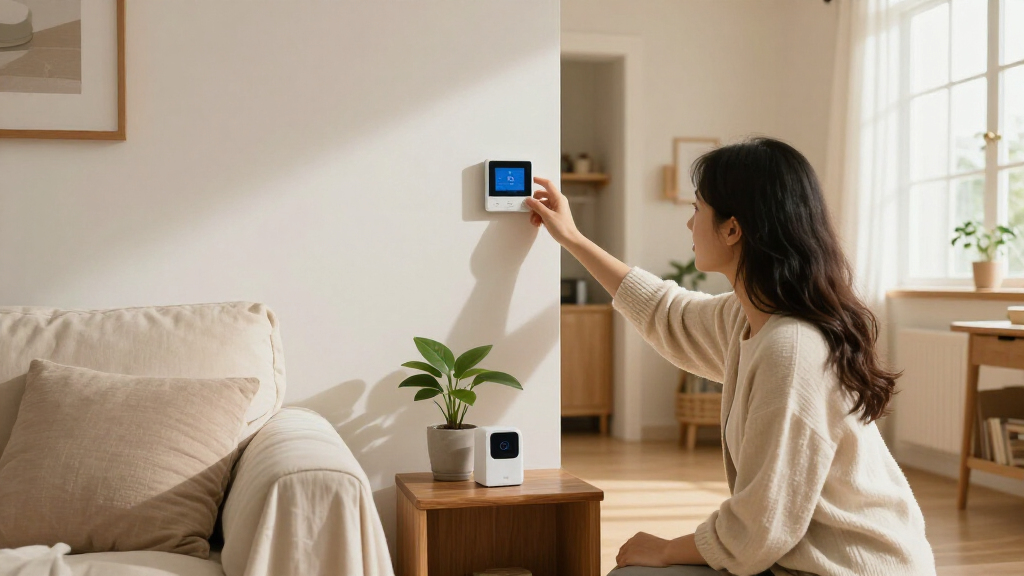

Smart thermostats with room sensors solve a problem single-thermostat systems can’t: uneven temperatures between rooms. After comparing 13 leading models, the ecobee Smart Thermostat Premium with SmartSensor stands out as the best overall pick thanks to its superior multi-room comfort logic, built-in air quality monitoring, and support for the widest sensor ecosystem. The Honeywell Home T9 is the strongest value alternative with reliable room prioritization, while the Google Nest Learning Thermostat (4th Gen) earns its premium price with a gorgeous display and genuinely useful auto-scheduling. The main tradeoffs you’ll face: sensor range and number supported, C-wire requirements, ecosystem lock-in (Alexa vs. Google vs. Siri), and whether remote sensors detect occupancy or just temperature. Keep reading for the full breakdown of all 13 models and which one fits your home and budget.

Get home appliances delivered free — and shop member deals
- Fast, free delivery on millions of items
- Access to Prime Big Deal Days deals on October 6–7
- Prime Video, Amazon Music and more included
Complete the kit



Key Takeaways
- Only three ecosystems support room sensors well — amazon.com/dp/B0DT9MC2Z9?tag=koldfaste-20&ascsubtag=dc-1102761″ target=”_blank” rel=”nofollow sponsored noopener”>ecobee, Honeywell Home, and Nest — so your choice of voice assistant and smart home platform should drive your thermostat decision more than any single feature.
- Occupancy sensing is the real differentiator: ecobee‘s SmartSensor and the TQX‘s occupancy sensors can direct heating and cooling to occupied rooms, while Nest sensors measure temperature only, making them less effective in homes with shifting usage patterns.
- The Nest Learning Thermostat (4th Gen) appears three times in this lineup (Silver, Obsidian, and standalone bundles) — the only differences are color and whether a sensor is included, so compare those bundle prices carefully before buying.
- The Amazon Smart Thermostat and Sensi Touch 2 are the cheapest ways into smart climate control, but neither supports room sensors out of the box, which limits their usefulness for homes with hot and cold spots.
- Multi-sensor homes should prioritize ecobee and Honeywell Home T9/X8S, which support up to 20 sensors, versus Nest’s 6-sensor ceiling — a hard limit for larger or multi-story homes.
| ecobee Smart Thermostat Essential, Wi-Fi, Energy Star Certified |  | Best for Flexible HVAC Compatibility | Connectivity: Wi-Fi | Display: Color touchscreen | Certification: ENERGY STAR | VIEW LATEST PRICE | See Our Full Breakdown |
| Honeywell Home X8S Smart Wi-Fi Thermostat with Room Sensor |  | Best for an Included Room Sensor | Display: Customizable 5-inch touchscreen | Included sensor: Wireless room sensor; range up to 200 ft | Smart home compatibility: Matter, Amazon Alexa, Google Assistant, and Apple Home | VIEW LATEST PRICE | See Our Full Breakdown |
| Google Nest Learning Thermostat (4th Gen) with Nest Temperature Sensor (2nd Gen), Silver |  | Best for Adaptive Scheduling | Thermostat generation: 4th | Included sensor: Nest Temperature Sensor (2nd gen) | Color: Silver | VIEW LATEST PRICE | See Our Full Breakdown |
| Sensi Touch 2 Wi-Fi Smart Thermostat, Alexa Compatible, ENERGY STAR Certified (ST76) |  | Best for HVAC Monitoring | Model: ST76 | Connectivity: Wi-Fi | Smart assistant compatibility: Alexa | VIEW LATEST PRICE | See Our Full Breakdown |
| ecobee Smart Thermostat Premium with Wi-Fi, Siri and Alexa, and SmartSensor |  | Best Premium Room-Sensing Package | Connectivity: Wi-Fi | Voice assistants: Siri and Alexa | Included sensor: SmartSensor | VIEW LATEST PRICE | See Our Full Breakdown |
| Google Nest Learning Thermostat (4th Gen) with Nest Temperature Sensor (2nd Gen), Obsidian |  | Best Overall | Generation: 4th gen thermostat; 2nd gen temperature sensor | Color: Obsidian | System Compatibility: Most 24V systems including gas, electric, oil, forced air, heat pump, and radiant | VIEW LATEST PRICE | See Our Full Breakdown |
| TQX Matter Over Wi-Fi Thermostat with Occupancy and Remote Sensors |  | Best for Advanced Automation Setups | Connectivity: Matter-enabled smart-home speaker; Wi-Fi | Occupancy Detection: Millimeter-wave sensor with occupancy learning | Display: Light-sensing brightness; responds to occupancy and proximity | VIEW LATEST PRICE | See Our Full Breakdown |
| Amazon Smart Thermostat with Alexa and Ring Compatibility |  | Best Budget Starter Pick | Compatibility: Alexa and Ring | Installation: DIY with Alexa app guidance | Wiring Requirement: C-wire required | VIEW LATEST PRICE | See Our Full Breakdown |
| Honeywell Home T9 Wi-Fi Smart Thermostat with Smart Room Sensor |  | Best Multi-Room Comfort Balancing | Included Sensor: 1 Smart Room Sensor (temperature and humidity) | Sensor Range: Up to 200 ft, depending on home construction | Control: Touchscreen, Resideo app, Amazon Alexa, Apple HomeKit, Google Assistant | VIEW LATEST PRICE | See Our Full Breakdown |
| Google Nest Smart Thermostat, Charcoal |  | Best Simple Saver for Google Homes | Color: Charcoal | Connectivity: Wi-Fi 2.4 GHz and 5 GHz; Bluetooth Low Energy | Energy Certification: ENERGY STAR certified | VIEW LATEST PRICE | See Our Full Breakdown |
| ecobee Comfort and Security Bundle with Smart Thermostat Premium and SmartSensor |  | Best Security-Minded Pick | Included devices: Smart Thermostat Premium and SmartSensor | System compatibility: Compatible with 95% of HVAC systems | Energy certification: ENERGY STAR certified | VIEW LATEST PRICE | See Our Full Breakdown |
| Honeywell Home X8S Premium Smart Wi-Fi Thermostat with Room Sensor, Black |  | Best Big-Screen Control Center | Display: 5-inch touchscreen | Included sensor: Wireless Room Sensor with up to 200 ft range | HVAC compatibility: Up to 3 heat/2 cool heat pump with electric backup, or 2 heat/2 cool conventional | VIEW LATEST PRICE | See Our Full Breakdown |
| Google Nest Thermostat, Smart Wi-Fi Thermostat, Snow |  | Best Budget Starter | Connectivity: Wi-Fi | Color: Snow | Energy certification: ENERGY STAR certified | VIEW LATEST PRICE | See Our Full Breakdown |
| smart thermostats with room sensor | Connectivity |
|---|---|
| ecobee Smart Thermostat Essent | Wi-Fi |
| Honeywell Home X8S Smart Wi-Fi | — |
| Google Nest Learning Thermosta | — |
| Sensi Touch 2 Wi-Fi Smart Ther | Wi-Fi |
| ecobee Smart Thermostat Premiu | Wi-Fi |
| Google Nest Learning Thermosta | Google Home app, Alexa, Siri, Google Assistant, Matter |
| TQX Matter Over Wi-Fi Thermost | Matter-enabled smart-home speaker; Wi-Fi |
| Amazon Smart Thermostat with A | — |
| Honeywell Home T9 Wi-Fi Smart | — |
| Google Nest Smart Thermostat | Wi-Fi 2.4 GHz and 5 GHz; Bluetooth Low Energy |
| ecobee Comfort and Security Bu | — |
| Honeywell Home X8S Premium Sma | 2.4 or 5 GHz Wi-Fi; 802.11ax/ac/a/b/g/n |
| Google Nest Thermostat | Wi-Fi |
More Details on Our Top Picks
ecobee Smart Thermostat Essential, Wi-Fi, Energy Star Certified
I’d choose the ecobee Smart Thermostat Essential when broad HVAC support and smart home choice matter more than having a room sensor in the box. It works with many 24 VAC systems and supports Apple HomeKit, Google Assistant, and Alexa, while its touchscreen and app make schedules and energy use easy to manage. Compared with the Google Nest Learning Thermostat (4th Gen), it puts less emphasis on learning routines and more on straightforward controls and ecosystem flexibility. The key room-sensor tradeoff is that ecobee’s SmartSensor is sold separately, so targeted comfort adds a separate purchase. Homes without a C-wire may also need the separately sold Power Extender Kit. This is a practical starting point for sensor-based control if you’re comfortable building the setup piece by piece.
Pros:- Supports Apple HomeKit, Google Assistant, and Alexa
- Works with a wide range of common 24 VAC HVAC systems
- Touchscreen and app provide convenient temperature and schedule controls
- Humidity detection and time-of-use energy management add useful home controls
Cons:- SmartSensor is sold separately, adding a separate purchase for room-based temperature management
- Homes without a C-wire may need a separately sold Power Extender Kit
Best for: Homeowners with a compatible 24 VAC system who want touchscreen and app control across Apple, Google, or Alexa and plan to add a room sensor later
Not ideal for: Buyers who want an included room sensor or need a ready-to-install option for a home without a C-wire
- Connectivity:Wi-Fi
- Display:Color touchscreen
- Certification:ENERGY STAR
- System compatibility:Most 24 VAC HVAC systems; compatible with 85% of systems
- Supported systems:Gas, oil, electric, dual fuel, forced air, conventional systems, heat pumps, and boilers
- Smart home compatibility:Apple HomeKit, Google Assistant, and Alexa
- Room sensor:Compatible with ecobee SmartSensor; sold separately
- C-wire:Power Extender Kit sold separately for homes without a C-wire
Our verdict“Choose the ecobee Essential if broad HVAC and smart home compatibility matter more than getting a room sensor included.”
Honeywell Home X8S Smart Wi-Fi Thermostat with Room Sensor
The Honeywell Home X8S makes the most sense when you want to start managing room temperatures without buying a sensor separately: a wireless room sensor is included, with a stated range of up to 200 feet. Its customizable 5-inch touchscreen also brings humidity and ventilation controls into the thermostat. Compared with the ecobee Smart Thermostat Essential, the X8S is a more complete room-sensing package out of the box, while the ecobee offers a broader set of named smart home ecosystems and does not include its sensor. The X8S supports Matter, Alexa, Google Assistant, and Apple Home, plus viewing and speaking with visitors through compatible Ring or First Alert VX1 doorbells. Those extras come with firm limits: it requires a C-wire and does not work with 120–240V electric baseboard heat. The compatible doorbell is separate.
Pros:- Includes a wireless room sensor with a stated range up to 200 feet
- Customizable 5-inch touchscreen provides a large control surface
- Supports humidity and ventilation control
- Matter support connects with Alexa, Google Assistant, and Apple Home
Cons:- Requires a C-wire, even though a C-wire adapter voucher is included
- Not compatible with 120–240V electric baseboard heat
- Compatible Ring or First Alert VX1 doorbell camera is sold separately
Best for: Homeowners with a C-wire and compatible central HVAC who want an included wireless room sensor plus humidity and ventilation controls
Not ideal for: People with electric baseboard heat, no C-wire, or no interest in doorbell camera features and extra system controls
- Display:Customizable 5-inch touchscreen
- Included sensor:Wireless room sensor; range up to 200 ft
- Smart home compatibility:Matter, Amazon Alexa, Google Assistant, and Apple Home
- Wi-Fi:2.4 or 5 GHz; 802.11ax/ac/a/b/g/n
- System compatibility:Up to 3 heat/2 cool heat pump with electric backup, or 2 heat/2 cool conventional systems
- Other supported systems:Hot water heat and forced air (gas, oil, or electric)
- Wiring requirement:C-wire required; C-wire adapter voucher included
- Certification:ENERGY STAR
- Doorbell compatibility:Ring and First Alert VX1 streaming doorbells
Our verdict“Pick the X8S if you have compatible wiring and want room sensing included from the start.”
Google Nest Learning Thermostat (4th Gen) with Nest Temperature Sensor (2nd Gen), Silver
I’d put the Google Nest Learning Thermostat (4th Gen) near the top for households that want a room sensor paired with a thermostat that learns temperature preferences and routines. The included Nest Temperature Sensor (2nd gen) gives the system room-level input, while the larger display and Dynamic Farsight make settings easier to see. Unlike the Honeywell Home X8S, which emphasizes a customizable touchscreen, ventilation controls, and a long-range included sensor, this Nest’s appeal is its learning behavior and broad 24V compatibility. It supports Matter and Alexa, Siri, and Google Assistant for control. The tradeoff is that the product data doesn’t specify the sensor’s range or advanced sensor controls, so buyers seeking detailed room-by-room capabilities should compare those needs carefully. Most homes don’t need a C-wire, but some do.
Pros:- Includes a second-generation Nest Temperature Sensor
- Learns temperature preferences and routine
- Works with many common 24V heating and cooling systems
- Supports Matter and Alexa, Siri, and Google Assistant
Cons:- Some homes may require a C-wire
- Compatibility depends on the home’s heating and cooling system
- Provided product details do not specify the sensor’s range or room-selection features
Best for: Households with varied daily routines that want an included room sensor and a thermostat that adapts its schedule
Not ideal for: Buyers who need a guaranteed C-wire-free installation or want detailed room sensor range and control information before choosing
- Thermostat generation:4th
- Included sensor:Nest Temperature Sensor (2nd gen)
- Color:Silver
- System compatibility:Most 24V systems, including gas, electric, oil, forced air, heat pump, and radiant
- C-wire:Not required in most homes; some homes may require one
- Smart home compatibility:Matter
- Voice assistants:Alexa, Siri, and Google Assistant
- Display:60% larger display with Dynamic Farsight
Our verdict“Choose this Nest if adaptive scheduling and an included sensor matter more than a highly specified sensor setup.”
Sensi Touch 2 Wi-Fi Smart Thermostat, Alexa Compatible, ENERGY STAR Certified (ST76)
The Sensi Touch 2 suits buyers who want practical scheduling and HVAC upkeep prompts alongside the option to add room sensors. Usage reports, performance alerts, and maintenance reminders can help owners spot system issues and keep track of operation; the product data also cites potential HVAC energy savings of about 23%. Its Sensi Room Sensors are sold separately, so this is a build-your-own room-sensing setup rather than the ready-to-go bundle offered by the Google Nest Learning Thermostat (4th Gen). Alexa compatibility is listed, with no comparable multi-platform support specified here. App-guided DIY installation and Bluetooth setup may simplify setup, but the thermostat requires a C-wire. I’d favor it for monitoring and reminders over buyers whose first priority is getting room-level temperature input immediately.
Pros:- Usage reports support monitoring of HVAC operation
- Provides HVAC performance alerts and maintenance reminders
- Flexible schedules and remote access are available through Wi-Fi
- App-guided DIY installation includes universal Bluetooth setup
Cons:- Requires a C-wire
- Compatible Sensi Room Sensors are sold separately
- Alexa is the only smart assistant compatibility listed in the provided product data
Best for: Alexa households with a C-wire that want scheduling, HVAC performance alerts, maintenance reminders, and the option to add sensors
Not ideal for: Buyers who want an included room sensor, broader listed smart home compatibility, or an installation that does not require a C-wire
- Model:ST76
- Connectivity:Wi-Fi
- Smart assistant compatibility:Alexa
- Certification:ENERGY STAR
- Room sensor compatibility:Sensi Room Sensors; sold separately
- Installation:DIY app-guided setup; universal Bluetooth
- Wiring requirement:C-wire required
- Potential HVAC energy savings:About 23%
Our verdict“Choose the Sensi Touch 2 if HVAC alerts and upkeep reminders matter more than an included room sensor.”
ecobee Smart Thermostat Premium with Wi-Fi, Siri and Alexa, and SmartSensor
The ecobee Smart Thermostat Premium is the strongest fit here for buyers who want room sensing bundled with broader home monitoring. Its included SmartSensor and occupancy sensing can help direct comfort toward rooms in use, while the built-in air quality monitor adds alerts and filter reminders. Compared with the Google Nest Learning Thermostat (4th Gen), which pairs an included sensor with adaptive scheduling, ecobee layers in a smart speaker, Siri and Alexa support, and air quality features. It also includes a Power Extender Kit and Trim Kit, which can make installation more accommodating; listed HVAC compatibility is 95%. The added functions create more setup and ecosystem dependencies: Siri needs an Apple home hub, and some security features require an ecobee Smart Security subscription. Check HVAC compatibility before purchase.
Pros:- Includes SmartSensor and occupancy sensing for room-focused comfort
- Built-in air quality monitor provides alerts and filter reminders
- Supports Siri and Alexa voice control
- Power Extender Kit and Trim Kit are included
Cons:- Siri requires an Apple home hub
- Some security features require an ecobee Smart Security subscription
- HVAC compatibility should be confirmed before purchase
Best for: Homeowners who want an included room sensor, occupancy-based comfort, air quality alerts, and Siri or Alexa control in one thermostat
Not ideal for: Buyers seeking a simpler thermostat, those without an Apple home hub who plan to use Siri, or households outside its HVAC compatibility range
- Connectivity:Wi-Fi
- Voice assistants:Siri and Alexa
- Included sensor:SmartSensor
- HVAC compatibility:Compatible with 95% of HVAC systems
- Energy certification:ENERGY STAR certified
- Air quality monitoring:Built-in monitor with alerts and filter reminders
- Installation accessories:Power Extender Kit and Trim Kit
- Warranty:3 years
Our verdict“Pick the ecobee Premium if you want an included room sensor alongside air quality monitoring and voice control.”
Google Nest Learning Thermostat (4th Gen) with Nest Temperature Sensor (2nd Gen), Obsidian
This model earns the top spot because it is the only entry in this batch that actively learns your routine instead of waiting for you to build schedules by hand. After a week or two of adjustments, it handles temperature changes on its own, which the Honeywell Home T9 and the standard Nest Smart Thermostat leave entirely to you. The included second-generation sensor lets the thermostat prioritize a specific room — a nursery or home office, for example — and the 60% larger display makes glanceable adjustments easier than on the smaller Nest Smart. Compared with the Amazon Smart Thermostat, its ecosystem reach is far wider, spanning Alexa, Siri, Google Assistant, and Matter. The tradeoff is that learning behavior can occasionally override a manually set preference, and a C wire may still be needed depending on your wiring.
Pros:- Learns temperature preferences and adapts to changing routines without manual programming
- Includes a temperature sensor for room-specific comfort control out of the box
- Broad smart-home support including Alexa, Siri, Google Assistant, and Matter
- Larger, easier-to-read display than the previous generation
Cons:- A C wire may still be required in some homes despite the ‘most homes’ claim
- Compatibility depends heavily on the home’s heating and cooling system
- Self-learning adjustments can occasionally fight manually set preferences
Best for: Homeowners who want a thermostat that adapts automatically to their schedule and can prioritize comfort in one specific room
Not ideal for: Renters or buyers on tight budgets who just need basic scheduling — the learning features would go unused
- Generation:4th gen thermostat; 2nd gen temperature sensor
- Color:Obsidian
- System Compatibility:Most 24V systems including gas, electric, oil, forced air, heat pump, and radiant
- C Wire:Not required in most homes
- Connectivity:Google Home app, Alexa, Siri, Google Assistant, Matter
- Display:60% larger than previous generation
Our verdict“Buy this if you want the most hands-off, adaptive experience in the lineup and your HVAC system supports it.”
TQX Matter Over Wi-Fi Thermostat with Occupancy and Remote Sensors
The TQX is the most technically ambitious option here, aimed at tinkerers rather than casual users. Its millimeter-wave occupancy detection goes beyond what the Nest Learning Thermostat or Honeywell T9 offer, sensing not just motion but sustained presence, and its occupancy learning refines comfort around how you actually use rooms. Support for up to five remote sensors plus auxiliary outputs for humidification, dehumidification, and ventilation makes it closer to a zoning controller than a simple thermostat. The catch is a structural one: sensor data is blended to adjust the whole-home temperature, so it does not regulate individual rooms independently the way a true zoning system would. It also requires a Matter-enabled smart speaker for internet access, which adds a dependency the plug-and-play options here avoid.
Pros:- Millimeter-wave occupancy detection with occupancy learning for presence-based comfort
- Pairs with up to five QSZ remote sensors for multi-room monitoring
- Auxiliary outputs support humidification, dehumidification, and mechanical ventilation
- Handles complex system configurations including heat pumps up to 4 heat / 2 cool
Cons:- Remote sensors blend data rather than controlling rooms independently
- Not compatible with 120V/240V line-voltage systems
- Requires a Matter-enabled smart-home speaker for connectivity — an extra purchase and point of failure
Best for: Smart-home enthusiasts running Matter hubs who want occupancy-aware control and whole-home sensor averaging
Not ideal for: Buyers without a Matter-enabled speaker or those wanting true room-by-room temperature control
- Connectivity:Matter-enabled smart-home speaker; Wi-Fi
- Occupancy Detection:Millimeter-wave sensor with occupancy learning
- Display:Light-sensing brightness; responds to occupancy and proximity
- Remote Sensors:Supports up to 5 QSZ Remote Sensors
- Conventional Systems:Up to 2 heat, 2 cool
- Heat Pump Support:Up to 4 heat, 2 cool
- Fan Coil Support:Binary output, 2-pipe or 4-pipe
- Auxiliary Outputs:Up to 2 for humidification, dehumidification, or ventilation
- Voltage:Not compatible with 120V/240V line-voltage systems
Our verdict“This pick makes the most sense for Matter-first households that want occupancy intelligence and can accept whole-home averaging instead of true zoning.”
Amazon Smart Thermostat with Alexa and Ring Compatibility
Built on Honeywell Home thermostat technology but sold at an entry-level position, this model is the simplest way into smart climate control for Alexa households. Where the Honeywell T9 offers room sensors and multi-room balancing, this thermostat keeps things lean: schedules, app control, and presence-based adjustments when paired with compatible Alexa devices like an Echo or Ring camera. That Alexa-and-Ring integration is its real hook — no other option in this lineup ties into Ring security hardware as directly. The compromises are real, though. There is no room sensor support at all, which is the whole point of this roundup for many buyers, a C-wire is mandatory, and the automatic features quietly stop working without compatible Alexa hardware in the home.
Pros:- Affordable entry point built on proven Honeywell Home technology
- Deep Alexa and Ring integration, including presence-based adjustments
- Guided DIY installation through the Alexa app
- Schedule-based control that can help trim energy use
Cons:- No room sensor support despite being in a sensor-focused roundup
- C-wire is required, with no adapter included
- Automatic features depend on owning compatible Alexa devices
Best for: Alexa and Ring households wanting an affordable, schedule-driven thermostat with basic presence automation
Not ideal for: Anyone buying specifically for room sensors or true per-room comfort — this model has no sensor support
- Compatibility:Alexa and Ring
- Installation:DIY with Alexa app guidance
- Wiring Requirement:C-wire required
- Technology:Honeywell Home thermostat technology
- Control:Alexa app, schedules, compatible Alexa devices
- Room Sensors:Not supported
Our verdict“Choose this only if budget and Alexa integration outweigh your interest in room-sensor comfort; otherwise step up to the Honeywell T9.”
Honeywell Home T9 Wi-Fi Smart Thermostat with Smart Room Sensor
If your problem is uneven temperatures between floors or rooms, the T9 attacks it more directly than anything else in this batch. Unlike the TQX, which averages sensor readings into one whole-home number, the T9 lets you prioritize specific rooms by occupancy or schedule, so the thermostat actively heats or cools the room you’re actually using. The included sensor tracks both temperature and humidity, has a 200-foot range, and additional sensors can be added for whole-home balancing. Compared with the Nest Learning Thermostat, it gives you explicit control instead of algorithmic guesswork — some buyers prefer deciding priorities themselves. The friction points: it needs a C-wire or the included power adapter, it won’t work with electric baseboard heat, and its design language is more utilitarian than Nest’s.
Pros:- Prioritizes occupied rooms or scheduled rooms rather than averaging the whole house
- Included sensor monitors both temperature and humidity with up to 200 ft range
- Supports additional sensors for whole-home comfort balancing
- Works with touchscreen, Resideo app, Alexa, HomeKit, and Google Assistant
Cons:- Not compatible with electric baseboard heating (120–240V)
- Requires a C-wire or the included power adapter; heating-only oil furnaces need a C-wire
- Requires manual setup of room priorities rather than learning them automatically
Best for: Homeowners with hot or cold spots who want to prioritize specific rooms by occupancy or schedule
Not ideal for: Homes with electric baseboard heating, or anyone who wants fully automatic learning without setting priorities
- Included Sensor:1 Smart Room Sensor (temperature and humidity)
- Sensor Range:Up to 200 ft, depending on home construction
- Control:Touchscreen, Resideo app, Amazon Alexa, Apple HomeKit, Google Assistant
- Compatible Systems:Forced air (gas, oil, electric), hot water, steam, heat pumps with electric backup
- Power Requirement:C-wire or included low-voltage power adapter
- Not Compatible With:Electric baseboard heat (120–240V)
Our verdict“This model is better suited than any other here for taming room-to-room temperature swings, as long as your wiring and heating type cooperate.”
Google Nest Smart Thermostat, Charcoal
This is the pragmatic middle child of the Nest family — far less expensive than the Nest Learning Thermostat (4th Gen), but carrying the same polish and ENERGY STAR certification. It trades away the self-learning behavior and the bundled room sensor, relying instead on manual schedules, home/away detection, and energy-saving suggestions. For a buyer who already knows their routine, that’s a fair trade: you lose automation but keep HVAC monitoring alerts, remote control, and dual-band Wi-Fi that connects more reliably than 2.4 GHz-only competitors. Compared with the Amazon Smart Thermostat, it needs no mandatory C-wire in most homes and works outside the Alexa ecosystem. Just know that some HVAC systems still demand a C wire or power accessory, and unlike the Learning model or Honeywell T9, there’s no room sensor path at all.
Pros:- ENERGY STAR certified with automatic home/away adjustments that trim energy use
- Works without a C wire in most homes
- HVAC monitoring sends alerts for potential system issues and maintenance
- Dual-band Wi-Fi (2.4 and 5 GHz) plus Bluetooth Low Energy for reliable connectivity
Cons:- No room sensor support, unlike the Nest Learning Thermostat it sits beneath
- No self-learning schedules — everything must be programmed manually
- Some HVAC systems still require a C wire or compatible power accessory
Best for: Google Home users with predictable routines who want energy savings and HVAC alerts without paying for learning features
Not ideal for: Buyers who want room-specific comfort or automatic schedule learning — this model offers neither
- Color:Charcoal
- Connectivity:Wi-Fi 2.4 GHz and 5 GHz; Bluetooth Low Energy
- Energy Certification:ENERGY STAR certified
- Control:Google Home app, compatible voice assistants, remote access
- Power:Works without a C wire in most homes; some systems require a C wire or power accessory
- HVAC Monitoring:Alerts for potential system issues and maintenance reminders
Our verdict“Skip the Learning model’s premium and pick this if you’ll happily set your own schedules and mainly want savings, alerts, and Google Home integration.”
ecobee Comfort and Security Bundle with Smart Thermostat Premium and SmartSensor
This bundle stands out because it does two jobs at once: the Smart Thermostat Premium handles heating and cooling while doubling as a security hub, with motion detection, entryway alerts, and even smoke alarm listening. The included SmartSensor is what earns its place in this roundup — it averages temperatures across rooms, so a chilly bedroom stops fighting with a warm hallway. Compared with the Honeywell Home X8S, which offers a bigger touchscreen and Matter support, ecobee’s advantage is the security layer plus air quality monitoring built into one device. The tradeoff is real, though: some security alerts sit behind a paid subscription, and buyers who only want temperature balance will find the standalone ecobee Smart Thermostat Premium with SmartSensor a leaner option.
Pros:- Combines climate control with motion, entry, and smoke alarm alerts
- SmartSensor balances temperatures in rooms away from the thermostat
- Air quality monitoring and filter reminders add everyday value
- Power Extender Kit and Trim Kit included for DIY installation
Cons:- Key security alerts require an ecobee Smart Security subscription
- Compatibility depends on the home’s HVAC setup despite the 95% claim
Best for: Homeowners who want room-to-room temperature balance and basic home security monitoring in a single ecosystem
Not ideal for: Renters or budget-conscious buyers who only need temperature control — the security features they’re paying for require a subscription to fully use
- Included devices:Smart Thermostat Premium and SmartSensor
- System compatibility:Compatible with 95% of HVAC systems
- Energy certification:ENERGY STAR certified
- Heating and cooling savings:Up to 26% per year
- Motion detection range:Up to 120° arc and 16 feet
- Entryway response:Turns off HVAC and sends a notification if an entryway is left open 5 minutes
- Included accessories:Power Extender Kit (PEK) and Trim Kit
- Subscription requirement:Some security alerts require ecobee Smart Security subscription
Our verdict“This pick makes the most sense for buyers who want one ecosystem covering both comfort and home awareness, as long as they accept the subscription cost for full security features.”
Honeywell Home X8S Premium Smart Wi-Fi Thermostat with Room Sensor, Black
If the thermostat on your wall is something you actually look at all day, the X8S makes a strong case. Its 5-inch customizable touchscreen is the largest display in this lineup, and it can even show a live feed from compatible Ring or First Alert video doorbells — a trick the Google Nest Thermostat can’t match. The bundled wireless room sensor reaches up to 200 feet, giving it more range than the ecobee SmartSensor, which matters for larger or multi-story homes. Its Matter support also makes it the most platform-neutral pick here. The catches: a C-wire is required (a voucher for an adapter softens the blow), it won’t work with 120–240V electric baseboard heat, and some air quality features assume extra HVAC equipment you may not own.
Pros:- 5-inch customizable touchscreen with video doorbell viewing
- Wireless room sensor with up to 200 ft range for larger homes
- Full Matter support plus Alexa, Google Assistant, and Apple Home
- ENERGY STAR certified with indoor air quality controls
Cons:- C-wire required, and baseboard electric heat is unsupported
- Some air quality features depend on additional HVAC equipment or accessories
Best for: Tech-forward homeowners in larger homes who want a wall-mounted command center that ties into doorbells and every major smart home platform
Not ideal for: Homes with electric baseboard heating or no C-wire path — this model simply won’t cooperate without workarounds
- Display:5-inch touchscreen
- Included sensor:Wireless Room Sensor with up to 200 ft range
- HVAC compatibility:Up to 3 heat/2 cool heat pump with electric backup, or 2 heat/2 cool conventional
- Connectivity:2.4 or 5 GHz Wi-Fi; 802.11ax/ac/a/b/g/n
- Smart home compatibility:Matter, Amazon Alexa, Google Assistant, Apple Home
- C-wire:Required; C-Wire Adapter voucher included if needed
- Doorbell compatibility:First Alert VX1 and Ring streaming doorbells
- Energy certification:ENERGY STAR
Our verdict“The X8S suits buyers who want their thermostat to double as a smart home hub with a big display, provided their wiring and heating system cooperate.”
Google Nest Thermostat, Smart Wi-Fi Thermostat, Snow
One honest note first: the base Nest Thermostat doesn’t ship with a room sensor, so it earns its spot here as the affordable on-ramp to Google’s sensor ecosystem — add a Nest Temperature Sensor later and you get the room-balancing benefits the pricier Nest Learning Thermostat (4th Gen) bundles out of the box. What you give up versus that model is auto-scheduling; here you set schedules yourself in the Google Home app, though the thermostat still nudges you with energy-saving suggestions. Compared with the ecobee Comfort and Security Bundle, this is far simpler — no subscription, no security extras, just clean climate control. The main friction point is power: most homes skip the C-wire, but some heat pump and zone systems will need one or a compatible power accessory.
Pros:- Programmable schedules and automatic adjustments help trim energy bills
- Remote control and energy suggestions through the Google Home app
- HVAC monitoring sends alerts and maintenance reminders
- Works with Google Assistant, Alexa, and Matter-certified voice assistants
Cons:- Room sensor sold separately, unlike bundled rivals in this roundup
- Some heat pump, zone-controlled systems require a C-wire or power accessory
Best for: First-time smart thermostat buyers in the Google ecosystem who want a low-cost entry now and may add temperature sensors later
Not ideal for: Buyers who want sensor-included room balancing or automatic learning schedules on day one — this entry-level model provides neither out of the box
- Connectivity:Wi-Fi
- Color:Snow
- Energy certification:ENERGY STAR certified
- C wire:Not required in most homes; required or replaced by a compatible power accessory for some systems
- Smart home compatibility:Google Assistant, Alexa, and Matter-certified voice assistants
- Scheduling:Programmable schedules via Google Home app with energy-saving suggestions
Our verdict“A sensible entry point for Google-centric households willing to buy sensors separately, but skip it if you want bundled room balancing and self-programming schedules.”

How We Picked
I ranked these 13 thermostats on five buyer-relevant criteria. Sensor performance carried the most weight: how many remote sensors each system supports, whether sensors detect occupancy in addition to temperature, and how intelligently the system averages or prioritizes readings across rooms. A thermostat with excellent app design but weak sensor logic defeats the purpose of this category. Compatibility came next — HVAC system support (conventional, heat pump, dual fuel), C-wire requirements or workarounds, and integration with Alexa, Google Home, Siri, and Matter.
From there, I scored usability (app design, scheduling flexibility, learning capability), energy savings potential based on Energy Star certification and how aggressively each system optimizes runtime, and value — what you get at each price tier relative to the alternatives. Products that bundle sensors ranked slightly higher than sensor-less equivalents at similar cost. Models lacking room sensor support entirely, like the Amazon Smart Thermostat, still earned places as budget entry points but ranked lower because they miss the core feature this roundup exists for.
Factors to Consider When Choosing Smart Thermostats With Room Sensors
Choosing a smart thermostat with room sensors involves more than picking the best-reviewed model. These are the factors that actually determine whether you’ll be happy two years from now.Sensor Type: Temperature-Only vs. Occupancy-Aware
The single biggest mistake buyers make is assuming all room sensors are equal. Temperature-only sensors, like the Nest Temperature Sensor, tell your thermostat that the nursery is 68°F instead of the 72°F shown at the wall unit — useful, but passive. Occupancy-aware sensors, like ecobee’s SmartSensor, add motion detection so the system actively follows people through the house and heats or cools where someone actually is. For households with irregular schedules or rooms used only at certain times of day, occupancy sensing delivers noticeably better comfort and savings. If your home has one stubborn room and a predictable routine, a temperature-only sensor is sufficient and often cheaper. If your family migrates between rooms constantly, occupancy sensing is worth the premium.
Sensor Capacity and Home Size
Check the maximum sensor count before committing to an ecosystem, because you’ll likely add more sensors over time. ecobee and Honeywell Home’s T9 and X8S support up to 20 room sensors, which covers most multi-story homes comfortably. Nest caps out at 6 sensors, which works for smaller homes but becomes a real limitation if you have a basement, attic conversion, or sunroom that needs monitoring. Remember that each sensor needs decent wireless range from the thermostat — thick plaster walls and metal ductwork can reduce reliable range well below the advertised figure. A common mistake is buying a single sensor expecting whole-home balance; most homes need at least two or three placed in the rooms where comfort matters most.
HVAC Compatibility and the C-Wire Question
Nothing derails a thermostat upgrade faster than discovering your system isn’t compatible mid-installation. Before buying anything, photograph your existing thermostat’s wiring and use the manufacturer’s online compatibility checker. The C-wire (common wire) is the recurring sticking point: most premium models like the Nest Learning Thermostat and ecobee Premium work best with one, though both include workarounds. Budget models like the Amazon Smart Thermostat often require a C-wire with no exception, which can mean an electrician visit that erases your savings. Heat pump owners should pay extra attention — models handling multi-stage heat pumps and dual-fuel systems cost more but prevent short-cycling and premature wear on expensive equipment.
Ecosystem Lock-In: Alexa, Google, Siri, and Matter
Your thermostat will likely outlast several phones and smart speakers, so choose its ecosystem carefully. ecobee uniquely supports Alexa and Siri built in, making it the most flexible option for mixed-assistant households. Nest thermostats integrate deeply with Google Home but have limited Alexa functionality. Honeywell Home plays reasonably well with everything but excels with neither. The TQX’s Matter support is the forward-looking choice — Matter compliance means the thermostat will work across Apple, Google, and Amazon ecosystems without favoritism, protecting you if you switch platforms later. If smart home automation routines (like adjusting temperature when you leave) matter to you, verify the specific platform supports the triggers you want before buying.
Learning vs. Manual Scheduling
Learning thermostats build schedules automatically by watching your habits, while manual-schedule models require you to program setpoints yourself. The Nest Learning Thermostat is the category’s best-known learner — over a few weeks it stops asking and starts deciding. ecobee’s Smart Recovery and time-of-use awareness achieve similar results through a different route, pre-heating or pre-cooling so you hit your target temperature at the exact moment needed, sometimes shifting runtime to cheaper off-peak hours. Manual schedulers like the Sensi Touch 2 and Amazon Smart Thermostat are simpler and more predictable but demand upfront effort. Neither approach is objectively better — tinkerers resent learning models that override their preferences, while busy households forget to program manual ones. Be honest about which type of user you are.
When to Pay More — and When Not To
Premium models justify their price through hardware you’ll notice daily: the Nest Learning 4th Gen’s high-resolution display, ecobee Premium’s built-in air quality monitor and speaker, and metal finishes that look intentional on your wall. They also tend to receive longer software support, which matters for a device expected to serve 8-10 years. But premium features decay in value quickly if you won’t use them — an air quality sensor in a home with good ventilation is a gimmick. The smart spending rule: match your budget to your sensor needs first, then spend leftover budget on display and extras. A mid-range T9 with three sensors will outperform a premium thermostat with one sensor in any home larger than 1,500 square feet.
Frequently Asked Questions
How many room sensors do I actually need for my home?
For homes under 1,500 square feet, one or two sensors placed in your most-used rooms usually closes the comfort gap. Larger or multi-story homes benefit from three to five sensors — typically one per floor plus problem rooms like a sun-exposed bedroom or drafty basement office. A useful heuristic: place sensors where people spend time, not in hallways or near vents where readings get skewed. If you’re torn, start with one sensor in the room that gets the most complaints, live with it for a month, and add more only if specific rooms still feel off. The mistake to avoid is spreading sensors across rooms nobody occupies, which waters down the averaged temperature without improving anyone’s comfort.
Can I mix room sensors from different brands with one thermostat?
No — room sensors are proprietary to their ecosystems, which is why your thermostat choice is a longer-term commitment than most buyers realize. ecobee SmartSensors only pair with ecobee thermostats, Honeywell Home’s sensors only work with Honeywell Home models like the T9 and X8S, and Nest Temperature Sensors require a Nest thermostat. There’s no cross-brand pairing, and generic Zigbee or Z-Wave sensors won’t substitute. This matters when upgrading later: replacing your thermostat usually means replacing every sensor too, adding $60-100 to the true switching cost. If you anticipate changing smart home platforms within a few years, the TQX’s Matter-based approach gives you the most flexibility, since Matter is designed for cross-platform operation.
Do room sensors actually save money, or just improve comfort?
Both, but through different mechanisms. The comfort benefit comes from eliminating the hot-and-cold-room problem — the system conditions based on where you actually are instead of the hallway where the thermostat hangs. The savings come from occupancy-aware models that stop conditioning empty rooms entirely, and from averaging readings so your system doesn’t overshoot. Energy Star-certified models with sensor support, like the ecobee lineup and Honeywell T9, typically deliver measurable runtime reductions because sensors let the system run shorter, smarter cycles. Expect modest savings — realistically a few percent off heating and cooling costs — rather than the dramatic cuts marketing sometimes implies. Homes with a single thermostat in a naturally cool or warm spot see the biggest gains, because that misplaced baseline sensor has been distorting runtime for years.
Will these thermostats work without a C-wire?
It depends on the model, and this is the most common installation headache. The Nest Learning Thermostat (4th Gen) and ecobee Premium both include power-extender kits or built-in workarounds that let them run without a C-wire on most conventional systems, though heat pumps without a C-wire remain hit-or-miss. Budget models like the Amazon Smart Thermostat generally require a C-wire outright, and skipping it causes symptoms that look like random reboots, Wi-Fi dropouts, or short-cycling that damages your equipment over time. Before purchasing, turn off power at the breaker, pop off your current thermostat’s faceplate, and count the wires — four or fewer usually signals a problem. If you don’t have a C-wire, either budget for a power extender kit or factor an electrician visit of an hour or two into your total cost.
Which is better for a rental property: ecobee, Nest, or Honeywell?
For rentals, prioritize simple setup, remote lockout, and durability over learning features. The Amazon Smart Thermostat wins on cost if the property has a C-wire — you can monitor and cap temperatures remotely through the Alexa app, which prevents tenants from setting the heat to 80°F in January. The ecobee Smart Thermostat Essential adds sensor support at a reasonable price with equally strong landlord-friendly remote controls. Skip the Nest Learning Thermostat for rentals — its learning behavior assumes consistent occupancy patterns and can behave unpredictably with rotating tenants. Also verify guest-mode or access-control features if you want tenants to adjust temperature locally without changing your schedule. Honeywell Home’s app supports multiple properties under one account, which simplifies management if you own several units.
Conclusion
After comparing all 13 models, the right choice comes down to your home’s layout, your ecosystem, and how much control you want. For best overall, the ecobee Smart Thermostat Premium with SmartSensor is the most complete package — occupancy sensing, built-in air quality monitoring, Siri and Alexa support, and room to grow with up to 20 sensors. For best value, the Honeywell Home T9 with Smart Room Sensor delivers genuine multi-room comfort and strong app scheduling at a mid-range price, and the ecobee Smart Thermostat Essential is the cheapest path into real sensor-based comfort. For best premium, the Google Nest Learning Thermostat (4th Gen) pairs the category’s best display with auto-scheduling that quietly optimizes your home — just accept the 6-sensor ceiling and temperature-only sensors. For beginners, the Amazon Smart Thermostat is the easiest install and simplest app, though you give up room sensors entirely. For specific needs: the ecobee Comfort and Security Bundle adds window/door sensors for whole-home monitoring, the TQX Matter thermostat suits future-proofed multi-platform households, and the Honeywell Home X8S variants make sense for larger homes wanting room sensors with room-level humidity tracking. Whatever you choose, buy at least one sensor with your thermostat — the sensor, not the wall unit, is what transforms climate control into whole-home comfort.
Fall yard work Picks
leaf blowers
As an affiliate, we earn on qualifying purchases.