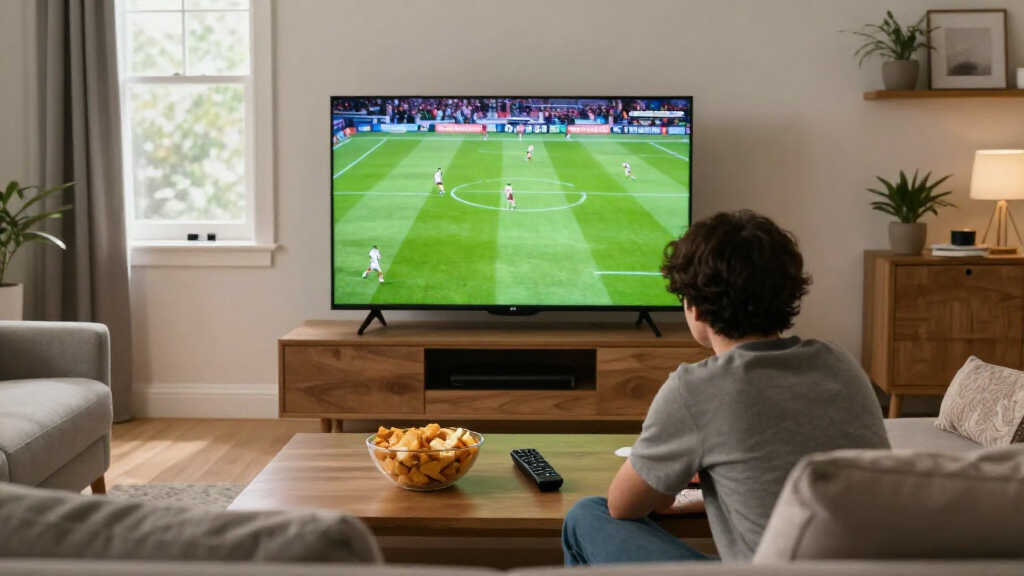
Choosing the right large screen TVs for sports requires balancing immersive size with crisp motion handling. My top recommendation is the LG 77-Inch Class OLED evo C6H, which delivers unmatched contrast and near-instant response times that eliminate blur during fast-paced action. For those prioritizing raw size and brightness in well-lit rooms, the Samsung 98-Inch DU9000 offers a cinema-scale experience without the premium OLED price tag. The main tradeoff lies in choosing between the perfect black levels of OLED and the higher peak brightness of LED panels. Continue reading to see how these and other models stack up against each other for your specific viewing setup.

Get home appliances delivered free with Prime
- Fast, free delivery on millions of items
- Prime Video, Amazon Music and more included
- Member-only deals all year
Complete the kit



Key Takeaways
- OLED panels, particularly the LG C6H series, dominate for dark-room sports viewing due to pixel-level lighting control that eliminates motion blur.
- For bright living rooms, Mini LED technology (like the Samsung M80H) provides the necessary peak brightness to overcome glare while maintaining good contrast.
- Size does not equal performance: the 98-inch Samsung DU9000 offers massive immersion but lags behind smaller OLEDs in motion clarity and color depth.
- Budget-friendly QLED options like the TCL F8D and Hisense E6SR now include 144Hz refresh rates, making them viable for sports on a tighter budget.
- Bundle deals often obscure value; standalone models frequently offer better component quality than bundled protection plans or wall mounts.


| large screen TVs for sport | Screen size | Refresh rate | Display technology |
|---|---|---|---|
| LG 77-Inch Class OLED evo C6H | — | — | — |
| Samsung 75-Inch M80H Series 4K | — | — | — |
| Samsung S85H 65-Inch 4K OLED S | — | — | — |
| LG 77-Inch OLED evo C6H 4K Sma | — | — | — |
| Samsung DU9000 98-Inch 4K Crys | — | — | — |
| Roku Pro Series LX 65-Inch 4K | 65 inches | 144Hz VRR | — |
| LG 83-Inch C6H Series 4K OLED | 83 inches | Up to 144Hz | OLED evo |
| LG 77-Inch OLED evo C6 Series | 77 inches | — | OLED |
| TCL 75-Inch F8D Series 4K UHD | 75 inches | 144Hz | QLED |
| Hisense 75-inch E6SR Series Hi | 75 inches | 60Hz | Hi-QLED |
| Samsung 50-Inch QN70H Neo QLED | 50 inches | 60 Hz | QLED with Quantum Mini LED |
| TCL 85-Inch T7 Series 4K QLED | 85 inches | 144 Hz | 4K UHD QLED |
| Samsung 65-Inch M70H Series 4K | 65 inches | 60Hz Native / 120Hz DLG | 4K Mini LED |
| TCL 75-Inch R7D Series QLED 4K | 75 inches | 60 Hz | 4K UHD QLED |
More Details on Our Top Picks
LG 77-Inch Class OLED evo C6H 4K Smart TV (2026)
For a big living room where sports need both scale and contrast, I’d put this 77-inch OLED near the top of the shortlist. Its self-lit pixels give dark scenes and shaded stadium views precise blacks, while Brightness Booster Pro helps the image hold its color in brighter moments. The native 120 Hz refresh rate is a strong fit for fast play; the 165 Hz VRR figure is for compatible PC gaming, not a promise of 165 Hz sports broadcasts. Compared with the Samsung 75-Inch M80H, this LG trades Mini LED’s specified 1000-nit peak brightness for OLED’s pixel-level control and Dolby Vision support. Its drawbacks are the premium-style OLED tradeoff in very bright rooms and streaming that depends on internet access and, for some services, subscriptions.
Pros:- 77-inch OLED panel with self-lit pixels for precise blacks and vivid color.
- Brightness Booster Pro raises picture brightness compared with standard OLED.
- Native 120 Hz refresh rate suits fast-moving sports.
- Dolby Vision, Dolby Atmos, and four HDMI 2.1 inputs.
Cons:- OLED may be less suited than a bright Mini LED option to rooms with strong direct light.
- The 165 Hz VRR capability requires a compatible PC and graphics card.
- Streaming apps require internet access, and some require subscriptions.
Best for: Sports fans who want a large 77-inch screen, high contrast, and smooth motion in a room with controllable lighting.
Not ideal for: Viewers in sunlit rooms who prioritize a specified high peak brightness, or buyers who expect 165 Hz from TV broadcasts.
Our verdict“Choose this LG if you want a large, contrast-rich OLED for sports and can manage room glare.”
Samsung 75-Inch M80H Series 4K Mini LED Smart TV (2026)
I’d steer sports fans with a bright viewing room toward the 75-inch Mini LED panel here. Its stated maximum brightness of 1000 nits gives highlights more headroom than the product data provides for the LG OLED models, while AI processing can sharpen and upscale lower-resolution feeds. That can help when a broadcast looks less detailed than a 4K stream. Compared with the LG 77-Inch C6H, this Samsung gives up two inches of screen and OLED’s pixel-level black control, but its Mini LED design and SDR-to-HDR remastering make it a different fit for everyday mixed-quality viewing. The listed 144 Hz refresh rate is for compatible PC games, not sports broadcasts; sports viewers should focus on the panel’s motion performance rather than that gaming figure. It also has three HDMI ports, one fewer than the LG.
Pros:- 75-inch Mini LED display with a stated maximum brightness of 1000 nits.
- AI processing enhances picture clarity and upscales content to 4K.
- Automatic SDR-to-HDR remastering can add punch to standard dynamic range material.
- Wi-Fi, Bluetooth 5.3, and three HDMI ports.
Cons:- Three HDMI ports are fewer than the four on the LG C6H OLED models.
- The 144 Hz rate applies to compatible PC gaming, not regular sports broadcasts.
- Some smart services require an internet connection and Samsung account.
Best for: Sports households with daylight or overhead lighting that want a bright 75-inch screen and AI upscaling for varied sources.
Not ideal for: Buyers seeking OLED-level pixel control, Dolby Vision support, or 144 Hz sports playback.
Our verdict“Pick the M80H for a bright room and flexible broadcast sources, rather than for OLED contrast or PC gaming specs.”
Samsung S85H 65-Inch 4K OLED Smart TV (2026)
At 65 inches, this is the most manageable OLED choice in this group for a smaller den or a closer seating distance. Its 120 Hz OLED panel pairs deep blacks with smooth motion, so quick camera pans and night games retain contrast without needing the 77-inch footprint of the LG C6H. Samsung’s AI processor also upscales content to 4K, a useful aid for sports feeds that do not arrive in native 4K. The tradeoff is size: fans watching from across a large room may value the LG’s extra screen area more than this model’s smaller, easier-to-place form. The glossy finish can reflect windows or lamps, so placement matters. HDR10+ is supported, but the provided specs do not list Dolby Vision.
Pros:- 65-inch OLED screen produces deep blacks and vivid colors.
- 120 Hz refresh rate supports smooth presentation of fast action.
- AI processing upscales content to 4K.
- Four HDMI ports and HDR10+ support.
Cons:- Smaller screen area than the 77-inch LG OLEDs and 98-inch Samsung DU9000.
- Glossy screen finish may reflect lights and windows.
- G-SYNC and FreeSync features depend on compatible devices and content.
Best for: Sports viewers with a smaller room or closer seating who want OLED contrast and 120 Hz motion.
Not ideal for: Buyers furnishing a large viewing room who want a screen approaching 77 or 98 inches, or anyone facing strong reflections.
Our verdict“Choose the S85H if your room suits a 65-inch OLED and you value contrast over maximum screen size.”
LG 77-Inch OLED evo C6H 4K Smart TV (2026) Bundle
This bundle is the closest alternative to the standard LG 77-Inch C6H: the core sports appeal is the same large OLED format, Brightness Booster Pro, and native 120 Hz refresh rate. Self-lit pixels help keep dark areas distinct, while Dolby Vision and Dolby Atmos support suit viewers who also use the set for films and streamed events. For sports, the practical difference is the included two HDMI cables and 26-month protection plan, not a higher refresh rate; the listed 165 Hz VRR remains a compatible-PC feature. Against the Samsung M80H, this LG emphasizes OLED contrast over Mini LED brightness. The bundle adds useful setup extras, but the 67.4-inch stand width and 10.5-inch depth call for a sturdy, spacious surface. Its Wi-Fi 5 is also an older listed standard than some newer wireless options.
Pros:- 77-inch OLED with pixel-level dimming and Brightness Booster Pro.
- Native 120 Hz refresh rate with VRR up to 165 Hz for compatible devices.
- Includes two HDMI cables and a 26-month extended protection plan.
- Dolby Vision, Dolby Atmos, and FILMMAKER MODE support.
Cons:- Stand footprint measures 67.4 by 10.5 inches and needs ample furniture space.
- Wi-Fi is listed as Wi-Fi 5.
- The 165 Hz VRR figure applies to compatible gaming hardware, not TV sports feeds.
Best for: Buyers who want a 77-inch OLED for sports and value included HDMI cables and extended service protection.
Not ideal for: Viewers who want the simplest low-footprint setup, need newer listed Wi-Fi standards, or mainly watch in a very bright room.
Our verdict“Pick this bundle over the standard LG C6H if the included cables and protection plan suit your setup.”
Samsung DU9000 98-Inch 4K Crystal UHD Smart TV (2024)
If the priority is making sports feel larger than life, the 98-inch screen is the defining reason to choose this Samsung. Its sheer size can make a wide field and distant action easier to follow from across a spacious room, while 4K upscaling and AI picture enhancement help refine lower-resolution sources. Motion Xcelerator is listed at 120 Hz, though the supplied data does not specify a native refresh rate, so I would not treat it as equivalent to the clearly listed native 120 Hz OLED panels. Compared with the LG 77-Inch C6H, the DU9000 offers far more screen area but gives up OLED’s self-lit pixel contrast and Dolby Vision. It is also a substantial installation: the set weighs 117.7 pounds and measures 85.9 inches wide. Its two-channel, 20-watt speakers may leave some fans wanting a separate sound system.
Pros:- 98-inch screen creates an unusually large viewing area for sports.
- 4K upscaling and AI picture enhancement refine incoming content.
- Motion Xcelerator 120Hz is designed to support smoother motion.
- Tizen OS provides streaming features and Game Bar.
Cons:- The 117.7-pound set and 85.9-inch width make installation and placement demanding.
- 4K UHD LED lacks the self-lit pixel contrast of the LG OLED models.
- Built-in audio is two-channel with 20-watt speaker output.
Best for: Sports fans with a very large room who value a 98-inch image more than OLED contrast or compact installation.
Not ideal for: Small-room buyers, people without suitable wall or stand support, and viewers prioritizing OLED blacks or Dolby Vision.
Our verdict“Choose the DU9000 when a 98-inch sports image matters more than OLED contrast, easy placement, or built-in audio power.”
Roku Pro Series LX 65-Inch 4K OLED Smart TV
The 65-inch OLED panel makes this the more room-friendly sports pick in this group: it delivers deep contrast and glare reduction without demanding the wall space of the 75-inch TCL F8D or 83-inch LG C6H. Its 144Hz VRR and FreeSync Premium support are useful for gaming between matches, though sports broadcasts themselves are usually limited by their source frame rate. Dolby Vision adds HDR support, while the rechargeable voice remote and Bluetooth headphone mode suit a mixed-use living room. Compared with the larger LG bundles, this Roku gives up screen scale and does not list port details, but its two-height stands and cable management may make setup easier in a compact space. Choose it for contrast and flexibility, not the biggest crowd-viewing image.
Pros:- OLED contrast and glare reduction help keep the picture clear in varied room lighting
- 144Hz VRR and FreeSync Premium support responsive gaming alongside sports viewing
- Rechargeable voice remote has hands-free controls and backlit buttons
- Two-height tool-less stands and cable management offer setup flexibility
Cons:- Its 65-inch screen is smaller than the 75-inch TCL and 77-inch and 83-inch LG options
- The product details do not specify the number or type of ports
- Private wireless listening relies on Bluetooth headphone mode
Best for: Viewers who want OLED contrast and sports-friendly motion features in a room that cannot fit a 75-inch or larger screen
Not ideal for: Buyers who prioritize a truly oversized shared-viewing picture or need confirmed HDMI port details before choosing
- Screen size:65 inches
- Display:OLED
- Resolution:4K
- Refresh rate:144Hz VRR
- HDR and audio:Dolby Vision, Dolby Atmos
- Gaming features:FreeSync Premium, ALLM, VRR
- Other features:Glare reduction, Bluetooth Headphone Mode, two-height tool-less stands, cable management
Our verdict“Pick this Roku if OLED contrast and flexible setup matter more to you than the larger viewing area offered by the lineup’s 75-inch-plus TVs.”
LG 83-Inch C6H Series 4K OLED evo Smart TV Bundle
For a large room where sports need to feel like the main event, the 83-inch OLED evo screen is the draw: its self-lit pixels create strong contrast while the extra area gives a group a more commanding view than the 65-inch Roku Pro Series LX. The up-to-144Hz refresh rate, VRR, and ALLM also make it a capable gaming display, so it suits households that switch from live games to consoles. Dolby Vision and Dolby Atmos round out the movie experience, and webOS supplies streaming and smart-home access. This bundle includes an HDMI cable, streaming bundle, and a separate 24-month CPS warranty. Compared with the 77-inch LG C6 bundle, this model offers more screen, but that size needs a wide wall and careful placement; the added warranty is not the manufacturer’s standard coverage.
Pros:- 83-inch OLED evo display gives group viewing more screen area than the smaller options
- Self-lit pixels support deep blacks and high contrast
- Up to 144Hz, VRR, HDMI 2.1, and ALLM suit sports and responsive gaming
- Bundle includes an HDMI cable, streaming bundle, and 24-month CPS warranty
Cons:- The 83-inch size requires substantial room and wall space
- The CPS warranty is separate from the manufacturer’s standard warranty
- Its screen scale may be unnecessary for smaller rooms
Best for: Households with a large viewing room that want an oversized OLED for live sports, streaming, and console gaming
Not ideal for: Apartment viewers or anyone with limited wall space, or buyers who want all warranty coverage to come from the TV manufacturer
- Screen size:83 inches
- Display technology:OLED evo
- Resolution:4K Ultra HD
- Processor:Alpha AI Processor
- Refresh rate:Up to 144Hz
- HDR and audio:Dolby Vision, Dolby Atmos
- Gaming features:HDMI 2.1, NVIDIA G-SYNC compatibility, AMD FreeSync Premium, VRR, ALLM
- Smart platform:LG webOS
- Included items:HDMI cable, streaming bundle, 24-month CPS warranty
Our verdict“Choose this LG when you have the space for an 83-inch OLED and want sports viewing to take priority over a compact, easy-fit setup.”
LG 77-Inch OLED evo C6 Series 4K Smart TV with Deco Protection Plan and Wall Mount Bundle
The 77-inch OLED hits a useful middle ground for buyers who want a big sports picture without stepping up to the 83-inch LG C6H. Its native 120Hz refresh rate is well suited to fast action, while VRR up to 165Hz and a 0.1ms response time are aimed more at PC and console gaming than broadcast sports. Four HDMI 2.1 inputs leave room for several connected devices, and the bundle adds a wall mount, cables, surge protector, and a 26-month Deco protection plan. Compared with the TCL F8D, this LG offers OLED contrast and more advanced gaming connectivity, but it does not have the TCL’s 75-inch screen size advantage relative to some rooms or its listed 144Hz refresh rate as a straightforward headline spec. Its 165Hz figure applies through VRR, not the native refresh rate.
Pros:- 77-inch OLED provides deep contrast for sports and other viewing
- Native 120Hz refresh rate with VRR support up to 165Hz
- Four HDMI 2.1 inputs accommodate multiple gaming and media devices
- Bundle includes a wall mount, cables, surge protector, and 26-month Deco plan
Cons:- The 165Hz figure is VRR support; the native refresh rate is 120Hz
- The bundled protection plan is separate from the limited manufacturer warranty
- Its 77-inch panel still needs substantial wall and room space
Best for: Sports viewers who also connect multiple consoles or a gaming PC and want a large OLED with four HDMI 2.1 inputs
Not ideal for: Buyers focused mainly on live sports who would rather pay attention to screen size and simple broadcast viewing than gaming-oriented VRR features
- Screen size:77 inches
- Display technology:OLED
- Resolution:4K
- Native refresh rate:120Hz
- Variable refresh rate:Up to 165Hz
- HDR formats:HDR10, Dolby Vision, Hybrid Log Gamma
- HDMI inputs:4 HDMI 2.1
- Audio:2.2-channel, Dolby Atmos
- Bundle:26-month Deco Essentials protection plan, wall mount, cables, surge protector
Our verdict“Choose this LG if you want a large OLED for sports plus extensive gaming connections, rather than paying for the 83-inch LG’s extra screen area.”
TCL 75-Inch F8D Series 4K UHD QLED Smart Fire TV, 144Hz (75F8D, 2026)
The TCL F8D pairs a 75-inch screen with a high-brightness LED backlight, making it a sensible choice for sports in a room where a smaller OLED may feel less imposing. Quantum Dot color covers 93% of DCI-P3, and its 144Hz refresh rate with VRR gives it a strong gaming case too. It supports Dolby Vision as well as HDR10+, HDR10, and HLG, giving viewers broad format coverage. Compared with the Hisense E6SR, the TCL’s 144Hz spec is a clearer fit for fast gaming and motion-focused use; the Hisense instead offers a Roku interface and AI upscaling. Fire TV and Alexa+ bring streaming and voice control, but built-in speakers may not satisfy buyers seeking fuller match-day sound, and Wi-Fi 5 is an older wireless standard than some buyers may want.
Pros:- 75-inch QLED screen and high-brightness LED backlight suit larger, brighter rooms
- Quantum Dot color covers 93% of DCI-P3
- 144Hz refresh rate, VRR, and ALLM support smoother gaming
- Fire TV, Alexa+, AirPlay 2, and support for several HDR formats
Cons:- Built-in speakers may not provide the impact of a separate audio system
- Wi-Fi connectivity is limited to Wi-Fi 5
- QLED does not offer the self-lit pixel contrast of the LG OLED models
Best for: Sports fans with a bright or shared living room who want a 75-inch screen and also play games on a high-refresh-rate console
Not ideal for: Viewers who want OLED-level black performance, advanced built-in sound, or newer-than-Wi-Fi-5 wireless connectivity
- Screen size:75 inches
- Display technology:QLED
- Resolution:4K UHD
- Refresh rate:144Hz
- HDR formats:Dolby Vision, HDR10+, HDR10, HLG
- Color technology:Quantum Dot Color; 93% DCI-P3 coverage
- Gaming features:VRR, ALLM, Auto Game Mode, Game Accelerator 288, Motion Rate 480
- Smart platform:Fire TV with Alexa+
- Connectivity:4 HDMI ports, Wi-Fi 5, Bluetooth 5.4, Apple AirPlay 2
Our verdict“Pick the TCL F8D for a bright-room 75-inch sports screen with strong gaming support, and plan on separate audio if sound is a priority.”
Hisense 75-inch E6SR Series Hi-QLED 4K UHD Smart Roku TV (2026)
The Hisense E6SR brings 75-inch scale and Hi-QLED color to sports fans who want a straightforward Roku TV, rather than the faster gaming-focused setup of the TCL F8D. Dolby Vision and AI 4K upscaling can help supported HDR content and lower-resolution streams look more polished, while Game Mode Plus with VRR and ALLM adds useful responsiveness for casual gaming. The main compromise is its listed 60Hz refresh rate: unlike the TCL’s 144Hz panel or the LG OLED options, this is not the pick for buyers seeking high-refresh motion or serious gaming performance. Roku TV and Apple AirPlay make everyday streaming and device sharing simple. For sports, its large screen is appealing, but buyers should weigh screen size against the refresh-rate gap.
Pros:- 75-inch Hi-QLED screen offers large-scale viewing
- Dolby Vision and AI 4K upscaling support vivid picture and improved lower-resolution content
- Roku TV and Apple AirPlay provide familiar streaming and device sharing
- Game Mode Plus includes VRR and ALLM
Cons:- Listed refresh rate is 60Hz, below the TCL F8D’s 144Hz and the LG models’ higher refresh capabilities
- The large screen requires substantial room space
- The listed gaming features do not make it a high-refresh-rate alternative to the TCL F8D
Best for: Roku users who want a 75-inch TV for streamed sports and casual gaming, without prioritizing high-refresh-rate play
Not ideal for: Fans who want a 120Hz-or-higher native panel for gaming or who place fast-motion performance ahead of Roku simplicity
- Screen size:75 inches
- Display technology:Hi-QLED
- Resolution:4K UHD
- Refresh rate:60Hz
- Backlight:Direct LED
- HDR formats:Dolby Vision, HDR10, HLG
- Picture enhancements:AI 4K Upscaler, Hi-QLED Color, Noise Reduction, Wide Color Gamut
- Gaming features:Game Mode Plus, VRR, ALLM
- Smart platform:Roku TV
Our verdict“Choose the Hisense for a large Roku-based sports and streaming setup if a 60Hz panel meets your gaming and motion needs.”
Samsung 50-Inch QN70H Neo QLED 4K Smart TV (2026)
This 50-inch model stands out for viewers with limited wall space who still demand premium color accuracy. Unlike the massive TCL 85-inch T7, which requires a dedicated media room, the QN70H fits comfortably in smaller living areas or bedrooms. The Quantum Mini LED backlighting delivers punchy highlights that make stadium lights pop during night games, while the NQ4 AI processor sharpens broadcast feeds that often look soft on other sets. However, the 60Hz native refresh rate is a significant limitation for sports fans accustomed to ultra-smooth motion. While Motion Xcelerator helps, it cannot replicate the fluidity of native high-refresh panels. This is a trade-off for the compact size and refined color volume, making it a specialized choice rather than a universal sports powerhouse.
Pros:- Quantum Mini LED backlighting provides excellent brightness and contrast for dark scenes.
- AI upscaling improves the clarity of standard-definition broadcast sports feeds.
- Compact footprint makes it suitable for smaller viewing distances.
Cons:- Native 60Hz refresh rate limits motion smoothness for fast-paced sports.
- Limited to one USB port for media playback or firmware updates.
Best for: Apartment dwellers or bedroom owners who want high-end color and contrast without dominating the room with a giant screen.
Not ideal for: Dedicated sports fans who prioritize motion clarity over size, as the 60Hz panel may show blur during fast pans.
- Screen Size:50 inches
- Display Technology:QLED with Quantum Mini LED
- Refresh Rate:60 Hz
- HDR Format:HDR10+
- Processor:NQ4 AI Processor
- Connectivity:3 HDMI, 1 USB, Wi-Fi, Bluetooth 5.3
- Operating System:Tizen
Our verdict“Choose this if you have limited space but refuse to compromise on color vibrancy and build quality.”
TCL 85-Inch T7 Series 4K QLED Smart Google TV, 144Hz (85T7)
The TCL 85T7 is engineered for maximum immersion, offering an 85-inch canvas that places you courtside. Its native 144Hz refresh rate is the critical differentiator here, outperforming the 60Hz panels found on the Samsung QN70H and TCL R7D. This high refresh rate ensures that fast-moving objects like soccer balls or hockey pucks remain sharp and distinct, reducing the blur common on slower screens. The inclusion of Dolby Vision and HDR10+ enhances contrast, making daytime games look vibrant without washing out shadows. However, the glossy screen finish can be problematic in brightly lit rooms, potentially reflecting overhead lights during daytime matches. It is a bold choice for those who prioritize motion performance and size over ambient light handling.
Pros:- Native 144Hz refresh rate delivers exceptional motion clarity for sports.
- 85-inch screen size provides a cinema-like immersive experience.
- Supports multiple HDR formats including Dolby Vision for better dynamic range.
Cons:- Glossy screen finish is prone to reflections in bright environments.
- Wi-Fi 5 support may limit streaming speeds for 4K content compared to Wi-Fi 6 devices.
Best for: Dedicated sports fans with large viewing rooms who demand the smoothest possible motion for fast-paced games.
Not ideal for: Viewers in sun-drenched rooms who struggle with screen glare, due to the glossy panel finish.
- Screen Size:85 inches
- Display Technology:4K UHD QLED
- Refresh Rate:144 Hz
- HDR Formats:Dolby Vision, HDR10, HDR10+, HLG
- Audio:Dolby Atmos
- Operating System:Google TV
- Connectivity:4 HDMI (eARC), 2 USB, Wi-Fi 5, Bluetooth
Our verdict“This is the definitive pick for motion-critical sports viewing if you have the space and control over room lighting.”
Samsung 65-Inch M70H Series 4K Mini LED Smart TV (2026)
This 65-inch Mini LED set strikes a practical middle ground between size and performance. While it lacks the native 144Hz panel of the TCL 85T7, its DLG 120Hz mode offers a smoother experience than the standard 60Hz models like the Samsung QN70H. The 1000-nit peak brightness is a major advantage for sports, ensuring that highlights on grass or snow remain crisp and detailed even in bright living rooms. The software-based Mini LED dimming provides decent contrast, though it may not match the precision of full-array hardware systems found on higher-end OLEDs. It is a strong contender for those who want a large, bright screen without the premium price tag or the extreme size of the 85-inch TCL.
Pros:- High peak brightness (1000 nits) handles ambient light well for daytime sports.
- Mini LED backlighting improves contrast over standard LED panels.
- Gaming Hub and 120Hz DLG mode support modern consoles.
Cons:- DLG 120Hz mode can reduce image sharpness compared to native high-refresh panels.
- Smart features require a Samsung account and constant internet connection.
Best for: Viewers who want a bright, large screen for mixed usage including sports, movies, and casual gaming.
Not ideal for: Purists who require true native high-refresh rates, as the DLG 120Hz mode can introduce slight sharpness artifacts.
- Screen Size:65 inches
- Display Technology:4K Mini LED
- Refresh Rate:60Hz Native / 120Hz DLG
- Peak Brightness:1000 nits
- HDR Format:HDR10+
- Gaming Features:Gaming Hub, Motion Enhancement
- Connectivity:HDMI, USB, Wi-Fi, Bluetooth
Our verdict“A solid all-rounder that balances brightness and motion enhancement for a typical family living room.”
TCL 75-Inch R7D Series QLED 4K UHD HDR Roku Smart TV (75R7D, 2026)
The TCL 75R7D delivers impressive value by offering a massive 75-inch QLED display at a likely lower cost than premium competitors. It serves as a cost-effective alternative to the larger TCL 85T7, sacrificing the native 144Hz refresh rate for a standard 60Hz panel. The Roku OS is a standout feature for sports fans, providing easy access to live sports apps and a simple interface that avoids the complexity of other platforms. While the Game Accelerator 120 helps with motion, it relies on frame interpolation rather than native high refresh, which may not satisfy motion purists. This TV is ideal for those who want big-screen impact and a user-friendly smart system without paying for top-tier motion performance.
Pros:- Large 75-inch QLED screen offers great value for the price point.
- Roku OS provides a straightforward and widely supported app ecosystem.
- Good brightness levels for a QLED panel in its class.
Cons:- Native 60Hz refresh rate limits motion clarity for fast sports.
- Interpolated 120Hz mode may introduce artifacts in complex scenes.
Best for: Budget-conscious buyers who want a large 75-inch screen and a simple, reliable smart TV interface.
Not ideal for: Gamers or sports fans who demand native 120Hz+ motion for the smoothest possible viewing experience.
- Screen Size:75 inches
- Display Technology:4K UHD QLED
- Refresh Rate:60 Hz
- HDR Formats:HDR10, HDR10+, HLG
- Operating System:Roku OS
- Gaming Features:Game Accelerator 120, ALLM
- Connectivity:3 HDMI (eARC), 2 USB, Wi-Fi
Our verdict“The best choice for getting maximum screen size and basic smart features without breaking the bank.”
How We Picked
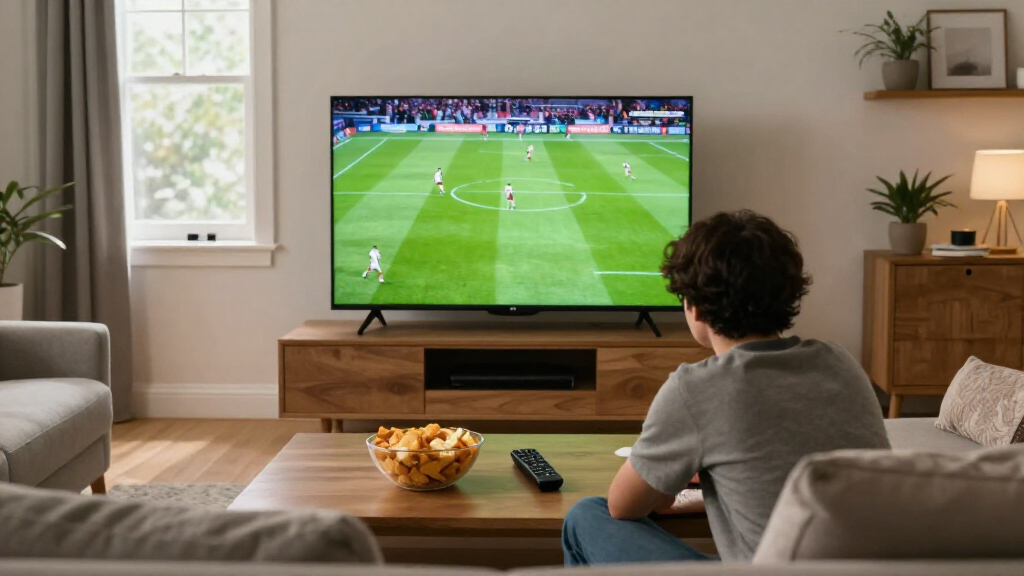
To rank these displays, I evaluated each model based on three pillars specific to sports viewing: motion handling, peak brightness, and screen size-to-value ratio. Sports content is unforgiving of slow response times, so panels with high refresh rates (120Hz or higher) and advanced motion interpolation were prioritized. I also weighed the ambient light performance, recognizing that many sports fans watch in daylight-heavy environments where OLEDs can struggle with reflections compared to Mini LED or QLED alternatives.
Ranking logic favored the LG OLED evo C6H for overall performance because it combines perfect blacks with the fastest pixel response times available, critical for tracking fast-moving balls. However, the Samsung DU9000 rose in the rankings for buyers who prioritize sheer screen real estate over pixel perfection, while budget QLEDs were evaluated on how well they deliver 144Hz support without compromising color accuracy. This approach ensures the list serves both high-end enthusiasts and value-conscious buyers looking for the best bang-for-buck immersion.
Factors to Consider When Choosing Large Screen TVs For Sports
Selecting a large screen for sports involves more than just picking the biggest number in inches. The following factors explain how technical specifications translate to your actual viewing experience and where you should allocate your budget.
Motion Handling and Refresh Rate Reality
Sports broadcasts are captured at standard frame rates (50-60fps), but fast action like soccer or tennis can look choppy on slower panels. Native 120Hz or 144Hz panels are essential for reducing judder and motion blur, creating smoother tracking of fast-moving objects. While marketing often highlights “effective” refresh rates via interpolation, I recommend focusing on native panel speed and pixel response time. OLEDs naturally excel here due to instant pixel switching, whereas LCD-based TVs (LED, QLED, Mini LED) rely on backlight strobing or software processing that can introduce artifacts. If you watch a lot of fast-paced sports, prioritize panels with low input lag and dedicated gaming modes, which often correlate with better motion performance for video content too.
Brightness vs. Contrast: The Room Environment Factor
The biggest mistake buyers make is ignoring their room’s lighting when choosing between OLED and LED technologies. OLED panels offer infinite contrast and perfect blacks, making them superior for dark or dimly lit rooms, but they can suffer from visible glare and lower peak brightness in sun-drenched spaces. Conversely, Mini LED and QLED models achieve much higher peak brightness levels, allowing them to punch through ambient light and maintain vivid colors during daytime viewing. If your media room is light-controlled, OLED is the clear winner; if you watch in a bright living room with large windows, a high-brightness Mini LED like the Samsung M80H is a more practical choice that avoids the “washed-out” look OLEDs can sometimes exhibit under direct sunlight.
Screen Size and Viewing Distance Math
Buying a 75-inch or 98-inch TV is exciting, but viewing distance determines whether you see the screen or the pixels. For 4K resolution, the general guideline is to sit between 1 to 1.5 times the screen’s diagonal size away. A 98-inch screen requires a significant depth in your room to avoid seeing individual pixels, whereas a 65-inch OLED can look sharp from much closer distances. I advise measuring your sofa-to-TV distance before committing to the largest size. If your room is small, a smaller, higher-quality OLED will provide a better sports experience than a massive, lower-tier LCD that forces you to sit further back to hide its inferior motion handling.
Connectivity for Multi-Source Sports Viewing
True sports fans often watch multiple games simultaneously or use specialized streaming devices. You need a TV with multiple HDMI 2.1 ports if you plan to connect a gaming console, a soundbar with eARC, and a streaming box simultaneously. While most 2026/2027 models include HDMI 2.1, the number of ports varies, and some cheaper models may have only one high-speed port. Check for ALLM (Auto Low Latency Mode) support as well, which automatically switches the TV to game mode when you turn on a connected device, reducing input lag. This is particularly useful if you use a streaming app on the TV’s internal OS for sports packages, ensuring the interface feels snappy and responsive.
Audio Capabilities and External Sound Systems
Large screens often sacrifice audio depth for slim profiles, meaning built-in speakers on even premium TVs can sound thin during crowd noise or commentary. While high-end models like the LG C6H use AI sound processing to upmix audio, they rarely replace a dedicated soundbar or home theater system. When budgeting for your large screen, I strongly recommend allocating funds for an external audio solution. If you cannot use external speakers, look for models with integrated subwoofers or advanced Dolby Atmos virtualization, but be aware that physical speaker size limits bass response. For sports, clear dialogue (commentary) is often more important than deep bass, so look for TVs with dedicated center-channel simulation features.
Frequently Asked Questions
Is OLED worth it for sports, or should I stick with LED?
OLED is worth it for sports if you watch in a controlled lighting environment, as it provides the perfect contrast that makes night games and dark stadiums look incredibly realistic. The instant pixel response eliminates the motion blur common in LCD panels, keeping fast-moving balls sharp. However, if you watch in a bright room with lots of windows, a high-end Mini LED is often better because it fights glare more effectively and maintains higher brightness levels without the risk of image retention. For most enthusiasts, the superior motion clarity of OLED outweighs the brightness limitation, provided you can manage ambient light.
Do I really need a 144Hz TV for watching sports broadcasts?
Most sports broadcasts are capped at 60Hz, so a 144Hz panel does not directly increase the frame rate of the broadcast itself. However, a 144Hz native panel usually indicates a higher-quality display driver capable of smoother motion interpolation and lower input lag. This results in clearer upscaling of 1080p or 4K content and a more fluid feel during fast pans and zooms. If you also game or use high-refresh-rate streaming sources, 144Hz is a future-proof feature that ensures the TV remains versatile for all types of content beyond just traditional cable sports.
Is a 98-inch TV too big for an average living room?
For many average living rooms, a 98-inch TV can feel overwhelming and require excessive viewing distance to hide pixel structure. You generally need a viewing distance of 10 to 12 feet to comfortably watch 98-inch 4K content without seeing pixels. If your sofa is closer than 8 feet, a 75-inch or 83-inch model will provide a more immersive and sharper image. I recommend measuring your wall space and sightlines carefully; a slightly smaller, higher-quality panel often delivers a better viewing experience than a massive screen that dominates the room uncomfortably.
How does glare affect large screen TVs for sports?
Glare is a significant issue for large screens because the surface area reflects more ambient light, which can wash out colors and reduce contrast. Matte finishes and anti-reflective coatings help mitigate this, but they are not perfect. In bright rooms, the TV’s peak brightness must exceed the ambient light level to keep the image visible. This is where Mini LED TVs have an advantage over OLEDs, as they can achieve much higher nits. If your room cannot be darkened, prioritize brightness specs over contrast ratios to ensure the game remains visible during the day.
Should I buy a bundle with a wall mount and protection plan?
Bundles often appear cost-effective, but you should scrutinize the component quality. Third-party protection plans frequently have restrictive terms, and generic wall mounts may not support the specific VESA pattern or weight of your new TV. I recommend buying the TV standalone to secure the best hardware price, then purchasing a mount specifically rated for that model from a reputable brand. This approach ensures compatibility and safety, whereas bundles might include suboptimal accessories that require replacement, negating any initial savings.
Conclusion
Choosing the best large screen TV for sports depends heavily on your room’s lighting and your budget. For the best overall experience in a dark or dim room, the LG 77-Inch OLED evo C6H remains the gold standard due to its flawless motion handling and contrast. If you need maximum brightness for a sunlit living room, the Samsung 75-Inch M80H Mini LED offers a superior balance of size and visibility. For those seeking immersive scale on a mid-range budget, the TCL 85-Inch T7 QLED provides massive screen real estate with solid 144Hz performance. Beginners or value seekers should look at the Hisense 75-inch E6SR or TCL 75-inch F8D, which deliver reliable 4K sports viewing without the premium price tag. Match your choice to your environment, and you will find the perfect screen for every game.