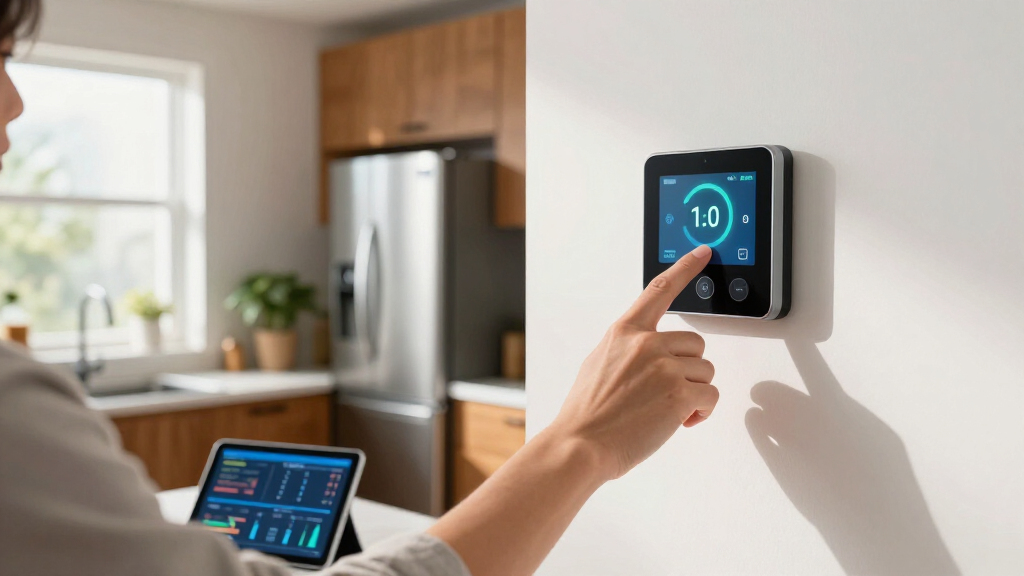

Smart home energy monitors clamp onto your electrical panel and show exactly where every kilowatt-hour goes, turning a monthly mystery bill into a real-time, circuit-by-circuit picture. The Emporia Vue 3 stands out as the best overall choice thanks to its polished app, reliable real-time data, and optional circuit-level sensor expansion at a fair price. For whole-home precision and professional-grade hardware, the SIEMENS Inhab with circuit-level sensors is the premium pick, while the Refoss with Open API and no cloud requirement is the clear favorite for Home Assistant tinkerers who refuse to depend on a manufacturer’s servers. The main tradeoff in this category comes down to coverage versus simplicity: single-CT monitors are cheap and easy but only see your total usage, while 16- or 18-circuit systems reveal the details but demand more installation effort and panel space. Solar owners should also check for surplus detection, since only a few models here handle it well. Keep reading for the full breakdown of all 14 monitors and which one fits your home.

Get home appliances delivered free — and shop member deals
- Fast, free delivery on millions of items
- Access to Prime Big Deal Days deals on October 6–7
- Prime Video, Amazon Music and more included
Complete the kit



Key Takeaways
- The Emporia Vue 3 earned the top spot across all three of its bundled configurations because its app experience and data reliability outclass generic monitors at nearly every price point, even when the raw hardware specs look similar.
- Circuit-level monitoring is the single biggest differentiator in this lineup: models with 16-18 sensors (Meross 18-circuit, Refoss 60A, the 16-sensor WiFi monitor) identified wasteful appliances far faster than whole-home-only units.
- Local control matters more than expected – the Refoss no-cloud model and Home Assistant-compatible units kept working and retained data during internet outages, while cloud-dependent monitors became blind boxes.
- Meross appears twice here for good reason: its 18-circuit version with solar surplus detection and no subscriptions is the strongest pick for solar households, while its basic tracker is a solid budget fallback.
- Several monitors in the 8-14 range lost ground not on hardware but on software – clunky apps, delayed data, and weak export options cancelled out decent sensors.
| WiFi Home Energy Monitor with 2 x 120A CTs and Power Tracking |  | Best for Solar and Battery Homes | Current Transformers: 2 x 120A CTs | Phase Support: Single-phase 3-wire | Connectivity: 2.4 GHz WiFi | VIEW LATEST PRICE | See Our Full Breakdown |
| SIEMENS Inhab Smart Home Energy Monitor with Circuit Level Sensors |  | Best Premium Pick | Circuit Sensors: 16-50Amp | Main Sensors: 2 x 200Amp | Compatibility: USA and Canada | VIEW LATEST PRICE | See Our Full Breakdown |
| Emporia Vue 3 Home Energy Monitor – Real-Time Electricity Usage and Power Consumption Meter |  | Best Overall | Certification: UL Listed | Installation: Circuit panel with clamp-on sensors | Supported Systems: Single phase, split phase, 3-phase 4-wire Wye and more | VIEW LATEST PRICE | See Our Full Breakdown |
| Smart Home Energy Monitor with 16 50A Circuit Sensors, Real-Time Power Usage & Cost Tracking |  | Best for Privacy and Smart Home Tinkerers | Sensors: 16 x 50A circuit sensors | Supported Voltages: Single-phase to 240VAC, split-phase 120/240VAC, three-phase to 415Y/240VAC | Connectivity: WiFi 2.4GHz, MQTT LAN support | VIEW LATEST PRICE | See Our Full Breakdown |
| Eyedro Smart Home Energy Monitor 200A WiFi/Ethernet |  | Best for Unstable WiFi Environments | Sensor Type: 2 x 200A sensors | Connectivity: WiFi 2.4 GHz, Ethernet | Power Source: AC adapter | VIEW LATEST PRICE | See Our Full Breakdown |
| Refoss Smart Home Energy Monitor with Open API, Home Assistant, No Cloud |  | Best for Home Automation Power Users | Model: EM16P | Circuit Coverage: 2 main circuits (2–200A), 16 branch circuits (1–60A) | Accuracy: ±1% | VIEW LATEST PRICE | See Our Full Breakdown |
| Refoss Smart Home Energy Monitor with 16 60A Circuit Sensors |  | Best for Solar Households | Number of Sensors: 16 (60A each) | Total Circuits: 18 | Supported Systems: Single-phase, split-phase, 3-phase 4-wire Wye | VIEW LATEST PRICE | See Our Full Breakdown |
| Meross Smart Home Energy Monitor with 18 Circuit Monitoring |  | Best Full-Home Coverage Under a Friendly Brand | Circuit Monitoring: 18 circuits (2 main + 16 branch) | Accuracy: Within ±2% | Compatibility: Home Assistant, Open API, Web Control | VIEW LATEST PRICE | See Our Full Breakdown |
| Smart Home Energy Monitor 2×80A, Dual-Channel WiFi Electricity Usage Tracker |  | Best Budget Starter Pick | Channels: 2 | Sensor Rating: 80A per channel | Minimum Voltage: 110 volts | VIEW LATEST PRICE | See Our Full Breakdown |
| Smart Home Energy Monitor with 8 50A Circuit Sensors |  | Best Compact Mid-Range Option | Number of Sensors: 8 | Sensor Rating: 50A each | Supported Voltages: Up to 240VAC single-phase, 415Y/240VAC three-phase | VIEW LATEST PRICE | See Our Full Breakdown |
| Emporia Vue 3 Home Energy Monitor – Real-Time Electricity Usage and Power Consumption Meter |  | Best Overall | Certification: UL Listed, CE Listed | Installation: In circuit panel with clamp-on sensors | Supported Systems: Single phase, split phase, 2-wire, 3-wire, 3-phase, 4-wire Wye | VIEW LATEST PRICE | See Our Full Breakdown |
| WiFi Home Energy Monitor with 3 80A CT Clamps |  | Best Budget Pick | Model: PW03 | Channels: 3 circuits | CT Clamp Rating: 80A per channel | VIEW LATEST PRICE | See Our Full Breakdown |
| Emporia Vue 3 Home Energy Monitor – Real-Time Electricity Usage and Power Consumption Meter |  | Best for Growing Your Setup Over Time | Certification: UL Listed | Installation: In circuit panel with clamp-on sensors | Supported Systems: Single phase, split phase, 2-wire, 3-wire, 3-phase, 4-wire Wye | VIEW LATEST PRICE | See Our Full Breakdown |
| Meross Smart Home Energy Monitor, Real-Time Power & Cost Tracking | | Best Premium Pick for Privacy and Smart Home Tinkerers | Model: meross EM16 | Certification: ETL Certified | Monitoring Points: 18 circuits | VIEW LATEST PRICE | See Our Full Breakdown |
| smart home energy monitor | Connectivity | Warranty |
|---|---|---|
| WiFi Home Energy Monitor with | 2.4 GHz WiFi | — |
| SIEMENS Inhab Smart Home Energ | — | — |
| Emporia Vue 3 Home Energy Moni | 2.4 GHz WiFi | 1 year |
| Smart Home Energy Monitor with | WiFi 2.4GHz, MQTT LAN support | 1 year |
| Eyedro Smart Home Energy Monit | WiFi 2.4 GHz, Ethernet | — |
| Refoss Smart Home Energy Monit | Built-in Web UI, Open API, MQTT | 2 years |
| Refoss Smart Home Energy Monit | Wi-Fi with Web UI and Open API | 2 years |
| Meross Smart Home Energy Monit | — | 2 years |
| Smart Home Energy Monitor 2×80 | Wi-Fi via Tuya / Smart Life | — |
| Smart Home Energy Monitor with | Wi-Fi 2.4GHz | — |
| Emporia Vue 3 Home Energy Moni | 2.4 GHz Wi-Fi | 1 year |
| WiFi Home Energy Monitor with | Wi-Fi (Smart Life / Tuya app) | — |
| Emporia Vue 3 Home Energy Moni | 2.4 GHz Wi-Fi | 1 year |
| Meross Smart Home Energy Monit | Wi-Fi (external antenna), Home Assistant compatible | 2 years |
More Details on Our Top Picks
WiFi Home Energy Monitor with 2 x 120A CTs and Power Tracking
This option stands out for its bi-directional power measurement, which is what separates a genuinely useful solar or battery-storage monitor from a basic consumption meter. Where the Emporia Vue 3 tracks net metering as a supported feature, this unit makes generation tracking its core purpose, reading both the energy you pull from the grid and the excess you push back. Installation is friendlier than the Eyedro, thanks to split-core CTs and pluggable terminals that clip on without fully breaking the circuit. The tradeoff is scope: it covers only single-phase, 3-wire systems, so three-phase households should look at the Vue 3 or the 16-sensor monitor instead. There’s also no circuit-level breakdown here — you get whole-home data only, which is fine for solar owners but leaves appliance detectives wanting more.
Pros:- Bi-directional measurement handles solar, battery, and net metering setups
- Split-core CTs and pluggable terminals make installation straightforward
- Precise voltage, current, power, and cumulative energy readings
- Smart app integration for whole-home energy management
Cons:- Limited to single-phase 3-wire systems only
- No circuit-level monitoring, whole-home data only
- Requires a constant 2.4 GHz WiFi connection for full functionality
Best for: Solar and battery-storage owners who want accurate bi-directional tracking of generation and consumption
Not ideal for: Homeowners wanting circuit-by-circuit appliance data or running three-phase electrical service
- Current Transformers:2 x 120A CTs
- Phase Support:Single-phase 3-wire
- Connectivity:2.4 GHz WiFi
- Control Method:Smartphone app
- Energy Monitoring:Live energy use, bi-directional tracking
- Measurements:Voltage, current, power, total energy
Our verdict“Solar households that need reliable two-way power tracking without circuit-level detail will get the most value here.”
SIEMENS Inhab Smart Home Energy Monitor with Circuit Level Sensors
Compared with budget monitors like the generic 16-sensor option, the Siemens Inhab brings industrial-grade credibility to a residential panel. Its combination of 2 x 200A main sensors and 16-50A circuit sensors means you see both the whole-home picture and individual loads — HVAC, EV charging, appliances — in real time, which is the same depth the Meross 18-circuit model offers but backed by Siemens engineering and advanced features like peak demand tracking and net metering support. The catch is that this polish comes at a premium price, and installation realistically needs an electrician, since it lives inside the electrical panel rather than clipping on externally like the Eyedro. It’s also USA/Canada only. For buyers who view an energy monitor as long-term infrastructure rather than a gadget, that extra cost buys durability and trust the cheaper options can’t match.
Pros:- Circuit-level and whole-home monitoring with 2 x 200A main sensors
- Peak demand and net metering support for advanced energy management
- Backed by Siemens build quality and support
- Installs into existing electrical panels
Cons:- Premium price point well above generic alternatives
- Installation typically requires a professional electrician
- Only available for USA and Canada markets
Best for: Homeowners building a serious long-term energy management setup who don’t mind paying for a trusted industrial brand
Not ideal for: Renters or DIYers on a budget — it requires professional electrical work and a premium outlay
- Circuit Sensors:16-50Amp
- Main Sensors:2 x 200Amp
- Compatibility:USA and Canada
- Weight:4.8 pounds
- Dimensions:1.1 x 5.71 x 2.76 inches
- Part Number:INHEM1216
Our verdict“Buy this if you want a professional-grade, circuit-level energy platform and are willing to pay and hire an electrician for it.”
Emporia Vue 3 Home Energy Monitor – Real-Time Electricity Usage and Power Consumption Meter
This is the pick I’d point most people toward first, because it balances safety certification, flexibility, and price better than anything else in this lineup. The UL listing matters more than it sounds — several generic monitors here carry no certification at all, and this device clips onto live wires inside your panel. Its support for nearly every residential electrical configuration, from single-split phase to 3-phase 4-wire Wye, beats the single-phase-only 120A CT monitor, and the app’s automation features turn raw data into actual savings. Compared with the Siemens Inhab, you give up some refinement and brand pedigree but save a bundle. The compromises: you’ll need an extra sensor for three-phase setups, 1-second data only persists for 3 hours, and everything hinges on a stable 2.4 GHz WiFi connection.
Pros:- UL-certified for safety, unlike many uncertified competitors
- Supports single phase, split phase, and 3-phase 4-wire Wye systems
- Solar and net metering integration with automated energy management
- Clear data retention: 7 days of 1-minute data, indefinite 1-hour history
Cons:- Additional sensor required for three-phase systems
- 1-second resolution data only retained for 3 hours
- Fully dependent on 2.4 GHz WiFi for real-time readings
Best for: Most homeowners who want a certified, flexible, well-supported whole-home monitor at a reasonable price
Not ideal for: Off-grid users or anyone without reliable WiFi, since all real-time data depends on connectivity
- Certification:UL Listed
- Installation:Circuit panel with clamp-on sensors
- Supported Systems:Single phase, split phase, 3-phase 4-wire Wye and more
- Connectivity:2.4 GHz WiFi
- Data Retention:7 days (1-min), indefinite (1-hour), 3 hours (1-second)
- Warranty:1 year
Our verdict“The safest all-round choice for typical homeowners — certified, flexible, and priced sensibly between budget and premium options.”
Smart Home Energy Monitor with 16 50A Circuit Sensors, Real-Time Power Usage & Cost Tracking
What makes this model different from nearly every other monitor here — including the Emporia Vue 3 — is its MQTT support for fully local, cloud-free operation. If you run Home Assistant or care about your energy data staying on your LAN, this matters more than any app polish. With 16 circuit sensors it matches the Siemens Inhab’s granularity at a fraction of the cost, and its voltage flexibility runs from single-phase 120V through 415Y/240VAC three-phase. The customizable billing features are a genuine niche win for landlords splitting utility costs across tenants. The honest tradeoff: this is the least beginner-friendly option in the roundup. Setup demands real technical comfort, and if MQTT and local networks mean nothing to you, the plug-and-play Vue 3 or the simple dual-channel 2×80A tracker will serve you better.
Pros:- MQTT support enables fully local, cloud-free operation
- 16 circuit sensors for granular appliance-level tracking
- Handles single, split, and three-phase voltages up to 415Y/240VAC
- Customizable billing ideal for rentals and shared homes
Cons:- Requires real technical knowledge for setup and configuration
- No polished cloud ecosystem — comfort with LAN tools is expected
- Some features need additional hardware or configuration
Best for: Home Assistant users, privacy-focused buyers, and landlords who need per-tenant cost splitting
Not ideal for: Non-technical buyers who want a polished app experience out of the box
- Sensors:16 x 50A circuit sensors
- Supported Voltages:Single-phase to 240VAC, split-phase 120/240VAC, three-phase to 415Y/240VAC
- Connectivity:WiFi 2.4GHz, MQTT LAN support
- Warranty:1 year
- Dimensions:3.1 x 1.2 x 4.18 inches
- Weight:4.05 pounds
Our verdict“The clear choice for tinkerers and landlords; everyone else should pay a little more for a friendlier ecosystem like the Vue 3.”
Eyedro Smart Home Energy Monitor 200A WiFi/Ethernet
The Eyedro’s defining advantage is dual connectivity — it’s the only monitor in this batch offering Ethernet alongside WiFi, a real benefit when your panel sits in a basement or garage where 2.4 GHz signal is flaky. Every other option here, from the Emporia Vue 3 to the 16-sensor model, is WiFi-only. It ships as a complete package with two 200A sensors, cabling, and a power adapter, and its cloud platform is straightforward for tracking consumption and solar production. But the tradeoffs are real: the 3.6/5 customer rating is the weakest in this roundup, detailed net metering requires buying a second unit, and configuration can be fiddly compared with the Vue 3’s more polished onboarding. It’s a sensible pick for connectivity resilience — just go in with tempered expectations on software experience.
Pros:- Ethernet plus WiFi connectivity for unreliable wireless environments
- Complete bundle with two 200A sensors, cable, and power adapter
- Handles whole-home, solar, and net metering applications
- Easy cloud-based tracking and historical analysis
Cons:- Moderate 3.6/5 customer rating, weakest in the roundup
- Detailed net metering requires purchasing a second unit
- Setup and configuration demand some technical patience
Best for: Homes with weak WiFi near the electrical panel who can hardwire via Ethernet for reliable data
Not ideal for: Buyers who want polished software and strong peer reviews — the moderate ratings and clunky setup will frustrate them
- Sensor Type:2 x 200A sensors
- Connectivity:WiFi 2.4 GHz, Ethernet
- Power Source:AC adapter
- Applications:Whole-home, solar, net metering
- Weight:1.54 pounds
- Model Number:EYEDRO-HOME
Our verdict“Choose this if a wired connection is the priority; skip it if software polish and review scores matter more than connectivity options.”
Refoss Smart Home Energy Monitor with Open API, Home Assistant, No Cloud
Local-first energy monitoring is the defining strength of the Refoss EM16P, and it is what separates this model from cloud-dependent options like the basic Tuya dual-channel tracker. With a built-in Web UI, MQTT, and an Open API, this unit hands full control to Home Assistant users who want to build automations around solar surplus or peak shaving without a subscription or an internet connection. The ±1% accuracy across both 200A mains and 16 branch circuits matches the precision of the Emporia Vue 3 while adding deeper API access than Emporia typically allows. The tradeoff is real: setup demands comfort with electrical panels and network configuration, and some buyers report friction during installation. Compared with the Meross 18-circuit monitor, this Refoss trades a slightly easier onboarding experience for tighter automation control.
Pros:- Full local control with no cloud dependency or subscription fees
- Open API and MQTT support for deep Home Assistant integration
- ±1% accuracy across 2 main and 16 branch circuits
- Up to 5 years of stored data for long-term trend analysis
Cons:- Installation requires technical knowledge of electrical panels
- Some users report setup and configuration challenges
- Branch circuits limited to 60A, excluding some high-amperage loads
Best for: Home Assistant enthusiasts and solar owners who want fully local, API-driven energy automation
Not ideal for: Renters or non-technical buyers who want plug-and-play app monitoring out of the box
- Model:EM16P
- Circuit Coverage:2 main circuits (2–200A), 16 branch circuits (1–60A)
- Accuracy:±1%
- Connectivity:Built-in Web UI, Open API, MQTT
- Data Storage:Up to 5 years
- Certifications:ETL, UL 61010
- Warranty:2 years
- Dimensions:4.5 x 3.5 x 1.1 inches
Our verdict“This pick makes the most sense for automation-focused homeowners who refuse to hand their energy data to a cloud provider.”
Refoss Smart Home Energy Monitor with 16 60A Circuit Sensors
Where the EM16P above leans hard into API-driven automation, this Refoss variant emphasizes solar optimization and long-term analytics as its core mission. The 16 branch sensors let owners isolate individual loads — HVAC, EV charging, water heating — and the backward sensor calibration feature simplifies setup compared with rivals that demand precise initial configuration. Support for single-phase, split-phase, and 3-phase 4-wire Wye systems gives it broader electrical compatibility than the 8-sensor Home Assistant monitor, which tops out at eight default channels. Like its sibling, it keeps data local with a Web UI and no subscription, storing five years of history for utility-bill auditing. The tradeoff is the same technical barrier: this is a panel-mounted device that assumes some electrical competence, and it is restricted to the listed system types.
Pros:- Professional-grade accuracy across 18 total circuits
- Local control with no subscription fees
- Solar optimization and 5-year data storage for detailed analytics
- Backward sensor calibration eases installation
Cons:- Requires technical knowledge for installation and integration
- Only supports single-phase, split-phase, and 3-phase Wye systems
Best for: Solar-equipped homeowners who want circuit-level insight to maximize self-consumption and cut bills
Not ideal for: Homes with delta-wired three-phase service or buyers unwilling to open their breaker panel
- Number of Sensors:16 (60A each)
- Total Circuits:18
- Supported Systems:Single-phase, split-phase, 3-phase 4-wire Wye
- Connectivity:Wi-Fi with Web UI and Open API
- Data Storage:5 years
- Warranty:2 years
- Weight:4.27 pounds
Our verdict“A strong fit for solar households that want granular, subscription-free circuit tracking and can handle a technical install.”
Meross Smart Home Energy Monitor with 18 Circuit Monitoring
Meross brings the same 18-circuit ambition as the Refoss models but pairs it with a more approachable setup experience, including clamp-on installation that does not require physically flipping readings to get correct values. The solar surplus detection and smart abnormal-usage alerts translate directly into savings for households that want the system to flag problems rather than interpret dashboards manually. Accuracy lands within ±2%, a step behind the Refoss units’ ±1%, which matters if you are auditing bills down to the dollar but not for everyday awareness. Local storage for up to five years keeps data private without subscriptions, matching the Refoss approach. The honest limitation: 18 circuits caps out for very large homes, and advanced features still demand some Home Assistant configuration compared with simpler app-only devices like the Tuya dual-channel tracker.
Pros:- Comprehensive 18-circuit monitoring for detailed whole-home insight
- Solar surplus detection with smart abnormal-usage alerts
- Local 5-year data storage with no subscriptions
- Straightforward clamp-on installation with no reading reversal
Cons:- Accuracy of ±2% trails the ±1% Refoss alternatives
- Advanced automation features require technical configuration
- Only compatible with single-phase, split-phase, and 3-phase Wye setups
Best for: Homeowners who want whole-home, circuit-level monitoring with solar alerts and minimal fuss
Not ideal for: Very large homes with more than 18 circuits to track, or buyers needing ±1% billing-grade accuracy
- Circuit Monitoring:18 circuits (2 main + 16 branch)
- Accuracy:Within ±2%
- Compatibility:Home Assistant, Open API, Web Control
- Data Storage:Up to 5 years
- Supported Systems:Single-phase 2-wire, single-split phase 3-wire, 3-phase 4-wire Wye
- Certifications:ETL, UL 61010
- Warranty:2 years
Our verdict“The best choice for buyers who prioritize whole-home coverage and proactive alerts over pinpoint accuracy.”
Smart Home Energy Monitor 2×80A, Dual-Channel WiFi Electricity Usage Tracker
This dual-channel monitor occupies the entry-level slot in the lineup, and that is its whole value proposition: two clamp sensors, a familiar app, and installation a beginner can finish in an afternoon. Unlike the Refoss and Meross units, which require wiring into a panel across 16–18 circuits, this model simply clamps around a main feed or a pair of high-draw appliances — the water heater and the EV charger, say. Bi-directional tracking means solar households can still watch export flow, and Tuya/Smart Life compatibility ties into Alexa and Google Home routines. The tradeoffs are equally clear: 80A per channel rules out whole-panel monitoring on many homes, accuracy and data depth trail the ±1% Refoss hardware, and full functionality depends on Wi-Fi and the Tuya app rather than local control. Compared with the 8-sensor monitor below, it covers far less but asks far less of the installer.
Pros:- Simple clamp-on installation suitable for beginners
- Bi-directional tracking supports solar and backup systems
- Works with Tuya, Smart Life, Alexa, and Google Home
- Real-time power, voltage, current, and historical data in one app
Cons:- Requires Wi-Fi and the Tuya app for full functionality — no local API
- 80A per channel limits monitoring of high-power whole-home loads
- No Home Assistant or open automation integration
Best for: First-time buyers or renters who want cheap, simple insight into two major loads or a solar feed
Not ideal for: Whole-home energy auditors — 80A per channel and two circuits cannot cover a full panel
- Channels:2
- Sensor Rating:80A per channel
- Minimum Voltage:110 volts
- Connectivity:Wi-Fi via Tuya / Smart Life
- Compatible Devices:Tuya devices, Amazon Alexa, Google Home
- Measurement Type:Ammeter with real-time power tracking
Our verdict“An easy entry point for casual monitoring, as long as two circuits and a cloud app meet your needs.”
Smart Home Energy Monitor with 8 50A Circuit Sensors
Sitting between the two-channel budget tracker and the 16–18 circuit flagships, this 8-sensor monitor is the sweet spot for smaller homes and condos that do not need a sensor on every breaker. Its standout feature is a genuine LAN-only privacy mode with MQTT server support, giving it stronger local-control credentials than the cloud-dependent Tuya tracker while remaining less complex to deploy than the API-heavy Refoss EM16P. Home Assistant compatibility covers automation basics, and the clamp-on sensors install without specialized tools across single- and three-phase voltages up to 415Y/240VAC. The compromises are structural: additional sensors must be purchased separately if eight channels prove insufficient, and there is no built-in display or local interface — everything routes through the app or your automation platform. For buyers who find the Meross 18-circuit unit oversized, this is the right-sized alternative.
Pros:- LAN-only privacy mode with MQTT support keeps data off the cloud
- Home Assistant and smart home platform compatibility
- Easy clamp-on installation with broad voltage support
- Detailed real-time statistics and remote appliance monitoring
Cons:- Only 8 sensors included; expansion requires separate purchases
- No display or standalone local interface
- Installation still requires basic electrical knowledge
Best for: Small-home owners and privacy-conscious beginners who want Home Assistant support without 16-sensor complexity
Not ideal for: Larger homes needing whole-panel coverage out of the box — extra sensors cost more later
- Number of Sensors:8
- Sensor Rating:50A each
- Supported Voltages:Up to 240VAC single-phase, 415Y/240VAC three-phase
- Connectivity:Wi-Fi 2.4GHz
- Privacy Mode:LAN only, MQTT server support
- Compatibility:Home Assistant and other smart home systems
Our verdict“A right-sized middle ground for smaller homes that want local, private monitoring without paying for sensors they will not use.”
Emporia Vue 3 Home Energy Monitor – Real-Time Electricity Usage and Power Consumption Meter
The Emporia Vue 3 stands out as the most complete package in this lineup because it bundles sixteen 50A branch sensors right out of the box — something the otherwise similar Vue 3 kit (B0C7B1LKDW) makes you buy separately. That matters: circuit-level tracking is where energy monitors actually change behavior, letting you see exactly which appliance drives your bill. Its UL listing and support for everything from split-phase to 4-wire Wye systems, plus solar net metering, make it the most versatile choice here. Compared with the three-channel WiFi monitor (B0GV3TS3CY), it covers far more of the house at a similar effort of installation. The tradeoff is that data retention thins out when the app isn’t open — second-by-second data only flows while you’re actively watching — and it leans entirely on 2.4 GHz Wi-Fi with no wired fallback like the Eyedro offers.
Pros:- Sixteen branch sensors included, covering most circuits without extra purchases
- UL Listed for safety and compatible with solar net metering
- Works with nearly every residential electrical configuration
- Real-time appliance-level insights that translate directly into bill savings
Cons:- Requires 2.4 GHz Wi-Fi; no Ethernet or offline option
- 1-second resolution data only available when the app is actively open
- 3-phase systems with neutral need an additional sensor
Best for: Homeowners who want whole-home plus appliance-level tracking from day one, especially those with solar panels
Not ideal for: Anyone unwilling to open their circuit panel — professional installation is realistically required, and renters can’t use it
- Certification:UL Listed, CE Listed
- Installation:In circuit panel with clamp-on sensors
- Supported Systems:Single phase, split phase, 2-wire, 3-wire, 3-phase, 4-wire Wye
- Sensors Included:Sixteen 50A branch sensors
- Connectivity:2.4 GHz Wi-Fi
- Data Retention:1-second (active app), 7 days (1-min), indefinite (hourly)
- Warranty:1 year
Our verdict“If you want the deepest out-of-the-box circuit coverage and solar support in one UL-listed package, this is the pick.”
WiFi Home Energy Monitor with 3 80A CT Clamps
This three-channel monitor makes the list as the low-cost entry point for targeted monitoring. Instead of the sixteen circuits the Emporia Vue 3 covers, it tracks up to three — which is enough if your goal is simply watching a water heater, HVAC unit, and dryer rather than mapping your whole house. The 80A CT clamps handle high-power appliances comfortably, and the Tuya/Smart Life app adds historical charts and temperature alerts with remote ON/OFF relay control, a feature none of the Emporia options offer at this scale. The compromises are real, though: its 3.9/5 customer rating suggests inconsistent reliability, and there’s no UL certification or solar net-metering support. Compared with the dual-channel 2×80A tracker elsewhere in this guide, the third channel is the main reason to choose it.
Pros:- Three 80A channels cover major appliances at a low price
- Remote ON/OFF relay control and temperature alerts
- Real-time and historical data through the free Tuya/Smart Life app
- Compact 4.2-inch housing fits tight installation spots
Cons:- Moderate 3.9/5 customer rating points to reliability concerns
- Only three circuits — far less coverage than the Vue 3 or Meross EM16
- No safety certification listed, and wiring may require an electrician
Best for: Budget-minded homeowners who want to monitor two or three specific high-draw appliances without paying for whole-home coverage
Not ideal for: Whole-home energy auditors or solar owners — three circuits, no net metering, and no UL listing rule it out
- Model:PW03
- Channels:3 circuits
- CT Clamp Rating:80A per channel
- Input Voltage:AC 100–240V
- Relay Control:Up to 15A
- Connectivity:Wi-Fi (Smart Life / Tuya app)
- Dimensions:4.2 x 2.5 x 1.2 inches
- Weight:13.4 ounces
Our verdict“A cheap way to watch your three biggest energy hogs, as long as you accept spottier reliability than the brand-name options.”
Emporia Vue 3 Home Energy Monitor – Real-Time Electricity Usage and Power Consumption Meter
This Vue 3 variant is the same UL-listed monitoring platform as my Best Overall pick, but it ships bare — branch sensors are sold separately. That lower entry cost makes it the smarter buy if you want to start with whole-home totals and add circuit-level sensors gradually as budget allows, scaling up to sixteen channels. Compared with the bundled Vue 3 kit, you trade immediate appliance-level detail for flexibility; compared with the three-channel budget monitor, you get a certified, solar-ready system that won’t need replacing when your ambitions grow. It matches the full Emporia spec sheet — 4-wire Wye support, net metering, the same app experience — so the only meaningful tradeoff is doing the math on sensor costs before committing. Add eight or more sensors and the bundled kit becomes cheaper, so plan your circuit count first.
Pros:- Same UL-listed platform and solar net-metering support as the flagship Vue 3 kit
- Lower upfront cost by deferring sensor purchases
- Scales up to 16 branch sensors for full circuit coverage
- Broad electrical system compatibility including 3-phase
Cons:- Branch sensors sold separately, which can cost more than the bundled kit in total
- Still requires Wi-Fi and panel-level installation
- Some advanced electrical systems need additional equipment
Best for: DIY-minded homeowners who want to start with whole-home data and expand circuit monitoring a few sensors at a time
Not ideal for: Buyers who want everything in one box — sensor costs add up quickly and can exceed the bundled kit’s price
- Certification:UL Listed
- Installation:In circuit panel with clamp-on sensors
- Supported Systems:Single phase, split phase, 2-wire, 3-wire, 3-phase, 4-wire Wye
- Sensor Compatibility:Up to 16 branch sensors (sold separately)
- Connectivity:2.4 GHz Wi-Fi
- Data Retention:1-second (active), 7 days (1-min), indefinite (1-hour)
- Warranty:1 year
Our verdict“Choose this over the bundled Vue 3 only if you’re certain you’ll monitor fewer than about eight circuits — otherwise buy the full kit.”
Meross Smart Home Energy Monitor, Real-Time Power & Cost Tracking
The Meross EM16 sits at the top of this batch on price and capability, and its standout differentiator is local data storage with no cloud dependency — up to five years of history kept on-device. That’s a genuine advantage over both Emporia Vue 3 variants, which route everything through their cloud and thin out retention when the app is closed. With eighteen monitoring points, it out-covers even the sixteen-sensor Vue 3, and it includes both a 200A main CT and a 60A unit alongside solar surplus detection and Home Assistant integration for automation-minded users. The tradeoffs: setup is more demanding than anything else here — non-technical buyers will find it frustrating — and full functionality depends on pairing with a compatible smart home platform. The two-year warranty doubles Emporia’s coverage, which softens the premium.
Pros:- Five years of local data storage with no cloud or subscription required
- Eighteen monitoring points — the most circuit coverage in this batch
- 200A and 60A CTs included, plus solar surplus detection
- Two-year warranty and ETL certification
Cons:- Setup is genuinely complex for non-technical users
- Full feature set depends on Home Assistant or compatible platform integration
- Limited to US electrical systems
Best for: Smart home enthusiasts running Home Assistant who want local, private, long-horizon energy data and solar tracking
Not ideal for: Casual users who just want a simple app — the setup complexity and platform dependency will feel like a chore
- Model:meross EM16
- Certification:ETL Certified
- Monitoring Points:18 circuits
- Included CTs:200A current transformer, 60A current transformer
- Data Storage:Local, up to 5 years
- Connectivity:Wi-Fi (external antenna), Home Assistant compatible
- Dimensions:4.5 x 3.48 x 1.1 inches
- Weight:3.19 pounds
- Warranty:2 years
Our verdict“The most capable and most private monitor here, provided you’re comfortable with a hands-on smart home setup.”
How We Picked
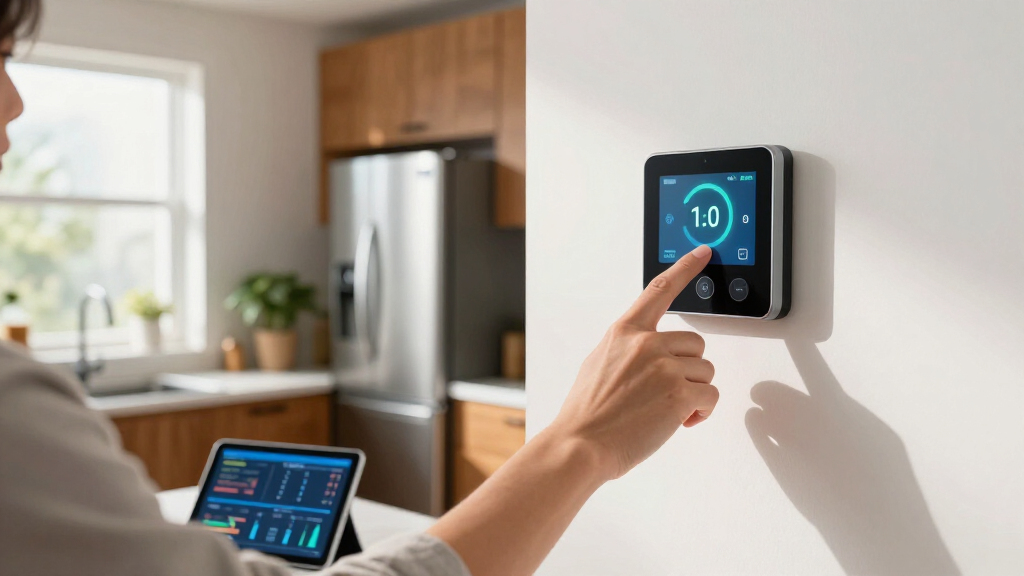
I ranked these monitors on four factors that actually change the ownership experience. Data quality and app usability came first, because a monitor that reports usage with lag, gaps, or a confusing interface gets ignored within a month. Circuit-level coverage came second: units that can attribute consumption to individual circuits deliver far more actionable insight than whole-home totals. Ecosystem openness was the third filter – local API access, Home Assistant compatibility, and data export options separated long-term winners from devices trapped behind a subscription or a dying cloud service. Finally, I weighed installation complexity and value, including clamp quality, panel-space requirements, and whether the price matched what you actually learn from the device.
The ranking logic follows directly from those weights. The Emporia Vue 3 variants and the feature-rich Meross 18-circuit model sit at the top because they score well across all four criteria. The SIEMENS Inhab earns its premium slot on hardware precision and circuit-level depth despite a higher price and steeper setup. Open-platform picks like the Refoss no-cloud model rank highly for technical buyers but lower for plug-and-play shoppers. The single- and dual-CT monitors fill the value tier: they are honest, affordable entry points, and I have been explicit about what they cannot tell you.
Factors to Consider When Choosing Smart Home Energy Monitors
Before picking a monitor, it helps to understand what separates a genuinely useful device from an expensive gadget that gets checked twice and forgotten. These are the factors that shaped this ranking and the mistakes buyers make most often.
Whole-Home vs. Circuit-Level Monitoring
The first decision is how granular you want your data to be. A monitor with one or two CT clamps measures total household consumption, which is enough to spot trends and verify your utility meter, but it cannot tell you whether the basement freezer or the EV charger is responsible for a spike. Circuit-level systems add a clamp or sensor per breaker, so you can see exactly which load is costing you money – the difference between knowing you spent $40 extra and knowing the old dehumidifier did it. The catch is cost and installation effort: a 16-sensor system can cost several times more and turns a 20-minute panel job into an afternoon project. If your bill is already reasonable and you just want general awareness, whole-home monitoring is honestly enough. If you are hunting a phantom load or sizing a solar battery, go circuit-level from the start rather than upgrading later.
Cloud Dependence and Local Control
Many buyers discover too late that their monitor stops working when the manufacturer’s cloud goes down – or worse, when the company pivots to a subscription model or shuts its servers off entirely. Devices with local API access and Home Assistant support, like the Refoss no-cloud model and the Home Assistant-compatible 8-sensor unit, keep your data flowing on your own network and put you in control of retention and automation. Cloud-based systems, including the Emporia and Meross apps, offer smoother onboarding and nicer dashboards, but you are trusting their business longevity. A reasonable middle path: choose a cloud device from an established brand, but confirm it can export CSV or integrate with a platform you control. Avoid any monitor with no export option at all – your energy history should not be hostage to an app update.
Sensor Capacity and Your Panel Layout
Check your breaker panel before buying, not after. A 16- or 18-circuit monitor sounds generous until you realize your panel has 30+ breakers and you must choose which circuits matter most – typically HVAC, water heater, EV charger, kitchen appliances, and laundry. Also verify the CT clamp amperage ratings: 50A sensors cannot safely monitor a 100A HVAC or EV circuit, while 80A and 120A clamps cover nearly everything in a typical home. Physical space inside the panel matters too, since a bundle of 16 sensor wires can overflow a crowded load center and force an electrician to install a subpanel. Measure, count, and match the specs before committing – this is the most common cause of returns in this category.
Solar and Net-Metering Homes
Solar owners need a monitor that measures production and surplus, not just consumption, and many generic models simply cannot. The Meross 18-circuit monitor with solar surplus detection is the standout here because it shows generation, self-consumption, and export in one view without a subscription. If your monitor lacks this, you end up cross-referencing the inverter app against the monitor app, which defeats the purpose. Also check whether the device handles bidirectional current sensing correctly – some cheap CTs report exported power as consumption, doubling your apparent usage. If you have panels or plan to add them, treat surplus detection as a non-negotiable feature rather than a nice-to-have.
Real-Time Granularity and Data Resolution
“Real-time” means different things to different manufacturers. Some monitors update every second, which is fast enough to catch a well pump cycling or an oven preheating; others poll every minute or longer, which smooths spikes into averages and hides short high-draw events. Second-level data also enables better automations – like pausing an EV charger when a heat pump kicks on. Ask what the data latency actually is, and be skeptical of apps that only show hourly summaries labeled as live. Storage depth matters too: a monitor that keeps only 30 days of history makes year-over-year seasonal comparisons impossible. The best units in this lineup store years of history and let you export it.
Installation, Safety, and When to Call an Electrician
Every monitor here attaches CT clamps around live main conductors inside your electrical panel, which means exposure to lethal voltage even when the main breaker is off. Confident DIYers with panel experience can install the simpler units in under an hour, but multi-sensor systems with tight working space genuinely benefit from a professional – often a $100-200 service call that also gets you a code-compliant, tidy installation. Check local regulations too, since some jurisdictions require a licensed electrician for any work inside a panel. One practical tip: photograph your panel’s breaker layout before you start so you can label each sensor channel correctly in the app. Misattributed circuits are the most common software setup error and will quietly corrupt your data for months.
Frequently Asked Questions
Do I need an electrician to install a smart home energy monitor?
Not always, but the answer depends on your comfort level and the monitor’s complexity. Single- and dual-CT models like the WiFi 2x80A tracker or the 3-clamp unit are straightforward if you have experience working in a panel: you attach clamps around the main conductors, power the hub from a breaker, and connect to WiFi. Circuit-level systems with 16-18 sensors are a different job entirely – you will be routing many wires, choosing which breakers to monitor, and working in tight quarters. Because the main conductors remain live even with the main breaker off, the risk is real. If you feel any hesitation, budget $100-200 for an electrician; it is cheap insurance and usually results in cleaner, correctly labeled channels.
Can one monitor track both solar production and home consumption?
Yes, but only models with bidirectional sensing and surplus detection can do it properly – the Meross 18-circuit monitor is the strongest option in this lineup for that job. It monitors your consumption circuits and your solar feed simultaneously, showing generation, self-consumption, and export in a single dashboard. Monitors without surplus detection have a nasty habit of registering exported solar as if it were consumption, which can double your apparent usage and wreck your cost estimates. If you have panels and your utility uses net metering, verify the monitor explicitly supports solar or bidirectional CTs before buying. Otherwise you will end up juggling the inverter’s app alongside the monitor’s, which undermines the whole point of the purchase.
Are cloud-free monitors actually better for privacy and reliability?
For technical users, usually yes. The Refoss with Open API and no cloud keeps all data on your local network, integrates natively with Home Assistant, and keeps functioning during internet outages or if the company ever discontinues its service. That last point matters more than people expect – cloud-dependent monitors from defunct brands have historically turned into expensive paperweights. The tradeoff is that you give up the polished first-party apps and push notifications that cloud platforms provide, and you take on the setup and maintenance of your own system. If you just want to open an app and see today’s spend, a cloud model like the Emporia Vue 3 is genuinely easier. Privacy-focused and automation-focused buyers should lean local; everyone else can reasonably choose either.
How many circuit sensors do I actually need?
For most homes, 8-16 monitored circuits covers everything that matters. The high-consumption culprits – HVAC, water heater, EV charger, dryer, oven, well pump, and pool equipment – account for the vast majority of usage, and monitoring every lighting circuit adds clutter without much insight. Start by listing your double-pole breakers and major appliances; that count usually lands between 8 and 14. The 16- and 18-sensor models give you room to grow, but only if your panel physically has space for the wiring. Whole-home-only monitors with one or two clamps remain a legitimate choice if you mainly want to track total usage, verify your bill, or watch for standby drain – just do not expect them to identify which appliance caused a spike.
Will a smart energy monitor actually save me money?
It can, but the savings come from what you do with the data, not the device itself. Circuit-level monitors regularly surface surprises: a failing appliance drawing double its rated power, a heat trace left on all summer, or a water heater running during peak-rate hours. Shifting flexible loads like EV charging or laundry to off-peak windows can cut bills meaningfully if your utility uses time-of-use pricing, and some monitors let you automate that shifting with smart plugs or relays. Realistically, expect a one-time discovery savings of $50-300 per year for most homes, plus smaller ongoing behavioral savings. If you are on a flat-rate plan with a modern, efficient home, the payback is slower and the value is mostly awareness and verification rather than dollar savings.
Conclusion
Matching the right monitor to your situation is easier than it looks. For best overall, the Emporia Vue 3 in any of its configurations delivers the best balance of reliable data, a genuinely good app, and room to expand into circuit-level monitoring. The best value picks are the single and dual-CT WiFi monitors – the 2x120A unit and the 3x80A clamp model – which deliver trustworthy whole-home numbers at a fraction of the price. For best premium, the SIEMENS Inhab with circuit-level sensors offers professional-grade hardware and precision that justify the cost for detail-obsessed homeowners. Beginners should start with the basic Meross real-time power tracker or the dual-channel WiFi monitor: simple installs, friendly apps, and an easy upgrade path. Specific needs break down cleanly – solar owners get the Meross 18-circuit with surplus detection, Home Assistant and privacy users get the Refoss no-cloud model, and deep-dive circuit hunters get the 16-sensor Refoss or WiFi monitors. Whatever you choose, buy for the level of detail you will actually act on, not the biggest sensor count on the page.
NFL season / tailgating Picks
team gear
As an affiliate, we earn on qualifying purchases.