
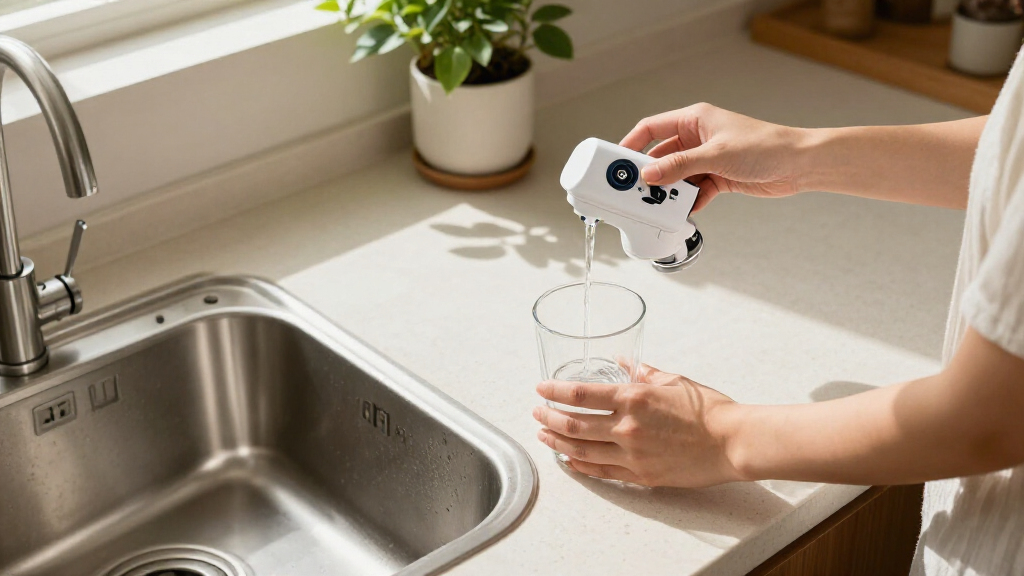

Among these countertop reverse osmosis water filters, I’d put the Bluevua RO100ROPOT-UV first for shoppers who want a feature-rich system, while the DREO model with two autofill pitchers stands out for ready-to-serve water and the AquaTru Classic Alkaline for buyers seeking an alkaline option. The main tradeoffs are how much water the system can hold, how much counter space it takes, and whether mineral or UV features suit your needs. Pitcher-based designs can make serving easier, while simpler configurations may mean fewer parts to manage. Filter replacement schedules and wastewater handling also differ, so the headline feature is only part of the decision. Read on for the full comparison and guidance on matching a model to your household.

Get home appliances delivered free with Prime
- Fast, free delivery on millions of items
- Prime Video, Amazon Music and more included
- Member-only deals all year
Complete the kit


Key Takeaways
- The lineup splits into distinct serving styles: DREO’s one- and two-pitcher options prioritize accessible stored water, while tank-focused models such as DREO’s 3L and 5 L systems emphasize capacity.
- Bluevua offers several closely related choices: RO100ROPOT, RO100ROPOT-UV, RO100ROPOT-Lite, and ROPOT-Lite differ by configuration, so shoppers should compare their exact included features rather than choosing by brand name alone.
- Mineral additions are a preference, not an automatic upgrade: Waterdrop’s C2SL and M6SL, plus AquaTru’s alkaline models, suit people seeking mineral or alkaline options; a standard RO setup may be a better match for buyers who want fewer add-ons.
- Glass-carafe models serve a different priority than high-capacity tanks: Waterdrop’s glass-pitcher options and AquaTru’s Glass Carafe models emphasize serving and vessel material, while larger tanks may suit households that draw water frequently.
- The best choice depends on day-to-day use, not the longest feature list: Pitcher access, countertop footprint, refill frequency, filter upkeep, and the specific feature set matter more than stage count alone.
| DREO Countertop Reverse Osmosis Water Filter with Two Autofill Pitchers |  | Best for Shared Pitcher Use | Purification method: Reverse osmosis | Water efficiency: 3:1 pure-to-drain ratio | Capacity: 5 liters | VIEW LATEST PRICE | See Our Full Breakdown |
| Bluevua RO100ROPOT-UV Countertop Reverse Osmosis Water Filter System |  | Best for UV and Mineral Filtration | Filtration stages: 6 | RO membrane pore size: 0.0001 μm | Additional filtration: UV light and remineralization filter | VIEW LATEST PRICE | See Our Full Breakdown |
| DREO Countertop Reverse Osmosis Water Filter System with 3L Tank | 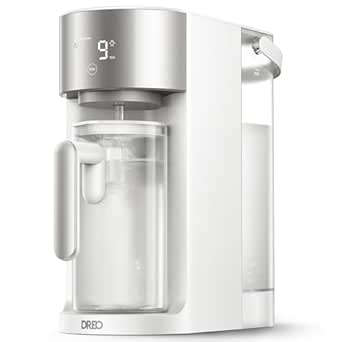 | Best for One- or Two-Person Homes | Purification method: Reverse osmosis | RO membrane pore size: 0.0001 μm | Contaminant reduction: Listed under laboratory conditions: 99% lead, hexavalent chromium, chlorine, PFOS, and PFOA; 97% fluoride | VIEW LATEST PRICE | See Our Full Breakdown |
| Bluevua RO100ROPOT-Lite Countertop Reverse Osmosis Water Filter |  | Best Compact Glass-Carafe Pick | Filtration: Five-stage system with 0.0001 μm RO membrane | Additional filtration: Remineralization | Pure-to-drain ratio: 3:1 | VIEW LATEST PRICE | See Our Full Breakdown |
| DREO Countertop Reverse Osmosis Water Filter with Autofill Pitcher |  | Best Streamlined Autofill Pick | Purification method: Reverse osmosis | Contaminant reduction: Up to 99.9%; includes PFOA, PFOS, chlorine, and fluoride | Pure-to-drain ratio: 3:1 | VIEW LATEST PRICE | See Our Full Breakdown |
| DREO WF511 7-Stage Countertop Reverse Osmosis Water Filter |  | Best for Two-Pitcher Convenience | Filtration stages: 7 | RO membrane pore size: 0.0001 μm | Pure-to-drain ratio: 3:1 | VIEW LATEST PRICE | See Our Full Breakdown |
| Bluevua ROPOT-Lite Countertop Reverse Osmosis Water Filter |  | Best Compact Pick for One or Two | Filtration stages: 5 | RO membrane size: 0.0001 μm | Pure-to-drain ratio: 3:1 | VIEW LATEST PRICE | See Our Full Breakdown |
| Waterdrop C2SL Countertop Reverse Osmosis Water Filter with Mineral Filter and 40 oz Glass Pitcher |  | Best for Remineralized Pitcher Water | Filtration: 7-stage reverse osmosis | RO membrane: 0.0001 μm | Feed water tank capacity: 108 oz | VIEW LATEST PRICE | See Our Full Breakdown |
| Bluevua RO100ROPOT Countertop Reverse Osmosis Water Filter System |  | Best for Long Filter Intervals | Filtration stages: 5 | Container material: Borosilicate glass | Filter life: 12–24 months | VIEW LATEST PRICE | See Our Full Breakdown |
| AquaTru Classic Alkaline Countertop Reverse Osmosis Water Purifier |  | Best for Broad Contaminant Reduction | Filtration method: Four-stage reverse osmosis | Contaminants reduced: Up to 84 | Water tank capacity: 1 gallon | VIEW LATEST PRICE | See Our Full Breakdown |
| Waterdrop M6SL Mineral Reverse Osmosis Countertop Water Filter with Glass Pitcher |  | Best for Mineralized Water and Flexible Dispensing | Filtration: 8-stage reverse osmosis | RO membrane pore size: 0.0001 μm | Tank capacity: 185 oz total: 135 oz tap water and 50 oz wastewater | VIEW LATEST PRICE | See Our Full Breakdown |
| DREO Countertop Reverse Osmosis Water Filter System, 5 L |  | Best for Shared Daily Use | Model: DR-KWF003 | Filtration: 7-in-1 reverse osmosis; filters up to 99.9% of listed contaminants | Tank capacity: 5 L | VIEW LATEST PRICE | See Our Full Breakdown |
| FETIONS CT2 Countertop Reverse Osmosis Water Filter |  | Best for High- TDS Feed Water | Model: FT-CT2 | Filtration: 5-stage reverse osmosis | Raw-water tank capacity: 5 L | VIEW LATEST PRICE | See Our Full Breakdown |
| AquaTru Glass Carafe Alkaline Countertop Reverse Osmosis Water Purifier |  | Best Compact Alkaline Glass-Carafe Pick | Filtration: 4-stage reverse osmosis | Contaminant reduction: Up to 84 contaminants | Maximum supported water TDS: 600 ppm | VIEW LATEST PRICE | See Our Full Breakdown |
| AquaTru Glass Carafe Countertop Reverse Osmosis Water Filter |  | Best for Straightforward Glass-Carafe Filtration | Filtration: 4-stage reverse osmosis | Maximum supported water TDS: 300 ppm | Maximum flow rate: 0.5 gpm | VIEW LATEST PRICE | See Our Full Breakdown |
| countertop reverse osmosis water filter | Dimensions | Weight | Pure-to-drain ratio | Filter life |
|---|---|---|---|---|
| DREO Countertop Reverse Osmosi | 15.7 × 6.7 × 13.4 inches | 10.8 pounds | — | 6 months |
| Bluevua RO100ROPOT-UV Countert | — | 17.8 pounds | 2:1 | — |
| DREO Countertop Reverse Osmosi | 14.5 × 6.7 × 13.4 inches | 9.5 pounds | 3:1 | 265 gallons (1,000 liters) or 6 months |
| Bluevua RO100ROPOT-Lite Counte | 9.7 × 9.5 × 14.1 inches | 5 kg | 3:1 | 1 year |
| DREO Countertop Reverse Osmosi | 14.5 × 6.7 × 13.4 inches | 9.5 pounds | 3:1 | 6 months |
| DREO WF511 7-Stage Countertop | 15.91 × 9.06 × 13.07 inches | 14.6 pounds | 3:1 | — |
| Bluevua ROPOT-Lite Countertop | 9.7 × 9.5 × 14.1 inches | 5 kg | 3:1 | — |
| Waterdrop C2SL Countertop Reve | 15.8 × 6.1 × 11.4 inches | — | 3:1 | Up to 12 months or 528 gallons |
| Bluevua RO100ROPOT Countertop | 10.9 × 15.4 × 14.3 inches | 5 kg | — | 12–24 months |
| AquaTru Classic Alkaline Count | 14 × 12 × 14 inches | 22.8 pounds | — | 6 months to 2 years |
| Waterdrop M6SL Mineral Reverse | 15.9 × 9.3 × 14.5 in | — | 3:1 | — |
| DREO Countertop Reverse Osmosi | — | — | 3:1 | 265 gallons (1,000 L), approximately 6 months |
| FETIONS CT2 Countertop Reverse | 19.5 × 10.5 × 19 in | 7 kg | 4:1 | — |
| AquaTru Glass Carafe Alkaline | 14 × 7.5 × 13 in | — | — | — |
| AquaTru Glass Carafe Counterto | 14 × 7.5 × 13 in | — | — | — |
More Details on Our Top Picks
DREO Countertop Reverse Osmosis Water Filter with Two Autofill Pitchers
Among these DREO models, this one is the clearest fit for households that want filtered water ready in more than one pitcher: two autofill pitchers can reduce the back-and-forth of refilling a single container. It also pairs a 3:1 pure-to-drain ratio with a built-in TDS meter, filter-life indicator, touch controls, and self-cleaning, giving buyers useful status checks without a plumbing hookup. The tradeoff is its 5-liter capacity and 10.8-pound weight, which take more room and make it less nimble than the smaller DREO 3L model. The stated six-month filter interval also means ongoing replacement is part of ownership. I’d choose it over the single-pitcher DREO if having a second pitcher in rotation matters more than minimizing counter space.
Pros:- Includes two autofill pitchers for keeping a second container ready.
- 3:1 pure-to-drain ratio uses less drain water than the Bluevua RO100ROPOT-UV’s 2:1 ratio.
- Built-in TDS meter and filter-life indicator provide at-a-glance water and maintenance information.
- Self-cleaning function and installation-free countertop setup.
Cons:- The 5-liter capacity and 15.7-inch length need substantial counter space.
- Filter replacement is specified every six months.
- At 10.8 pounds, it is less convenient to move than the 9.5-pound DREO 3L model.
Best for: Households that want two pitchers available for serving or keeping chilled, and have room for a countertop system.
Not ideal for: One- or two-person households with tight counters, or buyers who prefer a lighter unit and a smaller water reservoir.
- Purification method:Reverse osmosis
- Water efficiency:3:1 pure-to-drain ratio
- Capacity:5 liters
- Dimensions:15.7 × 6.7 × 13.4 inches
- Weight:10.8 pounds
- Filter life:6 months
- Features:Built-in TDS meter, filter-life indicator, touch controls, self-cleaning
- Included containers:Two autofill pitchers
Our verdict“Choose this DREO if two ready-to-use pitchers matter more than a compact footprint.”
Bluevua RO100ROPOT-UV Countertop Reverse Osmosis Water Filter System
The Bluevua RO100ROPOT-UV stands apart from the DREO options by combining six filtration stages with both UV light and a remineralization filter. That combination suits buyers who want those added treatment steps, rather than the simpler setup of the DREO 3L system. Water collects in a borosilicate glass carafe, and the display tracks filter life and water quality, so the key information is easy to check. Its 2:1 pure-to-drain ratio is less water-efficient than the 3:1 ratio offered by the Bluevua RO100ROPOT-Lite and the listed DREO models. The 1.7-liter carafe and 17.8-pound weight also make it a less convenient choice for frequent serving or moving. I’d pick it for its added treatment stages and glass container, not for portability.
Pros:- Six-stage filtration includes reverse osmosis, UV light, and remineralization.
- Borosilicate glass carafe avoids using a plastic water container.
- Display shows filter life and water quality.
- No plumbing or installation is required.
Cons:- Its 2:1 pure-to-drain ratio is less efficient than the 3:1 ratio of the Bluevua Lite and DREO options here.
- The 1,700 ml carafe may need frequent refilling for multiple people.
- At 17.8 pounds, it is considerably heavier than the DREO 3L system.
Best for: Buyers who want UV and remineralization alongside reverse osmosis, and prefer collecting water in a glass carafe.
Not ideal for: People who need a lightweight, easy-to-move unit, a larger serving container, or a more water-efficient pure-to-drain ratio.
- Filtration stages:6
- RO membrane pore size:0.0001 μm
- Additional filtration:UV light and remineralization filter
- Container:1,700 ml borosilicate glass carafe
- Pure-to-drain ratio:2:1
- Maximum flow rate:0.26 liters per minute
- Weight:17.8 pounds
- Warranty:1-year limited manufacturer warranty upon registration
Our verdict“Pick this Bluevua if UV treatment, remineralization, and a glass carafe outweigh efficiency and portability for you.”
DREO Countertop Reverse Osmosis Water Filter System with 3L Tank
This DREO is the most tailored option here for a small household: its 3-liter tank and 1.1-liter pitcher fit daily use by one or two people without the larger footprint of the 5-liter DREO with two pitchers. Real-time TDS readings for raw and filtered water make it easier to track the system’s output, while auto-fill and self-cleaning reduce routine handling. Its 3:1 pure-to-drain ratio also matches the stronger efficiency figures among the listed models. The tradeoff is scale: buyers serving more people may find themselves refilling it often, and the filter is specified for 265 gallons or six months. Compared with the single-pitcher DREO 3L listing, its stated contaminant reductions are more specific, but the compact capacity still defines who it suits.
Pros:- 3-liter tank and 1.1-liter pitcher are sized for everyday use by one or two people.
- Real-time TDS monitoring reports raw and filtered water readings.
- 3:1 pure-to-drain ratio limits drain water compared with the Bluevua RO100ROPOT-UV.
- Auto-fill pitcher and self-cleaning simplify routine use.
Cons:- The tank and pitcher capacity may feel small in a busy household.
- Filter replacement is specified at 265 gallons or six months.
- The countertop unit still needs dedicated space despite its compact design.
Best for: One- or two-person households seeking a compact, no-plumbing RO system with real-time raw and filtered water TDS readings.
Not ideal for: Families or frequent hosts who need a large reservoir or want to avoid repeated refills.
- Purification method:Reverse osmosis
- RO membrane pore size:0.0001 μm
- Contaminant reduction:Listed under laboratory conditions: 99% lead, hexavalent chromium, chlorine, PFOS, and PFOA; 97% fluoride
- Tank and pitcher capacity:3 liters and 1.1 liters
- Pure-to-drain ratio:3:1
- Filter life:265 gallons (1,000 liters) or 6 months
- Dimensions:14.5 × 6.7 × 13.4 inches
- Weight:9.5 pounds
Our verdict“Choose this DREO for a small household that values compact capacity and live water-quality readings over high-volume storage.”
Bluevua RO100ROPOT-Lite Countertop Reverse Osmosis Water Filter
For buyers balancing a small counter with a glass serving container, the Bluevua RO100ROPOT-Lite has a notably compact 9.7 × 9.5-inch footprint and a borosilicate carafe. Its five-stage system includes reverse osmosis and remineralization, while the LED display tracks filter life and water quality. The 3:1 filtered-to-waste ratio is a better fit for efficiency-minded buyers than the 2:1 Bluevua RO100ROPOT-UV. Selectable dispense volumes add convenience, but this is still a plug-in appliance, and its listed 12-liter capacity should not be confused with the smaller carafe serving size. It is designed for one or two people, so the DREO 5-liter model with two pitchers is the more practical direction for heavier shared use. I’d favor the Lite when counter footprint and glass matter most.
Pros:- Compact 9.7 × 9.5-inch footprint compared with the larger DREO 5-liter model.
- Borosilicate glass carafe paired with five-stage filtration and remineralization.
- 3:1 filtered-to-waste ratio is more efficient than the Bluevua RO100ROPOT-UV’s 2:1 ratio.
- LED display tracks filter life and water quality, with selectable dispense volumes.
Cons:- Designed for one or two people, limiting its fit for larger households.
- Requires a power outlet to operate.
- At 5 kg, it is not as light as the 9.5-pound DREO 3L system.
Best for: One- or two-person households with limited counter space that want a glass carafe, water-quality display, and selectable dispensing.
Not ideal for: Larger households needing a high-volume serving setup, or buyers who need a system that works without an electrical outlet.
- Filtration:Five-stage system with 0.0001 μm RO membrane
- Additional filtration:Remineralization
- Pure-to-drain ratio:3:1
- Capacity:12 liters
- Carafe material:Borosilicate glass
- Dimensions:9.7 × 9.5 × 14.1 inches
- Weight:5 kg
- Filter life:1 year
Our verdict“Choose the Bluevua Lite if a small footprint and glass carafe matter more than serving a large household.”
DREO Countertop Reverse Osmosis Water Filter with Autofill Pitcher
This single-pitcher DREO keeps the useful parts of the two-pitcher model while using a 3-liter capacity and a lighter 9.5-pound body. It makes the most sense for buyers who want an autofill pitcher, self-cleaning, touch controls, and a built-in TDS meter but do not need a second pitcher. Its 3:1 pure-to-drain ratio is a strong efficiency point, and the listed maximum supported TDS of 1,200 ppm is higher than the 500 ppm limit given for the DREO 3L system with detailed lab-reduction figures. However, the two DREO models share a six-month filter interval, and this version provides less container capacity than the 5-liter, two-pitcher option. The stated contaminant claim is broad, so buyers wanting named, lab-specific reduction figures may prefer the other DREO listing.
Pros:- 3:1 pure-to-drain ratio supports more efficient water use than the Bluevua RO100ROPOT-UV’s 2:1 ratio.
- Autofill pitcher, self-cleaning, touch controls, and built-in TDS meter are included.
- At 9.5 pounds, it is lighter than the DREO model with two pitchers.
- Listed maximum supported water TDS is 1,200 ppm.
Cons:- The 3-liter capacity is smaller than the DREO model with a 5-liter capacity and two pitchers.
- Filter life is specified as six months.
- The provided contaminant-reduction claim is less specific than the lab-condition figures listed for the DREO 3L system.
Best for: Buyers who want a lighter, single-pitcher DREO with autofill and self-cleaning, and whose source water may exceed 500 ppm TDS.
Not ideal for: Households that need multiple pitchers, larger storage, or detailed contaminant-reduction figures for specific substances.
- Purification method:Reverse osmosis
- Contaminant reduction:Up to 99.9%; includes PFOA, PFOS, chlorine, and fluoride
- Pure-to-drain ratio:3:1
- Capacity:3 liters
- Maximum supported water TDS:1,200 ppm
- Dimensions:14.5 × 6.7 × 13.4 inches
- Weight:9.5 pounds
- Filter life:6 months
Our verdict“Pick this DREO if you want a lighter, single-pitcher system with autofill and a higher listed source-water TDS limit.”
DREO WF511 7-Stage Countertop Reverse Osmosis Water Filter
The DREO WF511 is a strong fit for households that want purified water ready to pour in more than one place: it includes two BPA-free pitchers alongside one-touch dispensing. Its seven-stage system, TDS monitoring, and filter-life indicator give it more at-a-glance feedback than the Bluevua ROPOT-Lite, while the 3:1 pure-to-drain ratio is designed to limit wasted water. Auto-flushing and a child lock add useful day-to-day controls. The tradeoff is its footprint: at nearly 16 inches wide, it needs more counter space than the ROPOT-Lite. It also requires a power outlet, so this is not a solution for a counter without nearby electricity. I’d choose it over a single-carafe system when having two pitchers matters more than saving space.
Pros:- Includes two BPA-free pitchers for serving and portable storage
- Built-in TDS and filter-life monitoring makes system status easier to track
- Auto-flushing and a child lock add practical operating controls
- 3:1 pure-to-drain ratio is designed to reduce water waste
Cons:- Nearly 16 inches wide, so it can crowd a small countertop
- Corded operation requires a nearby outlet
- The 5-liter stated capacity may be more than a small household needs
Best for: Households that want two pitchers for serving purified water in different rooms or keeping a spare pitcher chilled
Not ideal for: People with limited counter space or no convenient electrical outlet
- Filtration stages:7
- RO membrane pore size:0.0001 μm
- Pure-to-drain ratio:3:1
- Capacity:5 liters
- Dimensions:15.91 × 9.06 × 13.07 inches
- Weight:14.6 pounds
- Filter capacity:Up to 1,050 gallons
- Included pitchers:2 BPA-free pitchers
Our verdict“Choose the WF511 if two included pitchers and visible filter monitoring matter more to you than a compact footprint.”
Bluevua ROPOT-Lite Countertop Reverse Osmosis Water Filter
The Bluevua ROPOT-Lite is the most space-conscious choice in this group for a small household, with a footprint under 10 inches wide and a borosilicate glass carafe rather than a plastic water container. Its five-stage RO system and LED display cover the basics, including filter-life and water-quality tracking. Compared with the larger DREO WF511, it gives up the second pitcher and some capacity, but takes up less counter width and is explicitly suited to one or two people. Its 3:1 purified-to-drain ratio also matches the DREO’s stated ratio. The limitation is household size: its small-household design and 0.26-liter-per-minute maximum flow rate make it a less natural fit for frequent refills or a family. Filter replacement is listed annually, so ongoing maintenance is part of ownership.
Pros:- Narrow 9.7-inch width suits tighter countertops
- Borosilicate glass carafe avoids storing dispensed water in a plastic container
- LED display tracks filter life and water quality
- 3:1 purified-to-drain ratio
Cons:- Designed for only one or two people, limiting its fit for larger households
- Maximum flow rate is 0.26 liters per minute
- Requires a power outlet and annual filter replacement
Best for: One- or two-person households that want a narrow countertop RO system with a glass carafe and visible status information
Not ideal for: Families or frequent water users who need faster dispensing or more serving capacity
- Filtration stages:5
- RO membrane size:0.0001 μm
- Pure-to-drain ratio:3:1
- Maximum flow rate:0.26 liters per minute
- Dimensions:9.7 × 9.5 × 14.1 inches
- Weight:5 kg
- Carafe material:Borosilicate glass
- Filter life cycle:1 year
Our verdict“Pick the ROPOT-Lite for a small household that values a compact footprint and glass carafe over higher serving capacity.”
Waterdrop C2SL Countertop Reverse Osmosis Water Filter with Mineral Filter and 40 oz Glass Pitcher
The Waterdrop C2SL makes the clearest case for buyers who want RO filtration followed by mineral addition: its mineral filter adds calcium, magnesium, potassium, and sodium, and the system automatically fills a detachable 40-ounce glass pitcher. That pitcher-centered setup differs from the DREO WF511, which supplies two pitchers but does not list mineral addition. A smart display and voice alerts help track operation and filter changes, while the 3:1 ratio matches several alternatives here. The C2SL is designed for one or two people, and its 108-ounce feed tank means buyers still need room for the unit and a power outlet. Its maximum supported TDS is 500 ppm, lower than the 1,000 ppm listed for the DREO WF511, so it may not suit every source-water profile.
Pros:- Mineral filter adds calcium, magnesium, potassium, and sodium
- Automatically fills a detachable 40-ounce glass pitcher
- Smart display and voice alerts provide operating and filter-change prompts
- Seven-stage filtration with a 0.0001 μm RO membrane
Cons:- Designed for one or two people rather than a larger household
- Maximum supported TDS is 500 ppm, below the DREO WF511’s stated 1,000 ppm
- Requires counter space and a corded electrical connection
Best for: One- or two-person households who prefer mineral-added RO water dispensed into an automatically filled glass pitcher
Not ideal for: Larger households or buyers whose source water exceeds the stated 500 ppm maximum TDS
- Filtration:7-stage reverse osmosis
- RO membrane:0.0001 μm
- Feed water tank capacity:108 oz
- Pitcher capacity:40 oz
- Filter life:Up to 12 months or 528 gallons
- Pure-to-drain ratio:3:1
- Maximum supported TDS:500 ppm
- Dimensions:15.8 × 6.1 × 11.4 inches
Our verdict“Choose the C2SL if mineral addition and automatic glass-pitcher filling matter more than serving a larger household.”
Bluevua RO100ROPOT Countertop Reverse Osmosis Water Filter System
The Bluevua RO100ROPOT is a practical match for buyers who want a glass carafe and fewer filter changes than an annual replacement schedule may require: its stated filter life is 12–24 months. Five-stage filtration includes remineralization, and the filter-life monitor helps keep maintenance visible. Compared with the ROPOT-Lite, it has a broader stated replacement interval, but its 2:1 pure-to-drain ratio is less water-efficient than the Lite’s 3:1 ratio. It also measures 15.4 inches deep, making it less suitable for a tight counter despite being a portable, no-plumbing system. The included glass carafe avoids a plastic dispensing container, while the 12-liter listed capacity and 0.26-liter-per-minute maximum flow rate make it a measured choice rather than a high-throughput one.
Pros:- Five-stage filtration includes remineralization
- Borosilicate glass carafe avoids a plastic water container
- Stated filter life is 12–24 months
- Filter-life monitor and power-saving standby mode are included
Cons:- 2:1 pure-to-drain ratio is less efficient than the ROPOT-Lite’s 3:1 ratio
- 15.4-inch depth can take up substantial counter space
- Maximum flow rate is 0.26 liters per minute
Best for: Buyers who want remineralized RO water in a glass carafe and prefer a stated filter interval of up to two years
Not ideal for: People who prioritize a smaller footprint, a 3:1 water ratio, or high-volume dispensing
- Filtration stages:5
- Container material:Borosilicate glass
- Filter life:12–24 months
- Maximum flow rate:0.26 liters per minute
- Maximum supported water TDS:1,000 ppm
- Capacity:12 liters
- Dimensions:10.9 × 15.4 × 14.3 inches
- Weight:5 kg
Our verdict“Pick this Bluevua if glass storage and a longer stated filter interval outweigh water efficiency and counter depth.”
AquaTru Classic Alkaline Countertop Reverse Osmosis Water Purifier
The AquaTru Classic Alkaline stands out for buyers who put stated contaminant coverage ahead of a glass carafe or compact size: its four-stage RO system is described as reducing up to 84 contaminants, including lead, fluoride, microplastics, and PFAS. It needs no plumbing, holds a one-gallon tap-water tank, and uses tool-free filter replacement. Compared with the Waterdrop C2SL, the AquaTru lists broader contaminant coverage, while the C2SL offers a mineral filter and detachable glass pitcher. The AquaTru’s 22.8-pound weight and 14-inch dimensions make it the least convenient option here to relocate or squeeze onto a crowded counter. Its stated maximum supported TDS is 500 ppm, so buyers with higher-TDS feed water should look at a model such as the DREO WF511, listed for up to 1,000 ppm.
Pros:- Four-stage RO system is stated to reduce up to 84 contaminants
- Lists reduction of lead, fluoride, microplastics, and PFAS
- One-gallon tap-water tank supports larger fills
- Tool-free filter replacement and no-plumbing setup
Cons:- At 22.8 pounds, it is heavier than the other listed systems
- 14 × 12 × 14-inch dimensions need substantial counter space
- Maximum supported TDS is 500 ppm
Best for: Buyers who prioritize a stated broad contaminant-reduction range and want a one-gallon countertop tank with tool-free filter changes
Not ideal for: People who need a lightweight, frequently moved purifier or whose source water exceeds 500 ppm TDS
- Filtration method:Four-stage reverse osmosis
- Contaminants reduced:Up to 84
- Water tank capacity:1 gallon
- Product capacity:2.7 liters
- Dimensions:14 × 12 × 14 inches
- Weight:22.8 pounds
- Maximum supported water TDS:500 ppm
- Filter life:6 months to 2 years
Our verdict“Choose the AquaTru Classic Alkaline if its stated contaminant coverage and one-gallon tank matter more than portability or a glass pitcher.”
Waterdrop M6SL Mineral Reverse Osmosis Countertop Water Filter with Glass Pitcher
The Waterdrop M6SL combines an eight-stage RO setup with mineral addition, making it a strong fit for buyers who want more than basic purification. Its 40 oz detachable glass pitcher and five dispensing volumes offer more serving flexibility than the fixed-carafe approach of the AquaTru Glass Carafe Alkaline. Separate 135 oz tap-water and 50 oz wastewater tanks also give it substantial onboard capacity, and the stated 3:1 pure-to-drain ratio lets users reuse wastewater for household tasks. The tradeoff is its larger footprint and dependence on an outlet; it also requires the pitcher to stay on the unit during flushing, which limits where you can keep it between pours. I’d choose it over the simpler AquaTru when dispensing choice and tank capacity matter more than compact size.
Pros:- Eight-stage filtration with a 0.0001 μm RO membrane
- Adds potassium, calcium, sodium, and magnesium to filtered water
- Separate tap and wastewater tanks, with wastewater available for household reuse
- Glass pitcher and five touch-control dispensing volumes
Cons:- Requires a power outlet and a sizable countertop footprint
- Pitcher must remain on the unit during flushing
Best for: Households that want mineral-added RO water, several serving-size choices, and a detachable glass pitcher.
Not ideal for: Buyers with limited counter space or no convenient outlet, and anyone who wants to remove the pitcher during flushing.
- Filtration:8-stage reverse osmosis
- RO membrane pore size:0.0001 μm
- Tank capacity:185 oz total: 135 oz tap water and 50 oz wastewater
- Pure-to-drain ratio:3:1
- Pitcher capacity:40 oz
- Dispensing volumes:5
- Maximum supported TDS:300 ppm
- Dimensions:15.9 × 9.3 × 14.5 in
- Certifications:NSF/ANSI 58 and NSF/ANSI/CAN 372
Our verdict“Choose the M6SL if you want mineralized RO water and flexible dispensing, and can accommodate its powered countertop setup.”
DREO Countertop Reverse Osmosis Water Filter System, 5 L
With a 5 L tank and two 1.1 L autofill pitchers, this DREO is set up for repeated serving rather than filling one small carafe at a time. That makes it a practical choice for three to four people who want filtered water ready in more than one pitcher. The real-time TDS meter and filter-change reminders add useful monitoring, while its 3:1 pure-to-drain ratio matches the Waterdrop M6SL. Compared with the M6SL, this model emphasizes household convenience and monitoring over mineral addition and multiple dispensing volumes. Its stated filter life—about 265 gallons or six months—means more frequent replacement than the M6SL’s listed 12-month cycle, so upkeep is part of the tradeoff. I’d favor it when shared pitcher capacity matters more than extending intervals between filter changes.
Pros:- 5 L tank and two 1.1 L autofill pitchers support shared daily use
- Real-time TDS meter and filter-life reminders
- Seven-stage filtration lists PFOA, PFOS, chlorine, and fluoride among targeted contaminants
- No-plumbing countertop setup with a 3:1 pure-to-drain ratio
Cons:- Requires an electrical outlet
- Listed filter life is about 265 gallons or six months
Best for: Households of three or four who want two refillable pitchers, visible TDS readings, and filter-change reminders.
Not ideal for: People seeking mineral-added water or longer stated filter intervals, or anyone without a nearby power outlet.
- Model:DR-KWF003
- Filtration:7-in-1 reverse osmosis; filters up to 99.9% of listed contaminants
- Tank capacity:5 L
- Included pitchers:Two autofill pitchers, 1.1 L each
- TDS monitoring:Built-in real-time meter
- Maximum supported water TDS:500 ppm
- Filter life:265 gallons (1,000 L), approximately 6 months
- Pure-to-drain ratio:3:1
- Dimensions and weight:15.7 × 6.7 × 13.4 in; 10.8 lb
Our verdict“Pick this DREO for a multi-person household that values two ready-to-use pitchers and monitoring more than mineral addition or longer filter intervals.”
FETIONS CT2 Countertop Reverse Osmosis Water Filter
The CT2’s clearest distinction is its stated ability to support source water up to 2,000 ppm TDS, far above the limits listed for the Waterdrop M6SL and AquaTru Glass Carafe models. That makes it worth a closer look for buyers whose incoming water has unusually high TDS, though the specification alone does not establish which contaminants it reduces. Its 4:1 pure-to-drain ratio also differs from those models’ 3:1 figures. The practical compromise is capacity and size: the purified-water reservoir holds 2 L, and the unit measures 19.5 × 10.5 inches across with the lid closed. Compared with the more compact AquaTru, the CT2 is a bulkier, simpler-reservoir option. I’d shortlist it for its high stated TDS tolerance, not for a small kitchen or frequent large-volume serving.
Pros:- Maximum supported TDS of 2,000 ppm
- 4:1 pure-to-drain ratio
- Includes a 5 L raw-water tank and separate 2 L purified-water reservoir
- Countertop setup requires no installation
Cons:- Large footprint compared with the AquaTru Glass Carafe
- Purified-water reservoir is limited to 2 L
Best for: Buyers whose source water has high TDS and who have room for a larger countertop unit with a separate purified-water reservoir.
Not ideal for: People with limited counter space or households that need more than 2 L of purified water available at once.
- Model:FT-CT2
- Filtration:5-stage reverse osmosis
- Raw-water tank capacity:5 L
- Purified-water reservoir capacity:2 L
- Pure-to-drain ratio:4:1
- Maximum supported TDS:2,000 ppm
- Dimensions:19.5 × 10.5 × 19 in
- Height with lid closed:16.1 in
- Weight:7 kg
Our verdict“Consider the CT2 if high stated source-water TDS tolerance is your priority and your counter can accommodate its larger body.”
AquaTru Glass Carafe Alkaline Countertop Reverse Osmosis Water Purifier
The AquaTru Glass Carafe Alkaline takes a simpler path than the Waterdrop M6SL: it uses four-stage RO filtration, then adds alkaline minerals, dispensing into a lidded borosilicate glass carafe. Its 14 × 7.5 × 13 in footprint is notably narrower than the M6SL’s, so it suits counters where a larger tank-and-pitcher system is hard to place. AquaTru lists reduction of up to 84 contaminants, including lead, microplastics, arsenic, and PFOA/PFOS. The tradeoff is that the product data does not specify a large onboard tank or multiple dispensing volumes, and its filters have separate replacement schedules. Compared with the non-alkaline AquaTru Glass Carafe, this model is the pick for mineral addition; buyers who do not want that feature can favor the simpler counterpart.
Pros:- Four-stage RO filtration lists reduction of up to 84 contaminants
- Adds alkaline minerals after filtration
- Compact 14 × 7.5 × 13 in footprint
- Lidded borosilicate glass carafe and no-plumbing setup
Cons:- Requires a standard electrical outlet
- Filters have periodic replacement schedules, including a pre/carbon filter every six months or 300 gallons
Best for: Apartment dwellers and small households who want alkaline-mineralized RO water in a lidded glass carafe and have limited counter width.
Not ideal for: Buyers who want a large stated tank capacity, multiple dispensing volumes, or no mineral addition after filtration.
- Filtration:4-stage reverse osmosis
- Contaminant reduction:Up to 84 contaminants
- Maximum supported water TDS:600 ppm
- Maximum flow rate:0.5 gpm
- Dimensions:14 × 7.5 × 13 in
- Carafe material:Borosilicate glass
- Pre/carbon filter life:6 months or 300 gallons
- RO filter life:1 year or 600 gallons
- Warranty:1 year
Our verdict“Choose this AquaTru when compact size, a glass carafe, and alkaline mineral addition matter more than larger tank capacity.”
AquaTru Glass Carafe Countertop Reverse Osmosis Water Filter
This AquaTru keeps the countertop setup focused: four-stage reverse osmosis feeds a removable, lidded borosilicate glass carafe, with no plumbing or drilling. Its 14 × 7.5 × 13 in dimensions match the alkaline Glass Carafe model, but this version does not list alkaline mineral addition. That makes it the more direct choice for buyers who want a carafe-based RO system without that extra treatment step. The product description names lead, microplastics, fluoride, and PFAS among the contaminants reduced. Compared with the AquaTru Glass Carafe Alkaline, it supports source water up to 300 ppm TDS rather than 600 ppm; check that limit against your incoming water. Filter replacement is still part of ownership, including a pre/carbon filter listed for six months or 300 gallons.
Pros:- Four-stage RO filtration lists lead, microplastics, fluoride, and PFAS among targeted contaminants
- Removable borosilicate glass carafe with lid
- No plumbing or drilling required
- Compact footprint shared with the alkaline AquaTru Glass Carafe
Cons:- Maximum supported water TDS is 300 ppm, lower than the alkaline Glass Carafe model’s 600 ppm
- Requires an electrical outlet and scheduled filter replacement
Best for: Buyers who want a compact, no-plumbing RO system with a lidded glass carafe and do not need alkaline mineral addition.
Not ideal for: Households with source water above the listed 300 ppm TDS limit or those seeking mineral-added water or a larger serving reservoir.
- Filtration:4-stage reverse osmosis
- Maximum supported water TDS:300 ppm
- Maximum flow rate:0.5 gpm
- Dimensions:14 × 7.5 × 13 in
- Carafe material:Borosilicate glass
- Operating pressure range:40–85 psi
- Water temperature range:39–100 °F
- Pre/carbon filter life:6 months or 300 gallons
- Warranty:1 year
Our verdict“Pick this AquaTru for a compact glass-carafe RO setup without mineral addition, provided your source water falls within its 300 ppm TDS limit.”
How We Picked
I compared these 15 systems on the factors that shape everyday use: water storage and dispensing, countertop footprint, pitcher or carafe design, available mineral or alkaline features, and the practical effort involved in filling and maintaining each setup. I also looked at whether a product’s configuration appears suited to a particular household need, such as serving water from a pitcher or keeping a larger reserve on hand. Feature counts alone did not determine placement; a more elaborate system is not automatically a better fit.
The ranking favors models with a clear use-case advantage and a configuration that makes that advantage easy to understand. Closely related models from the same brand are distinguished by their named features and format, while options with specialized roles rank well for the buyers who need them rather than being treated as universal picks. Because the list includes multiple variants and the supplied product information does not establish measured output, certification details, or replacement intervals, I avoid treating those as verified performance claims. I recommend checking the exact model’s current specifications and filter requirements before buying.
Factors to Consider When Choosing Countertop Reverse Osmosis Water Filters
Before choosing a model, I’d match the machine to how water moves through your kitchen: how often you refill it, how you serve it, and how much space it can occupy. These broader checks can prevent a feature-rich system from becoming an awkward fit.
Match Storage to Your Household’s Drinking Pattern
Capacity matters most when several people draw water throughout the day or when you prefer to fill a pitcher once and serve from it later. A larger reservoir can reduce refill interruptions, but it may also take more counter space and can hold more water than a small household uses promptly. Think about peak use, not just the number of people in your home: cooking, tea, and filling bottles can raise demand. A pitcher is convenient for serving, though it may need refilling more often than a larger tank. Avoid buying on capacity alone; check whether the listed volume refers to purified-water storage, feed-water storage, or another component. If the product page is unclear, confirm the usable purified-water amount before choosing.
Choose a Dispensing Format You Will Actually Use
Countertop systems can store purified water in a tank, pitcher, or carafe, and each changes the daily routine. A removable pitcher is easy to carry to a table or refrigerator, while a fixed reservoir can keep water available without moving a vessel around. Glass options may appeal if material and serving presentation matter to you, but a glass carafe calls for careful handling and a place to set it down. Check how the container fits under cabinets and whether it is comfortable to lift when full. A common mistake is focusing on the purifier while overlooking where the finished water goes. Choose the format around your serving habits, not just the machine’s appearance.
Decide Whether Mineral or Alkaline Features Fit Your Preferences
Some models in this roundup add a mineral or alkaline stage, including options from Waterdrop and AquaTru. Those features may suit buyers who prefer water with added minerals or a particular taste profile, but they also add another specification to verify and potentially another part of the maintenance routine. If your priority is simply reverse-osmosis filtration, an added stage may not justify choosing a more complicated configuration. Read the manufacturer’s description to learn what the stage is intended to do and whether it changes the replacement schedule. Do not assume that “mineral” and “alkaline” mean the same thing across brands. Pick the feature for a clear personal preference rather than treating it as a universal benefit.
Check Filter Replacement Details Before You Buy
Replacement filters are part of the ownership decision, not an afterthought. Confirm which cartridges the exact model uses, how many separate replacements it needs, and the manufacturer’s stated replacement interval. A multi-stage label does not tell you how often filters need attention or how easy they are to access. If you are comparing similar models, include replacement availability and the number of cartridge types in your decision. Shoppers sometimes choose a system based on its initial setup and only later discover that maintenance is less convenient than expected. Keep the model number and filter names together when checking compatibility, since related products can use different parts.
Measure the Countertop and Plan the Refill Routine
Measure the available width, depth, and height, including clearance beneath upper cabinets and room to remove a tank or pitcher. Countertop purifiers need space not only to sit but also to open, refill, and dispense comfortably. Consider where you will pour in feed water and whether the nearby sink makes that task easy. A machine with an autofill pitcher may reduce one handling step, while a simpler tank design may be easier to understand and maintain. Check the manufacturer’s instructions for power needs and water handling before setting aside a spot. The best-fitting machine is one that works with your kitchen routine instead of forcing you to rearrange it.
Treat Performance Claims and Certification as Model-Specific
Reverse osmosis is a filtration method, but the exact claims a product makes depend on its design and supporting documentation. Look for the specific contaminants a model says it reduces, the test method behind those claims, and whether independent certification applies to the complete system or only certain components. Do not infer performance from a stage count, a UV label, or a brand’s other products. If you have a particular concern about your source water, compare the product documentation with a current water report or seek qualified advice. Also verify whether the unit is designed for your water source and whether its operating instructions fit your home. This check helps separate a feature that sounds reassuring from one supported by relevant evidence.
Frequently Asked Questions
Which model should I choose if I want water ready to serve from a pitcher?
I’d start with the DREO models that include an autofill pitcher if convenient serving is your main priority, with the two-pitcher version making the most sense when you want an extra vessel ready. The Waterdrop C2SL and M6SL and AquaTru Glass Carafe models are also worth comparing if a glass serving container or mineral-related feature matters to you. Check the exact included pitcher or carafe and its capacity; similarly named versions can differ. Consider where you plan to store or serve the vessel once it is full. If you mainly draw water directly from a reservoir, a pitcher-focused setup may add handling you do not need.
Is a mineral or alkaline model a better choice than a standard RO system?
Not by default. Mineral and alkaline options make sense if you specifically want the added feature or prefer the taste they are intended to provide, but they are not required for every buyer seeking reverse-osmosis filtration. In this lineup, Waterdrop’s C2SL and M6SL and AquaTru’s alkaline options give shoppers choices in that category. Read each model’s documentation to see what its added stage does and how it affects filter upkeep. If your priorities are a simpler setup and fewer feature decisions, compare standard configurations before paying extra for an add-on.
How can I tell whether a countertop system will make enough water for my household?
Estimate how much purified water your household uses during its busiest part of the day, including drinking, cooking, and filling bottles. Then compare that demand with the product’s stated purified-water storage and production information, taking care not to confuse tank capacity with daily output. A household that draws water often may value the DREO 3L or 5 L tank formats, while a smaller household may find a pitcher-based system easier to manage. Check the manufacturer’s operating conditions because production figures can depend on how the unit is used. If the published specifications do not make the difference between storage and output clear, ask the manufacturer before buying.
Do I need a UV feature in addition to reverse osmosis?
A UV feature is a separate product characteristic, not a reason on its own to assume a system is right for every home. The Bluevua RO100ROPOT-UV is the specifically named UV option in this roundup, so compare its documentation with the non-UV models rather than assuming they share the same setup. Think about your source water and the concern you want the system to address, then verify what the manufacturer claims the UV component does. Also check whether it changes maintenance, power needs, or replacement parts. If you have a specific water-safety concern, use appropriate water testing or professional guidance to choose a system.
What should I check before ordering a replacement filter or a similar-looking model?
Use the full model name and model number, not just the brand or a broad product-family label. This roundup includes near-name variants such as Bluevua RO100ROPOT and RO100ROPOT-UV, as well as RO100ROPOT-Lite and ROPOT-Lite, so similar wording is not enough to establish compatibility. Confirm the cartridge part number in the manufacturer’s instructions and check the stated replacement schedule for the exact unit. Before purchasing, make sure replacement filters are available for your intended model and note whether it uses multiple cartridge types. These checks can prevent a mismatched filter purchase and help you understand the ongoing upkeep.
Conclusion
For a broadly capable pick, I’d choose the Bluevua RO100ROPOT-UV, provided its UV feature matches your needs and its footprint suits your counter. For best value, compare the Bluevua Lite variants with standard options from DREO and Waterdrop, then choose based on the exact included features and replacement filters rather than assuming a Lite label guarantees the right fit. For a premium-style serving setup, the AquaTru Glass Carafe Alkaline and Waterdrop glass-pitcher models stand out for buyers who value their vessel format and added features. For beginners, I’d favor a configuration with a straightforward tank or pitcher routine and clearly documented filter changes over one with extra features you do not plan to use. If you need more stored water, compare DREO’s 3L and 5 L systems; if you want two serving pitchers, choose the DREO model built around that setup. Match the final choice to your counter space, water use, and maintenance preferences before ordering.