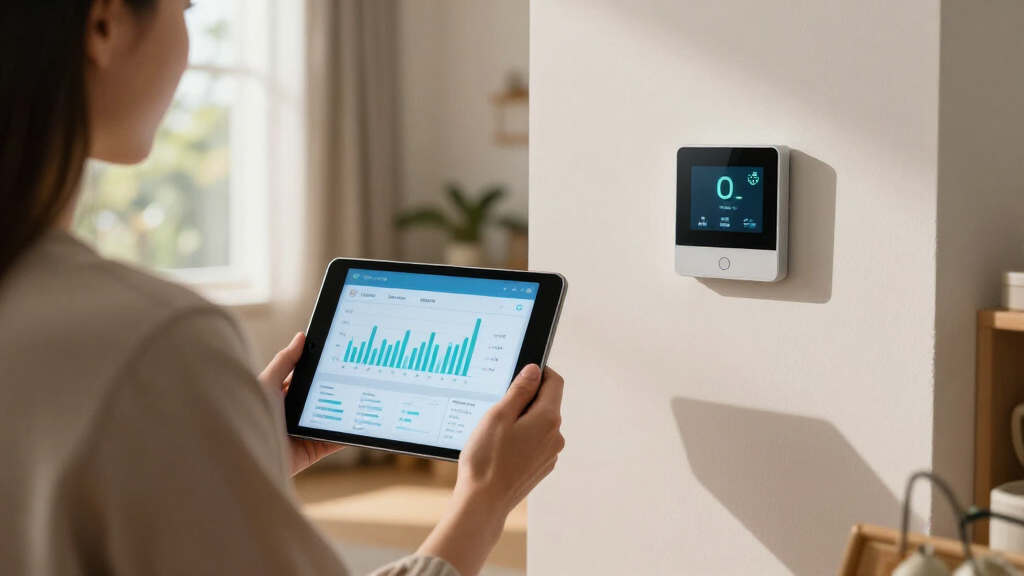

Smart home energy monitors clamp onto your electrical panel and show exactly where every kilowatt-hour goes, and the right one depends mostly on how many circuits you want to track and whether you need cloud connectivity or fully local control. The Emporia Vue 3 with solar monitoring earns my best overall pick for its polished app, reliable real-time data, and built-in solar surplus tracking at a mid-range price. The Refoss 16-circuit monitor with open API stands out for Home Assistant users who refuse to depend on a manufacturer’s cloud, while the Meross 18-circuit model covers more circuits per dollar than almost anything else here. The main tradeoffs you’ll face are sensor count versus price, subscription-free local access versus easier setup, and single-channel simplicity versus whole-home circuit-level detail. Keep reading for the full breakdown of all 15 monitors.

Get home appliances delivered free — and shop member deals
- Fast, free delivery on millions of items
- Access to Prime Big Deal Days deals on October 6–7
- Prime Video, Amazon Music and more included
Complete the kit


Key Takeaways
- Circuit capacity is the single biggest price driver in this lineup: monitors jump from 2-3 channels to 16-18 circuits roughly doubling the price, and under-buying sensors is the most common mistake.
- Local control and no-cloud operation separated the top picks for smart home enthusiasts — the Refoss open API model and Home Assistant-compatible monitors rank above equally capable cloud-dependent rivals.
- Solar monitoring is not universal: only the Emporia Vue 3 solar variant and the Meross 18-circuit model detect solar surplus, so solar owners should not buy a standard monitor expecting to add it later.
- Emporia‘s Vue 3 appears three times in this comparison with different configurations, and its app quality and data retention consistently outperform the budget WiFi clamp-on monitors.
- Every monitor here is install-in-panel hardware: none of them are plug-in outlet meters, so buyers unwilling to open their electrical panel should hire an electrician or reconsider the category.
| Smart Home Energy Monitor with 8 50A Circuit Sensors – Compatible with Home Assistant |  | Best for Small Panels | Number of Sensors: 8 | Sensor Current Rating: 50A | Voltage Support: 120/240VAC single-phase, 415Y/240VAC three-phase | VIEW LATEST PRICE | See Our Full Breakdown |
| Refoss Smart Home Energy Monitor with 16 60A Circuit Sensors |  | Best Overall | Number of sensors: 16 | Sensor capacity: 60A per sensor | Supported systems: Single-phase, Split-phase, 3-phase 4-wire Wye | VIEW LATEST PRICE | See Our Full Breakdown |
| Refoss Smart Home Energy Monitor with Open API, Home Assistant, No Cloud |  | Best for Home Assistant Power Users | Model: EM16P | Current Sensors: 2 main (200A each), 16 branch (1–60A each) | Accuracy: ±1% (200A), ±2% (low current) | VIEW LATEST PRICE | See Our Full Breakdown |
| Smart Home Energy Monitor with 16 50A Circuit Sensors, Real-Time Power & Cost Tracking, Compatible with Home Assistant |  | Best for Rentals and Shared Homes | Sensors: 16 x 50A | Voltage Support: Single-phase up to 240VAC, split-phase 120/240VAC, three-phase up to 415Y/240VAC | Connectivity: WiFi 2.4GHz, MQTT, LAN | VIEW LATEST PRICE | See Our Full Breakdown |
| WiFi Home Energy Monitor with 3 80A CT Clamps |  | Best Budget Spot-Checker | Supported Circuits: Up to 3 circuits with 3 CT clamps (80A) | Input Voltage: AC 100–240V | Connectivity: WiFi 2.4GHz | VIEW LATEST PRICE | See Our Full Breakdown |
| Meross Smart Home Energy Monitor, Real-Time Power & Cost Tracking |  | Best for Home Assistant Tinkerers | Certification: ETL, UL 61010 | Supported Systems: Single-phase 2-wire, single-split phase 3-wire, 3-phase 4-wire Wye | Maximum Current: 200A main circuits, 60A branch circuits | VIEW LATEST PRICE | See Our Full Breakdown |
| Square D WISEREMPV Energy Monitor System |  | Best Smart Home Ecosystem Integration | Color: White | Compatibility: Amazon Alexa, Google Home, Philips Hue, TP-Link, WeMo | Features: Real-time energy tracking, customizable alerts, mobile app control | VIEW LATEST PRICE | See Our Full Breakdown |
| Emporia Vue 3 Home Energy Monitor – Real-Time Electricity Usage and Power Consumption Meter |  | Best for Solar Homes | Certification: UL Listed | System Support: Single phase, single-split phase, 2-wire, 3-wire, 3-phase, 4-wire Wye | Sensor Support: Up to 16 branch sensors (sold separately) | VIEW LATEST PRICE | See Our Full Breakdown |
| WiFi Home Energy Monitor with 2 x 120A CTs and Power Tracking |  | Best Budget Whole-Home Starter | Current Transformers: 2 x 120A split-core CTs | Phase Support: Single-phase 3-wire | WiFi Frequency: 2.4 GHz | VIEW LATEST PRICE | See Our Full Breakdown |
| Eyedro Smart Home Energy Monitor 200A WiFi/Ethernet |  | Best for Unreliable WiFi Environments | Current Sensors: 2 x 200A | Connectivity: WiFi 2.4 GHz, Ethernet | Power Source: AC adapter (included) | VIEW LATEST PRICE | See Our Full Breakdown |
| Meross Smart Home Energy Monitor with 18 Circuit Monitoring | | Best for Whole-Home Circuit Tracking | Circuit Monitoring: 18 circuits | Max Current: 200A main, 60A branch circuits | Accuracy: Within ±2% | VIEW LATEST PRICE | See Our Full Breakdown |
| Emporia Vue 3 Home Energy Monitor – Real-Time Electricity Usage and Power Consumption Meter |  | Best Value for Branch-Level Detail | Certification: UL Listed | Sensors: Sixteen 50A branch sensors | Connectivity: 2.4 GHz Wi-Fi | VIEW LATEST PRICE | See Our Full Breakdown |
| Emporia Vue 3 Home Energy Monitor – Real-Time Electricity Usage and Solar Monitoring |  | Best for Solar Monitoring on a Budget | Certification: UL Listed | Sensor Type: Clamp-on sensors | Connectivity: 2.4 GHz Wi-Fi | VIEW LATEST PRICE | See Our Full Breakdown |
| SIEMENS Inhab Smart Home Energy Monitor with Circuit Level Sensors |  | Best Premium Pick | Model Number: INHEM1216 | Circuit Sensors: 16-50A circuit level, 2 x 200A main sensors | Product Dimensions: 1.1 x 5.71 x 2.76 inches | VIEW LATEST PRICE | See Our Full Breakdown |
| Smart Home Energy Monitor 2×80A, Dual-Channel WiFi Electricity Usage Tracker with App Control |  | Best Compact Option for Targeted Monitoring | Channels: 2 x 80A sensing channels | Power Source: Corded electric | Minimum Operating Voltage: 110 volts | VIEW LATEST PRICE | See Our Full Breakdown |
| smart home energy monitor | Connectivity |
|---|---|
| Smart Home Energy Monitor with | WiFi 2.4GHz |
| Refoss Smart Home Energy Monit | Wi-Fi, Open API, MQTT, WebSocket |
| Refoss Smart Home Energy Monit | WiFi, Open API, MQTT |
| Smart Home Energy Monitor with | WiFi 2.4GHz, MQTT, LAN |
| WiFi Home Energy Monitor with | WiFi 2.4GHz |
| Meross Smart Home Energy Monit | WiFi, Open API, Web Control |
| Square D WISEREMPV Energy Moni | — |
| Emporia Vue 3 Home Energy Moni | 2.4 GHz WiFi |
| WiFi Home Energy Monitor with | — |
| Eyedro Smart Home Energy Monit | WiFi 2.4 GHz, Ethernet |
| Meross Smart Home Energy Monit | — |
| Emporia Vue 3 Home Energy Moni | 2.4 GHz Wi-Fi |
| Emporia Vue 3 Home Energy Moni | 2.4 GHz Wi-Fi |
| SIEMENS Inhab Smart Home Energ | — |
| Smart Home Energy Monitor 2×80 | — |
More Details on Our Top Picks
Smart Home Energy Monitor with 8 50A Circuit Sensors – Compatible with Home Assistant
Most energy monitors in this roundup push you toward 16-circuit coverage, but not every panel needs that. This option stands out for being a right-sized choice for compact electrical panels, where eight 50A sensors cover the essentials — HVAC, water heater, dryer, and a handful of others — without paying for channels you’ll never clip onto. Compared with the 16-sensor Refoss monitor (B0FQ9ZNKBL), the tradeoff is straightforward: half the circuit coverage, but a simpler install with fewer CT clamps to route through a crowded panel. The local MQTT server with LAN-only privacy mode means your usage data never touches a cloud, a genuine advantage over cloud-tethered options like the Tuya-based PW03 (B0GV3TS3CY). Where it falls short is documentation — app and interface details are thin, so expect to lean on Home Assistant community resources rather than polished vendor support.
Pros:- Local-only operation via MQTT and LAN keeps energy data private
- Supports single-phase, split-phase, and three-phase panels for install flexibility
- Right-sized sensor count simplifies installation in tight panels
- Home Assistant compatibility for automation and dashboards
Cons:- Capped at 8 sensors unless you buy expansion hardware
- Sparse documentation on the app experience and interface
- Requires opening the circuit panel and comfort with electrical wiring
Best for: Owners of small or older homes with 8 or fewer priority circuits who want local, privacy-first monitoring without overbuying sensor channels
Not ideal for: Households with large panels or whole-home ambitions — 8 sensors won’t cover every branch circuit, unlike the 16-channel Refoss alternatives
- Number of Sensors:8
- Sensor Current Rating:50A
- Voltage Support:120/240VAC single-phase, 415Y/240VAC three-phase
- Connectivity:WiFi 2.4GHz
- Privacy Mode:Local MQTT server, LAN only
- Compatibility:Home Assistant
Our verdict“This is the pick for smaller panels where eight circuits are plenty and privacy matters more than channel count.”
Refoss Smart Home Energy Monitor with 16 60A Circuit Sensors
This model earns the top spot because it balances coverage, precision, and data ownership better than anything else in the lineup. Sixteen 60A sensors are enough for true whole-home circuit-level monitoring, and the five years of onboard data storage means you can actually analyze seasonal trends rather than watching a live number tick by. Compared with the EM16P (B0DJNV3GPR), a sibling Refoss unit, this version leans harder into solar households, with surplus optimization and long-term analysis as first-class features rather than afterthoughts. Against the 8-sensor monitor (B0H6L541FW), the doubling of channels is the difference between sampling your biggest loads and genuinely understanding your whole house. The tradeoffs are real: setup complexity shows up repeatedly in buyer feedback, and getting the most out of the open API, MQTT, and WebSocket integrations assumes you’re comfortable with home automation. Buyers wanting a plug-and-play app experience should look at cloud-based rivals instead.
Pros:- 16 high-precision sensors enable genuine whole-home monitoring
- 5 years of local data storage supports real trend analysis
- Solar optimization helps surplus-heavy households cut bills further
- Open API, MQTT, and WebSocket give deep integration options
Cons:- Setup complexity is a recurring complaint among buyers
- Technical knowledge needed to exploit the API and automation features
- Only supports specific electrical system configurations
Best for: Solar homeowners and automation enthusiasts who want full 16-circuit coverage, long-term data history, and no cloud dependency
Not ideal for: Non-technical buyers who expect a polished app-and-go experience — integration here rewards tinkering and punishes impatience
- Number of sensors:16
- Sensor capacity:60A per sensor
- Supported systems:Single-phase, Split-phase, 3-phase 4-wire Wye
- Data storage:5 years
- Connectivity:Wi-Fi, Open API, MQTT, WebSocket
- Warranty:2 years
- Dimensions:4.5 x 3.5 x 1.1 inches
Our verdict“The most complete package here — 16 circuits, local data, and solar smarts — provided you’re willing to invest setup effort.”
Refoss Smart Home Energy Monitor with Open API, Home Assistant, No Cloud
Where the 16-sensor Refoss (B0FQ9ZNKBL) is the all-rounder, the EM16P is the specialist — built explicitly around local control, Home Assistant, and open protocols. What sets it apart is the inclusion of two 200A main sensors alongside 16 branch sensors, so you get whole-home totals and per-circuit detail from one device, something the 8-sensor monitor (B0H6L541FW) simply can’t match. Accuracy is another differentiator: ±1% at 200A is better than most budget monitors in this space, which matters if you’re using the data for peak-load automation rather than idle curiosity. The built-in Web UI and OpenClaw AI integration mean your dashboards live entirely on your network. The honest drawback is that this is a tinkerer’s tool — if you don’t already run Home Assistant, you’re buying capabilities you’ll never touch, and ETL certification doesn’t change the fact that panel installation still demands electrical competence.
Pros:- Dual 200A main sensors plus 16 branch sensors for total-plus-detail monitoring
- High accuracy of ±1% at 200A supports reliable automation
- Built-in Web UI, Open API, and MQTT for fully local operation
- ETL certified with 2-year warranty
Cons:- Realizing its potential requires a Home Assistant or similar setup
- Sensor capacity ceilings (200A main, 60A branch) limit unusual installations
- Installation still demands electrical panel knowledge
Best for: Home Assistant users and smart-home builders who want 200A whole-home totals plus branch-level data with zero cloud involvement
Not ideal for: Casual users without an existing automation setup — most of this monitor’s value is locked behind integrations they won’t use
- Model:EM16P
- Current Sensors:2 main (200A each), 16 branch (1–60A each)
- Accuracy:±1% (200A), ±2% (low current)
- Connectivity:WiFi, Open API, MQTT
- Certification:ETL certified
- Warranty:2 years
- Dimensions:4.5 x 3.5 x 1.1 inches
Our verdict“If Home Assistant is already the brain of your home, the EM16P is the energy monitor that speaks its language natively.”
Smart Home Energy Monitor with 16 50A Circuit Sensors, Real-Time Power & Cost Tracking, Compatible with Home Assistant
Plenty of monitors tell you how many kilowatts you’re burning; very few help you split the bill. This model’s standout feature is customizable billing for rental properties and shared homes, translating raw consumption into per-tenant cost figures — a niche no other product in this batch fills. Like the EM16P (B0DJNV3GPR) it offers 16 channels and Home Assistant compatibility, but its sensors cap at 50A rather than 60A, which matters if you have heavy-draw branch circuits near that limit. It also includes real-time cost tracking in the app, so landlords and roommates see dollar figures, not just watts. The offline-by-design approach — no cloud required — trades away remote access conveniences that cloud monitors offer in exchange for privacy. Warranty coverage is only one year, half of what Refoss provides, and complex three-phase panels can make installation genuinely frustrating.
Pros:- Customizable billing features for rental and shared-home cost splitting
- 16 circuits of monitoring with real-time power and cost analysis
- Works with Home Assistant, MQTT, and LAN for local integration
- Supports single-phase, split-phase, and three-phase configurations
Cons:- No cloud connectivity limits remote monitoring features
- 1-year warranty is shorter than the 2-year Refoss coverage
- Installation in complex panels can be difficult
Best for: Landlords and roommates in shared households who need per-circuit cost tracking and fair bill splitting
Not ideal for: Owners of high-amperage branch circuits — the 50A sensor ceiling is lower than the Refoss alternatives’ 60A rating
- Sensors:16 x 50A
- Voltage Support:Single-phase up to 240VAC, split-phase 120/240VAC, three-phase up to 415Y/240VAC
- Connectivity:WiFi 2.4GHz, MQTT, LAN
- Compatibility:Home Assistant
- Warranty:1 year
- Dimensions:3.1 x 1.2 x 4.18 inches
- Weight:4.05 pounds
Our verdict“The only monitor here built with bill-splitting in mind — ideal for landlords, overkill for solo homeowners focused on pure accuracy.”
WiFi Home Energy Monitor with 3 80A CT Clamps
Not everyone needs 16 circuits of data — sometimes you just want to know what the well pump, the workshop, and the AC are costing you. This three-channel monitor is the cheapest way to answer that narrow question, and its 80A clamps actually exceed the per-circuit rating of pricier options like the 16-sensor tracker (B0D6VZQBPF), so heavy single circuits are fair game. Unlike the local-only Refoss units, this one lives in the Smart Life/Tuya app ecosystem, meaning real remote access, historical charts, and alerts from anywhere — but also cloud dependency that privacy-focused buyers will reject. Two features punch above its price: high-temperature alerts above 50°C and remote relay control up to 15A, letting you cut a circuit from your phone. Be clear-eyed about the ceiling, though: a 3.9-star rating signals inconsistent experiences, and with only three clamps this is spot-checking, not whole-home monitoring.
Pros:- 80A clamps handle heavy individual circuits beyond many rivals’ capacity
- Remote relay control up to 15A lets you cut circuits from the app
- Temperature alerts above 50°C add a safety layer
- Familiar Tuya/Smart Life app with remote access and history
Cons:- Only 3 circuits — partial monitoring rather than whole-home coverage
- 3.9/5 customer rating suggests mixed reliability
- Cloud-dependent design contrasts with local-first alternatives
Best for: Budget-conscious owners, workshop users, and small-business operators who want to monitor two or three specific high-draw circuits
Not ideal for: Whole-home analysts — three circuits can’t compete with the 16-channel coverage of Refoss or comparable monitors
- Supported Circuits:Up to 3 circuits with 3 CT clamps (80A)
- Input Voltage:AC 100–240V
- Connectivity:WiFi 2.4GHz
- App Compatibility:Smart Life, Tuya
- Temperature Alert:Yes, exceeds 50°C
- Relay Control:Up to 15A
- Dimensions:4.2 x 2.5 x 1.2 inches
- Weight:13.4 ounces
Our verdict“A low-cost way to watch a few problem circuits from your phone, as long as you accept cloud reliance and limited scope.”
Meross Smart Home Energy Monitor, Real-Time Power & Cost Tracking
Among the privacy-focused monitors in this roundup, the Meross Energy Monitor stands out for its local data storage with up to 5 years of history — no cloud dependency, no subscription, and no risk of your energy data disappearing if a server shuts down. Compared with the Emporia Vue 3, which leans on a cloud app and sells branch sensors separately, this Meross includes circuit-level monitoring hardware in the box and keeps an Open API and web control available for advanced users. The tradeoff is that the polished experience ends at the panel door: getting it wired into automations and solar surplus logic takes real technical effort, and it is limited to US electrical systems. This pick makes the most sense for buyers already running Home Assistant who want data they fully own.
Pros:- Local data storage for up to 5 years with no cloud dependency or subscription fees
- Circuit-level monitoring hardware included, unlike sensor-separate competitors like the Emporia Vue 3
- Open API and web control for Home Assistant automation and solar management
- Supports single-phase, split-phase, and 3-phase Wye systems up to 200A mains
Cons:- Technical setup required for smart home integration — not plug-and-play
- Limited to US electrical systems, ruling out international buyers
Best for: Home Assistant users and privacy-conscious homeowners who want years of locally stored, circuit-level energy data without subscriptions
Not ideal for: Non-technical buyers who want a polished app experience out of the box — the smart home integration requires manual setup
- Certification:ETL, UL 61010
- Supported Systems:Single-phase 2-wire, single-split phase 3-wire, 3-phase 4-wire Wye
- Maximum Current:200A main circuits, 60A branch circuits
- Data Storage:Up to 5 years, local
- Connectivity:WiFi, Open API, Web Control
- Warranty:2 years
- Dimensions:4.5 x 3.48 x 1.1 inches
Our verdict“A strong choice for Home Assistant enthusiasts who prioritize data ownership, but casual users will find the setup burden outweighs the privacy benefits.”
Square D WISEREMPV Energy Monitor System
If your home already runs on Alexa, Google Home, Hue, or WeMo, the Square D WISEREMPV earns its spot by plugging into that ecosystem more naturally than any other pick here. Where the Meross monitor demands DIY integration work and the Eyedro keeps to its own platform, Wiser ties energy data directly into the devices you already control, and its customizable alerts solve a genuinely common problem — the appliance left running all day. Coming from Square D, one of the most established names in electrical panels, it also fits cleanly into homes already using their hardware. The compromise is breadth: it does not offer the circuit-level granularity or the multi-system electrical support that monitors like the Meross provide, so deep-dive diagnostics are not its strength.
Pros:- Native integration with Alexa, Google Home, Philips Hue, TP-Link, and WeMo
- Real-time energy tracking with remote appliance monitoring
- Customizable alerts that catch appliances left running
- Backed by Square D, a major established electrical brand
Cons:- Full functionality depends on owning compatible smart devices
- Setup can be complex for users without electrical experience
Best for: Smart home enthusiasts with Alexa or Google ecosystems who want energy alerts woven into devices they already use daily
Not ideal for: Data-hungry users wanting circuit-level breakdowns or support for 3-phase systems — this system is built around ecosystem convenience, not analytics depth
- Color:White
- Compatibility:Amazon Alexa, Google Home, Philips Hue, TP-Link, WeMo
- Features:Real-time energy tracking, customizable alerts, mobile app control
- Brand:Square D (Schneider Electric)
Our verdict“The right pick when ecosystem convenience matters more than raw monitoring depth, provided your smart home speaks its language.”
Emporia Vue 3 Home Energy Monitor – Real-Time Electricity Usage and Power Consumption Meter
The Emporia Vue 3 is the most flexible option here for homeowners with panels that do not fit the standard American mold — it handles single-phase, split-phase, and 3-phase Wye systems, with dedicated solar and net metering support that the budget WiFi monitor with 2x120A CTs cannot match on its single-phase-only design. Its UL listing also matters more than it might seem: this device lives inside your circuit panel, and third-party certification is what many insurers and electricians want to see. The catch is the à la carte model — appliance-level insight requires up to 16 branch sensors sold separately, so the true cost climbs past the sticker price. Data retention also varies, with second-level resolution only while the app is actively open.
Pros:- UL-listed for safety — a meaningful advantage for in-panel installation
- Full solar and net metering support with flexible system compatibility
- Expandable to 16 branch sensors for appliance-level detail
- Detailed tiered data retention, from 1-second to indefinite hourly history
Cons:- Branch sensors sold separately, adding hidden cost
- 1-second data only available while actively using the app
- Requires 2.4 GHz WiFi with no Ethernet fallback unlike the Eyedro
Best for: Solar owners and bill-focused households who want reliable whole-home data and can expand with branch sensors over time
Not ideal for: Buyers on a strict budget — appliance-level monitoring requires separately purchased sensors, inflating total cost
- Certification:UL Listed
- System Support:Single phase, single-split phase, 2-wire, 3-wire, 3-phase, 4-wire Wye
- Sensor Support:Up to 16 branch sensors (sold separately)
- Connectivity:2.4 GHz WiFi
- Data Retention:1s active, 3 hours retained, 1 min for 7 days, 1 hour indefinitely
- Solar Support:Yes, with net metering
Our verdict“A dependable, safety-certified foundation for solar homes that rewards buyers willing to invest in sensors over time.”
WiFi Home Energy Monitor with 2 x 120A CTs and Power Tracking
For buyers who simply want to know what the whole house is drawing without paying for circuit-level infrastructure, this monitor keeps things lean: two split-core 120A CTs, pluggable terminals, and an app for live voltage, current, and power figures. The standout capability is bi-directional measurement, which lets it track energy flowing back to the grid — something you would otherwise need the Emporia Vue 3 or Eyedro for, both of which cost meaningfully more. Installation is genuinely approachable thanks to the clamp-on split-core design. But the limits are real: it covers single-phase 3-wire systems only, so three-phase households are out of luck, and there is no branch circuit detail, no Ethernet option, and no local storage — it depends entirely on a 2.4 GHz WiFi link and the cloud app behind it.
Pros:- Bi-directional power tracking for solar export monitoring at a low price point
- Easy installation with pluggable terminals and split-core CTs
- Live app-based tracking of voltage, current, power, and total energy
- Highly accurate measurement for a budget-class device
Cons:- Single-phase 3-wire only — no three-phase support
- Fully dependent on WiFi and app connectivity with no local storage
Best for: First-time monitor buyers on standard single-phase service who want whole-home and solar export tracking at minimal cost
Not ideal for: Three-phase homes or anyone wanting appliance-level breakdowns — this is whole-home data only, with no expansion path
- Current Transformers:2 x 120A split-core CTs
- Phase Support:Single-phase 3-wire
- WiFi Frequency:2.4 GHz
- Energy Monitoring:Live energy use, bi-directional tracking
- Installation:Pluggable terminals, split-core clamp-on CTs
- Control:Smartphone app
Our verdict“A sensible low-cost entry point for basic whole-home insight, as long as your electrical system and expectations stay simple.”
Eyedro Smart Home Energy Monitor 200A WiFi/Ethernet
The Eyedro carves out a niche no other pick in this roundup occupies: a wired Ethernet option alongside 2.4 GHz WiFi. For garages, outbuildings, or homes where WiFi drops at the panel, that cable connection means data you can actually trust, and the package arrives complete — power adapter, Ethernet cable, and two 200A sensors rated for whole-home and solar service. It handles grid, solar, and net metering, putting it in the same capability class as the Emporia Vue 3, though without Emporia’s branch sensor expansion. Two caveats temper the recommendation: the 3.6/5 customer rating is the weakest here, suggesting inconsistent app or reliability experiences, and a full net metering setup reportedly needs a second unit — a cost that erodes its value against the Vue 3.
Pros:- Dual WiFi and Ethernet connectivity for network-challenging installations
- Two included 200A sensors handle whole-home and solar monitoring
- Complete out-of-box kit with power adapter and Ethernet cable
- Supports solar, grid, and net metering applications
Cons:- Moderate 3.6/5 customer rating suggests reliability or app concerns
- Net metering setup requires purchasing a second device
- Limited to North American safety standards
Best for: Homeowners with weak WiFi near the electrical panel, or off-grid setups, who need a wired connection and heavy-duty 200A sensors
Not ideal for: Net metering customers — the required second device pushes total cost past better-rated alternatives like the Emporia Vue 3
- Current Sensors:2 x 200A
- Connectivity:WiFi 2.4 GHz, Ethernet
- Power Source:AC adapter (included)
- Compatibility:Solar, grid, net metering; North American standards
- Item Weight:1.54 pounds
- Dimensions:8 x 8 x 3 inches
- Included Components:Sensor module, two 200A sensors, power adapter, Ethernet cable, Quick Start Guide
Our verdict“Worth it mainly if Ethernet connectivity is a genuine requirement; otherwise the better-rated Emporia Vue 3 covers similar ground more confidently.”
Meross Smart Home Energy Monitor with 18 Circuit Monitoring
Among all the circuit-level monitors in this roundup, this Meross unit covers the most ground with 18 monitored circuits, edging out the Refoss 16-sensor model and the Siemens Inhab, which both top out at 16. That extra coverage matters if you want to see individual appliance loads across a larger home rather than guessing which circuit is driving your bill. The solar surplus detection is a genuine differentiator here — it tells you when excess solar production is available so you can time EV charging or water heating instead of exporting cheaply to the grid. Data is stored locally for up to five years with no subscription, a sharp contrast to platforms that meter out history behind paid tiers. Compared with the Emporia Vue 3, the Meross offers longer data retention but a shorter one-year-competitive warranty of two years and less granular app polish. The catch: no cloud backup at all, and installation demands comfort inside a live electrical panel.
Pros:- Monitors 18 circuits — the deepest circuit coverage in this lineup
- Solar surplus detection helps time high-load appliances to free excess generation
- Five years of local data storage with no subscription fees
- Works with Home Assistant for automation and keeps data private
- ETL and UL 61010 certified for safe panel installation
Cons:- No cloud storage or remote access outside your local setup
- Installation requires real comfort with electrical panel work
- Limited to US home electrical systems
Best for: Homeowners with many circuits to track and solar panels who want long-term, subscription-free data storage and Home Assistant automation
Not ideal for: Renters or anyone wanting cloud-based access to their data from anywhere — this is a local-storage, panel-installed system
- Circuit Monitoring:18 circuits
- Max Current:200A main, 60A branch circuits
- Accuracy:Within ±2%
- Compatibility:Home Assistant
- Supported Systems:Single-phase 2-wire, split phase 3-wire, 3-phase 4-wire with earthed neutral
- Data Storage:Up to 5 years local
- Certifications:ETL, UL 61010
- Warranty:2 years
Our verdict“If you want the most circuits monitored with solar awareness and zero subscriptions, this is the deepest whole-home option here.”
Emporia Vue 3 Home Energy Monitor – Real-Time Electricity Usage and Power Consumption Meter
The Vue 3 earns its value pick status by pairing sixteen 50A branch sensors with one of the most refined apps in the category, at a price that undercuts the Siemens Inhab while matching its sensor count. Where the Meross 18-circuit monitor stores everything locally, the Vue 3 leans on Emporia’s cloud, which means better charts and remote access but also dependence on their servers. Its UL listing and wide electrical system support — including 3-phase 4-wire Wye with an added sensor — make it adaptable to homes the Meross can’t cover. The tradeoff shows up in data retention: 1-second resolution only lasts 3 hours, minute-level data disappears after a week, and you need a live 2.4 GHz Wi-Fi connection for anything real-time. Still, for most households, hourly data kept indefinitely is plenty for spotting waste and trimming bills.
Pros:- Sixteen 50A branch sensors deliver per-circuit granularity at an accessible price
- UL Listed and supports nearly every residential electrical configuration
- Solar and net metering support built in
- Mature app with clear cost-tracking and usage insights
Cons:- 1-second data vanishes after 3 hours and minute data after just 7 days
- Requires a persistent 2.4 GHz Wi-Fi connection for real-time readings
- 3-phase systems need a separately sold sensor
Best for: Budget-conscious homeowners who want per-circuit breakdowns and an excellent app without paying Siemens-level prices
Not ideal for: Data hoarders and smart home tinkerers who want long-term high-resolution history stored locally — retention here is short and cloud-dependent
- Certification:UL Listed
- Sensors:Sixteen 50A branch sensors
- Connectivity:2.4 GHz Wi-Fi
- Supported Systems:Single phase, single-split phase, 2-wire, 3-wire, 3-phase, 4-wire Wye
- Data Retention:7 days (1-minute), 3 hours (1-second), indefinite (1-hour)
- Solar Support:Net metering compatible
- Warranty:1 year
Our verdict“The most sensor-per-dollar pick for homeowners who want circuit-level insight through a polished app, provided short data retention doesn’t bother you.”
Emporia Vue 3 Home Energy Monitor – Real-Time Electricity Usage and Solar Monitoring
This variant of the Vue 3 is the same UL-listed hardware platform tuned for households whose priority is solar production tracking rather than exhaustive branch-circuit detail. With clamp-on sensors and bidirectional net metering, it shows generation versus consumption side by side, which the Tuya dual-channel tracker also attempts but with far less app sophistication and no certification backing. Compared with its sibling, the Emporia Vue 3 consumption meter, the emphasis here is on the solar workflow — automation hooks and reporting that help you shift loads into your own generation window. The Meross 18-circuit model offers solar surplus detection with far deeper circuit coverage, but at higher complexity and cost; this Vue 3 keeps things approachable. The same limitations apply: 2.4 GHz Wi-Fi is mandatory, 3-phase homes with earthed neutral need an extra sensor, and 1-second data only streams live in the app.
Pros:- Bidirectional solar and net metering monitoring out of the box
- UL Listed safety certification with highly accurate readings
- Clamp-on sensors make installation simpler than hardwired alternatives
- Remote management and automation through a well-designed app
Cons:- Requires 2.4 GHz Wi-Fi with no offline mode for real-time data
- Extra sensor purchase needed for 3-phase systems with earthed neutral
- 1-second data only available while the app is actively open
Best for: Solar homeowners who mainly want to track generation versus consumption and automate load-shifting without a steep learning curve
Not ideal for: Users who want every circuit instrumented — this is focused on whole-home and solar flows, not 16-way branch breakdowns
- Certification:UL Listed
- Sensor Type:Clamp-on sensors
- Connectivity:2.4 GHz Wi-Fi
- Supported Systems:Single phase, single-split phase, 2-wire, 3-wire, 3-phase, 4-wire Wye
- Solar Support:Solar and net metering integration
- Data Retention:Minute data 7 days, hourly data indefinite, 1-second in app
- Warranty:1 year
Our verdict“The easiest path to clear solar-versus-consumption visibility if you don’t need exhaustive per-circuit instrumentation.”
SIEMENS Inhab Smart Home Energy Monitor with Circuit Level Sensors
The Siemens Inhab is the most professionally oriented option in this batch, built as an electrical-panel-native device from one of the world’s largest electrical equipment makers rather than a consumer gadget adapted to the panel. Its 16 circuit-level sensors (50A each) plus two 200A main sensors give simultaneous whole-home and per-circuit views, and its peak-demand and net metering analytics go beyond what the Emporia Vue 3 app offers for households managing time-of-use rates or whole-home batteries. The slim 1.1-inch profile fits cleanly into new or existing panels, which electricians appreciate compared with bulkier aftermarket boxes. The premium positioning comes with real friction: pricing is opaque and typically higher than Emporia or Refoss alternatives, the ecosystem is US/Canada only, and there’s no Home Assistant path like the Meross offers. You’re paying for industrial-grade build and Siemens support, not open flexibility.
Pros:- Engineered by Siemens for direct panel integration with a slim 1.1-inch profile
- 16 circuit sensors plus dual 200A main sensors for simultaneous whole-home and per-circuit views
- Advanced analytics including peak demand and net metering management
- Installs cleanly into both new and existing electrical panels
Cons:- Opaque pricing that generally sits above Emporia and Refoss options
- Closed ecosystem limited to US/Canada with required mobile app
- Requires electrical knowledge or an electrician for installation
Best for: Owners upgrading or building an electrical panel who want an industrial-grade, electrician-friendly monitor with peak demand and net metering analytics
Not ideal for: DIY smart home enthusiasts — no Home Assistant support, a closed app ecosystem, and pricing that runs well above consumer alternatives
- Model Number:INHEM1216
- Circuit Sensors:16-50A circuit level, 2 x 200A main sensors
- Product Dimensions:1.1 x 5.71 x 2.76 inches
- Item Weight:4.8 pounds
- Installation:Existing or new electrical panels
- Advanced Features:Peak demand tracking, net metering
- Region:US and Canada only
Our verdict“The pick for buyers who want name-brand, panel-integrated hardware and advanced energy analytics over open-platform flexibility.”
Smart Home Energy Monitor 2×80A, Dual-Channel WiFi Electricity Usage Tracker with App Control
Not everyone needs 16 circuits instrumented — sometimes you just want to know what the EV charger, heat pump, or dryer is costing you. This dual-channel tracker takes the opposite approach from the Meross 18-circuit monitor: instead of a full panel takeover, its two 80A channels clamp onto whatever matters most, with no wiring modifications. That makes it the most accessible entry point in the roundup — closer to the 3-clamp WiFi monitor in spirit but with higher per-channel amperage for heavy appliances. The bi-directional sensing handles solar or battery backup flows reasonably well, though the Tuya/Smart Life app lacks the polish of Emporia’s, and Alexa and Google Home support is a plus the panel-native Siemens doesn’t offer as openly. The compromises are real: no UL certification is listed, long-term durability is unproven, and full functionality depends entirely on Wi-Fi. For targeted questions, though, it’s the least invasive tool here.
Pros:- Clamp-style sensors install without any wiring modifications
- Dual 80A channels handle high-power appliances most small monitors can’t
- Bi-directional monitoring works with solar and backup power systems
- Works with Tuya, Smart Life, Amazon Alexa, and Google Home
Cons:- Only two channels — no whole-home or circuit-level overview
- No listed safety certification and unclear long-term durability record
- Wi-Fi dependency means no monitoring during outages or network drops
Best for: Homeowners or renters who want to track two specific high-draw loads — like an EV charger and a well pump — without a full panel installation
Not ideal for: Whole-home analyzers and safety-first buyers — two channels can’t cover a panel, and no certification is listed
- Channels:2 x 80A sensing channels
- Power Source:Corded electric
- Minimum Operating Voltage:110 volts
- Measurement Type:Ammeter with bi-directional power monitoring
- Compatible Devices:Tuya, Smart Life, Amazon Alexa, Google Home
- Installation:Clamp-on sensors, no wiring modifications
Our verdict“The right low-commitment tool for answering two specific energy questions, not for understanding your whole home.”

How We Picked
My ranking starts with measurement capability: how many circuits a monitor can track, the amp rating of its sensors, and whether data updates in real time or on a lag. A monitor that only reads your main service feed tells you how much you’re spending; one with 16 circuit-level sensors tells you why, and that difference justifies most of the price spread in this category. I gave clear weight to connectivity philosophy as well — products with open APIs, Home Assistant support, and no-cloud operation rank higher for buyers building serious smart homes, because a cloud shutdown can brick a lesser monitor’s usefulness overnight.
From there I judged app quality and data access, since a monitor is only as useful as the interface showing its numbers; history retention, cost tracking, alerts, and export options all mattered. I also weighed installation complexity, warranty length, and total cost of ownership — including whether any features hide behind subscriptions. Products were ranked against their peers at similar prices, not against the whole market, which is why a basic dual-channel monitor can outrank a premium one within its own lane.
Factors to Consider When Choosing Smart Home Energy Monitors
Before picking a monitor, it helps to understand what actually separates a useful long-term investment from a gadget that ends up ignored. These are the factors that shaped my rankings and the ones buyers most often get wrong.Circuit Count: Buy for the Panel You’ll Have, Not the Panel You Have
The most common and most expensive mistake in this category is under-buying sensor capacity. A three-channel monitor tells you total consumption and maybe your HVAC, but the real savings come from identifying the surprise offenders — an old freezer, a heat pump backup strip, a well pump — and those are circuits you didn’t think to prioritize. Expansion is rarely practical later: adding sensors usually means buying a whole second unit or re-pulling the panel. My advice is to count the circuits you’d genuinely want visibility into, add two or three for future loads like an EV charger or heat pump water heater, and buy that capacity up front. The price difference between an 8-channel and 16-channel unit is usually smaller than the cost of replacing an inadequate monitor twelve months in.
Cloud vs. Local Control
Every monitor here streams data somewhere; the question is whether that somewhere is a manufacturer’s server or your own network. Cloud-dependent monitors are easier to set up and work from anywhere out of the box, but they die the day the company ends support, changes its pricing, or suffers an outage — a pattern that has killed several popular energy monitors in recent years. Local-first options with open APIs and Home Assistant compatibility keep your data flowing regardless of the vendor’s fortunes, at the cost of a more technical setup. If you already run Home Assistant or a home server, local control should be non-negotiable. If you just want a phone app with charts, a cloud model is a reasonable choice — just prefer brands with a track record and no subscription tiers.
Sensor Amp Rating and Panel Compatibility
CT clamp ratings matter more than buyers expect. A 50A sensor is fine for branch circuits but will saturate and read incorrectly on a large load like a subpanel feed or EV circuit, while 80A and 120A clamps handle those comfortably. Check your main breaker rating too: a 200A service needs clamps rated to match, and several budget monitors simply can’t cover it accurately at peak draw. Solar owners have an extra wrinkle — you need either dedicated solar channels or bidirectional-capable clamps, because standard clamps can’t distinguish produced power from consumed power. Mismatched sensors don’t fail loudly; they just quietly report wrong numbers, which is worse than no data at all.
Data Resolution and History
Real-time means different things to different manufacturers. Some monitors update every second, which is fast enough to see your fridge compressor kick on; others poll every minute or longer, which blurs short spikes into averages and hides exactly the behavior you bought the monitor to catch. History retention matters just as much: free cloud storage that keeps only 30 days of data limits your ability to compare seasonal usage, and some brands gate longer retention behind subscriptions. If your goal is shrinking your bill through behavior change, second-level resolution and at least a year of accessible history are worth paying for. If you just want a monthly total, nearly any monitor will do.
Installation Reality Check
Every product in this roundup installs inside your electrical panel, around wires that are lethal even when breakers are flipped. If you’re comfortable killing the main breaker and routing sensor cables neatly, most installs take under an hour — but a licensed electrician visit typically runs $100–$300 and is money well spent if panels make you nervous. Budget for it in your comparison: a cheap monitor plus electrician fees can exceed a premium monitor installed yourself. Also check physical clearance, since some panels have little room for clip-on rail mounts, and look for whether the unit needs a nearby power circuit or runs on the panel itself. Renters and condo owners should verify they’re even allowed to modify the panel before ordering.
Subscriptions and Long-Term Cost
The sticker price is rarely the full price. Some ecosystems reserve historical data, tariff-aware cost tracking, or multi-device dashboards for monthly fees that quietly exceed the hardware cost within a couple of years. The strongest value performers in this comparison are the ones advertising no subscriptions with full features included, and I’d treat any recurring fee as a serious strike against an otherwise equal product. Also factor in ecosystem lock-in: a monitor tied to one company’s app can’t be repurposed if you switch platforms, while open-API hardware retains value. Cheap generic WiFi monitors are tempting, but an abandoned app with no local fallback becomes e-waste fast.
Frequently Asked Questions
Do I really need circuit-level monitoring, or is a whole-home monitor enough?
Whole-home monitoring tells you what you’re spending, and for some people that number alone motivates change. But in practice, most bill reductions come from spotting a specific problem — a failing appliance, a heat pump running on resistance backup, a pool pump running longer than programmed — and those are invisible in an aggregate number. Circuit-level sensors also future-proof you for EV charging and time-of-use rate optimization, where knowing which load to shift matters more than the total. If your budget forces a choice, a basic whole-home monitor is a fine starting point; just know that upgrading later usually means replacing the unit rather than adding sensors.
Are these monitors safe to install myself, or do I need an electrician?
The sensors themselves are clamp-on and non-contact, which is why DIY installation is common — but you still have to open the panel and work near energized bus bars, and the main breaker’s incoming lines stay live even when everything else is shut off. If you’ve never worked in a panel, hire an electrician; the typical $100–$300 fee is cheap insurance. Self-installers should kill the main breaker, verify with a non-contact tester, and take photos before and after. Also note that a poorly seated CT clamp doesn’t create a safety hazard so much as a data hazard — it produces readings you’ll wrongly trust.
Will a smart energy monitor actually save me money?
It can, but the monitor itself saves nothing — it’s the behavior and repairs it prompts that do. Most households find something actionable within the first month, whether that’s an attic fan running all night, an old second fridge costing $15 a month, or phantom loads worth 5–10% of the bill. Solar owners get a second benefit: production monitoring catches panel degradation and inverter faults early. The realistic expectation is paying back a mid-range monitor within one to two years through identified waste, provided you actually review the data. If you know you’ll check the app for two weeks and never again, spend the minimum.
What happens if the manufacturer shuts down its cloud service?
For cloud-only monitors, the honest answer is that you own a paperweight — the hardware routes data through company servers, and when those go dark, so does your dashboard. This isn’t hypothetical; several energy monitor brands have sunset products and left customers stranded. The defenses are buying from established brands with a long support history, or choosing local-control hardware with an open API or Home Assistant integration, which keeps functioning regardless of the vendor. If you’re investing in 16-circuit monitoring, that resilience argument gets stronger, because you’re sinking real installation labor into the product. Local-first options trade some setup convenience for exactly this kind of longevity.
Can any of these monitors track solar production, or do I need special hardware?
Solar tracking requires either dedicated input channels or bidirectional clamps, and it’s baked into the hardware rather than added later via software. In this lineup, the Emporia Vue 3 solar variant and the Meross 18-circuit model with solar surplus detection handle it natively, while standard versions of otherwise similar monitors cannot. Net-metered homes can approximate solar output by watching for export on the main feed, but that’s an inference, not a measurement, and it fails when house loads mask production. If you have panels or plan to add them, buy solar-capable hardware now — retrofitting means replacing the monitor. Battery owners should additionally confirm the monitor can distinguish battery charge from grid draw, which only a few models do well.
Conclusion
For best overall, the Emporia Vue 3 with solar monitoring balances app quality, real-time data, and solar capability at a price that undercuts premium rivals like the Square D WISER and Siemens Inhab. The Meross 18-circuit monitor is my best value pick — eighteen circuits, solar surplus detection, smart alerts, and no subscriptions for less than most 16-channel competitors. For smart home power users, the Refoss open API model with no cloud is the clear choice, since nothing else in this lineup matches its Home Assistant-first design. Beginners and renters with simple goals should start with the Meross real-time tracker or a basic 2–3 clamp WiFi monitor before committing to a full panel install. For premium whole-home builds, the Siemens Inhab and Square D WISER offer polished ecosystems at a premium, while the Eyedro’s Ethernet option suits anyone whose WiFi doesn’t reach the panel. Match the sensor count to your panel, decide cloud versus local before you buy, and whichever pick you make will earn its place on your wall.
NFL season / tailgating Picks
team gear
As an affiliate, we earn on qualifying purchases.