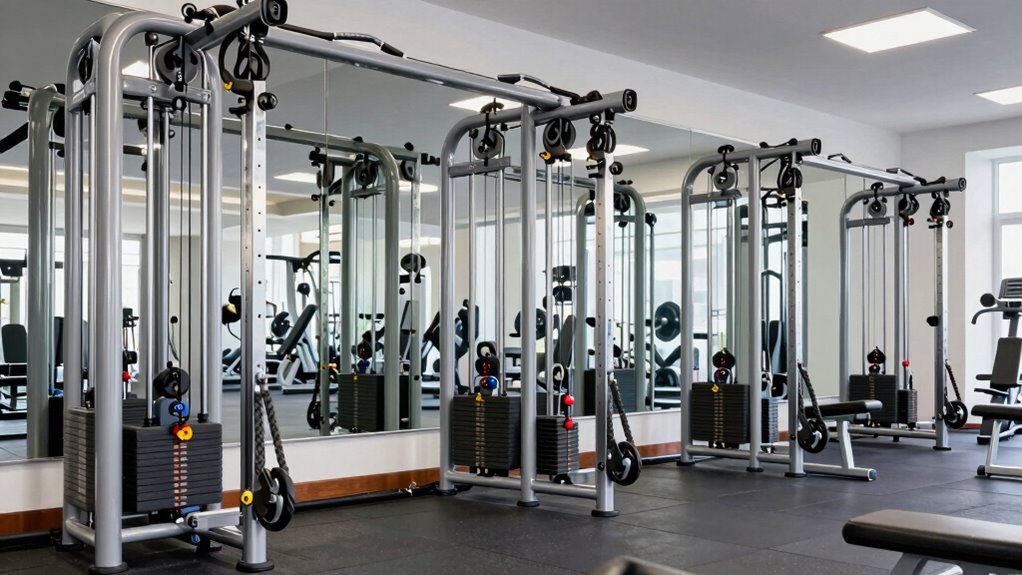

A cable crossover machine can add adjustable, smooth resistance to a home gym, but the right choice depends on your space, training range, and whether you need a standalone station or an all-in-one rack. My best overall pick is the Mikolo Cable Crossover Machine with 17 Adjustable Positions for its broad pulley-height options and focused cable-training setup. The Titan Fitness Functional Trainer stands out for dual weight stacks, while the GMWD G7 Pro is a wall-mounted alternative with swiveling arms and many adjustment points. The main tradeoffs are footprint, resistance system, and whether added equipment like a Smith machine or power cage is worth the extra bulk. Read on for the full comparison and a guide to choosing the right setup.

Get home appliances delivered free — and shop member deals
- Fast, free delivery on millions of items
- Access to Prime Big Deal Days deals on October 6–7
- Prime Video, Amazon Music and more included
Complete the kit


Key Takeaways
- Adjustability separates the focused cable stations: several Mikolo, CC01, and WM1 listings highlight 17 positions, while the GMWD G7 Pro lists 22 positions and swiveling arms for added setup flexibility.
- Wall-mounted designs can save floor space, but require a suitable wall: the wall stations are compact alternatives to freestanding trainers, while installation and clearance need planning.
- Dual-stack options suit independent side-to-side loading: the Titan Fitness and Body-Solid Powerline models use dual weight stacks, a different setup from systems that rely on other resistance arrangements.
- All-in-one cages trade a narrower footprint for more capability: the RitFit P9, JELENS M21, DONOW Smith Machine, and DP01 add rack or Smith-machine functions alongside cable work.
- Several listings are duplicated: the Mikolo Wall Mount Cable Station and CC01 appear twice, so the comparison has fewer distinct designs than 15 listing slots suggest.


| cable crossover machine | Dimensions | Material | Warranty |
|---|---|---|---|
| Mikolo Cable Crossover Machine | 52 x 56 x 82 inches | Alloy steel | 2 years |
| DONOW Cable Crossover Machine | 56 x 79.7 x 81 inches | Alloy steel | 2 years |
| Wall Mount Cable Station with | 24.8 x 18.11 x 78.74 inches | Industrial 14-gauge steel | — |
| RitFit P9 3D Smith Machine & C | 50.39 x 16.92 x 8.66 inches (as listed) | Alloy steel | — |
| JELENS M21 Smith Machine | — | Heavy-duty steel | 2 years for accessories |
| CC01 Cable Crossover Machine w | 64.17 x 53.94 x 81.89 inches | — | — |
| Mikolo Wall Mount Cable Statio | 26.9 x 25.6 x 82 inches | — | — |
| Titan Fitness Functional Train | 82 H x 64 W x 44 D inches | — | — |
| GMWD G7 Pro Wall-Mounted Cable | 39 D x 28.6 W x 77 H inches | — | 1 year |
| Wall Mount Cable Station WM1 w | 24.8 x 18.11 x 78.74 inches | — | 2 years |
| Mikolo Wall Mount Cable Statio | 26.9 x 25.6 x 82 inches | Metal | 2 years |
| CC01 Cable Crossover Machine w | 64.17 x 53.94 x 81.89 inches | — | — |
| Body-Solid Powerline Cable Cro | 42.3 x 62.6 x 83 inches | Alloy steel | 10 years on frame; 1 year on parts |
| Donow Smith Machine with 220 l | 78.6 inches wide x 65.6 inches deep x 87.4 inches high | — | 2 years |
| DP01 Power Cage | — | Steel | — |
More Details on Our Top Picks
Mikolo Cable Crossover Machine with 17 Adjustable Positions for Full-Body Home Workout
I’d put the Mikolo on the shortlist for a home gym that needs a dedicated cable station without stepping up to a Smith machine or full power cage. Its 17 pulley positions give users room to set up flyes, presses, and pulling exercises at different heights, while the stated 350-pound capacity offers a clear load limit. At 52 x 56 inches, it is more focused than the DONOW system, which adds a pull-up bar and lat-pulldown function but takes up a wider 79.7-inch span. The tradeoff is that Mikolo’s listed components are comparatively simple, and its 154-pound weight makes repositioning a job rather than a quick adjustment. Assembly is also required. I’d choose it for adjustable cable work, not as a substitute for a rack-based all-in-one gym.
Pros:- 17 pulley positions support varied cable angles for different exercises.
- 350-pound maximum capacity is specified, giving buyers a clear load limit.
- 52 x 56-inch dimensions make it more contained than the wider DONOW system.
- Accessory storage is included in the product description.
Cons:- At 154 pounds, it is difficult to move once assembled.
- Assembly is required and may take time.
- The listed package does not include the broader rack and Smith-machine functions offered by the RitFit P9 or JELENS M21.
Best for: Home-gym owners who want a freestanding cable crossover with multiple pulley heights and a stated capacity for regular cable training.
Not ideal for: Anyone who needs an easy-to-move station, a pull-up bar, or a combined rack and Smith machine setup.
- Brand:Mikolo
- Dimensions:52 x 56 x 82 inches
- Item weight:154 pounds
- Maximum weight capacity:350 lbs
- Material:Alloy steel
- Pulley positions:17
- Color:Red
- Warranty:2 years
Our verdict“Choose the Mikolo if you want a dedicated, adjustable cable station with a stated 350-pound capacity and do not need a full rack system.”
DONOW Cable Crossover Machine Home Gym System with Dual Pulley and Lat Pull Down
The DONOW suits buyers who want cable crossover work alongside pull-ups and lat pulldowns, rather than a station dedicated mainly to adjustable cable exercises. Its dual pulley setup and included attachments broaden the workout menu, while the product description cites commercial-grade steel and support for over 200 pounds. That makes it a more function-rich choice than the Mikolo, whose listed package centers on the cable machine and instruction. The added capability comes with a larger space demand: at nearly 80 inches wide and 56 inches deep, this system needs a planned home-gym spot. Its weight capacity is also described only as “over 200 lbs,” so buyers do not get the same specific ceiling provided for Mikolo. I’d favor DONOW when its pull-up and pulldown features justify the footprint.
Pros:- Dual adjustable pulleys support a range of cable angles and movements.
- Pull-up bar and multiple attachments add exercises beyond cable flyes.
- Lat-pulldown function suits users building a broader back-training setup.
- Commercial-grade steel construction is specified in the product description.
Cons:- The 79.7-inch width and 56-inch depth require substantial floor space.
- Capacity is listed as over 200 pounds rather than as an exact maximum.
- Assembly may be complex and time-consuming.
Best for: Home lifters who want a cable crossover with a pull-up bar, lat-pulldown capability, and included workout attachments.
Not ideal for: People with narrow workout areas or buyers who need a precisely stated maximum capacity before choosing equipment.
- Model number:DN-5011
- Dimensions:56 x 79.7 x 81 inches
- Material:Alloy steel
- Color:Black
- Weight capacity:Over 200 lbs
- Pulley system:Dual pulley with adjustable height positions
- Included components:Cable machine and accessories
- Warranty:2 years
Our verdict“Pick the DONOW if pull-ups and lat pulldowns matter as much as cable crossovers and you have room for its wide frame.”
Wall Mount Cable Station with 17 Positions for Home Gym
If floor space is the limiting factor, this wall-mounted station has a clear advantage over freestanding choices such as the Mikolo: its stated footprint is just 3.28 square feet. The dual pulleys and 17 height adjustments are intended to cover cable flyes, rows, and lat pulldowns, so it keeps the focus on cable training without occupying a broad floor area. That compactness depends on a suitable installation, though. The product calls for a concrete or masonry wall, and buyers may need reinforcement; it is not a simple station to place wherever convenient. There is also no specified weight capacity, which makes load planning less certain than with Mikolo’s stated 350-pound limit. I’d choose this for a permanent small-gym installation, not for renters or anyone who cannot verify the wall and load requirements.
Pros:- Wall-mounted design keeps the listed floor footprint to 3.28 square feet.
- 17 height positions allow cable setups for varied movements.
- Dual pulleys support exercises such as flyes, rows, and lat pulldowns.
- Industrial 14-gauge steel is specified for the frame.
Cons:- Requires a concrete or masonry wall and may need reinforcement.
- No weight capacity is provided in the product data.
- Installation is less flexible than placing a freestanding Mikolo or DONOW station.
Best for: Owners of compact home gyms with a suitable concrete or masonry wall who want several cable angles while preserving floor space.
Not ideal for: Renters, buyers with drywall-only mounting options, or lifters who require a stated weight capacity before purchase.
- Dimensions:24.8 x 18.11 x 78.74 inches
- Footprint:3.28 sq. ft.
- Material:Industrial 14-gauge steel
- Mounting:Wall-mounted
- Pulley system:Dual pulleys
- Height positions:17
- Weight capacity:Not specified
Our verdict“Choose this wall station when saving floor space is the priority and you can confirm the wall is suitable for secure installation.”
RitFit P9 3D Smith Machine & Cable Crossover Power Cage Home Gym
The RitFit P9 makes sense for buyers who want a cable crossover as part of a larger strength station. Alongside dual cable crossovers, it has a 3D Smith bar, an integrated 198-pound weight stack, and interchangeable 1:1 and 2:1 pulley ratios. That wider training range separates it from the Mikolo, which is a more straightforward cable machine, and the DONOW, which adds pull-ups and pulldowns without the described Smith setup. The P9’s 660-pound safety-load rating applies to its safety bars, not the cable stack, so I would not treat those figures as interchangeable. Its footprint and adjustment complexity also call for dedicated space and some familiarity with multi-station equipment. Advanced lifters may outgrow the stack’s stated load, even as beginners may find the system more involved than a standalone crossover.
Pros:- Combines dual cable crossovers with a 3D Smith bar and power-cage functions.
- Interchangeable 1:1 and 2:1 pulley ratios offer different resistance and movement options.
- Integrated 198-pound steel weight stack provides adjustable cable loading.
- Safety bars are rated for a maximum load of 660 pounds.
Cons:- The listed footprint is about 19.8 square feet, which may not suit a small gym.
- A 198-pound stack may limit progression for advanced cable lifters.
- Multiple functions and adjustments may feel complicated to beginners.
Best for: Home-gym users who want cable training, Smith-machine lifts, and rack-style safety features in one integrated system.
Not ideal for: Buyers who need a simple cable-only station, have a very small gym, or expect to progress beyond a 198-pound cable weight stack.
- Dimensions:50.39 x 16.92 x 8.66 inches (as listed)
- Material:Alloy steel
- Weight supported:198 lbs
- Maximum safety load:660 lbs
- Pulley ratios:1:1 and 2:1
- Weight stack:Integrated steel stack
- Color:Black
Our verdict“Choose the RitFit P9 if a cable crossover is one part of a broader home strength setup and you have room for its integrated stations.”
JELENS M21 Smith Machine, Multi-Function Power Cage with Dual Pulley Cable Crossover System, 2000LBS All-in-One Squat Rack with Smith Bar and Attachments
The JELENS M21 is aimed at buyers who want a cable crossover built into a rack-based home gym, with a broad accessory package for changing exercises. Its 20 height adjustments and dual-pulley system are paired with a Smith machine and power cage, while listed attachments include a lat-pulldown bar, triceps rope, cable handles, landmine, and more. That makes it a broader training setup than the Mikolo, which centers on cable work, and it offers more listed adjustment points than the RitFit P9’s described cable setup. The tradeoff is that the 2,000-pound capacity is a rack specification, not a stated cable load, so it should not be read as the pulley system’s resistance limit. This is also a large, heavy assembly with no dimensions supplied here. I’d choose it for a dedicated gym area, not a tight room.
Pros:- Combines a power cage, Smith machine, and dual-pulley cable crossover.
- 20 height adjustments give users flexibility when setting cable positions.
- Includes varied attachments such as a lat-pulldown bar, triceps rope, handles, and landmine.
- Heavy-duty steel construction and a stated 2,000-pound capacity are specified.
Cons:- Large footprint and heavy construction can make placement and moving difficult.
- Assembly may be complex for users without experience building rack equipment.
- The 2,000-pound capacity does not specify the cable system’s resistance limit.
Best for: Home lifters who want a power cage, Smith machine, adjustable cable system, and a wide accessory selection in one setup.
Not ideal for: Small-space buyers, people who need an easy-to-move machine, or anyone seeking a clearly specified cable resistance limit.
- Brand:JELENS
- Weight capacity:2,000 lbs
- Material:Heavy-duty steel
- Height adjustments:20
- Cable system:Dual pulley cable crossover
- Included accessories:Lat-pulldown bar, T-bar, pulldown bar, triceps rope, J-hooks, cable handles, weight-storage pins, landmine, foot board, counterweight racks with clamps
- Warranty:2 years for accessories
Our verdict“Pick the JELENS M21 if you want an accessory-rich rack and cable system and can dedicate space to a substantial all-in-one gym.”
CC01 Cable Crossover Machine with High and Low Pulley System, Functional Trainer with Pull Up Bars and Optional Bundle
I’d choose the JELENS CC01 when a home setup needs more than adjustable cable handles: its high and low pulleys are paired with pull-up bars, so it supports both cable work and body-weight training in one freestanding frame. Fifteen pulley heights and included bars, handles, and rope make it adaptable for rows, pulldowns, and arm exercises. Compared with the wall-mounted Goimu WM1, the CC01 does not rely on a wall installation and adds pull-up functionality, but it occupies a larger floor area. Its 210-pound pulley-system capacity and 146-pound frame suit many home routines, though the specs do not identify a weight-stack setup. Assembly may take two or three people, and the stated 64-inch-by-54-inch footprint makes it a poor match for very tight rooms.
Pros:- Combines high and low pulley work with pull-up bars.
- Fifteen adjustment levels allow different cable exercise heights.
- Includes a pull-down bar, rowing bar, pull-up handles, and tricep rope.
- Freestanding frame avoids the need for wall mounting.
Cons:- Its 64.17 x 53.94-inch footprint can crowd a small home gym.
- Assembly may require two or three people and take about 1.5 hours.
- The listed pulley capacity is 210 pounds, and no integrated weight-stack details are provided.
Best for: Home-gym owners who want high- and low-pulley cable exercises plus pull-ups in one freestanding machine.
Not ideal for: People with very limited floor space or buyers who want a clearly specified integrated weight-stack system.
- Dimensions:64.17 x 53.94 x 81.89 inches
- Machine weight:146 lbs
- Frame material:50 x 50 mm commercial steel square tubing with powder coating
- Pulley system capacity:210 lbs
- Pull-up bar capacity:500 lbs
- Pulley adjustment levels:15
- Included accessories:Pull-down bar, rowing bar, pull-up handles, tricep rope
Our verdict“Pick the CC01 if you want a freestanding cable station that adds pull-ups, but skip it if room space or a defined weight-stack setup is a priority.”
Mikolo Wall Mount Cable Station with Dual Pulley System and Adjustable Positions
The Mikolo M-G3 is the wall-mounted pick for buyers who want a substantial dual-pulley station and can provide a suitable mounting surface. Its listed 400-pound maximum capacity and 19/27 pulley positions point to a setup built for varied cable angles and demanding home routines. Compared with the lighter, folding-oriented GMWD G7 Pro, this Mikolo lists a higher capacity, but it is also specified at 400 pounds—so installation and wall support deserve serious planning. It includes a lat bar, cable bar, and tricep rope, while the G7 Pro supplies a broader mix of listed attachments and dual cable ratios. The Mikolo’s compact dimensions save floor area, not installation effort: assembly may be complex, and the product data does not clarify how the two position counts are divided.
Pros:- Dual-pulley design supports cable exercises from both sides.
- Listed 19/27 pulley positions offer a wide range of cable heights.
- Compact 26.9 x 25.6-inch dimensions conserve floor space.
- Includes a lat bar, cable bar, and tricep rope.
Cons:- At a listed 400 pounds, the unit may require substantial mounting support.
- Assembly may be complex, and secure installation is a prerequisite.
- The 19/27 position notation is not explained in the supplied specifications.
Best for: Experienced home-gym users with a strong, suitable mounting surface who want a compact dual-pulley station with a listed 400-pound capacity.
Not ideal for: Renters, people unable to verify wall support, or buyers seeking a freestanding station that can be moved easily.
- Model:M-G3
- Item weight:400 lbs
- Dimensions:26.9 x 25.6 x 82 inches
- Maximum weight capacity:400 lbs
- Pulley positions:19/27
- Cable tensile strength:2,200 pounds
- Included attachments:Lat bar, cable bar, tricep rope
Our verdict“Choose the Mikolo M-G3 for a compact, high-capacity wall-mounted station if your wall can support it; otherwise, favor a freestanding option such as the JELENS CC01.”
Titan Fitness Functional Trainer Cable Crossover Machine 200 lb Dual Stack
For a buyer who wants resistance ready on the machine rather than relying on separate plates, I’d put the Titan Fitness Functional Trainer ahead of the plate-loading JELENS CC01. Its dual 200-pound stacks let each side be adjusted independently, and the 2:1 cable ratio gives a smoother, lighter-feeling pull that suits controlled isolation work and gradual progression. Twenty pulley positions and a broad accessory set add exercise variety without changing the machine’s core appeal: a conventional, stack-based crossover. The tradeoff is substantial size and mass. At 672 pounds and 64 inches wide, it is far less convenient to assemble or relocate than wall-mounted choices such as the Goimu WM1. I’d reserve it for a dedicated training area where the footprint can stay put.
Pros:- Two 200-pound stacks provide independent resistance on each side.
- The 2:1 cable ratio supports controlled movements and smaller effective resistance changes.
- Twenty pulley positions cover a range of exercise angles.
- Included accessories support varied cable exercises.
Cons:- The 672-pound machine is difficult to move and requires planning for delivery and placement.
- Assembly requires two people.
- Its 64 x 44-inch base and 82-inch height demand a dedicated area.
Best for: Home lifters who want independently adjustable weight stacks and a fixed, full-size cable crossover for regular strength training.
Not ideal for: Apartment users, frequent movers, or anyone without room and help to assemble a 672-pound machine.
- Dimensions:82 H x 64 W x 44 D inches
- Machine weight:672 lbs
- Stack weight per side:200 lbs
- Cable ratio:2:1
- Pulley positions:20
- Frame material:Alloy steel
- Color:Black/Silver
Our verdict“Choose the Titan Fitness trainer if you want built-in dual stacks and have a permanent training space; pick a wall-mounted model if floor area and relocation matter more.”
GMWD G7 Pro Wall-Mounted Cable Machine with Dual Swivel Arms – 22 Adjustable Positions, All-in-One Cable Crossover, Black
The GMWD G7 Pro is my pick for compact versatility: its foldable wall-mounted format pairs adjustable swivel arms with two cable ratios, 2:1 and 1:1. That gives buyers a choice between lighter-feeling cable travel and a more direct resistance setup, a flexibility not listed for the Goimu WM1. The arms offer multiple height and angle settings, while the attachment set covers common cable movements. Its 39-inch depth is easier to fit into a home training area than the freestanding Titan Fitness trainer, though the G7 Pro depends on secure wall mounting and is not a portable substitute. The listed maximum weight recommendation is 350 pounds, which may be limiting for very heavy lifters. I’d verify installation requirements and usable wall clearance before choosing it.
Pros:- Foldable wall-mounted design reduces the space occupied when not in use.
- 2:1 and 1:1 cable ratios give users different resistance feels.
- Adjustable arms provide multiple height and angle settings.
- Attachment set includes D-handles, bars, and a tricep rope.
Cons:- Requires wall mounting and may need professional installation.
- At 165 pounds, it is not easy to relocate once positioned.
- The listed maximum weight recommendation is 350 pounds.
Best for: Space-conscious home lifters who want adjustable swivel arms, folding storage, and the option of two cable ratios.
Not ideal for: Renters or buyers without a suitable mounting wall, and lifters who need a higher listed maximum weight recommendation than 350 pounds.
- Model:G7 Pro
- Dimensions:39 D x 28.6 W x 77 H inches
- Item weight:165 lbs
- Maximum weight recommendation:350 lbs
- Cable ratios:2:1 and 1:1
- Adjustment details:26 height holes and 13 angle settings
- Warranty:1 year
Our verdict“Choose the G7 Pro if adjustable arms and dual cable ratios matter more than portability or a higher listed capacity.”
Wall Mount Cable Station WM1 with 17 Positions for Home Gym
The Goimu WM1 keeps the cable-station idea straightforward: a compact wall-mounted frame, 17 pulley positions, and useful attachments for common pushing, pulling, and arm exercises. Its 24.8 x 18.11-inch dimensions make it a more floor-space-conscious choice than the freestanding JELENS CC01, while the listed 300-pound capacity gives a clear reference for its intended use. Compared with the more adjustable GMWD G7 Pro, the WM1 has fewer position options and no stated dual cable ratios, but its simpler specification may suit buyers who just want adjustable cable work without swivel-arm complexity. The catch is installation: the supplied information calls for concrete or masonry mounting, and poor fixing may lead to wobble. It also remains limited to exercises that cable attachments can handle.
Pros:- Seventeen pulley positions accommodate different cable exercise heights.
- Compact dimensions preserve more floor space than a freestanding crossover.
- Includes a T bar, lat pull bar, rope, and dual-handle grip.
- Listed 300-pound capacity provides a defined use reference.
Cons:- Requires secure wall mounting, with concrete or masonry specified.
- Poor installation may cause wobble.
- Cable attachments limit it to exercises suited to a cable station.
Best for: Home-gym owners with a suitable concrete or masonry wall who want a compact station for standard cable exercises.
Not ideal for: Renters, users with drywall-only mounting locations, or buyers seeking a freestanding machine or multiple cable ratios.
- Model:WM1
- Dimensions:24.8 x 18.11 x 78.74 inches
- Pulley positions:17
- Weight capacity:300 lbs
- Supported tension:300 lbs
- Included components:Cable machine adaptor, T bar, lat pull bar, tricep/bicep curl rope, dual-handle grip
- Warranty:2 years
Our verdict“Choose the WM1 for basic, space-conscious cable training when you have a suitable masonry wall; otherwise, consider the freestanding JELENS CC01.”
Mikolo Wall Mount Cable Station with Dual Pulley System and Adjustable Positions
For buyers who want cable work without giving a freestanding trainer its own floor footprint, the Mikolo M-G3 is the clearest space-saving choice in this group. Its wall-mounted dual pulley system offers 19/27 adjustable positions, giving more scope to set exercise height than a fixed-pulley setup, while the included lat bar, cable bar, and triceps rope cover several common movements. Compared with the floor-standing CC01, it gives up pull-up bars and a self-supporting frame in exchange for a smaller wall-mounted arrangement. The listed 400-pound maximum support is a substantial capacity figure, but it does not remove the need to check wall compatibility and mounting requirements. Assembly may also take patience, and this is not the pick for renters or anyone unable to anchor equipment securely.
Pros:- Wall-mounted layout preserves floor space compared with freestanding trainers such as the CC01.
- Dual pulleys and 19/27 height positions support varied cable exercise angles.
- Lat bar, cable bar, and triceps rope are included for different movement patterns.
- Listed maximum weight support is 400 pounds, with a two-year warranty.
Cons:- Requires secure wall mounting, which limits where it can be installed.
- Assembly and mounting may be challenging without suitable tools or help.
- Does not include a pull-up bar or freestanding frame.
Best for: Home-gym owners with limited floor space, a suitable wall for secure mounting, and a focus on cable exercises such as rows, pulldowns, and triceps work.
Not ideal for: Renters, people with unsuitable or restricted walls, and lifters who want an independent frame or built-in pull-up station.
- Brand:Mikolo
- Model:M-G3
- Dimensions:26.9 x 25.6 x 82 inches
- Maximum weight support:400 pounds
- Adjustment positions:19/27
- Material:Metal
- Included attachments:Lat bar, cable bar, triceps rope
- Warranty:2 years
Our verdict“Choose the Mikolo M-G3 if floor space is scarce and you can mount a dual-pulley station securely to a suitable wall.”
CC01 Cable Crossover Machine with High and Low Pulley System, Functional Trainer with Pull Up Bars and Optional Bundle
The CC01 makes a practical middle ground for buyers who want a freestanding cable crossover without moving up to a full rack-and-trainer system. Its high and low pulleys, 15 adjustment levels, and pull-up bars give it more exercise range than the wall-mounted Mikolo M-G3, while its triangular frame is designed to keep the station stable without the scale of the Body-Solid PFT100. The stated pulley load capacity is 210 pounds; pull-up bar capacity and plate-storage capacity are listed separately, so those figures should not be confused with cable resistance. At 64.17 x 53.94 inches and 146 pounds, it still needs a dedicated area and is not effortless to reposition. Assembly may take multiple people, which makes it less appealing for a solo setup.
Pros:- High and low pulleys support a broad range of cable movements.
- Pull-up bars add bodyweight training without requiring a separate station.
- Fifteen adjustment levels allow changes to cable height for different exercises.
- Triangular design offers a freestanding alternative to wall-mounted stations.
Cons:- Its 64.17 x 53.94-inch dimensions still occupy a substantial workout area.
- At 146 pounds, moving it is difficult, especially after assembly.
- Assembly may require multiple people and a significant time commitment.
Best for: Home-gym users who want a freestanding high-and-low cable station with pull-up capability but do not need a Smith machine or full power cage.
Not ideal for: People with very little floor space, anyone needing easy portability, or lifters seeking a heavier listed cable load than 210 pounds.
- Dimensions:64.17 x 53.94 x 81.89 inches
- Product weight:146 pounds
- Frame material:Commercial steel square tubing
- Pulley system maximum load:210 pounds
- Pull-up bar maximum load:500 pounds
- Plate storage maximum load:105 pounds
- Adjustment levels:15
Our verdict“Pick the CC01 if you want a standalone crossover with pull-up bars and can dedicate floor space to a 146-pound frame.”
Body-Solid Powerline Cable Crossover Exercise Machine – Dual Weight Stack Functional Trainer
The Body-Solid Powerline PFT100 stands apart from plate-loaded or wall-mounted crossovers by using two independent 160-pound weight stacks. That arrangement lets each side work separately and keeps resistance changes simple, which suits users who value repeatable cable sessions over a lower-footprint design. Against the CC01, the PFT100 brings heavier specified stacks and a broad, stable frame, but it is far heavier at 476 pounds and measures 62.6 inches wide. That weight can help the station feel planted during cable work, yet delivery, assembly, and placement become serious planning tasks. Its 210-pound maximum user-weight recommendation is also a separate limit from the stack capacity. I’d favor this model for a permanent training space, not a multipurpose room that needs equipment moved around.
Pros:- Two independent 160-pound stacks allow each side to be trained separately.
- Stack-based resistance makes changing loads straightforward compared with plate-loaded systems.
- Alloy-steel construction and a wide frame support a stable, dedicated setup.
- Ten-year frame warranty and one-year parts warranty are specified.
Cons:- At 476 pounds, installation and later relocation are difficult.
- The 42.3 x 62.6-inch footprint is larger than a wall-mounted cable station.
- Maximum user-weight recommendation is 210 pounds.
Best for: Buyers setting up a permanent home or commercial gym who want two independent weight stacks for balanced, repeatable cable training.
Not ideal for: Small-space users, people who need to relocate equipment often, and buyers who need a higher maximum user-weight recommendation.
- Model:PFT100
- Weight stacks:2 x 160 pounds
- Dimensions:42.3 x 62.6 x 83 inches
- Item weight:476 pounds
- Maximum user-weight recommendation:210 pounds
- Material:Alloy steel
- Warranty:10 years on frame; 1 year on parts
Our verdict“Choose the PFT100 for a permanent training area where independent weight stacks matter more than compactness or easy relocation.”
Donow Smith Machine with 220 lbs Weight Stacks, Multi-Function Home Gym System, Power Rack Cable Crossover, Lat Pull-Down Training, Full Body Workouts
The Donow Smith Machine is the broadest training system here, pairing a dual independent cable crossover with a Smith bar, safety catches, and several attachment options. Its 220-pound total weight stack means cable exercises do not depend on loading separate plates, while the stated 400-pound bar capacity and 550-pound safety-catch capacity extend the setup beyond crossover work. Compared with the dedicated Body-Solid PFT100, Donow trades larger independent stacks for a more complete rack-and-cable package; compared with the DP01, it adds a Smith machine but takes up a sizable 78.6 x 65.6-inch area. That versatility comes with a real space and assembly cost. The two-year warranty is shorter than Body-Solid’s stated frame coverage, so this makes most sense when multiple stations in one frame are the priority.
Pros:- Combines a dual cable crossover with a Smith machine and rack-style training options.
- Two 110-pound stacks provide 220 pounds of total cable-stack weight.
- Stated bar and safety-catch capacities support varied strength exercises.
- Includes lat-pulldown, T-bar, dip-handle, and pull-up options.
Cons:- The 78.6 x 65.6-inch footprint is large for a home cable station.
- Assembly can take several hours and may require substantial help.
- Two-year warranty is shorter than the PFT100’s stated frame warranty.
Best for: Strength trainees building a home gym who want cable crossovers, Smith-machine lifts, pulldowns, and rack-style accessories in one system.
Not ideal for: People with a small workout area, buyers who only need a cable crossover, or anyone wanting a quick, simple assembly.
- Total weight stacks:220 pounds (110 pounds per side)
- Maximum bar capacity:400 pounds
- Safety-catch capacity:550 pounds
- Dimensions:78.6 inches wide x 65.6 inches deep x 87.4 inches high
- Frame material:2 x 2-inch commercial-grade steel
- Cable system:1:1 dual independent crossover with 7-strand steel cables
- Warranty:2 years
Our verdict“Choose the Donow if you want a full rack-and-Smith setup with cable training and have room for its large frame.”
DP01 Power Cage, 2000LBS Squat Rack with Cable Crossover and Dual Independent Pulley System
The DP01 is the space-conscious choice for buyers who want a power cage and cable crossover in one footprint rather than a dedicated cable machine beside a rack. Its listed 17.88-square-foot footprint is notably smaller than the Donow system’s stated overall dimensions, while its 31+29 height positions give the pulleys plenty of adjustment options for different cable angles. The 2:1 pulley ratio means the load felt at the handle is lower than the weight selected, a useful distinction when comparing it with the Donow’s 1:1 system. Its advertised 2,000-pound capacity applies to the power cage as specified, not necessarily the cable pulleys. Unlike the Donow, the DP01 does not list a Smith bar or weight stacks, and the cage’s assembly may be complex. It suits rack-first buyers more than anyone seeking a stack-based functional trainer.
Pros:- Combines a power cage and dual-pulley cable station in one listed 17.88-square-foot footprint.
- Thirty-one-plus-twenty-nine height positions provide many pulley setup options.
- Listed 2,000-pound capacity supports a rack-focused strength setup.
- Steel construction is designed for combined rack and cable training.
Cons:- The 2:1 pulley ratio changes the load felt at the handle compared with a 1:1 system.
- No weight stacks or Smith machine are listed, unlike the Donow.
- Assembly may be complex and require careful setup.
Best for: Home lifters who need a squat rack and adjustable dual-pulley cable station while keeping the combined equipment footprint contained.
Not ideal for: Buyers seeking built-in weight stacks, a Smith machine, or a stated 1:1 cable ratio like the Donow’s system.
- Weight capacity:2,000 pounds
- Footprint:17.88 square feet
- Interior space:47.64 inches
- Height adjustments:31+29 positions
- Pulley ratio:2:1
- Material:Steel
Our verdict“Pick the DP01 if you want a space-efficient power cage with adjustable cable pulleys and do not need stacks or a Smith machine.”

How We Picked
I compared these machines by how well their design supports cable training: pulley adjustment range, independent movement, and high- and low-pulley access all matter because they affect exercise variety and setup. I also weighed the resistance format, listed attachments and integrated equipment, installation demands, and how much floor or wall space each style is likely to need. Where a listing did not provide enough detail to confirm a feature, I avoided treating that feature as an advantage.
The ranking favors machines that appear to deliver a useful cable-training setup without making buyers pay in space or complexity for equipment they may not need. Standalone and wall-mounted stations rank well for focused functional training; dual-stack trainers earn attention for their resistance setup; and combined Smith-machine or power-cage systems make more sense for buyers who will use the added rack functions. Duplicate listings are treated as the same design rather than separate winners, and the available product information does not support claims about comparative durability or performance testing.
| cable crossover machine | Material |
|---|---|
| Mikolo Cable Crossover Machine | Alloy steel |
| DONOW Cable Crossover Machine | Alloy steel |
| Wall Mount Cable Station with | Industrial 14-gauge steel |
| RitFit P9 3D Smith Machine & C | Alloy steel |
| JELENS M21 Smith Machine | Heavy-duty steel |
| CC01 Cable Crossover Machine w | — |
| Mikolo Wall Mount Cable Statio | — |
| Titan Fitness Functional Train | — |
| GMWD G7 Pro Wall-Mounted Cable | — |
| Wall Mount Cable Station WM1 w | — |
| Mikolo Wall Mount Cable Statio | Metal |
| CC01 Cable Crossover Machine w | — |
| Body-Solid Powerline Cable Cro | Alloy steel |
| Donow Smith Machine with 220 l | — |
| DP01 Power Cage | Steel |
Factors to Consider When Choosing Cable Crossover Machine
Product names can make cable stations sound more alike than they are. I would start by deciding how the machine will fit into your training routine and room, then compare the mechanics and installation requirements that affect everyday use.
Match the machine style to your training plan
A standalone crossover is a direct fit if your main goal is cable work, such as flyes, rows, and extensions. A functional trainer or dual-pulley station may offer more exercise setups, while a Smith machine or power cage combines cables with barbell-style training. That added range only pays off if you will use those functions regularly. Otherwise, the larger combined unit can consume room and attention that a simpler station would leave free. Write down the movements you expect to do each week before choosing by feature count.
Measure the whole working area, not just the frame
Machine dimensions do not show how much room you need to move handles through a full range of motion. Measure the station, then check the space around it for cable travel, your stance, and safe access to attachments. A wall-mounted unit may reduce floor use, but the user still needs room to step back and move laterally. Tall frames also call for a ceiling-height check, especially if pull-up bars are part of the setup. A common mistake is measuring only the empty corner where the machine will stand.
Check wall structure and installation limits
Wall-mounted models shift some of the footprint question into an installation question. Confirm that your wall construction and available anchoring points suit the manufacturer’s instructions before purchase; drywall alone should not be treated as a secure mounting surface. Also plan for clearance around the arms and pulleys, since compact storage does not mean compact movement. If you rent, cannot confirm the wall structure, or want to reposition equipment later, a freestanding design may be the less restrictive choice. Installation needs are part of the machine’s real space cost.
Understand resistance and independent pulley movement
Look beyond the phrase “dual pulley” and find out how each side is loaded and whether the sides move independently. Separate stacks can make it easier to set different loads on each handle, while other designs may use a shared resistance arrangement. The right setup depends on whether you train one arm at a time, match both sides, or need particular loading increments. Compare the listed stack capacity and increments with your current strength and likely progression, not just the headline number. If those details are missing, ask the manufacturer rather than assuming the resistance suits your routine.
Choose adjustability for the exercises you will perform
A high number of pulley positions can help tailor cable paths, but the number alone does not tell you how easy the station is to adjust or whether its range suits your movements. Check that the pulleys can reach the low, middle, and high positions your planned exercises require. Swiveling arms can add positioning options, while fixed tracks may keep the design simpler. Before buying, compare the handle height and movement path with the exercises you care about most. Avoid paying for adjustment range that does not change how you train.
Decide when an all-in-one system is worth the tradeoff
A combined cage can replace several pieces of equipment and keep strength training in one station, which can be appealing in a home gym. The tradeoff is that you are committing to a larger, more involved setup rather than a cable-only machine. Check what is included, which attachments are optional, and whether the bar, rack, and pulley functions can be used without interfering with each other. Also review assembly and maintenance requirements before assuming an all-in-one model is simpler. Pay more in space and complexity only when the extra training functions will see regular use.
Frequently Asked Questions
Is a wall-mounted cable crossover a good choice for a small home gym?
It can be a strong space-saving choice if your wall can support the installation and you have room to exercise in front of it. The Mikolo, WM1, and GMWD listings represent this style, but their compact mounting does not remove the need for cable and user clearance. Check the mounting instructions against your wall construction before ordering. If you cannot confirm secure anchoring or want to move the machine later, a freestanding station is a safer fit for your plans.
Should I choose a dual-stack trainer or a cable station with a different resistance setup?
Choose based on how you use the two handles, not just the word “dual” in a product name. Dual-stack models such as the Titan Fitness Functional Trainer and Body-Solid Powerline list separate weight stacks, which can suit training where each side needs its own load. Other systems may use a different arrangement, so check whether the sides move independently and how resistance is selected. If that information is not clear in the listing, confirm it with the seller before treating the machine as a match for unilateral work.
Do I need a Smith machine or power cage built into my cable crossover?
You only need the combination if you expect to use the rack or Smith-machine functions alongside cable exercises. Models such as the RitFit P9, JELENS M21, DONOW Smith Machine, and DP01 bundle those functions into one system, which can reduce the need for separate stations. That convenience comes with a larger, more involved setup than a cable-focused unit. If your routine centers on cable movements, a standalone trainer may be easier to place and use. List your regular exercises before deciding whether the extra hardware earns its space.
Are 17 pulley positions enough for a full range of cable exercises?
For many home routines, 17 positions can provide useful flexibility across low, middle, and high cable paths. The Mikolo, CC01, and WM1 listings use that figure, while the GMWD G7 Pro lists 22 positions and swiveling arms. More positions can improve setup options, but they do not automatically make a machine better if the pulley path or adjustment process does not suit your movements. Check the available height range and handle clearance against your planned exercises rather than choosing by position count alone.
What should I verify before buying a machine with optional bundles or attachments?
Confirm exactly what comes with the base machine and what is sold separately. The CC01 listing mentions an optional bundle, so attachments shown in images may not be part of every package. Check the included handles, bars, and other accessories against the exercises you plan to do, and ask whether compatible attachments can be added later. Also verify assembly requirements and the resistance components included in the selected configuration. Comparing package contents can prevent a mismatch between the machine you expect and the equipment that arrives.
Conclusion
For most buyers seeking a dedicated home cable station, I would start with the Mikolo Cable Crossover Machine with 17 Adjustable Positions as the best overall fit in this lineup. The best value depends on your space and training needs: a straightforward wall-mounted station makes more sense than paying for a cage you will not use, while the best premium-style choice for independent dual-stack training is the Titan Fitness Functional Trainer. Beginners should favor a cable-focused station with a clear adjustment range over an all-in-one setup that adds functions they are still learning to use. For a small gym with a suitable wall, compare the Mikolo wall station and GMWD G7 Pro; for combined rack and cable training, look at the RitFit P9, JELENS M21, DONOW Smith Machine, or DP01. Before choosing, confirm installation, included accessories, and the resistance details for the exact configuration.
Fall Picks
fall essentials
As an affiliate, we earn on qualifying purchases.