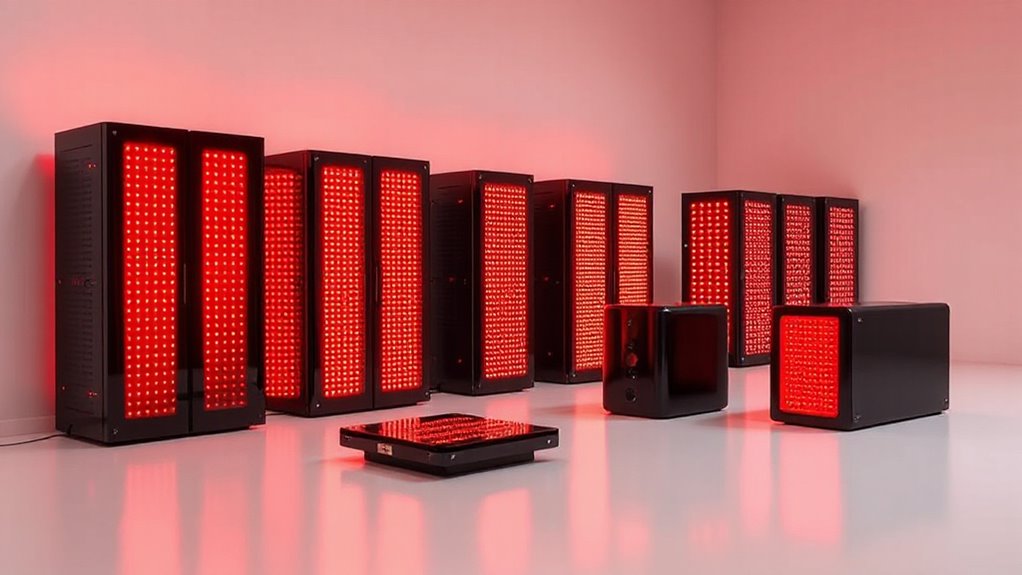
For a premium red light therapy panel for recovery, my best overall pick is the Hooga PRO300, which pairs 660nm red and 850nm near-infrared LEDs with a tabletop stand and timer. The BestQool 160W four-wavelength panel stands out for buyers who want more wavelength options, while the MitoMAX 2.0 is a focused alternative for face, neck, and body sessions. The main tradeoffs are coverage versus portability, simple controls versus added features, and a larger panel’s convenience versus the space it takes up. Panel specifications alone cannot guarantee recovery results, so fit, safe use, and realistic expectations matter. Read on for the full comparison and guidance on choosing a panel for your routine.

Get home appliances delivered free with Prime
- Fast, free delivery on millions of items
- Prime Video, Amazon Music and more included
- Member-only deals all year
Complete the kit


Key Takeaways
- The Hooga PRO300 leads this lineup for balanced home use: its tabletop setup, timer, and dual-chip LEDs offer a practical middle ground between compact lamps and larger panels.
- The BestQool 160W is the standout for wavelength variety: its four-wavelength design differs from the many options built around 660nm red and 850nm near-infrared.
- Compact panels suit targeted routines, not broad coverage: the BestQool 50W and Hooga HG200 are easier to place, while larger-format options make more sense when treating wider areas.
- Stand and mounting details affect day-to-day usability: models with a supplied stand or hanging kit can be easier to position, but the included setup may limit where or how they fit.
- The INIA 2-in-1 panel and belt serves a different need: its belt format and 1064nm plus 850nm wavelengths prioritize a wearable, targeted approach over a conventional panel’s broad illumination.


| premium red light therapy panel for recovery | Wavelengths | LED count |
|---|---|---|
| Red Light Therapy Panel for Bo | 660nm and 850nm | 486 LEDs: 324 red and 162 near-infrared |
| INTEO Red Light Therapy for Fa | 660nm red and 850nm infrared | — |
| Viconor Red Light Therapy for | 660nm red and 850nm infrared | 120 LEDs |
| Hooga Red Light Therapy Panel | 660nm red and 850nm near-infrared | — |
| Red Light Therapy for Body | 660nm and 850nm | 120 beads |
| Mito Red Light MitoMAX 2.0 Red | 660 nm red; 850 nm near-infrared | 200 |
| BestQool Red Light Therapy Pan | 660 nm red; 850 nm infrared | — |
| Red Light Therapy Panel | 660 nm and 850 nm | — |
| LED Red Light Therapy Device | 660 nm deep red; 850 nm near-infrared | Not specified |
| BestQool Red Light Therapy Pan | 660 nm red; 850 nm infrared | — |
| Hooga Red Light Therapy Panel | 660nm red; 850nm near infrared | 40 |
| INIA Red Light Therapy Panel & | 630nm, 660nm, 850nm and 1064nm | 360 |
| BestQool Red Light Therapy Pan | — | — |
| Red Light Therapy for Face and | — | 120 |
More Details on Our Top Picks
Red Light Therapy Panel for Body and Face with 660nm & 850nm LEDs
For recovery routines that need both body and face targeting, this panel pairs 660nm red and 850nm near-infrared light with five brightness settings and a flexible gooseneck. Its 8 x 14.5-inch panel is smaller than the Hooga PRO300, so it is easier to position for a specific muscle group or facial area, though it offers less panel coverage for broad sessions. The remote and timer options make it simpler to adjust a session without reaching for the controls, while the 486 LEDs provide a clear specification for shoppers comparing compact home panels. The tradeoff is that the gooseneck-supported format is more suited to targeted placement than a large, fixed panel, and the listed features do not specify irradiance. I’d choose it for flexible positioning, not for the widest coverage.
Pros:- Combines 660nm red and 850nm near-infrared wavelengths.
- Five brightness levels allow session intensity adjustments.
- Flexible gooseneck supports targeted positioning.
- Remote control and six timer options simplify routine use.
Cons:- The 8 x 14.5-inch panel covers less area per session than the Hooga PRO300.
- The product data does not specify irradiance or power output.
- A flexible arm may take more repositioning for broad body coverage.
Best for: Home users who want one panel for focused facial care and targeted post-exercise areas, with remote-controlled settings.
Not ideal for: Buyers who want broad, fixed coverage for larger body areas or need published irradiance data to compare treatment intensity.
- LED count:486 LEDs: 324 red and 162 near-infrared
- Wavelengths:660nm and 850nm
- Panel size:8 x 14.5 inches
- Brightness levels:5
- Timer options:20, 30, 40, 50, and 60 minutes
- Remote control range:65.6 feet
- Power cord length:7 feet
Our verdict“Choose this panel if flexible, remote-adjustable targeting matters more to you than large-area coverage or published irradiance figures.”
INTEO Red Light Therapy for Face and Body, Infrared Red Light Therapy Lamp
The INTEO suits buyers who want to direct light at different body areas without relying on a gooseneck or fixed tabletop angle. Its height-adjustable aluminum stand reaches 46.5 inches and flips through 180 degrees, giving it more positioning range than the Viconor’s adjustable-angle stand. The 13 x 7.5-inch panel still has a relatively focused footprint, so the stand improves access more than it increases coverage; larger areas may require repositioning. Like the Red Light Therapy Panel for Body and Face, it combines 660nm red and 850nm infrared light with brightness and timer controls. The 7-pound weight and tool-free setup support moving it around the home, but its tall stand needs storage space and the product details do not list LED count or irradiance. I’d rank it for adjustability rather than output transparency.
Pros:- Stand adjusts in height up to 46.5 inches.
- 180-degree flip supports a range of treatment angles.
- Uses both 660nm red and 850nm infrared light.
- Tool-free setup and 7-pound weight make it movable around the home.
Cons:- The 13 x 7.5-inch panel may require repositioning to cover larger areas.
- The tall stand can be awkward to store in a small room.
- LED count and irradiance are not specified in the supplied product data.
Best for: People setting up a regular home routine who need to position a panel at different heights for face, joints, and muscle groups.
Not ideal for: Buyers with very limited storage space or shoppers who require LED-count and irradiance figures before choosing a recovery panel.
- Wavelengths:660nm red and 850nm infrared
- Panel dimensions:13 x 7.5 inches
- Maximum device height:46.5 inches
- Stand:Aviation-grade aluminum; 180-degree flip and height adjustment
- Weight:7 pounds
- Included component:Cover
- Color:Premium Black
Our verdict“Pick the INTEO if stand height and flexible positioning matter more than compact storage or detailed output specifications.”
Viconor Red Light Therapy for Face and Body, Infrared Light Therapy Lamp with Stand 660nm & 850nm
The Viconor is the straightforward pick for a first home panel when a portable, adjustable setup matters more than extensive controls or a large specification sheet. It lists 120 LEDs and combines 660nm red with 850nm infrared light, with a stand and hook included for different placement options. That makes its setup more adaptable than a basic panel with no listed accessories, but less finely adjustable than the INTEO, which specifies stand height adjustment and a 180-degree flip. The product description presents it for face, muscles, and joints, though it gives no panel dimensions or irradiance to help estimate coverage and output. Its compact format is easier to move than the Hooga PRO300, but it is not the strongest choice for shoppers seeking a larger panel or detailed performance data. I’d treat it as an entry-level, targeted option rather than a premium large-area recovery system.
Pros:- Lists 120 LEDs and two wavelengths: 660nm red and 850nm infrared.
- Includes both a stand and a hook for placement options.
- Adjustable angles support targeting different body areas.
- Portable format is easier to move than a large panel such as the Hooga PRO300.
Cons:- Panel dimensions, power, and irradiance are not specified in the supplied data.
- The product description suggests daily sessions, which may not suit buyers seeking a low-maintenance routine.
- Its portable format does not establish that it can match larger panels for coverage or output.
Best for: New home users who want a portable red and near-infrared panel with a stand and hook for targeted sessions.
Not ideal for: Recovery-focused buyers who need broad coverage, published irradiance, or detailed power specifications for comparing panels.
- LED count:120 LEDs
- Wavelengths:660nm red and 850nm infrared
- Adjustable angles:180 degrees
- Power cord length:1.8 meters
- Included accessories:Stand and hook
Our verdict“Choose the Viconor as a portable first panel for targeted home sessions, but look elsewhere if you need verified output details or broad coverage.”
Hooga Red Light Therapy Panel Device – 660nm Red & 850nm Near Infrared Light Therapy, LED Light Therapy Lamp, 60 Dual Chip LEDs, Timer, Table Top Stand Included – PRO300
The Hooga PRO300 is the lineup’s most substantial listed panel for buyers who want a larger recovery setup rather than a compact targeted lamp. Its 60 dual-chip LEDs combine 660nm red and 850nm near-infrared light, and the table stand helps with a tabletop routine; compatibility with larger setups also leaves room to expand placement. Compared with the 120-bead hanging panel, Hooga lists independent red and near-infrared controls, which gives users more control over which band is active. Flicker-free LEDs, cooling fans, and a three-year warranty add practical support for repeated use. The tradeoff is its 4.3 kg weight and listed 300W wattage, plus dimensions that call for dedicated space. I’d favor it over the smaller Viconor for a more substantial installation, but the specs do not include irradiance or a precise treatment-area figure.
Pros:- 60 dual-chip LEDs provide both 660nm red and 850nm near-infrared light.
- Independent red and near-infrared controls allow separate wavelength selection.
- Includes a tabletop stand and supports larger setups.
- Flicker-free design, cooling fans, and a three-year manufacturer warranty are specified.
Cons:- The 300W listed wattage and corded design may not suit users seeking a low-draw portable option.
- At 4.3 kg, it is less convenient to move than the Viconor.
- The supplied product data does not state irradiance or treatment-area dimensions.
Best for: Dedicated home recovery users who have room for a larger corded panel and value separate red and near-infrared controls.
Not ideal for: Apartment users who need a lightweight, easily stored device or buyers who need irradiance measurements and a clearly stated coverage area.
- Wavelengths:660nm red and 850nm near-infrared
- LEDs:60 dual-chip LEDs
- Listed wattage:300 watts
- Power source:Corded electric
- Mounting type:Table mount
- Beam angle:60 degrees
- Weight:4.3 kg
- Dimensions:61.2 x 15.7 x 3.1 inches
- Warranty:3-year manufacturer warranty
Our verdict“Choose the PRO300 if you have space for a substantial, expandable panel and want independent wavelength controls for recovery sessions.”
Red Light Therapy for Body, 660nm & 850nm Near Infrared Light Therapy Panel, 300W with Hanging Kit & Handle
For shoppers comparing recovery panels by a stated output measurement, this model stands apart by listing 140mW/cm² at 6 inches. It pairs 660nm red and 850nm near-infrared light across 120 LED beads, with a 5–30-minute timer, cooling fan, handle, and hanging kit. Those mounting options make it more adaptable than the tabletop-focused Hooga PRO300, while the Hooga lists independent wavelength controls that this product does not specify. Its 300W rating and listed irradiance may appeal to users seeking a high-output setup, but the description warns that it may feel too powerful for sensitive skin or new users. There is no listed intensity adjustment, so a buyer cannot tailor output using a control described in the supplied data. I’d put it ahead for stated irradiance, not for fine-grained control or beginner comfort.
Pros:- Lists irradiance of 140mW/cm² at 6 inches.
- Combines 660nm red and 850nm near-infrared wavelengths.
- Hanging kit and handle provide more mounting options than a tabletop-only setup.
- Built-in cooling fan and 5–30-minute timer are specified.
Cons:- No adjustable intensity control is listed in the supplied product data.
- The description warns that the output may be too strong for sensitive skin or first-time users.
- A 300W panel with hanging options needs suitable space and setup.
Best for: Experienced home users who prioritize a stated irradiance figure and want a panel that can be hung or handled for recovery sessions.
Not ideal for: First-time users with sensitive skin or anyone who needs adjustable intensity, since no intensity control is specified.
- Wavelengths:660nm and 850nm
- LED count:120 beads
- Power:300W
- Irradiance:140mW/cm² at 6 inches
- Timer:5–30 minutes
- Cooling:Built-in cooling fan
- Included mounting accessories:Hanging kit and handle
Our verdict“Choose this panel if a stated irradiance figure and flexible mounting matter most, but skip it if you need adjustable intensity or a gentler entry point.”
Mito Red Light MitoMAX 2.0 Red Light Panel – Red and Near Infrared Light Therapy for Face, Neck, and Body
The MitoMAX 2.0 is the strongest fit here for buyers who want a taller panel to treat more of the body at once. Its 36-by-9-inch format and 200 LEDs give it a coverage advantage over the compact BestQool 50W, which is better suited to a smaller target area. Red-only, NIR-only, and combined modes let you choose how to use its 660nm and 850nm wavelengths, while the listed energy output is 68,040 joules per 10-minute session. That makes this a more substantial home setup, not a grab-and-go device. The tradeoff is practical: it needs dedicated space, and the product information says longer sessions may be needed for optimal results. I’d rank it below a compact panel for convenience, but ahead of smaller options for coverage.
Pros:- 36-inch height and 200 LEDs support broader coverage than compact panels.
- 660nm red and 850nm NIR modes can be used separately or together.
- Digital controls provide more mode choice than the simpler 45W LED panel.
- Third-party tested and FSA/HSA eligible, according to the provided product information.
Cons:- Its size calls for a dedicated place to set up and use it.
- The product information notes that longer sessions may be needed for optimal results.
- A larger panel is less convenient to store and reposition than the BestQool 50W.
Best for: Home users who have a dedicated setup area and want one panel for larger muscle groups as well as face and neck sessions.
Not ideal for: Buyers with limited storage or those seeking a lightweight panel they can move between rooms or take on the go.
- Wavelengths:660 nm red; 850 nm near-infrared
- LED count:200
- Dimensions:36 × 9 × 3 inches
- Energy per 10-minute session:68,040 joules
- Modes:Red only; NIR only; both
- Controls:Digital controls
- Testing and eligibility:Third-party tested; FSA/HSA eligible
Our verdict“Choose the MitoMAX 2.0 if broad treatment coverage matters more to you than a small footprint.”
BestQool Red Light Therapy Panel, 660nm Red & 850nm Infrared Light, 105W
The BestQool 105W suits buyers who want a more configurable home station without stepping up to the MitoMAX 2.0’s long panel format. Its adjustable U-shaped stand and wall-mounting kit give it two placement routes, while the touchscreen keeps adjustments close at hand. The stated irradiance is 95.6 mW/cm² at three inches, a useful reference for comparing distance-dependent output, though it does not by itself establish recovery results. Like the MitoMAX, it pairs 660nm red with 850nm infrared; unlike that model, the supplied details do not list separate red-only and NIR-only modes. Cooling and flicker-free LEDs add practical comfort, but buyers sensitive to bright light may find the panel intense. It offers flexible installation, with less coverage information than the MitoMAX’s clearly stated dimensions.
Pros:- Adjustable stand and wall-mount kit allow more placement choices than a fixed-position setup.
- Touchscreen controls make adjustments straightforward.
- Lists 95.6 mW/cm² irradiance at three inches for a specific distance.
- Flicker-free LEDs and an advanced cooling system are designed to support comfortable operation.
Cons:- The product information warns that the light may feel too bright or intense for sensitive users.
- Coverage dimensions and session guidance are not supplied.
- It offers fewer listed mode details than the MitoMAX 2.0.
Best for: Buyers setting up a semi-permanent home treatment area who want a stand or wall-mount option and touchscreen adjustments.
Not ideal for: Light-sensitive users, or buyers who need stated full-body coverage dimensions and clearly listed independent wavelength modes.
- Wattage:105 W
- Wavelengths:660 nm red; 850 nm infrared
- Irradiance:95.6 mW/cm² at 3 inches
- Controls:Touchscreen
- Stand:Adjustable U-shaped stand
- Mounting:Wall-mounting kit included
- Lighting:Flicker-free LEDs
- Cooling:Advanced cooling system
Our verdict“Pick this BestQool if stand-or-wall mounting flexibility matters more than published coverage dimensions.”
Red Light Therapy Panel, 660nm & 850nm, for Face & Body, Black
This panel stands apart through nine adjustable pulse frequencies, a remote, and a clear spread of irradiance and coverage figures at different distances. That level of detail helps buyers plan whether to sit closer for a smaller target or farther away for a wider area; the MitoMAX 2.0, by comparison, emphasizes its tall panel and session energy. The 660nm and 850nm wavelengths cover the familiar red-and-NIR pairing, while the LCD touchscreen offers controls on the unit itself. Its stated 140 mW/cm² at three inches is paired with lower figures at greater distances, so placement affects the reported intensity. The tradeoff is a more involved feature set: casual users may not need pulse adjustments, and this panel’s listed dimensions still call for room to position it. I’d favor it for control and published distance data, not simplicity.
Pros:- Nine pulse frequencies provide more session adjustment than the MitoMAX 2.0’s listed modes.
- Irradiance and coverage are specified at four distances to aid positioning choices.
- LCD touchscreen and remote offer two ways to control the panel.
- The product data specifies a steel construction, quiet cooling fans, and flicker-free illumination.
Cons:- The pulse options and controls may add complexity for users who want a basic routine.
- Its stated dimensions and positioning needs may be awkward in a small space.
- The supplied information does not list wattage or session-duration guidance.
Best for: Detail-oriented users who want remote operation, adjustable pulse settings, and coverage and irradiance figures across several distances.
Not ideal for: First-time buyers who want a simple on/off routine, or people without room to position a panel at different distances.
- Wavelengths:660 nm and 850 nm
- Dimensions:13.98 × 7.87 inches
- Irradiance at 3 inches:140 mW/cm²
- Irradiance at 6 inches:110 mW/cm²
- Irradiance at 12 inches:90 mW/cm²
- Irradiance at 18 inches:70 mW/cm²
- Coverage:15 × 14 inches at 3 inches; 20 × 18 inches at 6 inches; 26 × 24 inches at 12 inches; 31 × 28 inches at 18 inches
- Pulse modes:9 adjustable frequencies, 0–300 Hz
- Controls and construction:LCD touchscreen and remote; SPCC steel; quiet cooling fans; EMF described as close to 0
Our verdict“Choose this panel if adjustable pulses and distance-specific coverage data matter more than a pared-down control scheme.”
LED Red Light Therapy Device – 45W Deep Red (660nm) & Near-Infrared (850nm) Light Panel for Skin Rejuvenation and Pain Relief
The 45W LED panel is the straightforward choice for buyers who want red and near-infrared light in a basic home device, without the extra controls of the nine-pulse panel or the larger MitoMAX 2.0. Its 660nm and 850nm pairing is presented for skin and muscle or joint concerns, and the panel can be hung or placed independently. That flexible positioning is useful for treating a selected area while relaxing or working, but the available details do not give dimensions, irradiance, mounting hardware, or session guidance. Compared with the BestQool 50W, it provides less information about portability and output at a set distance; compared with the MitoMAX, it is the simpler, lower-wattage option rather than a broad-coverage setup. Buyers should also expect consistent use rather than quick results, and the product information cautions that it may not suit every skin type.
Pros:- Combines 660nm red and 850nm near-infrared wavelengths.
- Can be hung or placed independently for flexible home positioning.
- Designed for targeted use rather than requiring the larger footprint of the MitoMAX 2.0.
- The product description covers both skin-related use and muscle or joint pain relief.
Cons:- No irradiance, dimensions, or LED count are supplied for comparison with the BestQool 50W.
- Consistent use is stated as necessary for noticeable results.
- The product information says it may not suit all skin types.
Best for: Home users looking for a basic dual-wavelength panel to position near a selected muscle, joint, or skin area.
Not ideal for: Buyers who need published irradiance and coverage measurements, detailed setup guidance, or a panel explicitly described as suitable for all skin types.
- Wattage:45 W
- Wavelengths:660 nm deep red; 850 nm near-infrared
- Intended applications:Skin rejuvenation and pain relief
- Use:Home use
- Placement:Can be hung or placed independently
- LED count:Not specified
Our verdict“Choose this panel for a simple, positionable dual-wavelength option, but skip it if you need detailed output data before buying.”
BestQool Red Light Therapy Panel, 660nm 850nm Red and NIR, 50W
For a targeted routine, the BestQool 50W is the most convenient fit in this group: its foldable stand, portability, and adjustable angle make it easier to place near a face, joint, or smaller body area than the MitoMAX 2.0. The panel pairs 660nm red and 850nm infrared and lists 70 mW/cm² at three inches, giving buyers a specific near-field figure. It also states EMF of 0 at six inches, though that measurement should be read at the distance provided. Touch controls keep operation simple. The compromise is scale: this is not the pick for treating a large area at once, and the listing offers little detail about session duration. Compared with the 45W LED panel, it provides more placement and output information; compared with the 105W BestQool, it favors compact handling over higher stated wattage.
Pros:- Foldable stand and portable design make repositioning easier than with the MitoMAX 2.0.
- Adjustable angle helps direct light toward a specific treatment area.
- Lists 70 mW/cm² at three inches and EMF of 0 at six inches.
- Touch controls provide a simple alternative to the pulse-heavy controls of the 13.98-inch panel.
Cons:- Its compact format is less suited to broad coverage than the MitoMAX 2.0.
- Session-duration details are not provided.
- The stated irradiance is specific to three inches and does not describe output at other distances.
Best for: People who want a portable panel for targeted face, joint, or smaller-area sessions and value a foldable stand.
Not ideal for: Users aiming to cover larger muscle groups in one position or those who require detailed session-duration instructions.
- Power:50 W
- Wavelengths:660 nm red; 850 nm infrared
- Light intensity:70 mW/cm² at 3 inches
- EMF:0 at 6 inches
- Controls:Touch control
- Stand:Foldable stand
- Portability:Portable design
- Angle adjustment:Adjustable
Our verdict“Pick the BestQool 50W if portability and focused treatment matter more than covering a large area per session.”
Hooga Red Light Therapy Panel Device – 660nm Red & 850nm Near Infrared Light Therapy, LED Light Therapy Lamp for Face & Body, 40 LEDs, Timer, Adjustable Stand – HG200
The Hooga HG200 is the clearest fit here for recovery sessions focused on one area at a time. Its 40 LEDs combine 660nm red and 850nm near-infrared light, while the adjustable stand and built-in timer make positioning and session setup straightforward at home. At 9.8 by 6.3 inches, it takes up far less space than the BestQool 160W panel, but that smaller footprint also means less coverage per session. The listed irradiance is over 90mW/cm², though the product information does not specify the measurement distance, so I would not treat that figure as directly comparable with other panels. A cooling fan and corded power suit regular indoor use; the tradeoff is that this is a personal-use device, not a substitute for professional equipment or a full-body panel.
Pros:- Compact tabletop footprint is easy to accommodate in a home setup.
- Pairs 660nm red light with 850nm near-infrared light.
- Built-in timer and adjustable stand simplify session setup.
- Cooling fan supports operation during home sessions.
Cons:- Small panel provides limited treatment area compared with the BestQool 160W.
- Corded, indoor-only design limits where it can be used.
- Listed irradiance lacks a measurement distance, making direct comparisons difficult.
Best for: Home users who want a compact, stand-supported panel for focused recovery sessions on smaller body areas.
Not ideal for: Buyers seeking broad or full-body coverage in fewer sessions, or a device for clinical or outdoor use.
- Wavelengths:660nm red; 850nm near infrared
- LED count:40
- Light source wattage:48 watts
- Power source:Corded electric
- Mounting type:Table mount
- Dimensions:9.8 × 6.3 × 1.2 inches
- Material:Iron
- Features:Built-in timer, cooling fan, switching modes
Our verdict“Choose the Hooga HG200 for focused, at-home recovery work when compact size matters more than broad coverage.”
INIA Red Light Therapy Panel & Belt 2-in-1, 1064nm + 850nm Dual NIR
The INIA panel-and-belt design gives recovery-focused buyers a choice the other picks here do not: use it as a panel or wear it around a targeted area. Its four listed wavelengths—630nm, 660nm, 850nm and 1064nm—combine red light with two near-infrared wavelengths, and the 360-LED array offers a larger source than the Hooga HG200. Steady, 10Hz pulse and 40Hz pulse modes add treatment options, although the product details do not state irradiance, dimensions or power, so it is harder to judge output and practical coverage. The belt format may help users keep light directed at a particular area while moving around, but the device is described as potentially bulky for portability. It is a more flexible setup than a fixed panel, but likely more device than a casual user needs.
Pros:- Panel-and-belt format supports both stationary and wearable use.
- Four listed wavelengths include 850nm and 1064nm near-infrared.
- 360 LEDs provide a larger array than the Hooga HG200.
- Steady, 10Hz pulse and 40Hz pulse modes offer multiple operating options.
Cons:- Product details do not specify irradiance, power or dimensions.
- The combination panel-and-belt format may be bulky to transport.
- Multiple modes and wearable functionality may be unnecessary for occasional users.
Best for: Recovery-focused users who want both a stationary panel and a wearable option for targeting specific body areas.
Not ideal for: Casual users who want a simple, compact lamp, or buyers who need clearly stated irradiance and device dimensions before choosing.
- Wavelengths:630nm, 660nm, 850nm and 1064nm
- LED count:360
- Design:Panel and wearable belt
- Modes:Steady, pulse 10Hz, pulse 40Hz
- Listed use cases:Muscle relaxation, skin brightening, circulation, post-workout recovery
- Near-infrared wavelengths:850nm and 1064nm
Our verdict“Pick the INIA if wearable targeting and multiple wavelengths matter more to you than a simple, well-documented panel.”
BestQool Red Light Therapy Panel, 4 Wavelengths, 160W
The BestQool 160W is the strongest match in this group for buyers planning a more substantial recovery setup. At 19.7 by 8.4 inches, it covers more area than the Hooga HG200, and its modular design lets owners connect multiple panels when they want to build toward broader coverage. The listed 109mW/cm² irradiance at 3 inches gives a measurement distance, which is more useful for comparison than the HG200’s figure without one. Four wavelengths and adjustable modes support varied use, though the exact wavelengths and intensity settings are not provided in the supplied details. The 6.61-pound weight and larger dimensions call for dedicated setup space. A single unit still is not a full-body solution, so the modular approach involves adding equipment rather than getting broad coverage from this panel alone.
Pros:- Larger panel surface than the Hooga HG200 for broader local coverage.
- Modular design allows multiple units to be connected.
- Lists irradiance with a measurement distance: 109mW/cm² at 3 inches.
- Multiple modes and four wavelengths support varied use.
Cons:- A single panel does not provide full-body coverage.
- The larger footprint and 6.61-pound weight need more dedicated space.
- Supplied details do not name the four wavelengths or specify intensity settings.
Best for: Home recovery users who want a larger panel than a compact tabletop model and may add connected panels over time.
Not ideal for: Buyers with limited setup space, those wanting full-body coverage from one unit, or anyone who needs specific wavelength and intensity details before purchase.
- Power:160W
- Wavelength count:4
- Dimensions:19.7 × 8.4 × 2.6 inches
- Weight:6.61 pounds
- Irradiance:109mW/cm² at 3 inches
- Beam angle:60 degrees
- Design:Modular; multiple panels can be connected
- Modes:Multiple therapy modes
Our verdict“Choose the BestQool 160W if you want a more substantial, expandable panel and can accommodate its size and coverage limits.”
Red Light Therapy for Face and Body with Stand – 660nm Red & 850nm Infrared Light Device
This 120-LED curved lamp prioritizes adaptable positioning for home sessions, with a stand, hook and 180-degree angle adjustment. Its 660nm red and 850nm infrared pairing overlaps with the Hooga HG200’s wavelengths, but the larger LED count and curved surface set it up for a different use: positioning around the face or body rather than relying on a small tabletop panel. The three-meter power cord gives some flexibility around a room, although the product details do not include wattage, irradiance or panel dimensions, making output and coverage harder to compare with the BestQool 160W. The product recommends daily 15-to-30-minute sessions, which asks for a regular time commitment. It may suit someone who values adjustable angles and straightforward home placement, but buyers sensitive to light or with relevant skin concerns should be cautious.
Pros:- 120 LEDs combine 660nm red and 850nm infrared light.
- Stand, hook and 180-degree adjustment allow varied positioning.
- Three-meter power cord offers placement flexibility.
- Curved surface is designed for focused face and body use.
Cons:- Wattage and irradiance are not specified in the supplied details.
- Daily 15-to-30-minute sessions require a consistent time commitment.
- The product cautions that light sensitivity and skin conditions may affect suitability.
Best for: Home users who want an adjustable lamp for face and body sessions and can keep a regular treatment schedule.
Not ideal for: Buyers who need published irradiance, power or dimensions for comparing recovery output, or people with light sensitivity or skin concerns seeking a device without added caution.
- LED count:120
- Red wavelength:660nm
- Infrared wavelength:850nm
- Power cord length:3 meters
- Adjustable angles:180 degrees
- Design:Curved lamp with stand and hook
- Suggested session length:15–30 minutes daily
Our verdict“Choose this adjustable lamp if flexible home positioning matters more than having detailed output specifications for comparison.”

How We Picked
I compared the 14 listed products through the lens of recovery-oriented home use, giving weight to wavelength information, panel size or format, positioning options, and features that can make regular sessions easier. I also looked at whether each model appears suited to broad or targeted coverage, how much setup its design may require, and whether its stated features distinguish it from other options in this lineup. These factors help clarify practical fit; they do not establish that a device treats an injury or produces a particular health result.
The ranking favors useful balance over a single headline specification. The Hooga PRO300 ranks first for its combination of dual wavelengths, timer, and tabletop stand. The BestQool 160W and MitoMAX 2.0 serve buyers with different priorities—wavelength variety and a dedicated face-to-body panel, respectively—while compact lamps and lower-output formats rank better for targeted spaces or first-time use than for broad coverage. Product names and provided specifications do not establish irradiance, clinical effectiveness, or long-term durability, so I avoid treating those claims as proven advantages.
Factors to Consider When Choosing Premium Red Light Therapy Panel For Recovery
Choosing a recovery panel is less about finding the longest feature list and more about matching the device to your space, target area, and willingness to set up a repeatable routine. I’d use these factors to separate meaningful differences from specifications that may not answer your actual buying question.
Match coverage to the area you plan to treat
Start by identifying whether you want to illuminate a small area, such as the face or a specific muscle group, or cover a broader area in one position. A compact panel or lamp is easier to store and place, but it may require repositioning for larger treatment areas. A wider panel can reduce that hassle, though it demands more room and a suitable mounting position. Don’t infer coverage from a wattage number alone; the product dimensions and the manufacturer’s coverage guidance are more relevant to fit. If your needs vary, consider whether adjusting your position is realistic enough to make a smaller device useful. The best fit is the one you can position consistently without turning each session into a setup project.
Read wavelength claims without treating them as a results promise
Several panels here list 660nm red light and 850nm near-infrared, while the BestQool 160W adds two more wavelengths and the INIA 2-in-1 lists 1064nm and 850nm. A wider wavelength list can be a point of differentiation, but it does not by itself prove better recovery outcomes. Check which wavelengths are actually specified, whether the product explains its intended use, and whether the maker provides clear operating guidance. Avoid choosing by a “more is better” assumption when your main concern is whether the format, coverage, and session instructions suit you. Buyers comparing panels should also note that wavelength and output are different measurements. If a listing does not give enough detail to answer a key question, don’t fill the gap with assumptions.
Check output and distance information before comparing power labels
Labels such as wattage, LED count, or “dual chip” describe different aspects of a device and cannot be treated as interchangeable measures of light reaching your body. Look for manufacturer information about irradiance, measurement distance, and recommended positioning if you want to compare delivered output. Without consistent test conditions, two products’ headline figures may not support a fair comparison. A high wattage label alone does not show that a panel is more suitable for your recovery routine. If output information is missing, base the decision on verifiable factors such as dimensions, mounting, timer controls, and return or warranty terms. Don’t compensate for unclear specifications by assuming that a longer session is automatically appropriate.
Choose a mounting style you will use regularly
A panel can be technically appealing yet inconvenient if it is hard to position near the area you want to treat. Tabletop stands favor desks and counters, adjustable stands can offer more flexible angles, and hanging kits may suit a dedicated home setup. Each style takes different storage space and may work better for a different posture or room. Before buying, check what accessories are included rather than assuming a stand, hook, or mounting hardware comes in the box. A fixed position can also affect whether you can use the device comfortably without holding it. Favor simple, stable placement over a more elaborate setup you are unlikely to maintain.
Decide whether extra features solve a real routine problem
Timers, multiple wavelengths, and combination formats can be useful when they address a need you already have. A timer may help you follow the device’s instructions without watching the clock, while a wearable belt may be more convenient for targeted placement than a stand-mounted panel. Added controls can also introduce more setup steps, and a feature has little value if its purpose or operation is unclear. For a first device, a straightforward control scheme may be easier to use consistently than a more complex panel. Compare the full operating instructions, not just a short feature list. Buy for a routine you can describe in practical terms, rather than for options you may never use.
Treat safety, service, and claims as part of the purchase
Before choosing, read the manufacturer’s instructions for session length, distance, eye protection, and any use restrictions. Don’t assume every panel has the same safety guidance just because it lists similar wavelengths. People with a medical condition, photosensitivity, or questions about using light alongside treatment should ask a qualified clinician before starting. Check the warranty, customer support channel, and return terms so you know what happens if the product arrives damaged or does not fit your space. Be wary of claims that promise injury treatment or guaranteed recovery; device listings do not replace medical advice. These checks can matter more to a long-term purchase than an extra mode or a higher headline wattage.
Frequently Asked Questions
Is a larger panel a better choice for recovery than a compact lamp?
Not automatically. A larger panel may cover more of the body from one position, while a compact lamp can be easier to store and aim at a specific area. Your room, mounting options, and intended target area should guide the choice. Check the maker’s coverage and distance guidance rather than using wattage or panel size as a stand-in for effectiveness. If you need both broad and targeted use, compare how easily the device can be repositioned.
Do I need more than 660nm red and 850nm near-infrared?
Not necessarily; several products in this roundup use that familiar pair, while the BestQool 160W lists four wavelengths and the INIA belt-and-panel lists 1064nm and 850nm. More wavelengths do not by themselves show that a device will work better for your needs. First check whether the manufacturer explains its wavelength specifications and use instructions clearly. Consider extra wavelengths only if they address a specific preference, not as a substitute for clear output information, safe-use guidance, or a suitable format.
What should I compare when one panel lists watts and another lists LED count?
Wattage and LED count describe different specifications, so neither gives a direct, reliable comparison of light delivered to your body. Look for irradiance figures with the measurement distance and test conditions stated. If those details are absent, compare dimensions, wavelength information, positioning, controls, and the manufacturer’s usage instructions instead. Avoid assuming that the product with the larger number is automatically the stronger or more appropriate choice. When the data is incomplete, treat the uncertainty as part of the buying decision.
Can I use a red light panel alongside treatment for an injury or health condition?
Ask a qualified clinician before using a panel for an injury, a diagnosed condition, or alongside prescribed treatment. Product pages may describe intended uses, but those claims do not establish that a device can treat your condition or replace medical care. A clinician can account for your diagnosis, medications, skin sensitivity, and other individual factors. Follow the device’s safety and session instructions if you are cleared to use it. Seek medical advice promptly for new, severe, or worsening symptoms rather than relying on a light panel.
Which features matter most if I am buying my first panel?
For a first purchase, prioritize a format you can position easily, clear instructions, straightforward controls, and coverage suited to the area you plan to use it on. A timer and included stand can reduce routine friction, which may matter more than extra wavelengths or a complicated control panel. The Hooga HG200 is the smaller stand-equipped option in this lineup, while the PRO300 offers a larger step up in format and features. Compare the two against your available space and intended use rather than assuming that the larger model is the right starting point. Read safety guidance before the first session.
Conclusion
For most buyers seeking a capable home setup, I’d start with the Hooga PRO300: its dual wavelengths, timer, and tabletop stand make it the strongest all-around fit in this comparison. For best value in a compact format, the BestQool 50W is worth a closer look if targeted use and small-space storage matter more than broad coverage. The BestQool 160W is my premium-feature pick for shoppers specifically interested in a four-wavelength design, while the Hooga HG200 is the more approachable option for a first panel and modest coverage needs. Choose the INIA 2-in-1 for its wearable belt-and-panel format, or the MitoMAX 2.0 if face, neck, and body use is your priority. Before ordering, match the product’s dimensions and setup to your room, then confirm its output and safety instructions with the manufacturer.