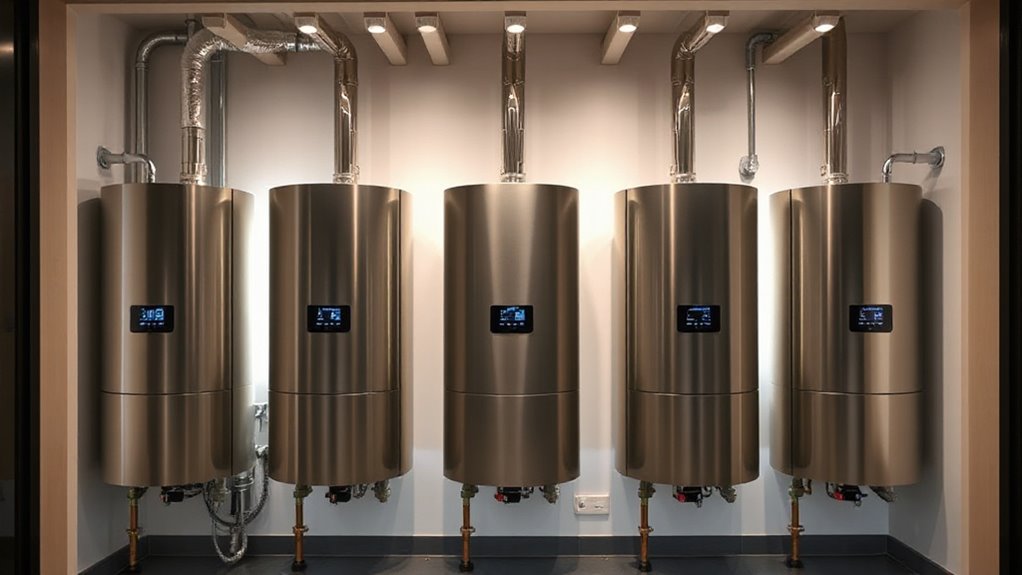

Shopping for a premium tankless water heater for home use means balancing flow rate, fuel type, and installation complexity against your household’s simultaneous hot water demands. The Rinnai RU199iN earns my best overall pick thanks to its 11 GPM output and condensing efficiency, making it the safest bet for large households running multiple fixtures at once. For smaller homes or milder climates, the Rinnai RXP160iN offers smart controls and strong efficiency at a lower capacity, while the Stiebel Eltron Tempra 29 Plus is the standout electric option for homes without gas service. The main tradeoff in this category is upfront condensing efficiency versus simpler, cheaper non-condensing installs — and gas versus electric capability in cold climates. Keep reading for the full breakdown of all nine models.

Get home appliances delivered free with Prime
- Fast, free delivery on millions of items
- Prime Video, Amazon Music and more included
- Member-only deals all year
Complete the kit


Key Takeaways
- Condensing models like the Rinnai RU199iN and RXP160iN cost more upfront but reclaim exhaust heat, delivering noticeably lower operating costs for high-use households.
- Flow rate ratings are lab numbers: in cold-winter climates, the MIZUDO‘s 10.3 GPM and RU199iN’s 11 GPM may effectively deliver 6-7 GPM, so size for your groundwater temperature, not the box label.
- The Stiebel Eltron Tempra 29 Plus is the only electric pick here, and its 28.8kW draw demands serious electrical panel capacity — a hidden cost gas models avoid entirely.
- Non-condensing units like the Rinnai RE199iN and V53DeP trade a few efficiency points for simpler venting and lower install cost, which often makes them the better real-world value.
- Ultra-low NOx models like the Rheem RTGH-84DVLN matter in emission-restricted states like California and Texas, where standard burners may not be compliant.


| premium tankless water heater for home | Warranty | Flow Rate | Installation |
|---|---|---|---|
| MIZUDO Natural Gas Tankless Wa | 2-year full unit, 5-year heat exchanger | 10.3 GPM | — |
| Ranein Natural Gas Tankless Wa | — | 8.5 GPM | — |
| Rinnai V53DeP Propane Tankless | 10-year heat exchanger, 5-year parts, 1-year labor | 5.3 GPM | Outdoor |
| Rinnai RE199iN Non-Condensing | 15-year limited heat exchanger, 5-year parts, 5-year labor with registration | — | Indoor, wall-mounted, professional install recommended |
| Stiebel Eltron Tempra 29 Plus | — | — | — |
| Rinnai RXP160iN Condensing Sma | 15-year heat exchanger, 5-year parts, 5-year labor | — | Indoor or outdoor (RX-OVC vent cap required outdoors) |
| Rheem RTG Series 9.5 GPM Natur | 15-year heat exchanger, 5-year parts | 9.5 GPM | Indoor |
| Rheem RTGH-84DVLN-3 8.4 GPM Na | 15-year heat exchanger, 5-year parts | 8.4 GPM at 35°F rise | Indoor, direct vent, wall mount |
| Rinnai RU199iN Condensing Tank | 15-year heat exchanger, 5-year labor, 1-year parts (residential) | 11 GPM | Indoor |
More Details on Our Top Picks
MIZUDO Natural Gas Tankless Water Heater, 199,000 BTU, Indoor, 10.3 GPM
This option stands out for pairing whole-house 10.3 GPM output with built-in WiFi and Alexa control, something the Rinnai RE199iN charges extra for via its separately sold Controlr module. For buyers who want remote monitoring, usage alerts, and temperature adjustments from a phone without add-on hardware, that integration is the differentiator here. The ±1°F temperature accuracy and low 0.53 GPM activation threshold mean even a trickling faucet triggers consistent hot water — a common weak point on cheaper units like the Ranein 8.5 GPM model. Tradeoffs are real, though: the sealed concentric venting system demands professional installation, and the 2-year full unit warranty falls well short of Rinnai’s 15-year heat exchanger coverage. Homes above 3,000 feet elevation should skip it entirely.
Pros:- 10.3 GPM flow supports simultaneous use across 2-3 bathrooms
- Built-in WiFi and Alexa control with no add-on module needed
- ±1°F temperature precision with 0.53 GPM low-flow activation
- Sealed concentric direct-vent design for safe indoor installation
Cons:- 2-year full unit warranty is short for the category
- Professional installation required due to sealed venting system
- Not recommended above 3,000 feet elevation
Best for: Tech-forward homeowners with 2-3 bathrooms who want app-based control and monitoring out of the box
Not ideal for: Buyers prioritizing long-term warranty protection or homes above 3,000 feet elevation
- Power Source:Natural Gas
- Heat Output:199,000 BTU
- Flow Rate:10.3 GPM
- Temperature Control:±1°F, up to 149°F
- Low-Flow Activation:0.53 GPM
- Venting:3″ x 5″ concentric direct-vent
- Smart Features:WiFi app control, Alexa compatible
- Warranty:2-year full unit, 5-year heat exchanger
Our verdict“This pick makes the most sense for connected homes that want high flow and smart control bundled together, provided a shorter warranty doesn’t bother you.”
Ranein Natural Gas Tankless Water Heater, 8.5 GPM, 190,000 BTU, Indoor
Compared with the Rinnai RE199iN at nearly identical BTU input, the Ranein trades a fraction of a gallon per minute — 8.5 GPM versus 9.8 GPM — for a noticeably lower bar to entry, and for most households serving 4-6 outlets, that flow difference is barely felt in practice. At 42 pounds and under nine inches deep, it is also lighter and slimmer than the MIZUDO, which makes wall mounting in tight utility spaces easier. The compromises show up in the details: there’s no smart connectivity, no stated temperature precision spec, and the 116 psi max pressure rating sits below the MIZUDO’s 150 psi. Elevation limits are stricter too — 2,000 feet versus 3,000 feet — which rules out much of the Mountain West. This model is better suited to budget-conscious buyers who need volume, not bells and whistles.
Pros:- 8.5 GPM handles 4-6 simultaneous outlets for large households
- Lightweight 42 lb, slim 8-inch depth simplifies wall mounting
- Straightforward installation with no smart-module complexity
- Energy-efficient on-demand heating with no standby loss
Cons:- No smart connectivity or precise temperature control specs
- Lower 116 psi max pressure rating than premium rivals
- Hard 2,000 feet elevation limit excludes many regions
Best for: Budget-minded owners of large homes with 4-6 water outlets who need high flow without premium features
Not ideal for: Tech-savvy buyers wanting app control, or households above 2,000 feet elevation
- Power Source:Natural Gas
- Heat Output:190,000 BTU
- Flow Rate:8.5 GPM
- Maximum Temperature:155°F
- Maximum Pressure:116 psi
- Dimensions:15.08″ W x 24.25″ H x 8.07″ D
- Weight:42 lbs
- Mounting:Wall mount, indoor
Our verdict“This is the value play for big households that want endless hot water and little else — skip it if smart features or high-elevation living apply to you.”
Rinnai V53DeP Propane Tankless Water Heater
While the rest of this lineup runs on natural gas or electricity, the V53DeP fills a gap others here can’t: it’s the only dedicated propane option, built for properties without a gas line — rural homes, cabins, and propane-tank setups. Its outdoor installation design eliminates indoor venting entirely, which simplifies placement in a way the indoor-only Ranein and MIZUDO can’t match, though it exposes the unit to weather and demands a climate-appropriate wall. The 5.3 GPM flow is modest next to the Rinnai RE199iN’s 9.8 GPM, so this is realistically a one-to-two bathroom solution, not a whole-home workhorse for a family of five. What justifies the premium price is longevity: enhanced scale detection plus a 10-year heat exchanger warranty mean lower lifetime ownership risk than the value-tier units.
Pros:- Propane fuel suits homes without natural gas service
- Outdoor mounting eliminates venting costs and frees indoor space
- Enhanced scale detection extends heat exchanger life
- Strong warranty: 10-year heat exchanger, 5-year parts
Cons:- Higher upfront cost than comparable gas units
- 5.3 GPM limits simultaneous fixture use
- Professional installation still required for gas and water lines
Best for: Rural or off-gas-line homeowners on propane who want durable, vent-free indoor space savings
Not ideal for: Large households running three or more showers at once — 5.3 GPM won’t keep up
- Fuel Type:Propane
- Flow Rate:5.3 GPM
- Installation:Outdoor
- Technology:Non-condensing tankless
- Durability Features:Enhanced scale detection
- Warranty:10-year heat exchanger, 5-year parts, 1-year labor
Our verdict“The right call for propane households that value durability and simple outdoor mounting over maximum flow.”
Rinnai RE199iN Non-Condensing Natural Gas Tankless Water Heater, Indoor, 9.8 GPM
This model earns the top spot by combining near-top-tier 9.8 GPM flow with the longest warranty in this batch — 15 years of limited heat exchanger coverage, dwarfing the MIZUDO’s 5-year exchanger term and the V53DeP’s 10-year. For a premium purchase meant to last a decade or more, that coverage is the single best proxy for ownership peace of mind. The LED display with diagnostic codes and service reminders translates into fewer mystery breakdowns and cheaper service calls, a practical edge over the Ranein, which offers no comparable diagnostics. Tradeoffs exist: WiFi capability requires the separately sold Controlr module, so the MIZUDO wins on out-of-box smart features, and buyers wanting built-in recirculation must step up to the Rinnai REP199iN instead. As a non-condensing unit, it also vents less efficiently than the Rinnai RU199iN, though with a simpler, more serviceable design.
Pros:- 9.8 GPM supports multiple simultaneous showers and fixtures
- 15-year limited heat exchanger warranty leads this lineup
- LED diagnostics and service reminders reduce maintenance guesswork
- Compact wall-mount design reclaims space versus tank heaters
Cons:- WiFi smart features require the separately sold Controlr module
- No built-in recirculation — that requires the REP199iN model
- Professional installation adds meaningful cost
Best for: Homeowners who want proven whole-home performance and the strongest long-term warranty protection available
Not ideal for: Buyers wanting built-in smart controls or recirculation without paying for add-on modules or a higher trim
- Fuel Type:Natural Gas
- Technology:Non-condensing tankless
- Max Flow Rate:9.8 GPM
- BTU:199,000
- Installation:Indoor, wall-mounted, professional install recommended
- WiFi:Via Rinnai Controlr module (sold separately)
- Warranty:15-year limited heat exchanger, 5-year parts, 5-year labor with registration
Our verdict“If longevity and reliable whole-house flow matter more to you than app control, this is the safest premium bet in the roundup.”
Stiebel Eltron Tempra 29 Plus Electric Tankless Water Heater, 28.8kW, 240V
This option stands out for eliminating the entire gas equation: no venting, no gas line, no combustion — a genuinely different installation path compared to every Rinnai and gas model in this guide. At 28.8 kW, it can serve a whole home in warm-climate regions or a couple of fixtures anywhere else, and its two temperature memory presets make morning-shower versus dishwasher switching a one-button affair. The catch is electrical: it demands three dedicated 40 amp breakers, 8-gauge copper wiring, and a 200 amp home service. Many older homes simply don’t have that capacity, and a panel upgrade can erase any savings versus the Rinnai RE199iN. Compared with the gas units, flow output in cold climates will also lag noticeably — incoming groundwater temperature caps real-world GPM. This is a clean, compact solution when your electrical infrastructure cooperates.
Pros:- No venting or gas line required, simplifying placement anywhere
- Sleek compact form factor fits tight spaces like closets and under sinks
- Two temperature memory presets for quick comfort settings
- Unlimited on-demand hot water with no standby heat loss
Cons:- Requires three dedicated 40 amp breakers and 8-gauge copper wiring
- Needs minimum 200 amp total home electrical service
- Real-world flow drops sharply in cold climates with cold groundwater
Best for: Homeowners with modern 200 amp electrical service who want a ventless, gas-free point-of-use or whole-home solution
Not ideal for: Homes with 100-150 amp service or cold-climate buyers needing high simultaneous flow — the electrical demands and GPM limits will disappoint
- Power:28.8 kW (28,800 watts at 240V)
- Voltage:240V / 208V
- Wattage at 208V:21,600 watts
- Breakers Required:3 dedicated 40 amp breakers
- Wiring:8 gauge copper, hard-wired
- Venting:None required
- Temperature Presets:2 memory presets
Our verdict“The right choice only if your electrical panel can handle it — otherwise a gas unit like the Rinnai RE199iN delivers far more flow per dollar of installation hassle.”
Rinnai RXP160iN Condensing Smart Sense Tankless Water Heater
The RXP160iN stands out for its Smart-Circ intelligent recirculation, which learns when your household actually uses hot water and pre-circulates accordingly — something the simpler Rheem RTG Series can’t match without external add-ons. Its UEF 0.97 efficiency makes it the most efficient gas unit in this lineup, and the dual-fuel Smart Sense control plus indoor/outdoor flexibility gives installers options most competitors here don’t. Compared with the Rinnai RU199iN, you give up about 2 GPM of peak flow, but you gain a built-in recirculation pump rather than needing to buy one separately. The tradeoffs are real: WiFi requires the separately sold Controlr module, and the full 5-year labor warranty demands registration within 90 days.
Pros:- Smart-Circ recirculation with an internal pump that learns household usage patterns
- Highest efficiency in this lineup at UEF 0.97
- Field-convertible between propane and natural gas with indoor or outdoor installation
- 9 GPM flow supporting up to 6 fixtures at once
Cons:- WiFi control requires the separately purchased Controlr module
- Full 5-year labor warranty only applies if registered within 90 days
Best for: Homeowners who want learned recirculation, minimal hot-water wait, and the flexibility to install indoors or out on either gas type
Not ideal for: Buyers wanting app control out of the box — the Controlr module costs extra and isn’t included
- Type:Condensing tankless
- Fuel:Propane or natural gas (Smart Sense)
- Max Flow Rate:9 GPM (6 fixtures)
- Efficiency:UEF 0.97
- Installation:Indoor or outdoor (RX-OVC vent cap required outdoors)
- Recirculation:Smart-Circ with internal pump
- Warranty:15-year heat exchanger, 5-year parts, 5-year labor
Our verdict“This pick makes the most sense for households that hate waiting for hot water and want the smartest, most efficient gas unit available.”
Rheem RTG Series 9.5 GPM Natural Gas Tankless Water Heater, Indoor
Rheem’s RTG Series targets the straightforward tank-to-tankless conversion. At 9.5 GPM from 199,900 BTUs, it edges out the Rinnai RXP160iN on raw flow, making it a solid fit for large households running multiple showers at once. Unlike both Rinnai models here, WiFi is built in — no extra module to buy — so remote temperature control works from day one. The catch is efficiency: at UEF 0.82, it’s a non-condensing design that vents hot exhaust, meaning higher operating costs and potentially different venting than a condensing unit like the Rheem RTGH-84DVLN would need. If your priority is maximum hot water with app control and simpler venting logic, that tradeoff can be worth it; efficiency-focused buyers should look elsewhere in this lineup.
Pros:- 9.5 GPM flow handles multiple simultaneous showers
- Built-in WiFi with remote temperature control, no extra module needed
- Space-saving wall-mount design frees up tank footprint
- 15-year heat exchanger warranty
Cons:- Non-condensing 0.82 UEF means higher gas bills than condensing models
- Indoor installation may require venting modifications from an old tank setup
Best for: Large households replacing an aging tank heater who want high flow and built-in app control without add-on modules
Not ideal for: Efficiency-focused buyers — the 0.82 UEF non-condensing design costs noticeably more to run than condensing rivals
- Flow Rate:9.5 GPM
- BTU Output:199,900 BTU/hr
- Efficiency:UEF 0.82
- Fuel:Natural gas
- Installation:Indoor
- Warranty:15-year heat exchanger, 5-year parts
Our verdict“A strong choice for whole-house tank replacements where flow and connectivity matter more than peak efficiency.”
Rheem RTGH-84DVLN-3 8.4 GPM Natural Gas Tankless Water Heater, Indoor, Condensing, Ultra-Low NOx
For buyers who want condensing efficiency without the flagship price, the RTGH-84DVLN-3 is the rational middle ground. Its 0.93 UEF puts it near the Rinnai RXP160iN’s efficiency while costing less overall, and Hot Start Programming solves a real annoyance — the cold-water sandwich during back-to-back showers — that basic units like the Ranein 8.5 GPM don’t address. At 8.4 GPM it comfortably handles 3–4 simultaneous showers, though it trails the Rheem RTG’s 9.5 GPM for the biggest households. The ultra-low NOx burner also matters in states with strict emissions rules. Real tradeoffs: it’s indoor-only, needs a natural gas supply plus direct venting, and offers no built-in connectivity at all — this is a workhorse, not a smart appliance.
Pros:- Condensing 0.93 UEF efficiency, using up to 34% less energy than a 50-gallon electric tank
- Hot Start Programming prevents cold water bursts between back-to-back uses
- Ultra-low NOx burner meets strict emissions requirements
- Compact 17.7-inch-wide wall-mount cabinet with 15-year heat exchanger warranty
Cons:- No WiFi or smart features of any kind
- Requires natural gas supply and direct venting, indoor installation only
Best for: Families of 3–4 simultaneous showers who want condensing efficiency and reliability on a tighter budget
Not ideal for: Households wanting app monitoring or recirculation features — this model has neither
- Flow Rate:8.4 GPM at 35°F rise
- Heat Output:157,000 BTU
- Efficiency:UEF 0.93
- Fuel:Natural gas
- Max Temperature:140°F
- Dimensions:17.7″ W x 23.7″ H x 9.8″ D, 59.9 lb
- Installation:Indoor, direct vent, wall mount
- Warranty:15-year heat exchanger, 5-year parts
Our verdict“The best value among condensing gas units here — ideal for buyers who prioritize efficiency and dependability over connectivity.”
Rinnai RU199iN Condensing Tankless Water Heater, 11 GPM, Natural Gas, Indoor
When nothing less than maximum simultaneous demand will do, the RU199iN is the heavyweight of this roundup. Its 11 GPM output feeds up to 7 appliances at once — two more fixtures than the RXP160iN and comfortably ahead of the Rheem RTGH-84DVLN — which makes it the right call for homes with multiple bathrooms, a laundry load, and a dishwasher running together. Compared with the similarly sized RE199iN, the condensing design here extracts far more heat from the same gas, and Circ-Logic support cuts wait times at distant taps. Note the catches: recirculation needs an external pump bought separately (unlike the RXP160iN’s built-in pump), and WiFi monitoring requires the optional Controlr module. It’s also indoor-only and gas-locked to natural gas.
Pros:- Class-leading 11 GPM flow supporting up to 7 simultaneous appliances
- Condensing design is ENERGY STAR qualified and heats only on demand
- Circ-Logic recirculation support reduces hot water wait times
- 15-year residential heat exchanger warranty
Cons:- Requires a separately purchased external pump to use recirculation features
- WiFi monitoring needs the optional Controlr module, not included
- Natural gas only, indoor installation only
Best for: Large households with 4+ bathrooms or high simultaneous demand who need the highest flow available
Not ideal for: Small homes or single-bathroom condos — the 11 GPM capacity and cost are overkill
- Type:Condensing tankless
- Fuel:Natural gas
- Flow Rate:11 GPM
- Simultaneous Appliances:Up to 7
- Installation:Indoor
- Recirculation:Circ-Logic support (external pump required)
- Warranty:15-year heat exchanger, 5-year labor, 1-year parts (residential)
Our verdict“The pick for big households that refuse to ration hot water — just budget for the add-ons if you want recirculation or app control.”

How We Picked
I evaluated these nine models against the factors that actually determine satisfaction with a premium tankless water heater for home use: real-world flow performance (accounting for cold-climate derating), thermal efficiency, condensing versus non-condensing design, venting requirements, and smart control features. Whole-house models were prioritized over point-of-use units, since buyers searching in this category typically want to replace a tank heater rather than supplement one. I also weighed installation realities — gas line sizing, electrical demands, and venting — because these costs often exceed the unit price itself.
The ranking rewards units that pair high capacity with efficiency (the RU199iN and RXP160iN), slots simpler non-condensing models as value and beginner-friendly picks, and reserves specific roles for the electric Tempra 29 Plus and propane V53DeP where fuel availability — not raw performance — is the deciding factor. Every pick has a defined buyer, and every omission of praise is deliberate: no model here is right for everyone.
| premium tankless water heater for home | Installation |
|---|---|
| MIZUDO Natural Gas Tankless Wa | — |
| Ranein Natural Gas Tankless Wa | — |
| Rinnai V53DeP Propane Tankless | Outdoor |
| Rinnai RE199iN Non-Condensing | Indoor, wall-mounted, professional install recommended |
| Stiebel Eltron Tempra 29 Plus | — |
| Rinnai RXP160iN Condensing Sma | Indoor or outdoor (RX-OVC vent cap required outdoors) |
| Rheem RTG Series 9.5 GPM Natur | Indoor |
| Rheem RTGH-84DVLN-3 8.4 GPM Na | Indoor, direct vent, wall mount |
| Rinnai RU199iN Condensing Tank | Indoor |
Factors to Consider When Choosing Premium Tankless Water Heater For Home
Choosing a premium tankless water heater involves more than comparing GPM numbers on a spec sheet. These are the factors that most often make or break the purchase.Size for Your Groundwater Temperature, Not the Label
The single most common mistake buyers make is trusting the flow rate printed on the box. That number assumes a mild 77°F temperature rise, which only holds in warm southern climates. In northern states, winter groundwater can drop below 40°F, cutting a 10 GPM unit’s effective output nearly in half. Before shopping, count your simultaneous peak demand — two showers plus a dishwasher is roughly 5 GPM — and check your local groundwater temperature chart. A smaller condensing unit sized correctly will outperform an oversized model you never needed, and a wrongly sized premium heater produces the exact lukewarm-shower disappointment you paid to avoid.
Condensing vs. Non-Condensing: The Efficiency Tradeoff
Condensing models extract residual heat from exhaust gases, pushing thermal efficiency above 90% and allowing cheaper PVC venting — but they add upfront cost and require condensate drainage. Non-condensing units waste more heat up the flue and require expensive stainless steel venting, yet their simpler design often means fewer components to fail and a lower install bill. The break-even math favors condensing for households using more than roughly 60 gallons of hot water daily; light users may never recoup the premium. This is why my rankings include both designs rather than defaulting to the most efficient option.
Fuel Type and Hidden Infrastructure Costs
Natural gas models dominate this lineup for good reason, but your home’s infrastructure determines what’s realistic. A 199,000 BTU unit like the MIZUDO or RU199iN may require a gas line upgrade — a cost that can rival the heater itself if your current line was sized for a tank unit. Propane conversions (the V53DeP) suit rural homes without gas mains. Electric units like the Tempra 29 Plus avoid venting entirely but demand 120+ amps of dedicated service, which frequently means a panel upgrade in older homes. Always get the fuel infrastructure quote before committing to a unit.
Smart Features and Recirculation Compatibility
Premium models increasingly include app control, leak detection, and integration with recirculation loops — features that matter more than they first appear. Recirculation compatibility eliminates the 30-60 second cold-water wait at distant fixtures, which is the most common complaint from converted tank owners. Wi-Fi monitoring lets you catch scale buildup and flow errors before they become service calls. If your fixtures sit far from the heater location, prioritize models like the Rinnai smart-capable units over slightly higher flow ratings; comfort at the tap beats capacity you never use.
Maintenance Commitments and Longevity
Tankless heaters reward maintenance in a way tank units never did. Annual descaling with vinegar takes under an hour and is non-negotiable in hard-water regions — scale is the leading killer of heat exchangers and the top cause of warranty denials. Condensing models add a neutralizer cartridge that needs periodic replacement. Buyers who ignore this commit to a 5-8 year lifespan instead of the 15-20 years these units can deliver. Factor in whether you’ll handle flushes yourself or pay for a service plan, and register the warranty promptly since most premium brands require documented installation by a licensed professional.
Frequently Asked Questions
Is 8.5 GPM enough for a whole house, or do I need 10+ GPM?
For most homes, 8.5 GPM is genuinely sufficient. A standard shower uses about 2 GPM, so two simultaneous showers plus a kitchen sink still leaves headroom on an 8.5 GPM unit — provided your climate cooperates. The catch is temperature rise: in a cold-winter state, that 8.5 GPM unit might realistically deliver 5 GPM, which is still enough for two showers but tightens quickly if a washing machine kicks on. Reserve the 10-11 GPM giants like the RU199iN and MIZUDO for homes in cold climates, households of five or more, or anyone who routinely runs three hot-water fixtures at once. Paying for capacity you never simultaneous draw is money better spent on efficiency.
Can I install a tankless water heater myself to save money?
I’d advise against it for the gas models in this lineup, and not just for safety reasons. Nearly every premium manufacturer — Rinnai and Rheem included — conditions its warranty on professional installation by a licensed contractor, and a DIY install can void coverage on a unit you paid a premium for. Gas models involve line sizing, pressure testing, and venting that fall under code requirements in most jurisdictions, and mistakes with condensate drainage can damage the unit. Electric models like the Tempra 29 Plus are more DIY-accessible if you’re comfortable with 240V double-pole circuits, but even then, permits and inspection protect you if you ever sell the home. Budget $1,000-2,500 for professional installation on top of the unit price.
Are condensing tankless heaters worth the extra cost?
For high-use households, yes — the math works in your favor over the ownership period. Condensing units run above 90% thermal efficiency versus roughly 80% for non-condensing models, which translates to real savings on monthly gas bills when you’re heating water for a family. They also use PVC venting instead of pricey stainless steel, which claws back some of the upfront difference at installation. The tradeoffs are added complexity (a secondary heat exchanger and condensate drain) and slightly more maintenance items. If you’re a single person or couple using modest hot water, a non-condensing unit like the RE199iN will likely serve you well for less money, and the efficiency premium may never pay for itself.
What does the Stiebel Eltron electric model require that gas models don’t?
Electrical capacity — and lots of it. The Tempra 29 Plus draws 28.8 kW at 240V, which works out to roughly 120 amps of dedicated service, often requiring three double-pole breakers. Many homes, especially older ones with 100-amp or 150-amp panels, simply cannot support that load alongside an EV charger or electric range, meaning a panel upgrade could double your total project cost. On the plus side, electric units need no venting, no gas line, no combustion air, and no annual descaling urgency on the same scale as gas models, and they can be installed in tighter spaces. Get an electrician’s assessment of your panel capacity before ordering; this is the single factor that decides whether the electric route is a bargain or a money pit.
How long do premium tankless water heaters actually last?
With proper care, 15 to 20 years is realistic, and that lifespan advantage is a core part of the premium pitch — a quality tank heater lasts 10-12, so the tankless unit outlives it by half again. The determining factor is almost always heat exchanger health, which means managing hard water. Annual descaling with a vinegar flush takes under an hour with a $100 pump kit, and skipping it is the fastest way to choke flow and kill the exchanger early. Condensing models have more components but their secondary exchangers operate under less thermal stress. Also note that heat exchangers often carry longer warranties (10-15 years) than the parts coverage, so registering the product and keeping service records protects your investment if a failure does occur.
Conclusion
The right pick here depends less on which unit is objectively best and more on your household’s shape. For best overall, the Rinnai RU199iN pairs the lineup’s highest capacity with condensing efficiency, making it the safest choice for large families and cold climates. The Rinnai RE199iN takes best value — non-condensing simplicity and strong flow without the condensing price premium. For best premium, the Rinnai RXP160iN layers smart controls and recirculation-friendly design onto high efficiency for buyers who want the most refined experience. Beginners and smaller households should look at the Rheem RTG Series 9.5 GPM for its straightforward operation and manageable install, while the Rheem RTGH-84DVLN suits emission-restricted states with its ultra-low NOx certification. For specific needs: the Stiebel Eltron Tempra 29 Plus for homes without gas service (pending an electrical panel check), the Rinnai V53DeP for propane households, and the MIZUDO or Ranein for buyers prioritizing maximum BTU output at a lower price point. Match the unit to your water demand and fuel infrastructure, and any of these will outperform the tank heater you’re leaving behind.
Fall Picks
fall essentials
As an affiliate, we earn on qualifying purchases.