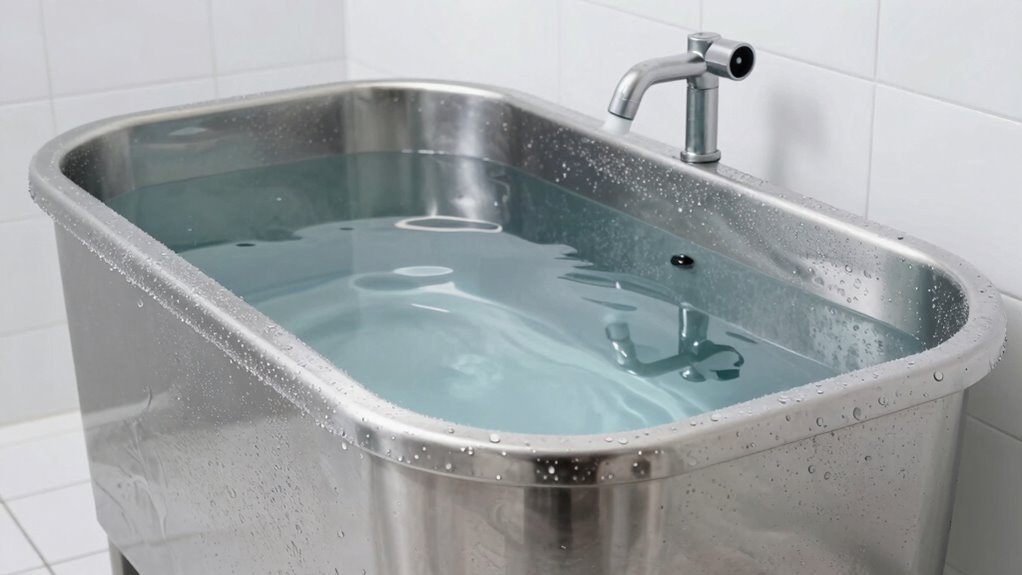
When your cold plunge pool is labeled as “sanitized,” it means proper disinfection practices have been followed to reduce germs, bacteria, and contaminants. This involves regularly cleaning the pool and use of effective disinfectants like chlorine or bromine, along with water testing to maintain safe levels. Maintaining proper pH and ensuring good water circulation are also key. By fully understanding what “sanitized” entails, you can confidently enjoy a safe, hygienic plunge—if you keep exploring, you’ll get detailed tips to keep your pool pristine.
Key Takeaways
- “Sanitized” means reducing bacteria, germs, and contaminants to safe levels through proper disinfection practices.
- It involves consistent use of disinfectants like chlorine or bromine, tested regularly for effectiveness.
- Proper water circulation, filtration, and pH balance support effective sanitation and prevent harmful microbial growth.
- Automated monitoring tools can ensure water remains sanitized by providing real-time quality data.
- Regular cleaning, chemical adjustments, and adherence to hygiene standards are essential for truly sanitized cold plunge pools.
Why Is Proper Sanitation Critical for Cold Plunge Pool Safety?
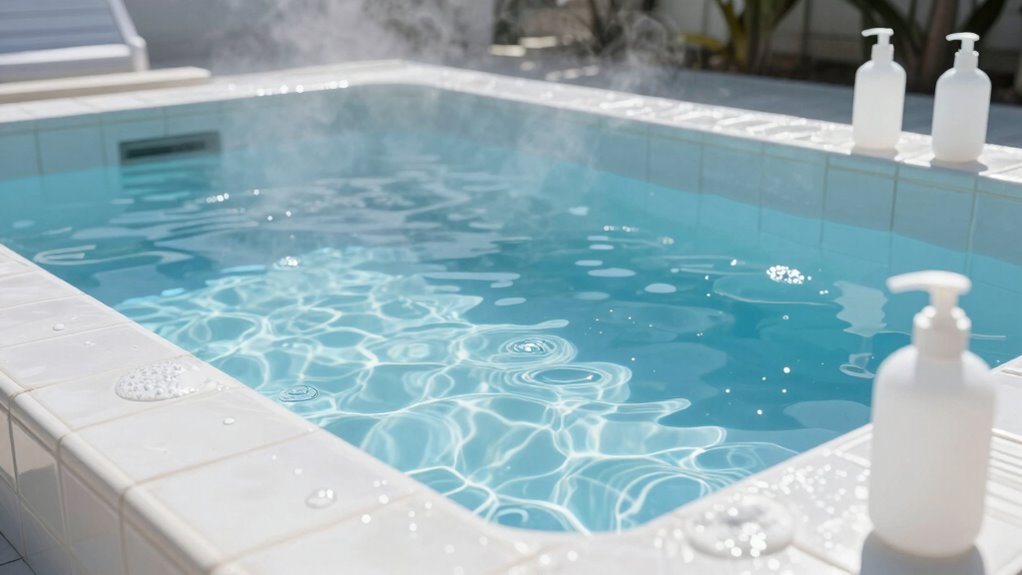
Proper sanitation is essential for keeping cold plunge pools safe because it directly prevents the growth of harmful bacteria and algae. A clean pool cover acts as a barrier, reducing debris and contaminants that can introduce bacteria. Maintaining the right water temperature is equally important; colder water slows bacterial growth, but if the temperature rises, bacteria can thrive. Keeping the cover secure helps retain consistent water temperature, making sanitation more effective. Without proper sanitation measures, bacteria and algae can quickly proliferate, risking infections and skin irritations. Regular cleaning, paired with a well-maintained pool cover and monitored water temperature, ensures your cold plunge remains safe, hygienic, and inviting for every use. Additionally, understanding contrast ratio can help in setting up the environment to optimize sanitation by reducing microbial growth in the water. Proper chemical balancing and disinfection protocols are also crucial components in maintaining a hygienic cold plunge environment. Employing effective water testing methods can further ensure sanitation standards are consistently met.
What Does “Sanitized” Mean and Why It Matters

Have you ever wondered what “sanitized” really means for your cold plunge pool? Sanitization involves reducing germs, bacteria, and other contaminants to meet specific hygiene standards. It’s not just about cleaning; it’s about lowering contamination risks that can cause infections or skin irritations. When a pool is labeled “sanitized,” it indicates that appropriate disinfection practices have been followed to ensure safe water quality. This process helps maintain a clean environment, protecting your health and extending the lifespan of your equipment. Understanding what “sanitized” entails ensures you’re more aware of how essential proper hygiene standards are for your cold plunge. It’s a critical step in creating a safe, healthy experience every time you take the plunge.
What Are the Best Disinfection Methods for Cold Plunge Pools?
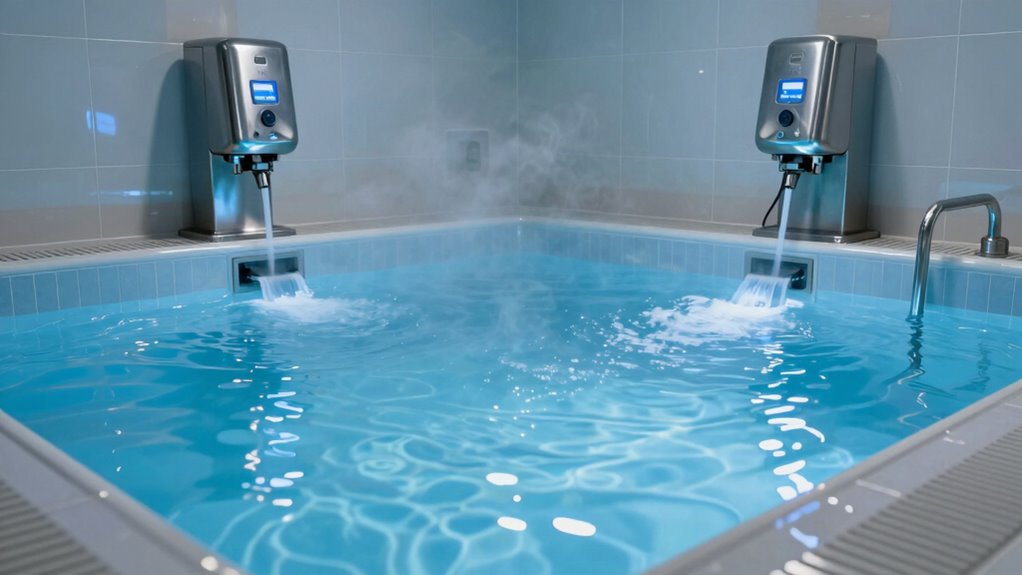
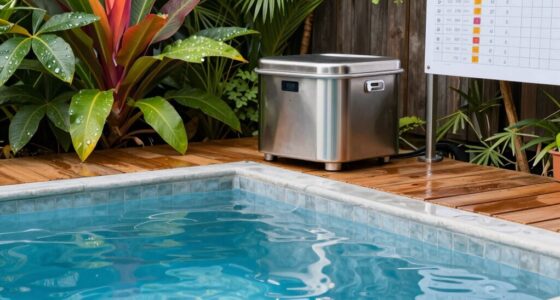
To effectively disinfect your cold plunge pool, choosing the right method is essential for ensuring safe, clean water. Using pool covers helps reduce debris and limits bacteria growth when the pool isn’t in use, maintaining sanitation between cleanings. Proper water circulation is equally critical, as it evenly distributes disinfectants and prevents stagnant areas where bacteria can thrive. Chlorine and bromine are common chemical disinfectants that quickly neutralize germs, but they require careful dosing and monitoring. Alternative options include UV sterilization and ozonation, which use light and ozone to eliminate pathogens without chemicals. Combining these methods can optimize disinfection, but always prioritize consistent water movement and coverage to keep your cold plunge pool safe and hygienic. Connected home fitness technology can also assist in monitoring water quality and automating maintenance routines for added convenience. Additionally, understanding the disinfection process helps you select the most effective and sustainable method for your pool needs. Incorporating regular maintenance routines ensures long-term cleanliness and prevents buildup of harmful microorganisms. Implementing advanced monitoring systems can further enhance the effectiveness of your disinfection strategy.
How Often Should You Sanitize Your Cold Plunge Pool?
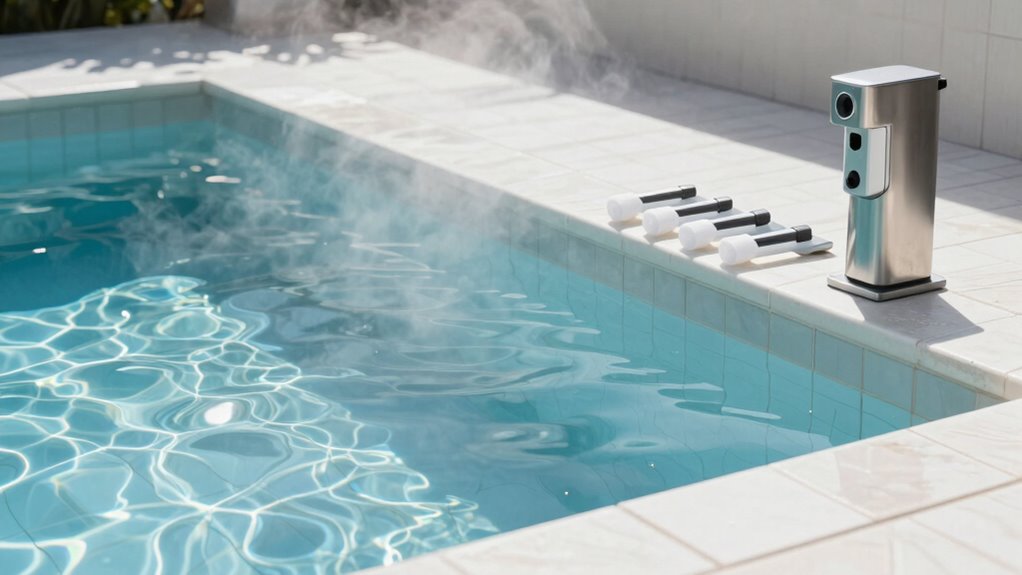
How often you should sanitize your cold plunge pool depends on how frequently it’s used and the environment it’s kept in. Regular sanitation helps maintain proper chlorine levels, prevents bacteria buildup, and keeps your water safe. If you use your plunge daily, consider sanitizing every 1-2 days. For less frequent use, every few days may suffice. Consistent filter maintenance is essential to support sanitation efforts, ensuring water stays clear and free of contaminants. Understanding pool chemistry can help you optimize your disinfection routine for safe, clean water.
How Can You Test Your Pool Water at Home for Safety?
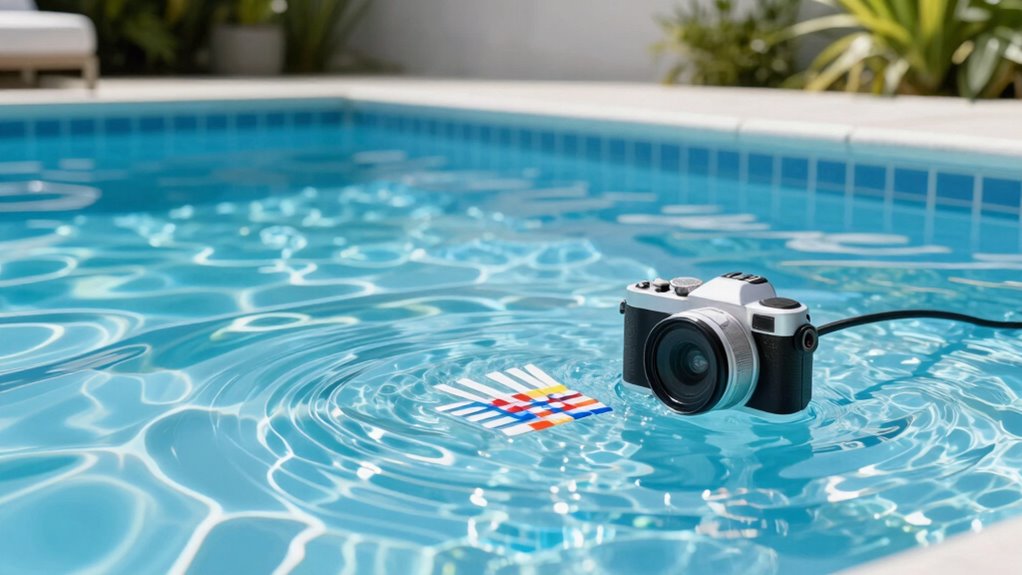
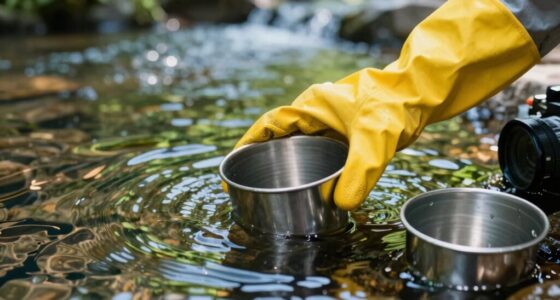
Wondering if your cold plunge water is safe? You can easily check it at home using test strips or water testers. Test strips are simple: dip one into your pool water, then compare the color change to the chart on the bottle. Water testers, on the other hand, often provide digital readings for pH, chlorine, and sanitizer levels, giving you quick, accurate results. Regular testing helps you maintain safe water conditions and prevents bacteria buildup. It’s best to test your water daily or after heavy use. Keep a log of your results so you can track changes over time. By staying proactive with these tools, you’ll ensure your cold plunge remains both enjoyable and safe. Proper testing procedures are essential for accurate readings, and maintaining proper chemical balance is crucial for water safety. Incorporating professional-grade testing tools can further enhance your ability to monitor water safety effectively. Additionally, understanding water quality standards ensures you adhere to safety guidelines and keep your cold plunge healthy.
How Do You Know If Your Cold Plunge Pool Is Properly Sanitized?
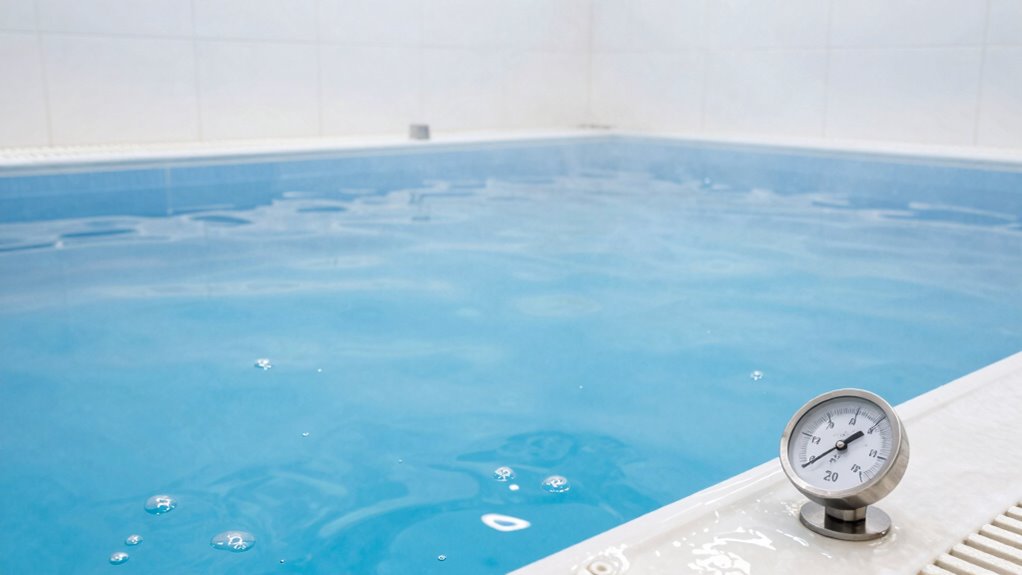
You can tell if your cold plunge pool is properly sanitized by monitoring its water quality regularly. Consistent water testing helps ensure the levels of sanitizer are adequate and bacteria are controlled. Check your pool filtration system to confirm it’s functioning correctly, keeping water clear and free of debris. Look for the following signs:
Regularly test water quality and check filtration to confirm your cold plunge pool is properly sanitized.
- Clear, clean water without cloudiness or algae
- Proper sanitizer levels as indicated by test strips or kits
- No foul odors or slimy surfaces
Regular water testing verifies that chemical levels are balanced, while a well-maintained pool filtration system keeps contaminants at bay. Ensuring your cold plunge pool is compliant with safety and quality standards further confirms it is properly sanitized and safe to use. Maintaining proper disinfection practices is essential for preventing bacteria buildup and ensuring a safe experience. Additionally, understanding water treatment protocols can help you optimize sanitation efforts, especially in water quality management to prevent issues before they arise.
What Are Common Myths About Cold Plunge Pool Hygiene Debunked?
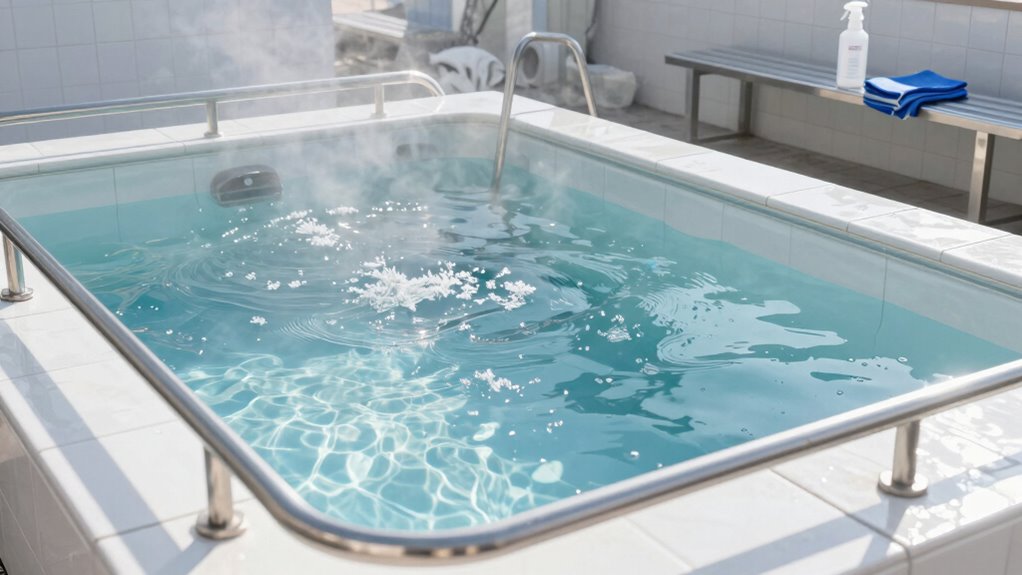
Many people believe that cold plunge pools are inherently dirty or require excessive chemicals to stay safe, but these myths often lead to unnecessary concerns. Myth busting reveals that maintaining hygiene in a cold plunge pool is straightforward with proper practices. Hygiene facts show that regular circulation, filtration, and minimal disinfectant use are enough to keep the water safe. You don’t need harsh chemicals or constant scrubbing to prevent bacteria or algae growth if you follow recommended maintenance routines. Believing that cold water automatically breeds germs is false; cold plunge pools can be hygienic with the right care. Understanding these myths helps you avoid unwarranted fears and promotes smarter, more effective hygiene habits for your pool. Proper cleaning and maintenance are essential components of water hygiene that ensure a safe and healthy experience.
How Can You Keep Your Cold Plunge Pool Clean and Safe Yourself?
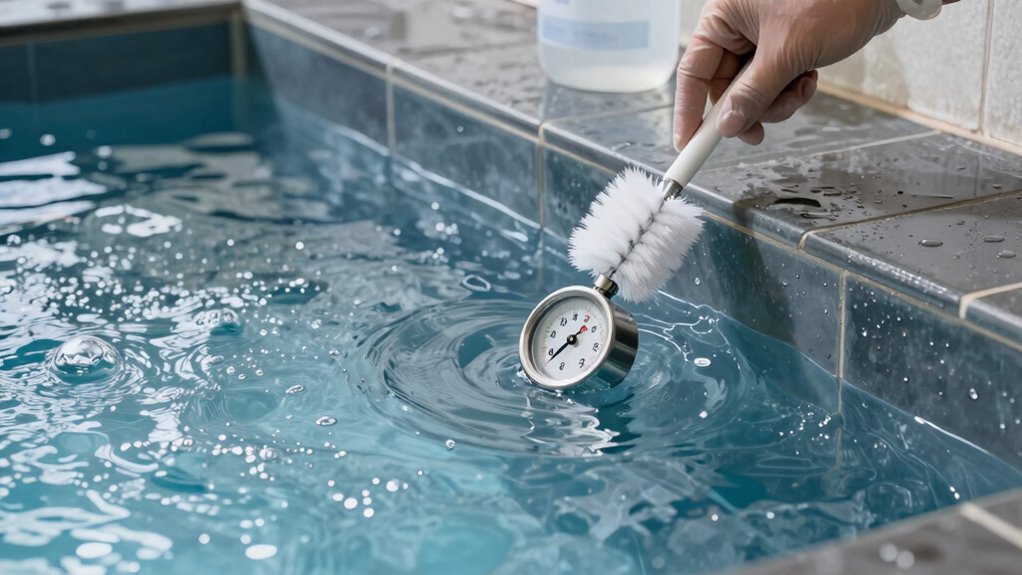
Maintaining a clean and safe cold plunge pool doesn’t require complicated procedures or harsh chemicals. Regular upkeep ensures your pool stays hygienic and enjoyable. Focus on proper pool filtration to remove debris and contaminants effectively. Keep an eye on pH balancing, aiming for a neutral level around 7.2 to 7.6, which prevents irritation and supports sanitizer efficiency. Using simple electrical systems can help automate some maintenance tasks, making it easier to keep your pool in top condition. Additionally, understanding the importance of proper disinfection techniques is crucial for ensuring water safety. You can further maintain safety by: – Regularly cleaning the filter to ensure ideal water flow and clarity – Testing and adjusting pH levels weekly – Draining and refilling the pool periodically to dilute any buildup. Incorporating water treatment methods aligned with industry standards can further enhance your pool’s hygiene. Implementing automated monitoring can help you maintain consistent water quality and reduce manual oversight. Utilizing smart‑home integrations with compatible sensors and controllers can streamline your maintenance routine and alert you to issues proactively. These simple steps help keep your cold plunge pool clean, safe, and inviting, making your dips both invigorating and worry-free.
Frequently Asked Questions
How Do Different Disinfectants Affect Cold Plunge Water Quality?
Different disinfectants affect your cold plunge water quality in various ways. Chlorine effects include quick microbial kill but can cause strong odors and skin irritation if overused. Bromine stability allows it to last longer and work effectively at lower temperatures, making it a good option. You should choose based on your needs—chlorine for rapid sanitation and bromine for long-lasting, stable disinfection without harsh smells.
Can Natural Remedies Replace Chemical Disinfectants?
Natural remedies can supplement chemical disinfectants, but they shouldn’t substitute them entirely. While remedies like vinegar or tea tree oil have antimicrobial properties, they might not consistently eliminate germs in cold plunge water. You need proven chemical disinfectants to guarantee proper sanitation. Using natural remedies alone risks insufficient disinfection, so combining them with standard disinfectants can enhance water quality without relying solely on natural options.
What Are Signs of Ineffective Sanitation in Cold Plunge Pools?
Imagine you’re back in the days of the Black Plague—ineffective sanitation shows through bacterial growth and murky water clarity. If your cold plunge pool’s water appears cloudy, has a foul smell, or shows visible algae, these are signs sanitation isn’t working. Bacterial buildup can cause skin irritations or infections, so always monitor water quality closely. Regular testing and proper disinfection help prevent these issues and keep your plunge safe and enjoyable.
How Does Water Temperature Influence Disinfection Effectiveness?
Water temperature critically impacts disinfection effectiveness because higher temperatures enhance microbial reduction, making sanitizers work more efficiently. Cooler water can hinder sanitizer activity, allowing microbes to survive and multiply. Maintaining a suitable water temperature ensures that disinfectants penetrate effectively, reducing the risk of contamination. You should monitor and adjust the temperature regularly, aiming for the recommended range, to keep your cold plunge pool properly sanitized and safe for users.
Are There Eco-Friendly Disinfection Options for Cold Plunge Pools?
Are eco-friendly options truly effective? You can rely on biodegradable disinfectants and plant-based sanitizers to keep your cold plunge pool clean without harming the environment. These alternatives break down naturally, reducing chemical runoff and toxicity. Using such options not only protects aquatic life but also promotes a healthier space for you. Embracing eco-conscious solutions makes your disinfection routine more sustainable while maintaining safety and hygiene.
Conclusion
Think of your cold plunge pool like a delicate garden; regular cleaning and proper disinfection are the sunlight and water it needs to thrive. When you stay vigilant—testing your water, sanitizing consistently—you’re ensuring it’s a safe, invigorating oasis rather than a hidden hazard. Just as neglect can turn a garden into weeds, skipping proper care can compromise your pool’s safety. With knowledge and routine, you’ll keep your plunge pool pristine and enjoyable for every dip.