To keep your cold plunge clean and functioning well, you should typically clean the filter every 1 to 2 weeks, especially if you use it frequently or notice debris buildup. Factors like water quality, temperature, and usage can affect this schedule, so monitor water clarity and flow to determine if you need more frequent cleaning. Regular maintenance prolongs your filter’s life and keeps water safe—continue on to discover detailed tips and signs it’s time to act.
Key Takeaways
- Clean the filter every 1 to 2 weeks during regular use to prevent debris buildup and maintain water clarity.
- Increase cleaning frequency if water appears cloudy, odorous, or if flow rate decreases.
- Deep clean and replace filters as recommended by manufacturer, typically every 3 to 6 months.
- More frequent cleaning is needed in warm or chemically imbalanced water to control bacteria and algae growth.
- Regularly monitor water quality and clarity to adjust cleaning intervals for optimal filter performance.
Why Regularly Cleaning Your Cold Plunge Filter Matters
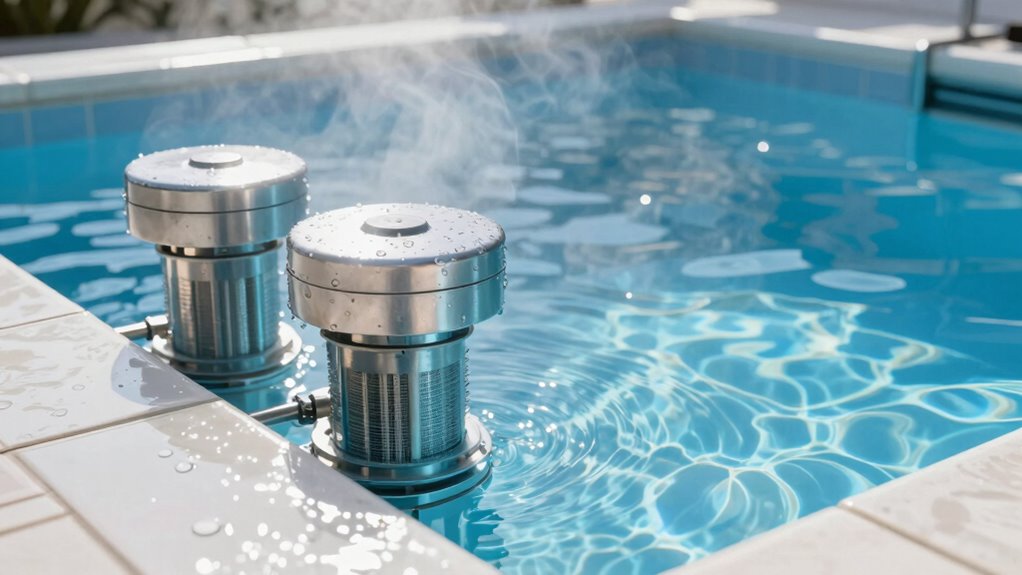
Regularly cleaning your cold plunge filter is essential because a dirty filter can reduce water flow and strain your system. Proper filter maintenance guarantees your water filtration stays effective, keeping your plunge clean and safe. When filters aren’t cleaned regularly, debris and buildup can clog the system, making it work harder and increasing energy consumption. This added strain can also lead to system wear and tear, potentially shortening the lifespan of your equipment. Clean filters also help maintain water clarity and prevent bacteria growth, promoting a healthier environment. Neglecting filter maintenance compromises water quality and may cause your system to malfunction. Additionally, understanding the filter lifespan can help you schedule timely replacements and avoid unexpected issues. Regular cleaning helps prevent bacterial growth and other contaminants from developing in your system. Staying on top of filter maintenance is crucial for optimal performance and safety. By staying on top of regular cleaning, you ensure ideal water filtration, prolong the life of your cold plunge, and enjoy a hygienic, invigorating experience every time. Regular maintenance also supports system efficiency, ensuring your plunge operates smoothly and saves energy over time.
How Often Should You Clean Your Cold Plunge Filter? The Recommended Schedule
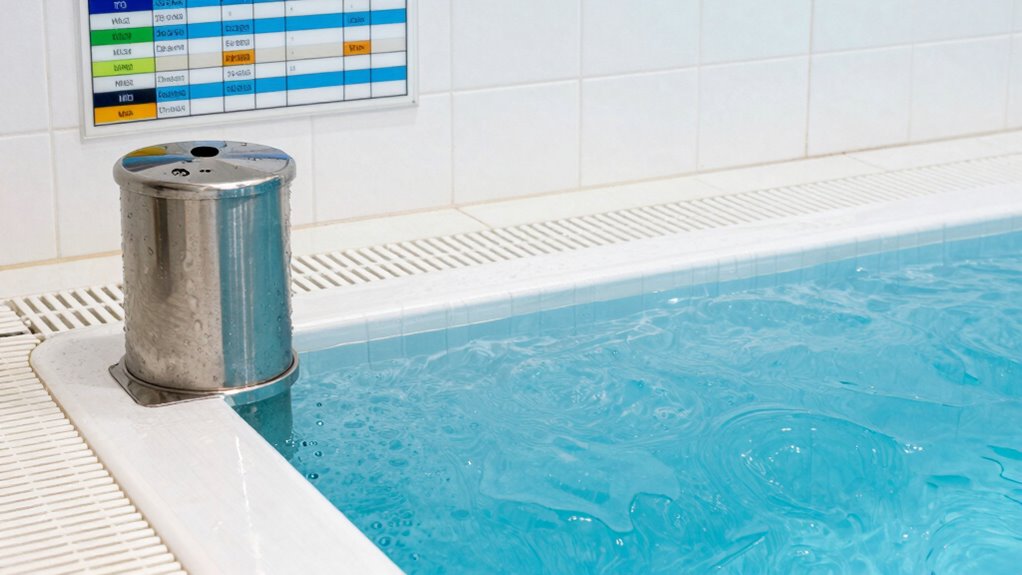
To keep your cold plunge functioning at its best, you should clean the filter every 1 to 2 weeks, especially if it’s used frequently or debris builds up quickly. Regular cleaning prevents clogging and ensures proper water flow. If you notice persistent debris or if the filter looks dirty, consider replacing it sooner. Maintaining a consistent cleaning schedule helps preserve the chemical balance of your plunge, reducing the risk of algae or bacteria growth. When cleaning, check if the filter needs replacement, especially if cleaning no longer restores clarity. Staying on top of this schedule keeps your cold plunge hygienic and efficient, minimizing the need for extensive chemical adjustments later on. Proper filter maintenance is key to a smooth, safe cold plunge experience. Additionally, paying attention to filter lifespan can help you determine when it’s time for a full replacement. Regular filter cleaning also helps in preventing the buildup of debris that can harbor bacteria, ensuring a safer dipping experience. Implementing a routine maintenance schedule can further extend the life of your filter and improve overall water quality. For optimal performance, it’s also helpful to monitor water clarity regularly and adjust your cleaning frequency as needed.
What Factors Affect Your Cleaning Frequency?
Several factors can influence how often you need to clean your cold plunge filter. Changes in water quality, how often you use the plunge, and environmental conditions all play a role. Being aware of these can help you adjust your cleaning schedule for ideal performance. Additionally, the type of heat pump system used can impact maintenance needs, as more advanced models often incorporate features that reduce buildup and improve efficiency. Regularly monitoring system performance can also help identify when cleaning is necessary before issues arise. Moreover, using performance cookies to analyze usage patterns may assist in optimizing maintenance routines based on user behavior. For example, tracking usage frequency can provide insights into when more frequent cleanings might be required.
Water Quality Changes
Water quality can change quickly depending on several factors, which in turn affect how often you need to clean your cold plunge filter. If your water becomes murky or cloudy, it indicates reduced water clarity and signals you should clean the filter sooner. Poor water quality can also shorten the filter lifespan, making it less effective at trapping debris and contaminants. Heavy usage, organic matter, or introducing new water sources can accelerate these changes. Regularly monitoring water clarity helps you determine when a cleaning is necessary. Maintaining good water quality not only extends your filter’s lifespan but also ensures a cleaner, safer plunge experience. Staying attentive to these signs will help you establish an effective cleaning schedule tailored to your specific conditions. Additionally, understanding the impact of indoor air quality on your environment can help you create a healthier space overall. Proper filter maintenance and keeping water parameters balanced are key to optimal performance and longevity. For optimal results, consider the quality of water source and how it influences your filter’s efficiency over time. Being aware of contaminant buildup can further guide your cleaning frequency to prevent issues before they arise. Regularly assessing these factors can also help prevent biological growth that might compromise water safety.
Usage Frequency Variations
How often you should clean your cold plunge filter depends heavily on how frequently you use it. If you use it daily, you’ll need to clean and perform filter replacement more often to maintain proper chemical balancing. Less frequent use means less buildup, so cleaning intervals can extend. To help you determine the right schedule, consider this table:
| Usage Frequency | Cleaning Interval | Notes |
|---|---|---|
| Daily | Weekly | Check for debris, replace filter if needed |
| Weekly | Every 2-3 weeks | Maintain ideal chemical balance |
| Monthly | Every 4-6 weeks | Less frequent cleaning required |
Adjust based on water clarity, odor, and filter condition to keep your plunge clean and safe. Regular inspection of your filter’s filter condition can help you adapt your cleaning schedule as needed.
Environmental Factors Influence
Environmental factors play a significant role in determining how often you need to clean your cold plunge filter. Water temperature impacts bacterial growth and algae development; higher temperatures can accelerate buildup, requiring more frequent cleaning. Additionally, maintaining proper chemical balance is vital—imbalances can promote debris accumulation and reduce filtration efficiency. If your water is too warm or if chemicals like pH, chlorine, or stabilizers are off, you’ll likely need to clean the filter more often. Conversely, cooler, well-balanced water slows down contaminants. Regularly monitoring these environmental factors helps you set an appropriate cleaning schedule. By staying vigilant about water temperature and chemical levels, you can prevent excessive grime, keep your cold plunge functioning smoothly, and extend the lifespan of your filter. Incorporating energy-efficient cloud solutions can also support sustainable maintenance practices for your pool equipment. Understanding water quality is essential for effective filter maintenance and ensuring a safe, enjoyable experience. Keeping an eye on bacterial growth can help identify when more frequent cleanings are necessary to maintain water safety and clarity.
Signs It’s Time to Clean Your Cold Plunge Filter

When your cold plunge filter needs cleaning, you’ll notice certain signs that shouldn’t be ignored. If you see cloudy or discolored water, it’s a clear indicator that your filter isn’t doing its job effectively. Unpleasant odors are another sign, suggesting bacteria buildup. You might also notice decreased water flow, which means the filter is clogged. Regular water testing can reveal imbalances, such as high levels of contaminants or algae, signaling it’s time for a filter replacement or cleaning. If you find yourself needing to clean the filter more frequently than usual, it’s a sign to check for underlying issues. Paying attention to these signs ensures your cold plunge stays clean, safe, and enjoyable.
Top Maintenance Tips to Keep Your Filter Running Smoothly

To keep your cold plunge filter running smoothly, regular maintenance is essential. Start by scheduling timely filter replacements based on your usage and manufacturer recommendations. This prevents buildup and ensures peak filtration. Next, regularly check and maintain proper chemical balancing in your pool water. Proper pH and sanitizer levels reduce debris and algae growth, easing the strain on your filter. Keep an eye on water clarity and flow rate; if you notice a decline, it may be time for a replacement or a quick cleaning. Avoid neglecting these steps, as they extend your filter’s lifespan and improve water quality. Consistent monitoring and timely filter replacement, combined with maintaining balanced chemicals, will keep your cold plunge filter operating efficiently and help you enjoy clean, invigorating water every time.
How to Deep Clean Your Cold Plunge Filter : Step by Step
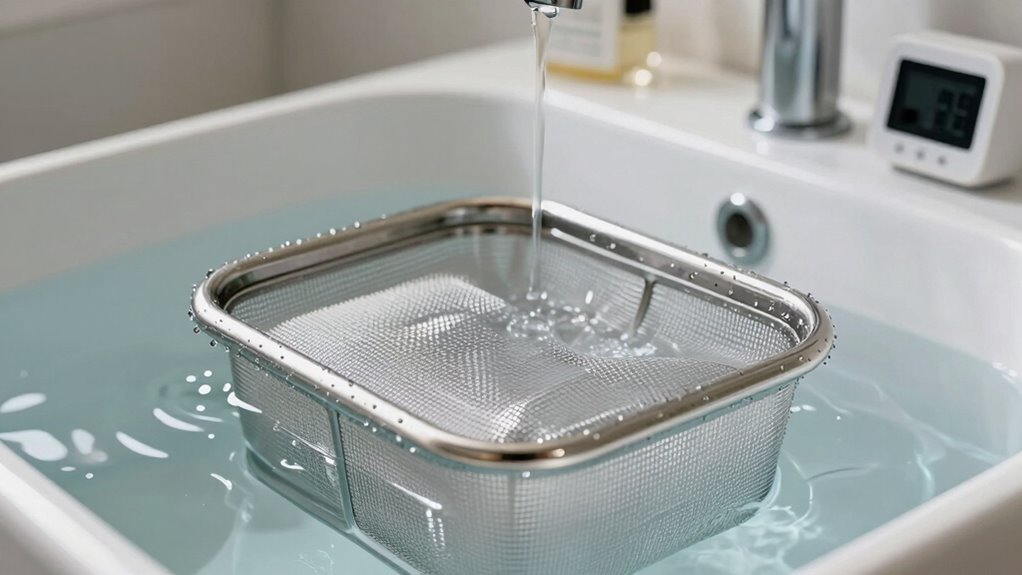
To deep clean your cold plunge filter, start by gathering all the necessary cleaning supplies. Then, follow each step carefully to guarantee your filter is thoroughly cleaned and maintained. Proper preparation makes the process easier and helps keep your filter functioning at its best.
Gather Cleaning Supplies
Gathering the right cleaning supplies is the first step toward a thorough deep clean of your cold plunge filter. You’ll need basic tools like a soft brush, a sponge, and a bucket. Make sure you have a filter replacement on hand if your filter is heavily clogged or worn out. Additionally, gather cleaning agents suitable for your filter type, such as enzyme cleaners or mild detergents. Don’t forget to check your chemical balancing supplies—these are essential to maintain proper water chemistry after cleaning. Wearing gloves and safety goggles is also recommended to protect your skin and eyes from harsh chemicals. Having all these supplies ready before you start ensures a smooth, efficient cleaning process, helping your cold plunge stay clean and functioning effectively.
Follow Proper Steps
Begin by turning off the cold plunge and unplugging it to guarantee safety before you start cleaning. Next, follow these steps for a thorough deep clean:
- Remove the filter and rinse it with water to eliminate debris.
- Use a specialized cleaner to scrub the filter, ensuring proper filter replacement if it’s worn out.
- Reinstall the filter, then refill the system, checking and adjusting chemical balancing to maintain water quality.
Always ensure the filter is completely dry before reinserting it. Regular cleaning prevents buildup and keeps your system running smoothly. Proper filter replacement when necessary extends the lifespan of your plunge and maintains peak performance. Don’t forget to check and adjust chemical levels after cleaning to avoid imbalances that could affect water clarity and safety.
What Are the Risks of Not Cleaning Your Filter on Time?

Neglecting to clean your cold plunge filter on time can lead to serious issues that affect both the equipment and your health. If you skip regular cleanings, the filter’s lifespan shortens because debris and buildup clog it, forcing the system to work harder. This stress can cause premature failure and costly repairs. Additionally, unclean filters compromise water clarity, making the water appear murky and uninviting. Poor water quality can also promote bacteria and algae growth, posing health risks like skin irritation or infections. Over time, neglecting these cleanings can turn your cold plunge into a breeding ground for germs, defeating the purpose of a revitalizing dip. Staying consistent with filter maintenance ensures ideal performance, clear water, and a safe, enjoyable experience.
How to Extend Your Cold Plunge Filter’s Life With Proper Care
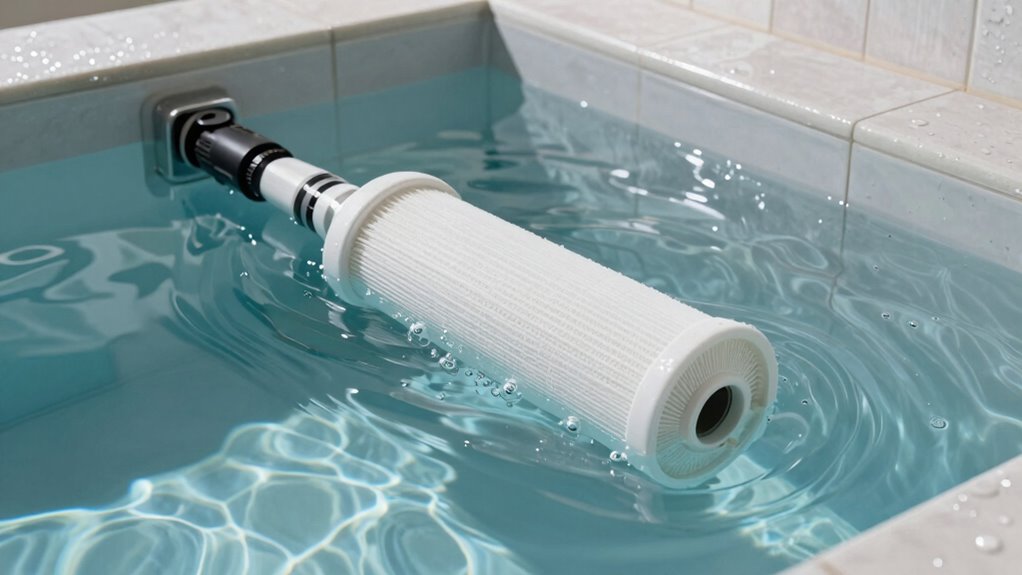
Proper care is essential to extend the lifespan of your cold plunge filter. Maintaining the correct chemical balance prevents buildup and reduces strain on the filter, delaying the need for frequent filter replacement. To maximize your filter’s durability, focus on these key practices:
Proper filter maintenance extends lifespan and prevents buildup, ensuring your cold plunge stays clean and functioning efficiently.
- Regularly check and adjust water chemistry to keep pH and sanitizer levels balanced.
- Clean your filter according to the recommended schedule to prevent debris buildup.
- Avoid overloading the filter by limiting contaminants entering your plunge.
Troubleshooting: When Your Filter Isn’t Staying Clean
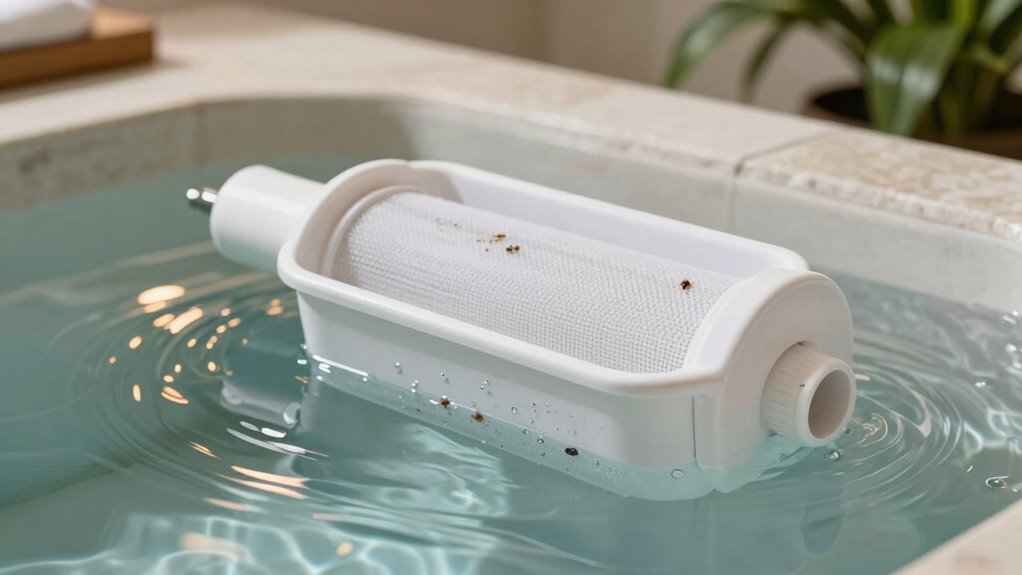
Even with regular maintenance, your filter may still struggle to stay clean if certain issues arise. One common problem is poor chemical balancing, which can cause debris and algae buildup despite frequent cleaning. If your filter isn’t staying clear, it might be time for a filter replacement, especially if it’s worn or damaged. Check your chemical levels regularly and adjust as needed to prevent contaminants from accumulating. Also, inspect the filter for clogs or wear that could hinder its performance. Proper chemical balancing helps reduce debris, making your filter’s job easier. If issues persist after these steps, replacing the filter ensures ideal filtration and keeps your cold plunge clean and healthy. Regularly troubleshooting these factors keeps your system functioning smoothly.
Frequently Asked Questions
Can I Use Household Cleaning Products on My Cold Plunge Filter?
You shouldn’t use household cleaning products or chemicals on your cold plunge filter. These cleaning agents can damage the filter’s components and introduce harmful residues into your water. Instead, opt for manufacturer-recommended cleaning solutions designed specifically for filters. Regularly clean your filter according to the schedule, but always stick to safe, approved cleaning agents to keep your plunge safe and functioning properly.
How Do Different Water Qualities Impact Cleaning Frequency?
Water quality wildly influences your cleaning schedule. When water contamination is common, you’ll need to clean your filter more frequently to prevent mineral buildup and bacterial growth. Hard water deposits minerals that clog filters, demanding regular rinsing and scrubbing. Soft water minimizes buildup but still requires periodic maintenance. By monitoring water clarity and testing for contaminants, you can customize your cleaning routine, keeping your cold plunge pristine and properly protected.
Is It Necessary to Replace the Filter After Cleaning?
No, you don’t need to replace the filter after cleaning if it’s still in good condition. Follow your maintenance schedule to check for wear or damage regularly. If the filter looks worn or clogged beyond cleaning, then consider filter replacement. Proper maintenance extends its lifespan, so inspect it often and replace only when necessary, ensuring peak filtration and continued cold plunge performance.
What Are Common Mistakes to Avoid During Filter Maintenance?
During filter maintenance, avoid common mistakes like using harsh cleaning tools that can damage the filter, which shortens its lifespan. Don’t forget to carefully inspect the filter for signs of wear or tears and replace it if necessary. Always follow manufacturer instructions, and verify you’re using the appropriate cleaning tools. Skipping regular cleaning or using improper tools can reduce filter effectiveness, leading to increased maintenance costs and decreased cold plunge performance.
How Does Filter Cleaning Affect Overall Cold Plunge Water Quality?
Imagine your cold plunge water flowing smoothly, like a pristine mountain stream. Regular filter cleaning keeps water circulation ideal, preventing mineral buildup that can cloud clarity. When you maintain your filter, you guarantee clean, crisp water, free from odors and impurities. This routine safeguards your health and enhances your experience, letting you immerse yourself in invigorating, pure water every time. Proper cleaning truly preserves your plunge’s quality and longevity.
Conclusion
Keep your cold plunge filter shining like a clear mountain stream by sticking to the cleaning schedule. Regular care is the heartbeat of your filter’s health, preventing buildup and ensuring pristine waters. Think of your filter as the gatekeeper of purity—when neglected, it’s like a dam starting to clog. Stay proactive, follow the tips, and your cold plunge will be a invigorating oasis, sparkling and inviting, year after year.