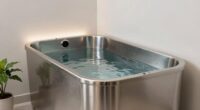
For a small cold plunge, a cartridge filter is usually the better fit because it’s compact, easy to install, and costs less to maintain. It effectively traps tiny particles and dissolved impurities, keeping the water clear and safe. Sand filters are larger and require more space and maintenance, making them less ideal for small setups. If you want to learn more about choosing the right filter, keep exploring the options.
Key Takeaways
- Cartridge filters are more compact and easier to install in small cold plunge spaces.
- They offer higher filtration precision, effectively removing fine particles and dissolved impurities.
- Cartridge filters typically have lower operational costs and simpler maintenance routines.
- Sand filters are larger, may require more space, and involve periodic backwashing.
- For small setups, cartridge filters provide efficient, space-saving, and cost-effective filtration solutions.
How Do Sand and Cartridge Filters Work?

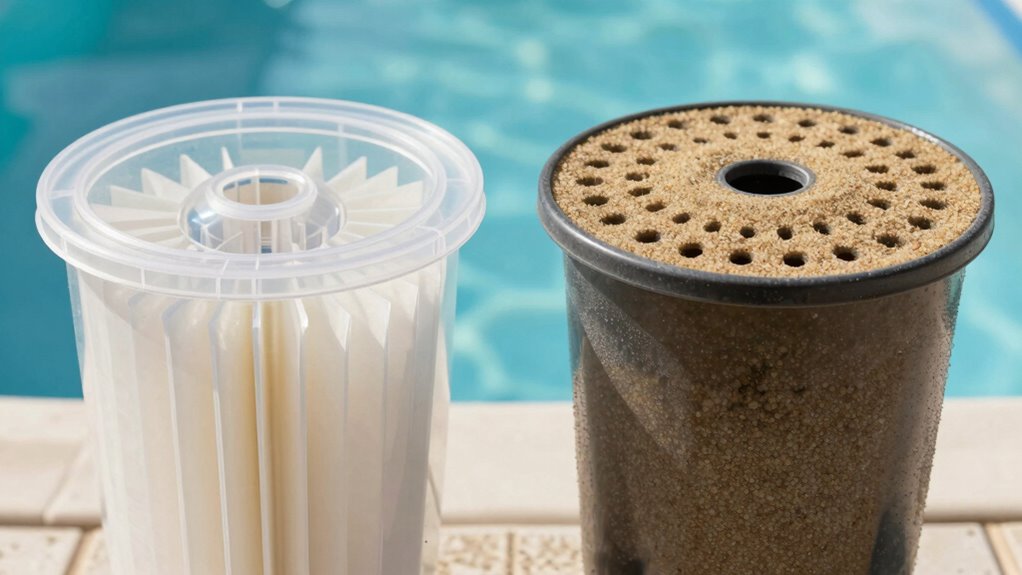
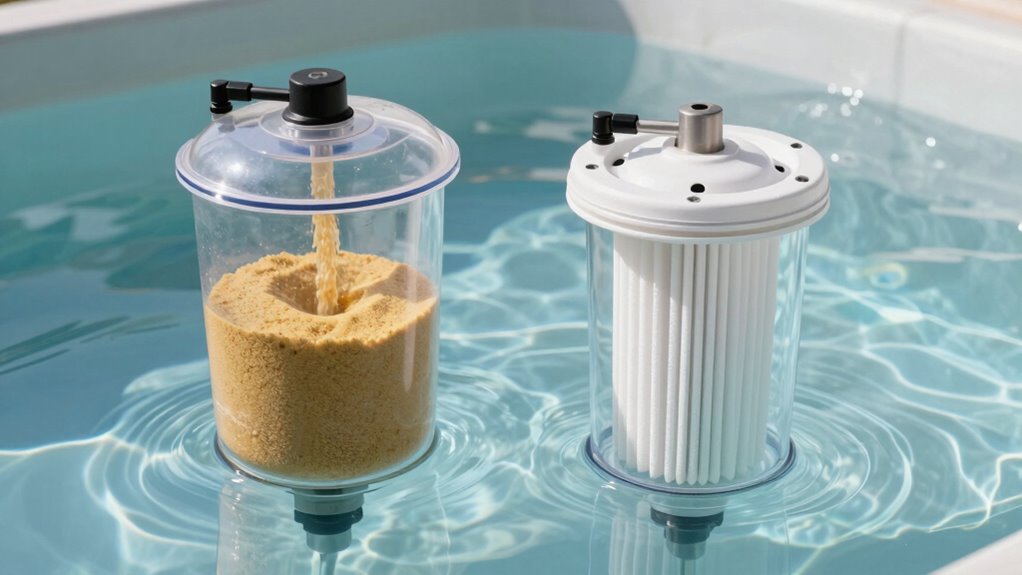
Sand and cartridge filters both serve to keep your pool clean by trapping dirt and debris, but they do so in different ways. Sand filters use a bed of special sand to catch particles as water flows through it. Their filtration mechanics rely on the size of the sand grains, which trap larger debris while allowing clean water to pass. Cartridge filters, on the other hand, use a pleated paper or fabric element that captures dirt at a microscopic level. This design offers finer filtration mechanics, providing sharper water clarity. As water passes through the filter media, contaminants are trapped, resulting in clearer water. While sand filters are generally slower to filter finer debris, cartridge filters deliver higher water clarity with quicker filtration cycles. Additionally, modern innovations in energy-efficient pool filtration are helping to reduce power consumption while maintaining effective cleaning performance. These advancements are making both types of filters more cost-effective and environmentally friendly for small cold plunge pools. Regular filter maintenance is essential to ensure optimal performance and longevity of your filtration system, regardless of the type you choose.
What Factors Matter Most When Choosing a Filter? (Efficiency, Cost, Maintenance)

When choosing a filter, you need to contemplate how well it cleans your water and how much it costs over time. Balancing efficiency with affordability is key to getting the best value. Think about which factors matter most to you—saving money or ensuring crystal-clear water. Additionally, consider the maintenance requirements of each filter type to keep your small cold plunge in optimal condition. For example, understanding the filter longevity can help you determine how frequently replacements are needed, affecting both cost and convenience. It is also important to evaluate the water filtration technology used, as different systems provide varying levels of water clarity and purity. Moreover, assessing energy consumption can influence your long-term operational costs and overall efficiency. Considering the filter installation process can also impact how easily you can set up and maintain your system over time.
Efficiency Balance
Choosing the right filter involves balancing several key factors, with efficiency, cost, and maintenance ranking as the most important. Filtration efficiency determines how well your filter clears contaminants, impacting water clarity and safety. Maintenance ease affects how simple it is to keep your system running smoothly without hassle. When weighing these factors, consider:
- How effectively the filter captures particles without clogging quickly
- The time and effort needed for routine upkeep
- The long-term durability and reliability
- The initial investment versus ongoing operational costs
- Understanding the science behind water filtration technologies can help you select the most suitable option for your small cold plunge. Additionally, knowing about local environmental factors can influence your choice in filtration systems, ensuring optimal performance based on your specific conditions.
Prioritizing filtration efficiency ensures your cold plunge stays clean, while ease of maintenance saves you time and effort. Striking the right balance helps you select a filter that performs well without becoming a burden, ensuring your small cold plunge remains pristine and hassle-free.
Cost Effectiveness
Evaluating cost effectiveness is essential because it directly impacts your long-term expenses and overall satisfaction with your filter system. When comparing filters, consider the filter material, as it influences both initial costs and durability. Sand filters typically have a lower upfront price but may require more frequent media replacement, impacting long-term costs. Cartridge filters often have a higher initial investment but are easier to maintain, saving you money over time. The installation process also matters—sand filters usually involve a more complex setup, which could increase installation costs, while cartridge filters are simpler to install and replace. Additionally, filter maintenance requirements can affect ongoing costs and convenience. Considering filter media longevity can help you select a system that minimizes replacement needs and maximizes efficiency. Proper system compatibility ensures the filter works effectively with your small cold plunge setup. Regularly assessing filter performance can help you determine if your current system continues to meet your needs efficiently. Balancing these factors ensures you choose a filter that provides the best value without sacrificing performance, making your small cold plunge both cost-effective and efficient.
Which Filter Removes More Debris and Contaminants?

When comparing filters, you’ll notice differences in debris capture efficiency and contaminant removal. Cartridge filters generally trap smaller particles more effectively, while sand filters excel at handling larger debris. Understanding these points helps you choose the filter that best meets your cleaning needs. Additionally, consideration of filter maintenance can influence your selection for a small cold plunge. For example, sand filters may require backwashing less frequently but can be less efficient at removing finer particles, which are better captured by cartridge filters. Moreover, the system size and flow rate are critical factors that can affect overall filtration performance and compatibility with your cold plunge system.
Debris Capture Efficiency
Sand filters generally excel at capturing larger debris like leaves and dirt, thanks to their coarse media that allows water to flow through while trapping bigger particles. They effectively handle bulky debris, reducing the load on other filtration stages. However, their filter lifespan can be shorter if debris accumulates quickly, requiring more frequent backwashing. Installation challenges are minimal but may involve ensuring proper flow rates to prevent channeling. Cartridge filters, on the other hand, tend to trap finer particles, which makes them better for small debris and contaminants. They often provide higher debris removal efficiency for tiny particles but need regular cartridge replacement. Consider these factors:
- Coarse media favors bigger debris capture
- Fine debris may bypass coarse filters
- Filter lifespan depends on debris load
- Ease of installation varies by filter type
- Effective cleaning routines can extend filter lifespan and maintain optimal performance.
Contaminant Removal Effectiveness
Cartridge filters generally remove more fine particles and contaminants than sand filters due to their tightly woven media, which traps small debris and dissolved impurities more effectively. This results in higher filtration efficiency, ensuring your cold plunge water stays cleaner and safer. Cartridge filters excel at contaminant removal because they can filter out bacteria, algae, and dissolved organic compounds that sand filters might miss. Their design allows for more precise filtering, making them ideal for maintaining water clarity and quality. While sand filters are effective for larger debris, cartridge filters provide superior contaminant removal, especially for tiny particles. If your goal is *best* water purity with minimal maintenance, a cartridge filter’s higher filtration efficiency makes it the better choice.
How Much Do These Filters Cost and What Are the Ongoing Expenses?

Understanding the costs associated with each filter type can help you make an informed decision for your pool. Sand filters typically have a longer filter lifespan, often lasting 5-7 years, with lower replacement costs. Cartridge filters tend to cost more upfront but usually need replacement every 1-3 years, depending on usage and maintenance. Ongoing expenses include regular backwashing or cleaning, which varies by filter type. Consider these factors:
- Initial purchase price
- Filter lifespan
- Replacement costs
- Maintenance frequency
Additionally, the filter media used in each system impacts both the cost and effectiveness over time. The cost efficiency of each filter type can vary based on your maintenance routine and local service costs. While sand filters may save you money over time due to less frequent replacements, cartridge filters can be more convenient but more costly long-term. Balancing upfront costs and ongoing expenses will help you choose the best filter for your small cold plunge.
How Easy Are They to Install and Maintain in Small Cold Plunges?

Installing and maintaining filters in small cold plunges is generally straightforward, but the process varies depending on the type you choose. Cartridge filters are usually easier to install, often involving simple replacement of the filter cartridge, which can be done without special tools. Maintenance involves regular cleaning or backwashing; cartridge filters typically need more frequent cartridge replacements due to filter lifespan limits, while sand filters require periodic backwashing to maintain efficiency. Overall, cartridge filters offer a quicker, less complicated installation process, but both types are manageable with basic knowledge. Proper filter maintenance routines** can extend the lifespan of your system and ensure optimal performance. Additionally, understanding proper piercing care and hygiene can help prevent contamination of your filtration system and ensure optimal performance. Being familiar with filter troubleshooting techniques** can also help you quickly resolve common issues and keep your cold plunge running smoothly.
How Long Do These Filters Last, and When Should You Replace Them?

Since both sand and cartridge filters have limited lifespans, knowing when to replace them is essential for maintaining ideal water quality. Your filter’s lifespan depends on usage, water quality, and maintenance, so keeping an eye on it is key. Typically, a sand filter lasts 3 to 5 years, while a cartridge filter needs replacement every 6 to 12 months. Follow a consistent replacement schedule to avoid efficiency drops. Look for these signs indicating it’s time to change your filter:
- Reduced water clarity
- Increased filter pressure
- Persistent odors or cloudiness
- Visible dirt or debris buildup
Adhering to a proper replacement schedule ensures your system works effectively and prolongs your filter’s life. Regular checks help you avoid costly repairs and maintain clean, safe water.
Which Filter Fits Best in Small Cold Plunge Spaces?

Choosing the right filter for a small cold plunge space requires careful consideration of size, capacity, and maintenance needs. A compact filter like a cartridge filter often fits better because it’s smaller and easier to install in tight areas. It also simplifies filter maintenance since cartridge replacements are straightforward and quick. In contrast, sand filters tend to be larger and may pose installation challenges in limited space, making them less practical. You’ll want a filter that doesn’t require extensive setup or ongoing adjustments, especially if space is limited. Opting for a cartridge filter minimizes installation challenges and makes filter maintenance more manageable. This way, you keep your small cold plunge clean and functional without the hassle of bulky equipment.
How Do Operating Costs and Energy Use Compare?
When comparing operating costs and energy use, cartridge filters generally consume less power and are more cost-effective over time than sand filters. This means you’ll see better energy savings and lower ongoing expenses. Cartridge filters typically require less frequent backwashing, reducing water and maintenance costs. They also operate more efficiently, saving you money on energy bills. To understand this better:
- Lower energy consumption leads to reduced electricity costs
- Less frequent cleaning minimizes maintenance expenses
- Compact design cuts down on water usage for backwashing
- Overall, a more efficient filter helps extend equipment lifespan and save money
Choosing a cartridge filter can considerably decrease your long-term operating costs, making it a smarter investment for your small cold plunge.
Which Filter Is the Better Choice for Your Cold Plunge?
Considering the long-term benefits and costs associated with your cold plunge filtration system, selecting the right filter becomes a key decision. For ideal water clarity and aesthetic appeal, a cartridge filter often provides superior results. It effectively traps fine particles, ensuring clear, inviting water with minimal effort. This keeps your plunge looking pristine and enhances the overall experience. On the other hand, a sand filter offers good filtration but may require more maintenance to maintain water clarity. If ease of use and consistent aesthetic appeal matter most, a cartridge filter is usually the better choice. It’s efficient, simple to clean, and keeps your small cold plunge looking inviting, making it a smart investment for long-term enjoyment and visual appeal.
Frequently Asked Questions
Which Filter Type Is Quieter During Operation?
You’ll find that cartridge filters are quieter during operation because they have fewer moving parts and generate less noise. Their operational quietness makes them ideal if you want a peaceful environment around your cold plunge. Sand filters, on the other hand, tend to produce more noise due to the backwashing process. So, if noise levels and operational quietness matter most, a cartridge filter is your best choice for a small cold plunge.
Can These Filters Handle Cold Water Temperatures Effectively?
Think of these filters as icy sailors braving cold waters—they handle low temperatures with remarkable resilience. Both sand and cartridge filters maintain temperature resilience, ensuring filtration efficiency even in chilly conditions. You won’t need to worry about freezing or sluggish performance, as their design allows them to operate smoothly in cold water. With proper maintenance, these filters keep your cold plunge clean and invigorating, no matter how icy the journey.
Are There Specific Brands Recommended for Small Cold Plunges?
For small cold plunges, you should consider brands like Hayward, Intex, or Pleatco, which offer reliable filters suited for tight spaces. Focus on size considerations; choose a filter that fits your plunge’s volume without overloading the system. These brands provide efficient filtration, are easy to install, and work well in cold water, ensuring your plunge stays clean and inviting.
How Do Filters Impact Water Clarity and User Experience?
Filters directly impact your water clarity and user experience by improving filtration efficiency, making the water look clearer and feel more invigorating. A good filter reduces debris and contaminants, ensuring a pleasant plunge. Keep in mind, maintenance requirements vary; cartridge filters often need frequent replacement, while sand filters require backwashing. Choosing the right filter helps you enjoy consistent clarity with manageable upkeep, enhancing your overall cold plunge experience.
What Safety Features Should I Look for in a Filter System?
Think of your filter system as a trusty sidekick, always ready to keep your cold plunge safe. Look for safety features like automatic shut-off, pressure gauges, and secure housing to prevent leaks. For filter maintenance, choose models with easy access and clear instructions. When installing, follow tips like proper sealing and correct placement to guarantee safety and efficiency, so your plunge stays pristine and worry-free.
Conclusion
Choosing between a sand and cartridge filter depends on what matters most to you. If you want low maintenance and quick setup, a cartridge filter’s your friend. But if you prefer long-lasting, efficient filtration and don’t mind a bit more upkeep, a sand filter could be better. Think about your space, budget, and how often you want to clean—then pick the filter that makes your cold plunge experience as invigorating and hassle-free as possible.