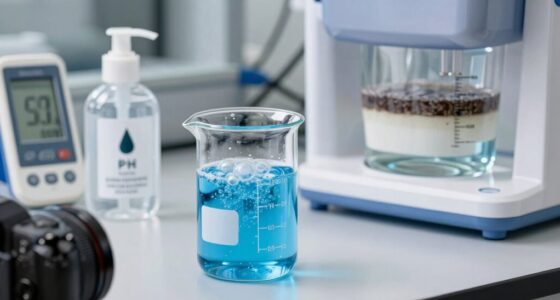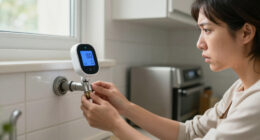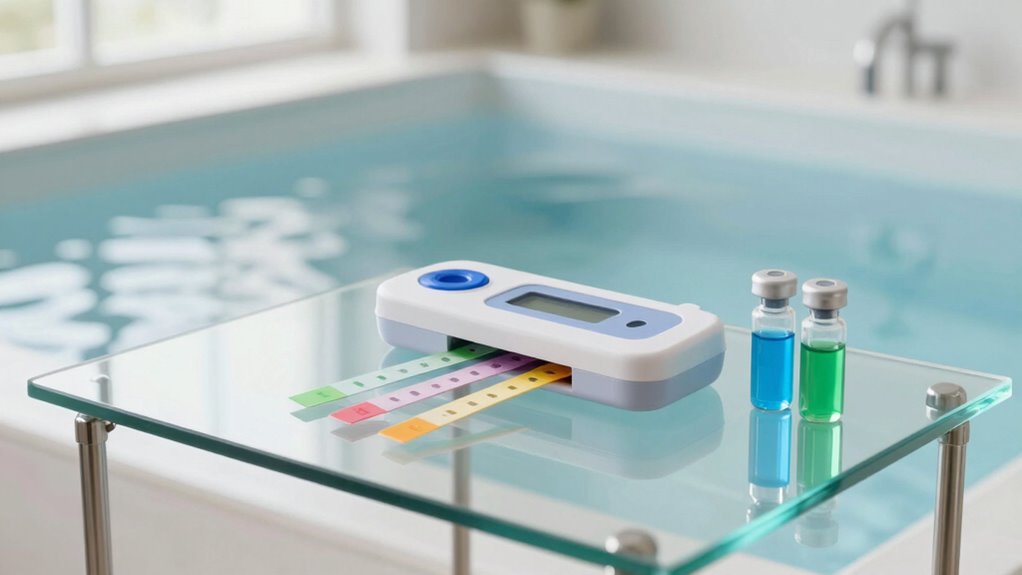

To keep your home cold plunge stress-free, test your water at least twice a week using easy test strips or digital testers. Focus on checking pH levels between 7.2 and 7.8 and monitor sanitizer levels regularly to prevent bacteria and algae. Keep detailed logs of your results and act quickly to fix imbalances with proper chemicals. Consistent maintenance and observation help guarantee safe, clean water—stay with us to discover simple tips for a smooth routine.
Open a free Amazon Business account
Business pricing, bulk buying and tax-exempt orders.
As an affiliate, we earn on qualifying purchases.
Key Takeaways
- Test water at least twice weekly using easy-to-use test strips or digital testers to ensure consistent quality.
- Prioritize checking pH levels first, maintaining them between 7.2 and 7.8 for safety and comfort.
- Regularly monitor sanitizer (chlorine or bromine) levels to prevent bacteria and algae growth.
- Keep detailed logs of test results and maintenance to identify patterns and act proactively.
- Perform routine filter cleaning and equipment checks to ensure proper circulation and water clarity.
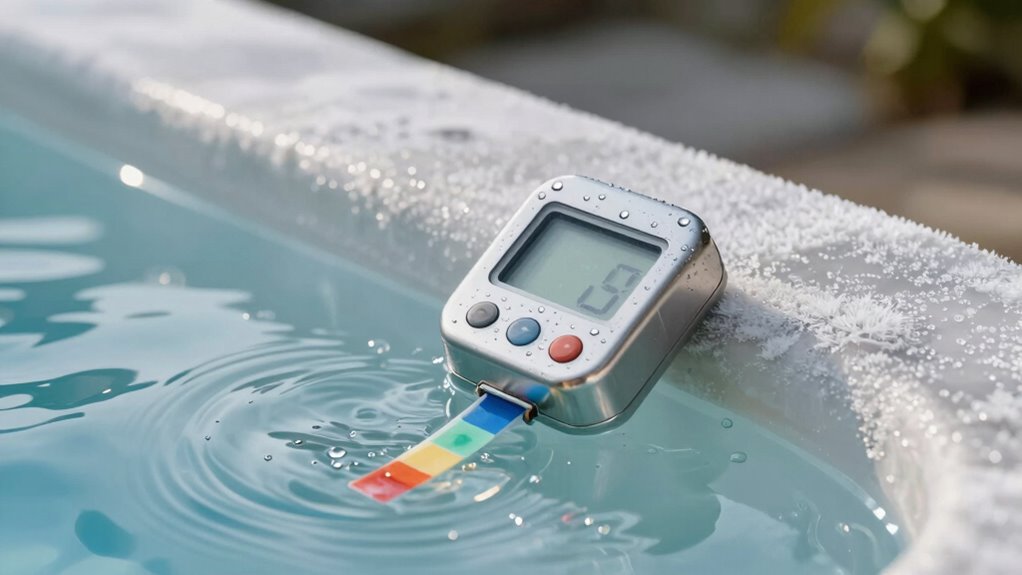
Maintaining clean and safe water in your cold plunge is essential for both health and enjoyment. When you follow a consistent water testing routine, you reduce the stress that often comes with managing your plunge’s water quality. This routine helps you catch problems early, ensuring that hydration safety remains a priority and that your equipment stays in good shape. Regular testing isn’t complicated, but it’s vital for preventing issues like bacteria growth, algae, or imbalanced chemicals that can compromise your experience.
Consistent water testing keeps your cold plunge safe, clean, and enjoyable while reducing stress and preventing problems.
You should start by testing your water at least a couple of times a week, especially if you use your plunge frequently. Use test strips or digital testers designed for pools or hot tubs—they’re quick and easy to use. Check the pH level first; maintaining a pH between 7.2 and 7.8 is key to hydration safety, as it prevents skin irritation and ensures that disinfectants work effectively. If the pH is too high or low, it’s time to adjust with the appropriate chemicals. Next, test for sanitizer levels—chlorine or bromine—depending on what you’re using. Keep these levels within the recommended ranges to inhibit bacteria and algae growth, protecting your health and prolonging equipment lifespan. Biodiversity and ecosystem health are also impacted by water quality, highlighting the importance of maintaining a balanced environment.
Equipment maintenance plays a critical role in water quality. Regularly inspect your filtration system, pumps, and chemical feeders to ensure they’re functioning properly. Clean filters weekly to prevent debris buildup, which can hinder water circulation and compromise sanitation. When testing your water, observe the clarity and smell as well; murky or foul-smelling water often indicates the need for a deeper clean or chemical adjustment. Additionally, understanding the water chemistry helps you make more informed decisions about chemical adjustments and system maintenance. Incorporating water testing as part of your routine can help you better understand how your system responds to various conditions and adjustments. To optimize your maintenance routine, consider investing in water quality monitors that can provide continuous data and alerts. By combining routine testing with proactive equipment checks, you’re creating a safe environment that requires less last-minute troubleshooting.
Don’t forget to keep detailed records of your test results and maintenance activities. This habit helps you notice patterns and anticipate issues before they become serious. If your test results reveal any imbalances or contaminants, act promptly—adding the right chemicals, cleaning filters, or adjusting circulation. When your water stays balanced and clean, you get to enjoy your cold plunge without worry, focusing instead on the refreshing experience it provides. In the end, a simple, consistent water testing routine combined with diligent equipment maintenance makes managing your home cold plunge less stressful, ensuring it remains a safe, enjoyable part of your wellness routine.
water test strips for pools and hot tubs
As an affiliate, we earn on qualifying purchases.
As an affiliate, we earn on qualifying purchases.
Frequently Asked Questions
How Often Should I Test My Cold Plunge Water?
You should test your cold plunge water at least twice a week to guarantee water safety and maintain cleanliness. If you use your plunge daily or notice any cloudiness or odor, increase testing frequency. Regular testing helps you catch imbalances early, preventing bacteria growth and other issues. Keep a log of your tests, and always follow your water treatment plan to keep your cold plunge safe and enjoyable.
What Are the Best Testing Kits for Home Use?
Your cold plunge deserves the best, and top-tier testing kits make water quality management a breeze. For home use, consider test strips or digital testers—they’re quick, accurate, and easy to read. Focus on testing frequency to keep water safe, especially if you plunge daily. Brands like API, Red Sea, or Poolmaster offer reliable kits that help you monitor pH, chlorine, and other essential levels, ensuring your cold plunge stays pristine and stress-free.
Can I Use Bottled Water for My Cold Plunge?
You can use bottled water for your cold plunge, but consider bottled water safety and water source comparison. Bottled water typically undergoes purification, making it relatively safe, but it’s essential to test it regularly for contaminants. Comparing your water source with bottled options helps guarantee purity. Keep in mind, using tap water with proper testing might be more cost-effective and environmentally friendly, especially if it’s filtered and tested regularly for your cold plunge.
How Do I Interpret Water Test Results Accurately?
You interpret water test results accurately by checking the chemical balance regularly and understanding the test readings. Focus on pH, chlorine or sanitizer levels, and alkalinity, ensuring they stay within recommended ranges. Test frequency depends on usage, but testing at least twice a week helps catch imbalances early. Use a reliable test kit, compare results to guidelines, and adjust chemicals accordingly to keep your cold plunge safe and enjoyable.
What Immediate Actions Should I Take if Water Tests Are Unfavorable?
If your water tests show a chemical imbalance or equipment calibration issues, take immediate action by adjusting chemical levels according to the test results. Shut off the equipment if calibration seems off and recalibrate or inspect it. Regularly monitor water chemistry, and consider adding stabilizers or clarifiers if needed. Addressing these issues promptly guarantees safe, clean water, making your cold plunge experience safer and more enjoyable.
digital water quality tester for pools
As an affiliate, we earn on qualifying purchases.
As an affiliate, we earn on qualifying purchases.
Conclusion
Mastering this water testing routine transforms your cold plunge experience from nerve-wracking to downright effortless. With just a quick test, you’ll dodge the terrifying thought of unsafe water and leap in with confidence. It’s so simple, you’ll wonder how you ever worried at all! Say goodbye to cold plunge anxiety and hello to the ultimate chill zone—your secret weapon for a stress-free, invigorating plunge every single time. Jump in and conquer the cold like a pro!
chlorine bromine sanitizer test kit
As an affiliate, we earn on qualifying purchases.
As an affiliate, we earn on qualifying purchases.
As an affiliate, we earn on qualifying purchases.
Flea & tick season Picks
flea and tick prevention
As an affiliate, we earn on qualifying purchases.